
18 min 30 sec
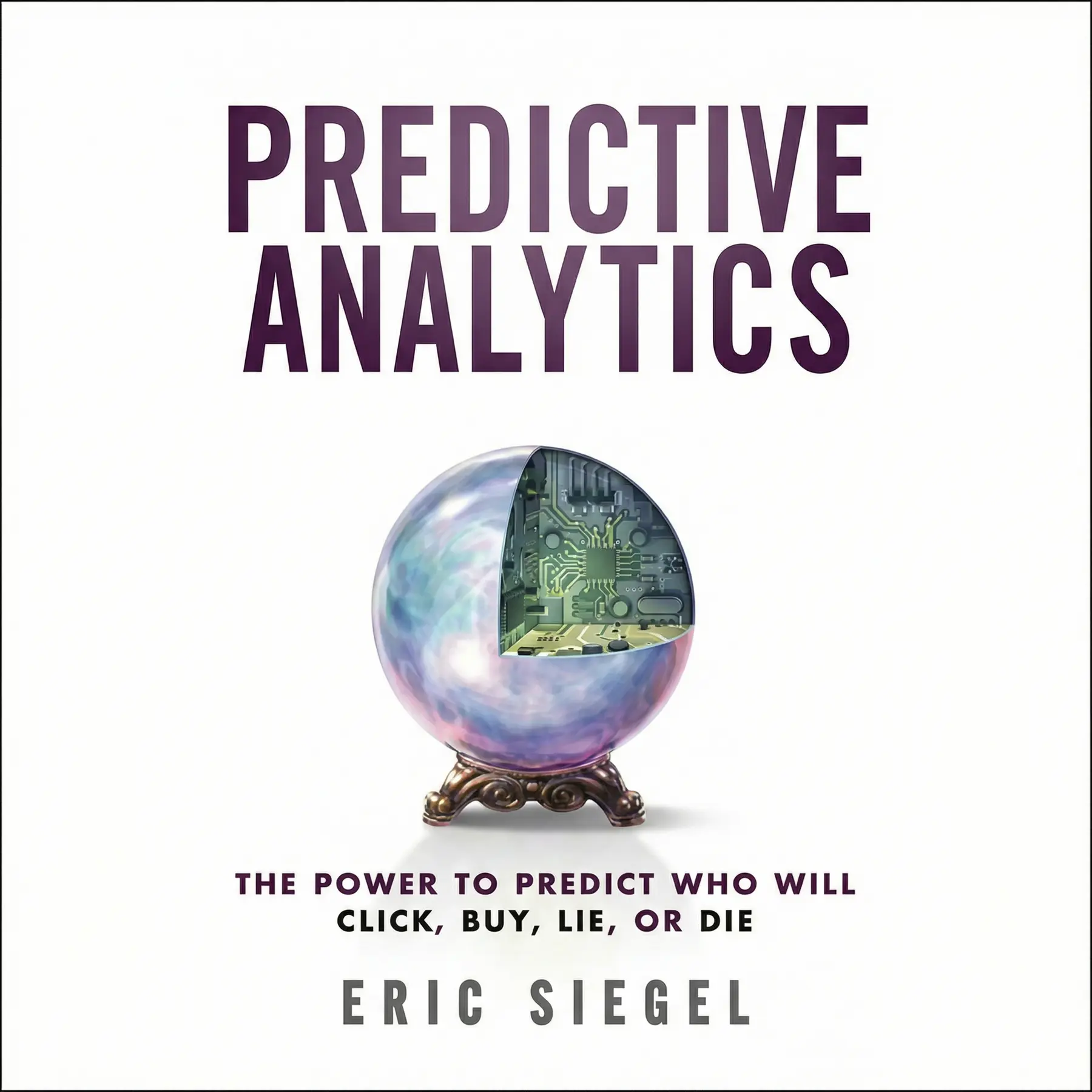
Predictive Analytics: The Power to Predict Who Will Click, Buy, Lie, Or Die
By Eric Siegel
Explore how data science anticipates human behavior in Eric Siegel’s guide to predictive modeling, from retail trends to crime prevention and the ethical dilemmas of a forecasted future.
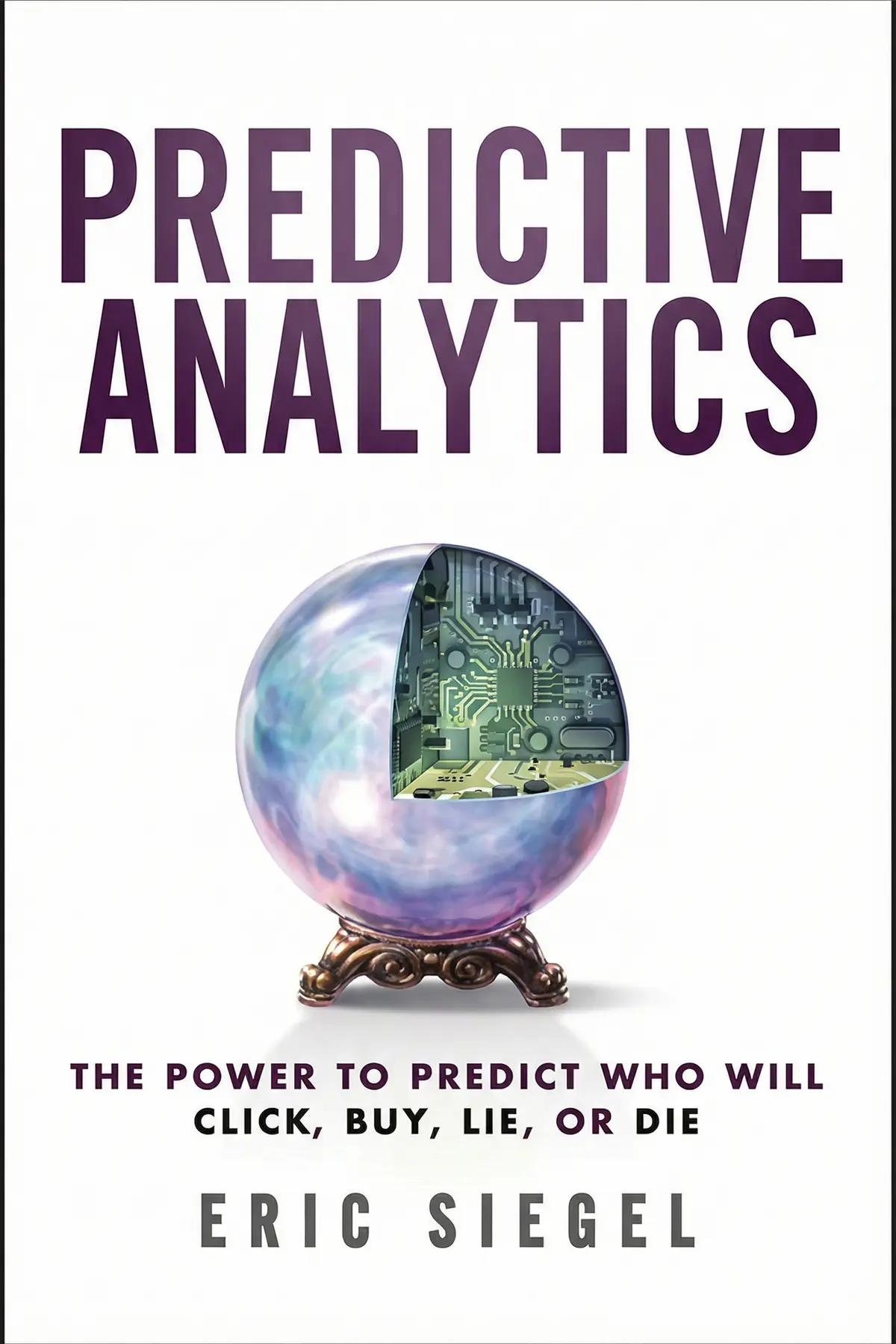
Table of Content
1. Introduction
2 min 01 sec
Every single day, the digital world expands at a rate that is almost impossible for the human mind to grasp. We are living through a period where every action we take—whether it is a simple click on a social media post, a routine grocery purchase, or even a casual search for a local restaurant—leaves behind a digital fingerprint. This trail of information is not just a byproduct of our modern lives; it has become one of the most valuable resources on the planet. For businesses, governments, and organizations, these vast oceans of data represent a goldmine of potential insight. But the real value doesn’t come from just collecting the information. The true power lies in the ability to look at what has happened in the past and use it to figure out what is likely to happen next.
This is the core of predictive analytics. It is a specialized branch of data science that goes beyond simple reporting. While traditional analytics might tell a company how many units they sold last month, predictive analytics aims to tell them who will buy a unit tomorrow. It is about identifying patterns in human behavior and using those patterns to anticipate future choices with a level of precision that can feel almost like magic. In this exploration, we are going to dive deep into the mechanics of this technology. We will look at how it helps organizations minimize their risks, how it has revolutionized our interaction with machines, and why it is increasingly being used to influence the way we think and act.
However, as we journey through the world of predictive modeling, we also have to confront some uncomfortable truths. As our ability to forecast the future improves, we are forced to ask serious questions about privacy, fairness, and the ethical boundaries of surveillance. We’ll see how these models are built, why they sometimes fail, and how they are being refined to become even more persuasive. This is a story about the intersection of human psychology and advanced mathematics, and it reveals a future that is being calculated in real-time, all around us.
2. The Core Mechanics of Predictive Scoring
2 min 06 sec
Discover how individual statistics are transformed into powerful scores that help organizations anticipate specific human reactions and minimize financial gambles.
3. The Ethical Dilemma of Foretelling Behavior
2 min 03 sec
Explore the thin line between helpful innovation and invasive surveillance as predictive models begin to uncover personal secrets and influence the justice system.
4. The Critical Importance of Balanced Data
1 min 56 sec
Learn why the sheer volume of data isn’t enough to ensure accuracy and how false correlations can lead even the smartest machines to bizarre conclusions.
5. Navigating the Hazards of Machine Learning
2 min 08 sec
Discover how automated systems identify hidden ‘microrisks’ and why letting a machine make mistakes is actually the key to its long-term intelligence.
6. The Power of the Ensemble Model
2 min 06 sec
See how combining multiple predictive perspectives through crowdsourcing has led to a dramatic leap in accuracy across industries from tech to defense.
7. Decoding the Complexity of Human Language
2 min 08 sec
Witness the breakthrough of IBM’s Watson and learn why teaching a computer to understand sarcasm and context is the ultimate frontier in data science.
8. The Art of Quantifying Persuasion
2 min 18 sec
Uncover how ‘uplift modeling’ allows companies to separate the ‘sure things’ from the ‘lost causes,’ maximizing their influence without annoying their audience.
9. Conclusion
1 min 44 sec
As we have seen, predictive analytics is no longer a niche field for mathematicians and academics. it has become a fundamental pillar of the modern world, quietly influencing almost every aspect of our lives. From the way we shop and the news we see, to the way our neighborhoods are patrolled and our credit is managed, the power of prediction is everywhere. It has given us the ability to turn mountains of raw, chaotic data into clear, actionable foresight. We’ve seen how machine learning can protect us from hidden risks and how ensemble models can bring together the best of human and artificial intelligence to solve once-impossible problems.
However, the ultimate lesson of this journey is that with great predictive power comes great responsibility. The technology itself is neutral, but the way we choose to use it—the data we select, the biases we allow to remain, and the transparency we provide—will define the future of our society. As these tools become even more persuasive and accurate, it is up to us to ensure they are used to empower individuals rather than just manipulate them. Whether you are a business leader looking to optimize your strategy or a curious citizen wondering why you see certain ads online, understanding predictive analytics is essential. It is the language of the future, and by learning how it works, we can better navigate the increasingly calculated world we all inhabit. The next time you see a recommendation that feels perfectly tailored to you, remember: it isn’t just a coincidence. It is the result of a vast, silent conversation between the data of your past and the possibilities of your future.
About this book
What is this book about?
This book is a deep dive into the world of data science, specifically focusing on the mechanisms and applications of predictive analytics. It explains how organizations across the globe are moving beyond simple data collection to create sophisticated models that can anticipate individual human behavior. From uncovering who is likely to click an advertisement or default on a loan to more complex tasks like predicting criminal activity or medical outcomes, the book illustrates the immense power hidden within our digital footprints. The promise of the book is to demystify the technology that increasingly governs our modern lives. It explains core concepts like machine learning, ensemble modeling, and uplift modeling in a way that is accessible yet thorough. Beyond the technical aspects, it also addresses the significant ethical concerns regarding privacy and the potential for systemic prejudice. By the end, listeners will understand how data is transformed into 'gold' and how the ability to forecast future actions is reshaping industries and the social fabric itself.
Book Information
About the Author
Eric Siegel
Eric Siegel is a world-renowned leader in the field of predictive analytics and the founder of the Predictive Analytics World Conference Series. A former Columbia University professor, he’s also the executive editor of the Predictive Analytics Times.
Ratings & Reviews
Ratings at a glance
What people think
Listeners consider this title an excellent introduction for non-experts, praising the clear and accessible writing style. Its high level of readability is well-regarded; one listener notes its suitability for professional or private application, while another points to the effective real-world illustrations, especially those featuring Watson and banking institutions. Although many listeners feel the material is easy to grasp, some remark that the content is a bit too elementary for what they require.
Top reviews
Fah
Ever wonder how companies seem to know exactly what you’re going to buy before you even do? Siegel does a phenomenal job of demystifying the world of big data without drowning the reader in complex equations or jargon. The examples involving IBM’s Watson and how banks use these algorithms to assess risk were genuinely fascinating to me. To be fair, this is a layman’s overview, but it’s written with such clarity that it makes for an ideal introduction for business leaders. I appreciated the quirky quotes and the way he frames the ethical implications of data collection throughout the chapters. It’s rare to find a book on such a technical subject that manages to be this readable and engaging for a general audience. Highly recommended for anyone curious about the tech driving our modern economy and personal interactions.
Show morePisit
Picked this up because I needed a plain-English explanation of big data for a presentation, and it delivered exactly what I needed. The way Siegel breaks down the logic of IBM’s Watson winning Jeopardy! was both entertaining and educational. Personally, I loved the inclusion of quirky quotes and the diverse case studies that show how PA affects everything from insurance to voter turnout. It’s not meant to be a technical manual, so criticizing it for a lack of equations seems a bit unfair to the author’s intent. For a novice, this book provides the perfect amount of context to understand how automated decision systems are shaping our lives. It’s a thought-provoking read that stays light enough for a plane ride or a weekend on the couch. Definitely a must-read for the data-curious among us who want a birds-eye view.
Show moreNook
Wow, I didn't expect a book about math and computer models to be such a page-turner! Siegel’s enthusiasm for the subject is infectious, and he has a knack for telling stories that make complex ideas feel incredibly simple. The breakdown of how banks use data to predict credit risk was eye-opening for someone like me who isn't a numbers person. I've read other books on big data that were dry and academic, but this one feels alive with practical, modern examples. It’s the perfect gift for a business student or anyone trying to understand the technological forces at play in the 21st century. Not once did I feel lost in the jargon, which is a testament to the author’s skill as a communicator. This is easily one of the best overviews of the field currently available on the market today.
Show moreKamol
Finally got around to reading this for my business book club and I was pleasantly surprised by the accessibility of the text. Siegel manages to walk a very fine line between being a high-level business overview and providing enough conceptual detail to keep things interesting. I particularly liked the discussion on uplift modeling, even if the explanation was a bit brief for my personal taste. The case studies involving healthcare and law enforcement provide a much-needed human context to the underlying math. Not gonna lie, some chapters feel a bit repetitive, especially when he keeps coming back to the power of advertising as the primary use case. Still, it provides a solid vocabulary for anyone who needs to talk to data scientists without feeling like an idiot. It’s a great bridge between two very different worlds of thought.
Show moreSiraporn
The chapter on uplift modeling alone made this worth the purchase for my marketing team. Siegel explains how to target the 'persuadables' rather than wasting resources on those who would buy anyway, which is a total game-changer for ROI. The writing style is very conversational, which makes it an easy sell for executives who might be intimidated by traditional techie textbooks. I did find the author's tone a bit self-congratulatory at times, as if he personally invented these concepts, but the practical value is undeniable. He covers the basics of lift and ensembles in a way that is intuitive and easy to grasp for the average professional. It’s not a 'how-to' guide by any means, but it’s an excellent 'what-is' guide that sparks creative thinking about data. A solid four stars for clarity and real-world relevance.
Show moreSaowalak
After hearing about this book for years, I finally see why it's considered a staple for entry-level analysts. It provides a comprehensive map of the predictive analytics territory without getting bogged down in the swamp of actual programming. While I agree with some critics that it can be a bit shallow, the breadth of applications covered is impressive. From predicting criminal recidivism to optimizing advertising spend, the scope of the book is truly expansive. I found the five core principles in the appendix to be a helpful distillation of the entire text’s philosophy. It’s a great resource for anyone needing to grasp the strategic potential of data-driven decision support systems. Just don't go in expecting a manual on how to write Python code for your own models. It's a conceptual guide, and a good one at that.
Show moreThitiwan
As someone who works with data occasionally, I found this to be a bit of a mixed bag. On one hand, the real-world examples of PA in action are quite illustrative and help bring the concepts to life for a non-technical audience. However, the book often veers into what feels like a 200-page propaganda piece for the industry rather than a balanced analysis. The truth is that Siegel spends way too much time on high-level anecdotes and not enough time on the actual logic behind building decision trees. You get a sense of what can be done, but you’re left in the dark regarding the technical 'how.' It’s a decent survey of the field, but if you’re looking for a deep dive, you’ll likely find it too shallow for your needs. It’s okay for a quick holiday read, but nothing more.
Show moreKanokporn
Frankly, Siegel has a tendency to treat predictive analytics as a magic black box rather than a rigorous scientific discipline. He pushes the idea that we don't need to know 'why' a correlation exists as long as the prediction works, which feels a bit anti-scientific to me. While this 'whatever works' approach might fly in a marketing department, it lacks the depth required for fields like healthcare or law. The book provides a decent survey of the current landscape, but it glosses over the dangers of human trust in technical systems. I enjoyed the sections on machine risk, yet I wish he had explored the ethical pitfalls with more vigor. It’s a useful introductory text, but readers should take the hype with a grain of salt. It’s more about decision-making math than it is about actual science.
Show moreFatima
Look, I wanted to like this, but it felt more like a long-winded sales pitch for the author's consulting business than a helpful guide. While the opening chapters had some interesting teases, the content quickly devolved into fluff and 'let me tell you about my grandchildren' style tangents. There is so much noise here and very little actual signal for someone trying to learn the mechanics of predictive analytics. It’s frustrating because the few pages that actually deal with five core principles are hidden at the very end of the text. Why not just lead with the meat instead of burying it under a mountain of anecdotal filler? If you already know that massive data sets involve probability, you’ve already mastered 90% of what this book has to offer. It's just too basic for its own good, even for a beginner.
Show moreMuk
Total waste of time if you have even a basic understanding of statistics. The writing is frankly some of the most frustrating I have encountered in a professional text, feeling more like a middle schooler’s rambling essay than a serious discourse. Siegel floats all over the place with long-winded sentences that never seem to land on a concrete point. Instead of a rational dissection of predictive methods, we get a 50,000-foot view that offers zero technical value. If you want signal, look elsewhere, because this book is almost entirely noise and fluff. It’s hard to believe this is considered a definitive guide when it lacks any real depth on how to actually build a model. Save your money and just read a Wikipedia page on decision trees instead. You will learn more in five minutes of browsing than you will in ten hours of reading this.
Show moreReaders also enjoyed

AUDIO SUMMARY AVAILABLE
Listen to Predictive Analytics in 15 minutes
Get the key ideas from Predictive Analytics by Eric Siegel, plus 5,000+ more titles in English and Thai.
- 5,000+ titles
- Listen as much as you want
- 7-day free trial
- Cancel anytime







