
15 min 22 sec
Principles: Life and Work
By Ray Dalio
Principles explores a systematic approach to life and business based on radical transparency and rational decision-making. Ray Dalio shares the fundamental truths that helped him build one of the world's most successful investment firms.
Table of Content
1. Introduction
1 min 37 sec
Imagine navigating a dense, freezing blizzard where you can barely see your own hand in front of your face. Every step feels like a gamble, and the fear of wandering off a cliff or getting lost in the whiteout is constant. Many people navigate their careers and personal lives in exactly this way—reacting to every crisis with panic and making decisions based on the immediate emotional weather. But what if you had a high-functioning compass and a detailed map that worked regardless of the storm?
This is the core premise behind the strategies of Ray Dalio, a man who built one of the most prosperous investment engines in history. He argues that the difference between those who achieve their dreams and those who stay lost in the woods isn’t luck or innate genius; it’s the presence of a clear, unshakeable set of principles. These aren’t just vague inspirational quotes. They are fundamental truths that serve as the operating system for everything you do.
In the pages that follow, we are going to explore a way of thinking that treats life and business as a series of cause-and-effect relationships. We’ll look at why reality is your best friend—even when it hurts—and how you can build a culture where honesty is so intense it’s considered ‘radical.’ We’ll dive into the concept of viewing your organization as a machine, where you are the mechanic responsible for its maintenance and upgrades. By the end of this exploration, you’ll see how to strip away the emotional clutter that clouds most decision-making and replace it with a logical, systematic approach to growth and excellence. Let’s begin by looking at the biggest picture of all: how the laws of the universe itself can inform your daily business strategy.
2. Alignment with Natural Evolution
1 min 58 sec
Discover why the harsh realities of the natural world provide the perfect blueprint for personal growth and why resisting reality is the greatest barrier to your success.
3. The Art of Strategic Goal Selection
2 min 07 sec
Learn why the biggest mistake in planning is trying to do everything at once and how to identify the hidden obstacles standing between you and your ultimate vision.
4. The Power of Radical Honesty
2 min 00 sec
Explore how an environment of absolute transparency can protect your business from catastrophic errors and foster a culture of deep, unwavering trust.
5. Evaluating People with Dispassionate Data
2 min 10 sec
Understand why your ‘gut feeling’ about employees is often wrong and how using objective metrics can lead to fairer and more effective management.
6. The Manager as a Master Mechanic
2 min 00 sec
View your organization as a high-performance machine and learn how to use flowcharts and metrics to diagnose and repair structural issues.
7. Designing a Top-Down Architecture
2 min 00 sec
Find out why the quality of your leadership determines the ceiling of your success and how to maintain the ideal ratio of managers to staff.
8. Conclusion
1 min 30 sec
As we bring our exploration of these principles to a close, it’s worth reflecting on the central theme: success is not a mystery, it is a system. By moving away from the chaotic, emotion-driven decision-making that plagues most people and moving toward a rational, machine-like approach to growth, you unlock a level of potential that is truly transformative. We’ve seen how aligning yourself with the laws of nature and evolution ensures you’re always moving forward, even when the path is difficult. We’ve looked at how radical truth and transparency can clear the ’emotional fog’ from your workplace, allowing the best ideas to rise to the top.
You now have the framework to view your business as an engine that can be meticulously tuned and your people as vital components whose performance can be measured and improved with honesty and data. The journey to adopting these principles isn’t always easy—it requires a thick skin and a willingness to be brutally honest with yourself. But the reward is a life and a career that is built on a foundation of reality rather than illusion.
The final takeaway is this: don’t just admire these principles—test them. Start by identifying one area of your life where you haven’t been entirely realistic. Shine the light of radical truth on it. Build a small ‘machine’ to fix it. As you see the results of this systematic approach, you’ll find the confidence to apply these rules to every aspect of your world. Thank you for joining us on this deep dive into the mind of one of history’s greatest investors. Now, it’s time to go out and start building your own machine for success.
About this book
What is this book about?
Have you ever wondered if there is a master algorithm for navigating the complexities of the professional world? Principles offers exactly that—a comprehensive framework for making better choices and building highly effective organizations. Based on the decades of experience garnered by investment titan Ray Dalio, this summary explores why embracing reality as it is, rather than how we wish it to be, is the ultimate secret to progress. The core promise of the book is that by treating your life and your business like a machine that can be audited and improved, you can achieve results far beyond what you initially thought possible. You will learn how to cultivate a culture of radical truth, where the best ideas win regardless of hierarchy. This journey isn't just about financial gain; it’s about creating a lifestyle of constant evolution, where every failure becomes the fuel for your next major breakthrough.
Book Information
About the Author
Ray Dalio
Ray Dalio is well known for his successful career as the founder of Bridgewater Associates, one of the world's largest hedge funds. He is a recurring figure on Time magazine’s list of the 100 most influential people in the world, and his several books, including Big Debt Crises, Principles for Success, and The Changing World Order, offer insights into personal development, leadership, and economic understanding.
Ratings & Reviews
Ratings at a glance
What people think
Listeners consider this title a necessary read, praising its profound wisdom and practical recommendations. The book organizes core tenets using a common-sense methodology, serving as a manual for both personal and professional life. They value the depth of material and the accessible layout featuring large typography, viewing it as transformative; one listener specifically highlights how it provides daily prompts for navigating one’s career and lifestyle.
Top reviews
Benjamin
Finally got around to finishing this massive tome, and I have to say, the structure is incredibly helpful for anyone trying to systematize their life. The book acts as a comprehensive guide for both personal and professional spheres, breaking down complex decision-making into a common-sense based approach. Frankly, I appreciated the physical layout of the book; the nice big print and clear headings make it easy to digest despite the intimidating page count. Dalio’s autobiographical section is a standout, providing essential context for how he developed his specific worldview from the ground up. While some critics might find the prose a bit repetitive, these everyday reminders on how to live and work are invaluable for leaders. It is a dense read, but it offers a clear blueprint for success that feels grounded in reality.
Show moreArt
Wow, this really changed my perspective on how to handle failure and ego in a professional setting. Dalio’s focus on turning every mistake into a repeatable algorithm is a powerful way to de-risk one's life. I particularly enjoyed the concept of the 'Holy Grail of Investing' regarding uncorrelated bets, which he applies brilliantly to management and risk. Not gonna lie, the book is quite thick and could have used a sharper editor to cut down on the blatant repetition. However, hearing Ray read the first half of the Audible version added a level of authenticity that made the biographical details pop. This is a must-read for anyone making high-impact decisions who wants to move beyond simple intuition. The lessons on radical truth-seeking are things I try to implement in my daily routine now.
Show moreLeo
Look, you don't have to agree with every single one of Dalio's rules to find immense value in his 'algorithm' mindset. This book provides a unique framework for stripping away the emotions that usually cloud our judgment during crises. Personally, I loved the emphasis on believability-weighted voting, as it solves the problem of democratic decision-making being too slow and autocratic styles being too blind. The physical book itself is great, with nice big print and a layout that encourages you to treat it as a reference tool. It’s a wise, common-sense approach to living that emphasizes truth above all else, even when that truth is uncomfortable. I've already started applying the concept of 'radical open-mindedness' to my personal relationships with surprising success. It is easily one of the most impactful business books I have ever read.
Show moreMadison
Direct and unvarnished, Ray Dalio provides a blueprint for anyone who wants to stop making the same mistakes over and over again. This book isn't just about hedge funds; it's about building a machine that produces the best possible results through constant iteration. I found the 'radical transparency' sections to be life-changing, as they challenge the culture of politeness that often hides incompetence. The print is nice and big, making it a comfortable read despite the density of the information provided. Truth is, most people are too afraid to hear the truth about themselves, but this book shows why that's a mistake. It is an essential guide for anyone who wants to live a more reasoned, algorithmic life. Every chapter offers a new way to refine your internal 'operating system' for better outcomes.
Show moreLincoln
As someone who manages a small team, Dalio’s systematic approach to meritocratic decision-making felt like a breath of fresh air. Truth is, we often rely on gut feelings when we should be using data-driven algorithms to assess our performance. I found the 'baseball cards' for employees to be an intriguing, if slightly clinical, way to manage strengths and weaknesses. The book is definitely life-changing in how it forces you to look at your own ego as a barrier to progress. However, I have to dock a star because the tone can be quite smarmy when he discusses his early career. It takes a lot of patience to get through the middle sections, but the practical frameworks for 'radical open-mindedness' are worth the effort. This is a must-read for anyone who feels stuck in their current professional routines.
Show moreVipawan
Picked this up because of the constant hype, and while the prose is a bit dry, the content is undeniably dense with wisdom. In my experience, the best parts of the book are the tactical tools like the issue log and root cause analysis. These provide a level of abstraction that is actually useful for identifying why a project went off the rails. To be honest, the transition from his life story to the list of principles is a bit jarring and repetitive. I also found his reliance on Myers-Briggs to be a bit outdated for a book that claims to be strictly evidence-based. Still, the core message about being radically open-minded is something every leader needs to hear more often. It serves as a solid reference guide that you can return to whenever you face a new 'one of those' situations.
Show moreEli
After hearing several people call this a 'must-read,' I went in with high expectations and mostly came away satisfied with the content. The way Dalio articulates the need for an 'idea meritocracy' is compelling, especially for organizations that struggle with internal corruption or incompetence. Frankly, the book could have been half as long and still conveyed the same major points about radical transparency and truth. I found the sections on 'believability' to be the most practical part of his management philosophy. It forces you to evaluate who you are actually listening to and why their opinion should carry weight. While it is certainly repetitive, the core ideas are strong enough to justify the time spent reading. It's a solid, wise guide that serves as a constant reminder to stay humble and keep learning from your errors.
Show moreOat
Is this book a life-changing manual or just a very long collection of workplace slogans? To be fair, Dalio has clearly put a lot of thought into his 'Principles,' but the 'radical transparency' concept feels like a non-starter for most middle managers. Much of the advice feels unoriginal, borrowing heavily from classics like Covey without enough attribution to the wisdom of the world. There is also a strange detour into what I’d call 'neurobollocks,' trying to justify a management style through the lens of reductive neuroscience. It is far too long and often repetitive, which makes the reading experience a bit of a slog. If you can sift through the redundancies, there are some useful nuggets about 'failing well,' but it is definitely not the revolutionary text the hype suggests.
Show morePensuda
The first third of this book is a fascinating memoir, but the remaining two-thirds felt like a repetitive corporate manual for a very specific culture. Look, if you’re the billionaire boss of your own firm, you can enforce 'radical transparency,' but for the rest of us, it’s a recipe for disaster. I found the 'neurobollocks' sections about the amygdala hijacking the prefrontal cortex to be a bit oversimplified and unnecessary. Furthermore, the way he views life through Joseph Campbell's hero's journey feels a bit self-indulgent, as if he's casting himself as the protagonist of reality. While I appreciate the 'fail well' philosophy, the sheer volume of principles makes it impossible to actually implement them all. It’s an interesting look at how a very successful man thinks, but I wouldn't call it a universal guide for the average worker.
Show moreSukit
This book presents a paradox where brilliant investment logic meets some very questionable psychological theories and turgid prose. Dalio’s fascination with Joseph Campbell’s hero's journey is interesting, yet he treats it more like a literal self-help map than a work of comparative myth. In my experience, the insistence on using Myers-Briggs indicators to pigeonhole employees contradicts the supposedly evidence-based approach he touts throughout the text. The 'Reason rider versus Emotion elephant' metaphor is an ancient one, and the way it’s framed here adds very little new value to the conversation. While the 'issue log' is a tactical tool I might actually use, the overall tone often feels a bit smarmy and self-congratulatory. It is a mixed bag of genuine financial wisdom and repetitive corporate dogma that needs better editing.
Show more
Readers also enjoyed
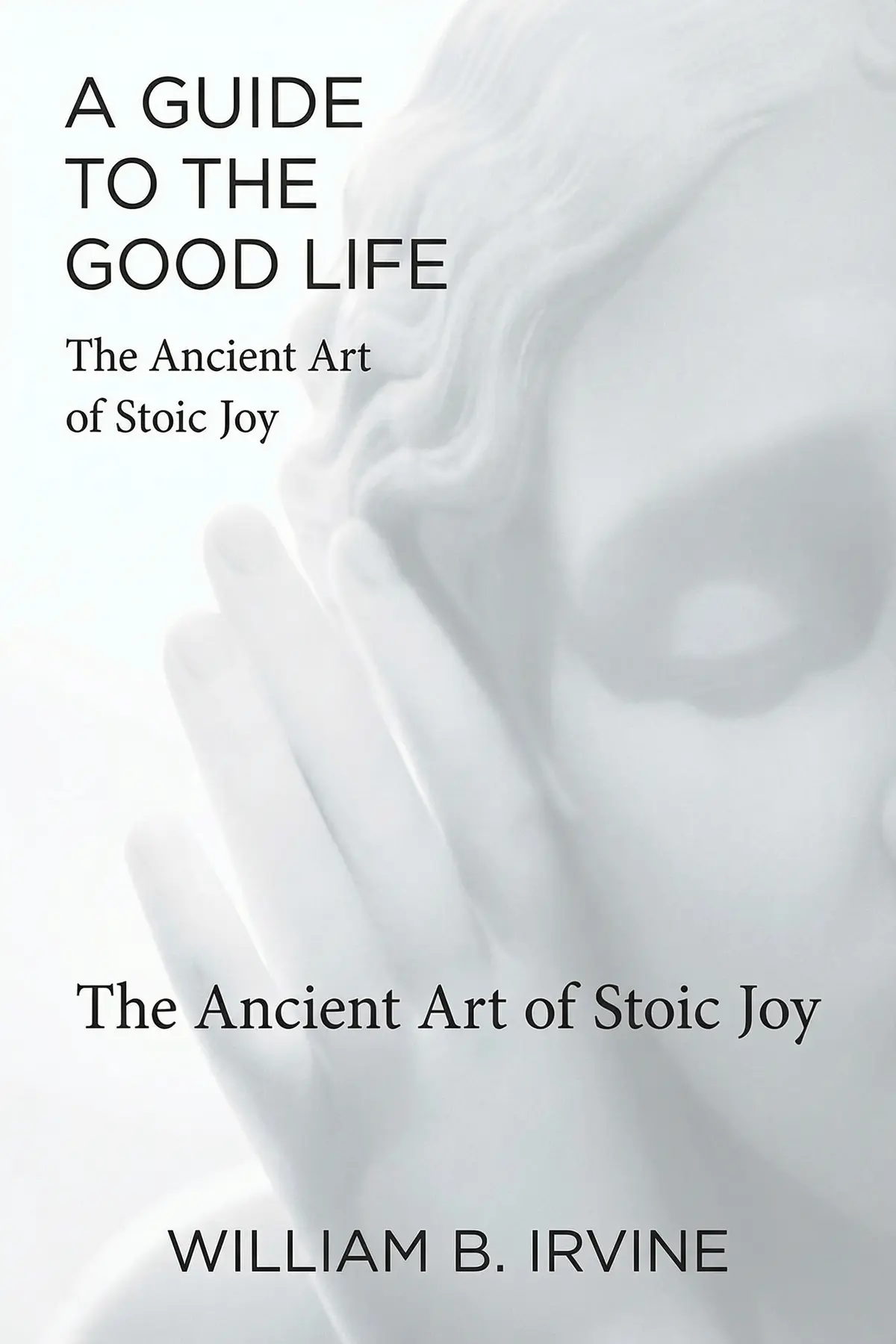
A Guide to the Good Life: The Ancient Art of Stoic Joy
William B. Irvine
A Year with Peter Drucker: 52 Weeks of Coaching for Leadership Effectiveness
Joseph A. Maciariello
A High-Performing Mind: Strengthen Your Mind and Live Your Best Life
Andrew D. Thompson
AUDIO SUMMARY AVAILABLE
Listen to Principles in 15 minutes
Get the key ideas from Principles by Ray Dalio, plus 5,000+ more titles in English and Thai.
- 5,000+ titles
- Listen as much as you want
- 7-day free trial
- Cancel anytime







