
20 min 18 sec
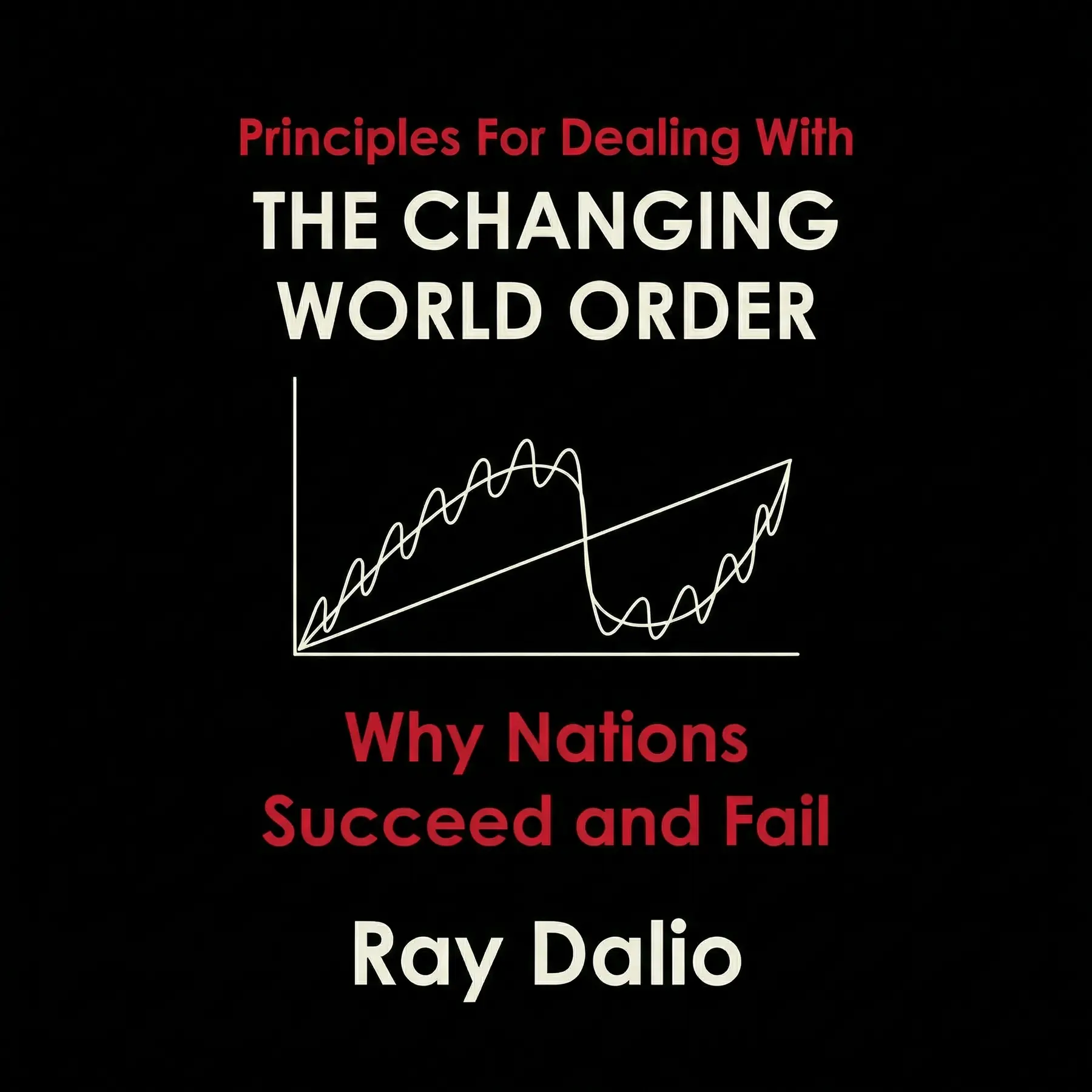
Principles For Dealing With the Changing World Order: Why Nations Succeed and Fail
By Ray Dalio
Explore the historical patterns that drive the rise and fall of global empires. This summary reveals the economic and geopolitical indicators that signal shifts in world power and how to protect your future.
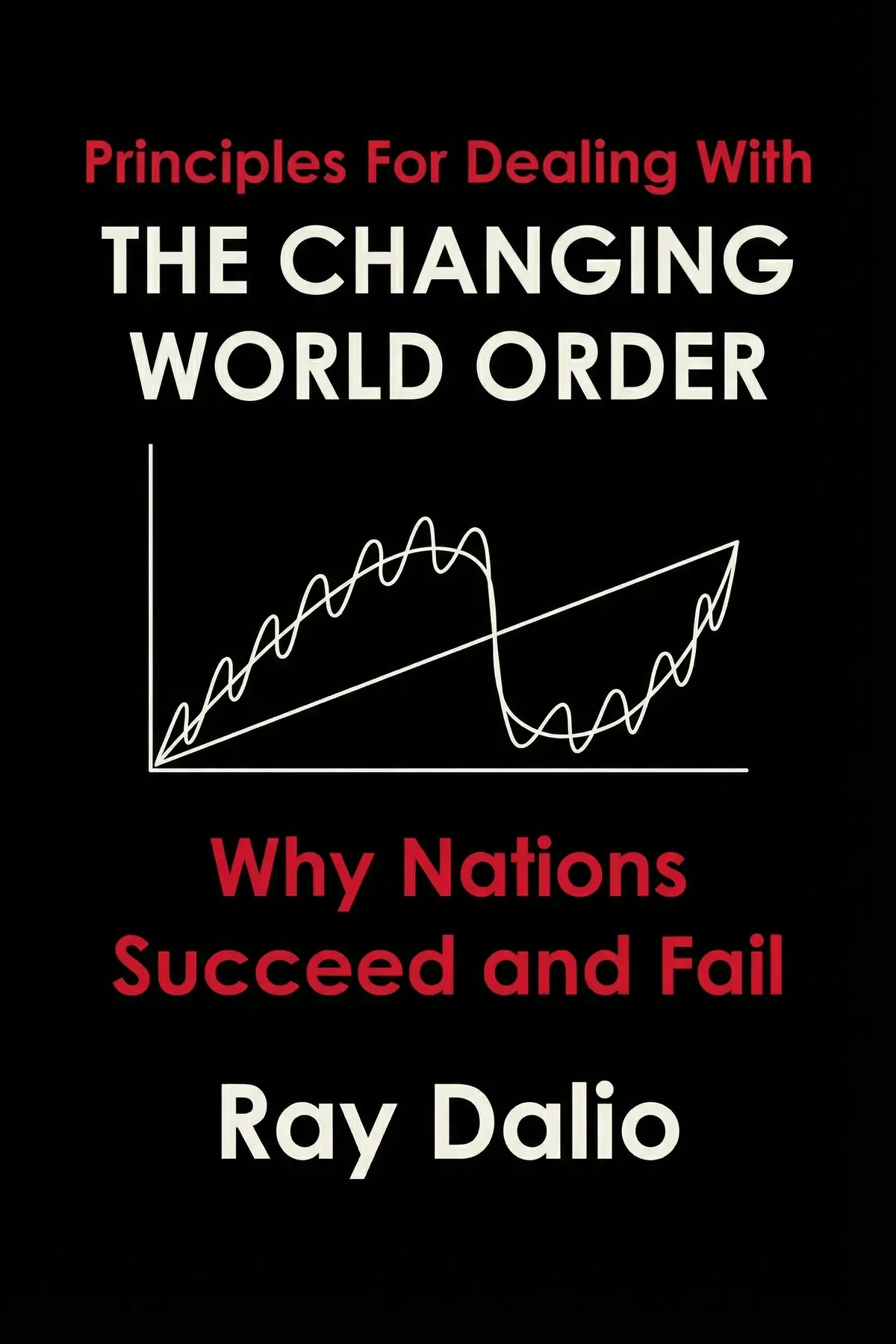
Table of Content
1. Introduction
1 min 48 sec
Throughout history, the rise and fall of great civilizations have often been viewed as unpredictable events, shaped by the whims of individual leaders or the unexpected turns of fate. From the grandeur of Ancient Egypt to the vast reach of the Roman and Ottoman Empires, every dominant power eventually reached a point of decline. This repetition suggests that these aren’t just isolated tragedies, but part of a deeper, more structured rhythm of human history. When we look at the current world order, dominated by American influence, it’s natural to wonder where we stand in this grand timeline. Is the era of Western hegemony nearing its conclusion, or is it merely facing a temporary hurdle?
Understanding these shifts isn’t just an academic exercise for historians; it is a vital tool for anyone looking to secure their future. Ray Dalio’s study of the changing world order offers a framework to decode these historical patterns. By identifying the specific economic and social indicators that precede a nation’s rise or fall, we can better navigate the current geopolitical landscape.
In this exploration, we will look at the mechanics of the ‘Big Cycle’—the predictable wave of peace and prosperity followed by conflict and restructuring. We will examine how educational standards, technological breakthroughs, and financial stability determine a nation’s longevity. We’ll also dive into the modern rivalry between the United States and China, seeing it through the lens of historical precedent. Finally, we’ll discuss how you can prepare for the coming changes by building a resilient approach to your personal finances and investments. If we can see the cycles of the past clearly, we have a much better chance of predicting what the future has in store.
2. The Mechanics of the Big Cycle
2 min 10 sec
Uncover the recurring historical pattern that dictates the longevity of global powers and why most people fail to see the signs of decline before it’s too late.
3. The Ingredients of National Ascent
2 min 24 sec
Explore how nations transform from struggling states into global superpowers through strategic investment in people and infrastructure.
4. The Seeds of Internal Decay
1 min 57 sec
Learn why the very prosperity that makes an empire great eventually leads to its downfall through complacency and rising debt.
5. The Breaking Point of Social Order
1 min 59 sec
Discover how the widening gap between the rich and the poor creates the perfect storm for internal revolution and systemic collapse.
6. The Great Rivalry: US and China
2 min 06 sec
Analyze the modern-day competition between the reigning superpower and its primary challenger through the lens of historical cycles.
7. The Global South and Emerging Wildcards
1 min 45 sec
Understand why the next shift in global power might not be a simple swap between two nations, but a broader redistribution of influence.
8. Technological and Environmental Disruptors
2 min 11 sec
See how rapid advancements in AI and the urgent reality of climate change act as accelerators for the changing world order.
9. Strategic Resilience in a Changing World
2 min 03 sec
Practical advice on how to build a portfolio and a mindset that can withstand the inevitable volatility of a shifting global landscape.
10. Conclusion
1 min 55 sec
The overarching lesson of Ray Dalio’s analysis of the world order is that we are participants in a grand, repeating process. No empire is permanent, and no system is immune to the forces of decay. By looking at the Big Cycle, we see that the challenges we face today—high debt, social inequality, and geopolitical rivalry—are not new phenomena. They are the same pressures that have tested every great civilization before us. While the specific players have changed, the underlying mechanics remain the same.
As the age of American dominance faces significant headwinds and rising powers like China move into the spotlight, it is easy to feel overwhelmed by the scale of the change. However, there is power in understanding. By recognizing the eight indicators of national strength and monitoring the shifts in the cycle, we can move from a state of uncertainty to a state of preparation. The goal is not to fear the decline, but to adapt to the new reality.
In the coming years, resilience will be defined by how well we can diversify our interests and embrace the technological and environmental shifts ahead. Whether through investing in emerging technologies like AI, preparing for the transition to digital currencies, or focusing on climate-resilient regions, the path forward requires a mix of historical wisdom and forward-thinking strategy. History shows us that those who are aware of the cycle are the ones best positioned to survive it. By staying informed, remaining flexible, and focusing on long-term productivity over short-term consumption, you can secure your own stability regardless of which way the global winds blow. The world order is changing, but with a clear set of principles, you can find your way through the turbulence.
About this book
What is this book about?
Throughout history, dominant nations have followed a predictable arc of growth, peak, and eventual decline. This summary examines the mechanical nature of these cycles, often referred to as the Big Cycle, which dictates the stability of the global order. By looking back at the Dutch, British, and American empires, it uncovers the specific markers of national strength—ranging from education and innovation to military power and reserve currency status. Listeners will gain a deeper understanding of the current friction between the United States and China, framed not as a unique event, but as part of a recurring historical process. The summary also explores how modern forces like artificial intelligence, digital currencies, and climate change act as catalysts for future shifts. Ultimately, it provides a strategic framework for individuals and investors to recognize the signs of a changing world and adapt their portfolios to remain resilient in turbulent times.
Book Information
About the Author
Ray Dalio
Ray Dalio is a highly successful investor and hedge fund manager who founded Bridgewater Associates, which grew to be one of the largest hedge funds in the world. He is the author of the bestselling book Principles, sharing the wisdom gained from his extensive career in finance. As of 2020, Dalio was ranked as the world’s 79th wealthiest individual.
Principles: Life and Work
Ray Dalio
Ratings & Reviews
Ratings at a glance
What people think
Listeners consider this title a must-read that offers significant knowledge regarding global economic history while remaining easy to digest. They also appreciate its deep content and revelatory outlook, with one listener pointing out how it dismantles the historical record of emerging empires. However, the caliber of the prose receives mixed feedback; some find it well-crafted, while others characterize the style as simple and unpolished.
Top reviews
Bae
As someone who has always struggled to connect historical dates with modern financial reality, Dalio’s framework was a complete revelation. He distills the rise and fall of empires like the Dutch and British into a predictable, cyclical pattern that makes our current global instability feel less like a random catastrophe and more like a scheduled event. To be fair, the book is quite thick and carries a weight of repetition that might bore some readers, but that’s clearly intentional to drive home his 'Big Cycle' concept. I found his analysis of the eight measures of power—especially education and reserve currency status—to be a fascinating lens through which to view the US-China rivalry. While his tone is clinical, the implications are deeply personal for anyone with a retirement account or a concern for the future of Western hegemony. It’s an essential roadmap for navigating a decade that feels increasingly like 1930. Highly recommended for those who want to see the forest through the trees.
Show moreUbolrat
Picked this up during a period of global uncertainty and found it surprisingly grounding. Dalio has a unique way of looking at the 'machine' of history that feels much more practical than a standard textbook. He focuses heavily on how money and credit cycles drive everything else, which is a perspective often missing from political analysis. The truth is, the world is changing fast, and this book provides a set of markers to help you figure out exactly where we are in the process. I loved the chapters on the 'Century of Humiliation' in China; it really helped me understand why their current leadership acts the way it does. Even if you don't agree with every one of his predictions, the mental models he shares are worth the price of admission alone. It’s a dense read, but the short summaries at the end of each section help keep you on track. It definitely changed how I look at the news.
Show moreCarlos
Finally got around to finishing this, and the way it distills the rise and fall of empires like the Dutch and British into a predictable pattern is masterclass-level work. I’ve read a lot of economic history, but Dalio’s focus on the 'real economy' versus the 'financial economy' provided a fresh perspective that clicked for me. He explains why countries inevitably print money to solve their problems and how that leads to the eventual debasement of their currency. It’s eye-opening to see the same mistakes being made across hundreds of years and multiple continents. While the book is definitely long and at times feels like a series of blog posts stitched together, the insights are profound. The way he breaks down China’s rise—focusing on their long-term strategic thinking versus the US’s short-termism—was particularly compelling. This isn't just a book for investors; it’s for anyone who wants to understand the tectonic shifts happening in our world today. Five stars for the big-picture clarity.
Show moreEnd
History doesn’t repeat, but it certainly rhymes—Dalio uses this logic to paint a vivid, if somewhat terrifying, picture of our current global trajectory. I loved how he simplified the complex relationship between education, innovation, and military strength. It’s a very easy-to-follow read despite the heavy subject matter, mostly because he uses clear language and avoids unnecessary jargon. He makes a compelling case that we are currently in the declining phase of the American empire, citing our massive debt and internal social divisions as primary indicators. Not everyone will want to hear his message, but ignoring it seems like a mistake. The book is a bit bulky, and I did find myself skipping some of the more repetitive sections toward the end, but the overall impact was massive. It’s easily one of the most thought-provoking books I’ve read in years. If you want to know what's coming, start here.
Show moreSiriporn
Ever wonder why our economy feels so fragile despite the stock market's performance? Dalio’s deep dive into the 'Big Cycle' provides the answer by looking at the last 500 years of financial history. I was particularly struck by his analysis of the transition from the British Pound to the US Dollar as the world’s reserve currency. It didn't happen overnight, and he shows exactly how the seeds of that change were sown decades earlier. Personally, I found the book to be a wake-up call regarding my own personal finances and where I choose to hold my assets. While some might find his tone a bit dry or his charts a bit cluttered, the underlying logic is incredibly sound. He doesn't just tell you what happened; he explains the cause-and-effect relationships that drive these massive shifts. It’s an essential read for anyone trying to make sense of the current transition in global power. A truly eye-opening experience.
Show moreDaranee
After hearing so much buzz about Bridgewater’s internal research, I finally dove into this massive volume, and I’m glad I did. Dalio manages to take complex macroeconomic shifts and turn them into a digestible narrative about debt, internal conflict, and external competition. Frankly, the writing style isn't going to win any Pulitzer Prizes; it’s plain and sometimes a bit sloppy with the editing, but the raw insights are where the value lies. I particularly appreciated the walkthrough of the Dutch Guilder’s collapse, as it provides a grim but necessary parallel to the current state of the US Dollar. However, I have to agree with some critics that the time-series graphs are a bit of a mess and occasionally lack clear units, which makes the data harder to verify on the fly. Despite those technical flaws, the central thesis remains incredibly thought-provoking and forced me to re-evaluate my long-term investment strategy. It’s a bit repetitive, but the message sticks.
Show morePornpimon
Is the US actually in decline, or are we just in a standard 'Big Cycle' transition? That’s the question Dalio tackles with a mix of data-heavy analysis and historical anecdotes. I found the section on the 'internal order'—basically how a country treats its own people—to be the most relevant part of the book given today's polarized political climate. He warns that when the wealth gap becomes too wide, populist movements inevitably rise, leading to internal conflict that weakens the empire. It’s a sobering thought. My only real gripe is that he tends to repeat himself every twenty pages, which makes the book feel longer than it needs to be. Also, some of the charts are incredibly cluttered and hard to read on a Kindle. Still, the core message about the dangers of excessive debt and money printing is something every voter and investor needs to hear. It’s a solid, albeit slightly unpolished, guide to the future.
Show moreParichat
Look, you don't have to agree with Dalio’s personal politics or his perceived bias toward the Chinese Communist Party to find value here. The man has made billions by spotting patterns, and he lays those patterns out with remarkable clarity. The book is basically a crash course in how reserve currencies function and why they eventually fail when the issuing country overextends itself. I found the comparison between the 1930s and our current era particularly chilling. To be fair, the editing is a bit rough, and he has a habit of using 'Principles' as a catch-all term that can get repetitive. Some of his historical claims are definitely debatable, but the broad strokes of his argument about debt cycles are hard to ignore. It’s not a perfect book, but it’s an important one that forces you to think about the long-term survival of the current world order. Definitely a conversation starter.
Show moreLily
The truth is, Dalio is a brilliant billionaire, but this often feels like he’s 'talking his own book' to appease his Chinese investment interests. He spends a lot of time praising China’s efficiency while glossing over their human rights record and the brittleness of their totalitarian system. As a financial economist, I found his cycles to be interesting but nothing new—anyone familiar with Kondratieff waves or Peter Turchin’s work will see the similarities. The book is also incredibly repetitive, almost as if no one was allowed to edit his original drafts. Some of the graphs are outright bad, with poorly marked axes that make the data look more certain than it actually is. That said, his explanation of how reserve currency status provides a 'hidden' advantage to the US is very well done. It’s a mixed bag: great for understanding debt cycles, but take his geopolitical predictions with a massive grain of salt.
Show moreBella
Wow. I really wanted to like this, but the sheer number of historical inaccuracies makes it hard to trust the underlying thesis. As a history buff, I was immediately pulled out of the narrative when Dalio muddled the timeline of the gold standard and misrepresented the impact of the Treaty of Versailles. It feels like he’s trying to force-fit complex, messy human events into a neat mathematical model that doesn't quite exist. The hubris on display here is staggering—he speaks with the authority of a scholar but lacks the factual rigor to back it up. Not gonna lie, his take on China felt incredibly lopsided, almost as if he’s ignoring their demographic crisis and internal corruption just to make his 'Big Cycle' chart look more symmetrical. The book is way too long for the amount of actual information it provides, and the constant self-references to his other 'Principles' felt like a marketing gimmick. If you want a real understanding of geopolitics, look elsewhere.
Show moreReaders also enjoyed

A Biography of Loneliness: The History of an Emotion
Fay Bound Alberti
Alexander Hamilton
Ron Chernow
1929: Inside the Greatest Crash in Wall Street History--and How It
Andrew Ross Sorkin
Alexander the Great
Philip Freeman
23 Things They Don’t Tell You About Capitalism
Ha-Joon Chang
A Little History of Economics
Niall Kishtainy
AUDIO SUMMARY AVAILABLE
Listen to Principles For Dealing With the Changing World Order in 15 minutes
Get the key ideas from Principles For Dealing With the Changing World Order by Ray Dalio, plus 5,000+ more titles in English and Thai.
- 5,000+ titles
- Listen as much as you want
- 7-day free trial
- Cancel anytime







