Principles: Life and Work
Ray Dalio
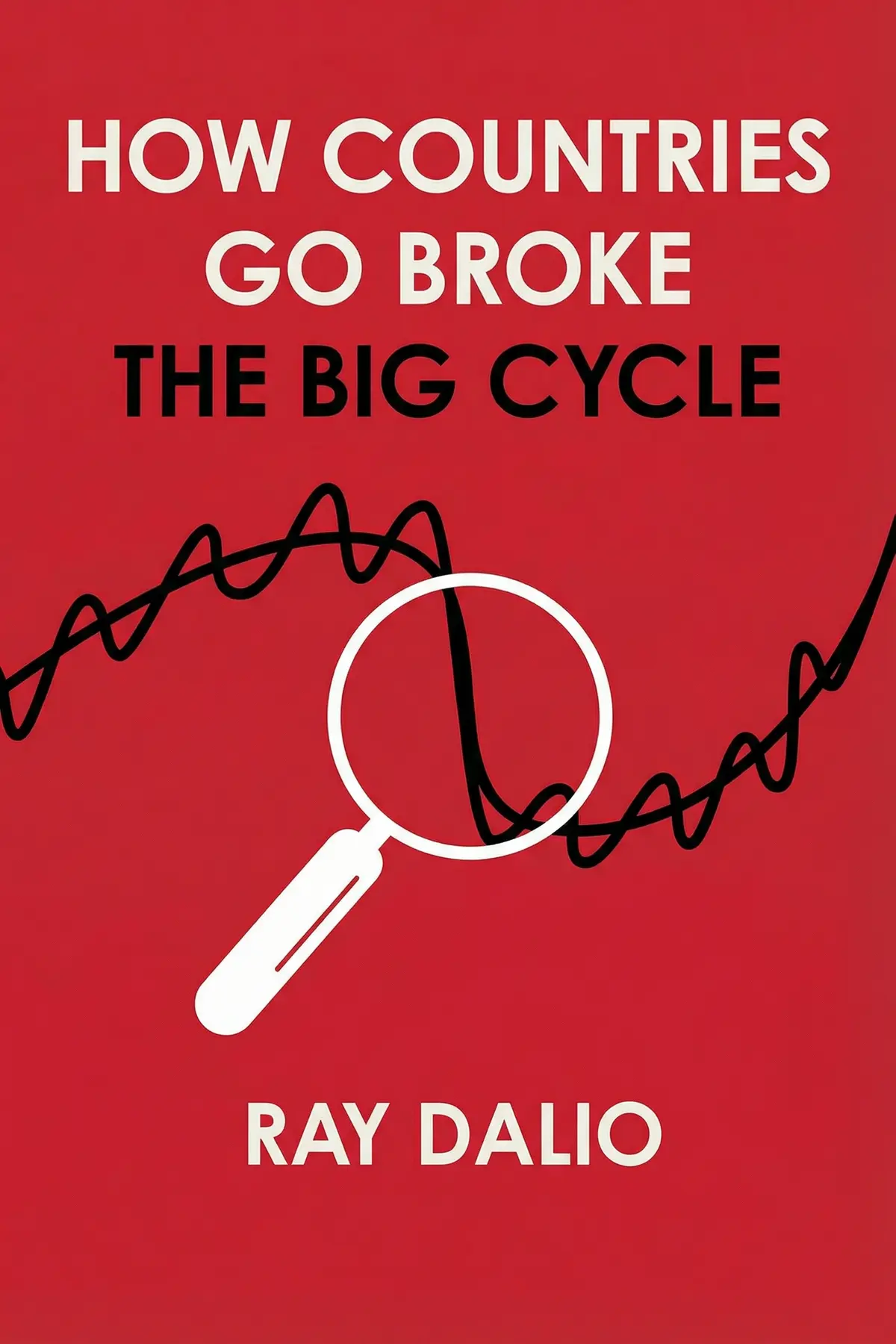
An analytical look at the predictable cycles that lead empires from prosperity to bankruptcy. Ray Dalio reveals the financial, political, and historical patterns that signal when a nation is nearing collapse.
2 min 03 sec
Throughout history, great empires have risen with confidence, only to eventually buckle under the weight of their own success. We’ve seen it with the Dutch, who once dominated world trade, and the British, whose empire once spanned the globe. Today, many wonder if the United States is following a similar path. But these declines aren’t just bad luck or random accidents. According to legendary investor Ray Dalio, they are the result of deeply ingrained, repeating patterns known as Big Cycles.
In this exploration of the mechanics behind national bankruptcy, we’re going to look at the economic indicators and financial policies that drive a country toward collapse. Dalio doesn’t just focus on the present; he looks back through centuries of data to show how debt, internal conflict, and shifting global power always move in tandem. It’s a story of how credit fuels growth until it becomes an unpayable burden, and how nations often choose to print money rather than face the harsh reality of their balance sheets.
As we walk through these concepts, you’ll start to see that history isn’t just a series of dates—it’s a roadmap. By understanding the cycles of the past, we can gain a clearer perspective on the chaos of the present. We’ll look at the short-term and long-term debt cycles that act as the heartbeat of the global economy, and the nine specific stages that lead a government from prosperity to ruin. We will also examine the five massive forces—ranging from technology to geopolitics—that determine who stays on top and who falls behind.
Whether you’re an investor trying to protect your assets or simply someone trying to make sense of the headlines, this journey through the rise and fall of nations offers a vital framework for what’s ahead. We are living in a time of high debt, social division, and changing world orders, and the signs are there for those who know how to read them. Let’s dive in and see what the past can tell us about the future of our financial world.
3 min 17 sec
Explore the hidden mechanics of credit that drive our economy through predictable waves of growth and contraction over both short and long periods of time.
3 min 32 sec
Follow the step-by-step progression of a national financial crisis, from the first signs of private debt to the ultimate devaluation of a currency.
3 min 30 sec
Discover how debt, politics, technology, and nature work together as a single complex system to shape the rise and fall of global powers.
3 min 54 sec
Trace the evolution of the American financial system from the creation of the Federal Reserve to the collapse of the gold standard.
3 min 40 sec
Understand the current era of economic management where the lines between government spending and central banking have completely blurred.
3 min 11 sec
Learn about the specific financial warning signs to watch for and the proposed ‘3% Solution’ that could prevent a national debt disaster.
3 min 30 sec
As the 80-year cycle nears its end, discover why global stability is wavering and what history tells us about the rise of nationalism and conflict.
1 min 52 sec
The rise and fall of nations is not a mystery; it is a cycle that has repeated for as long as humans have organized into societies. Through the lens of Ray Dalio’s research, we can see that ‘going broke’ is the final stage of a long process of borrowing more than we earn and ignoring the fundamental rules of accounting. We have seen how debt cycles drive the heartbeat of the economy, how internal political strife emerges from wealth inequality, and how the global order shifts when a dominant power becomes financially overextended.
As of 2025, the signs are unmistakable. The United States is deep into the late stages of a 80-year cycle. The coordination between the government and the central bank, known as Monetary Policy 3, has kept the system afloat but at the cost of high debt and rising inflation. The ‘3 Percent Solution’ offers a potential exit ramp, but it requires a level of national unity that is currently in short supply. Without a proactive shift, history suggests that a more chaotic ‘reset’—involving debt devaluation and political transformation—is the likely outcome.
However, understanding these cycles isn’t about fostering despair; it’s about gaining clarity. When you know that these patterns are recurring, you can make better decisions for your own financial security. You can look past the daily noise of the news and see the larger forces at play. History is a cycle of growth, excess, crisis, and renewal. By recognizing that we are in a period of transition, we can prepare for the challenges ahead and, hopefully, contribute to a more stable and prosperous cycle on the other side. The lessons of the past are there to guide us, if only we are willing to pay attention to the patterns of how countries go broke.
Have you ever wondered why the world's most powerful nations eventually lose their grip? In this exploration of global history and macroeconomics, we look at the mechanics of national decline. By studying centuries of data, Ray Dalio identifies the 'Big Cycles'—repeating patterns of debt accumulation, internal strife, and shifting global dominance that have unseated empires from the Dutch to the British. This summary breaks down the nine stages of financial ruin, explaining how debt spirals transition from manageable problems into existential crises. It also examines the interconnected nature of economic policy, technological disruption, and geopolitical tension. You will learn about the current state of the American economy, the implications of modern monetary shifts, and the warning signs that suggest we are nearing the end of a long-term historical arc. More than just a history lesson, this is a framework for understanding the forces shaping our financial future.
Ray Dalio is the founder of Bridgewater Associates, one of the world’s largest investment firms. He's known for his deep research into economic history and his practical frameworks for understanding markets, debt cycles, and global power shifts. He’s also a bestselling author, sharing insights from decades of investing and studying the rise and fall of empires.
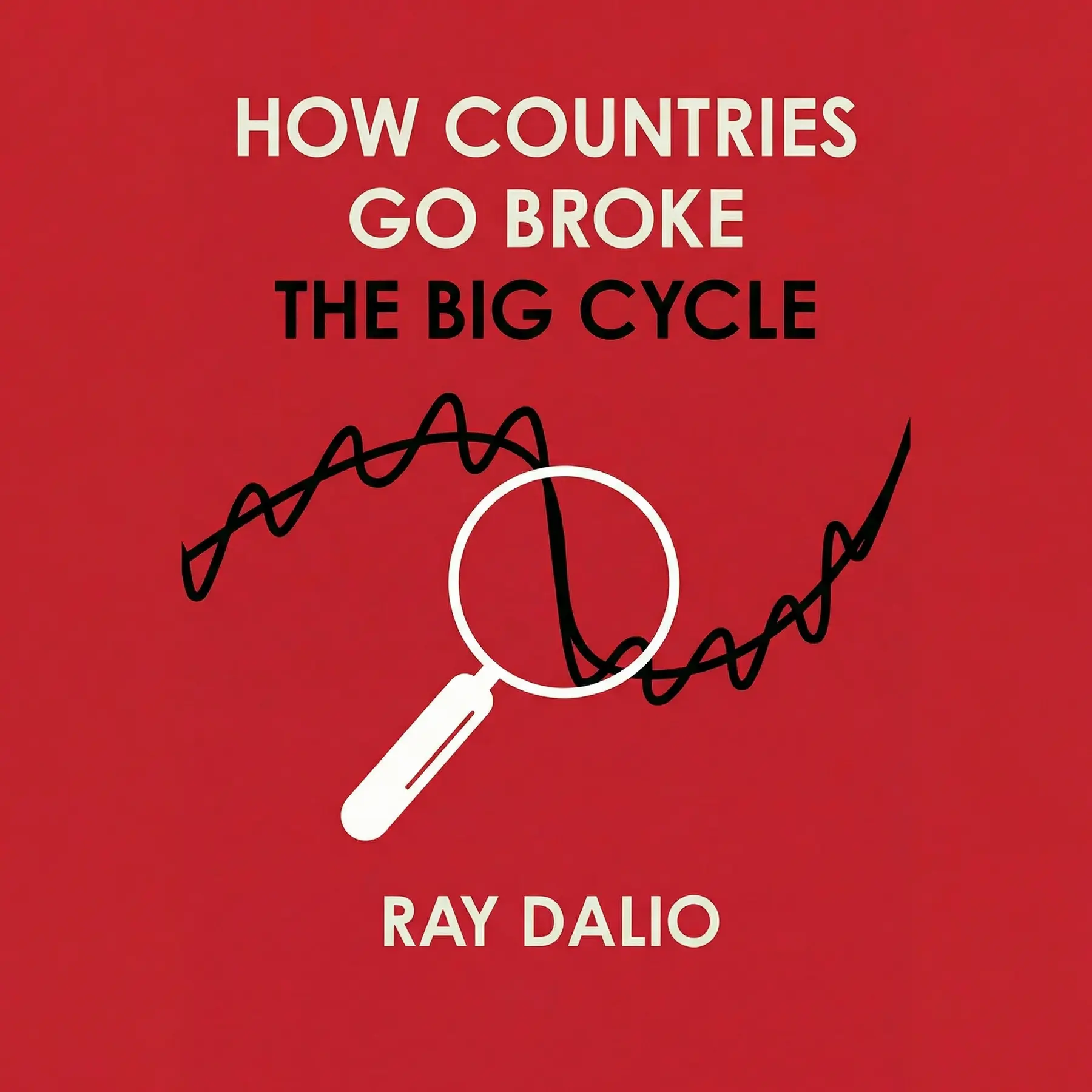
Listeners feel this work offers excellent perspective on today's global economy and consider it a valuable investment. They also appreciate its accessible nature, with one listener remarking it reads like a thriller, and its high-quality writing, noting the inclusion of bold type passages. Additionally, the economic substance is well-received, as one listener highlights the thorough analysis of government debt. However, the more technical sections receive mixed reactions, with several listeners finding them quite complex, though the material is praised for its exceptional synthesis.
Ray Dalio has a gift for taking the abstract, terrifying machinery of global finance and making it feel like a high-stakes drama. While some might find the heavy use of bold passages a bit distracting, I thought it helped emphasize the most critical takeaways. The book covers the "Big Debt Cycle" with a level of granular detail that explains why our current economic trajectory feels so precarious. Truth is, the sections on the five forces—especially the interplay between internal politics and debt—are worth the price of admission alone. It reads almost like a thriller at points, which is a rare feat for a book filled with yield curves and debt-to-GDP ratios. Even if you don't agree with every historical analogy, the overarching framework is impossible to ignore. It’s an essential briefing for anyone trying to navigate the messy transition into a new world order.
Show moreEvery page of this book feels like a wake-up call for anyone holding long-term paper assets in an era of unprecedented fiat expansion. Dalio dives deep into the "uncontrollable unravelling" that happens when debt growth outpaces real income for too long. To be blunt, the outlook is grim, but the clarity he provides is invaluable for wealth preservation. The chapter on the mechanics of money and credit is worth every penny because it strips away the jargon used by central banks. I loved the "bubble indicator" section; it’s a practical tool that most readers can actually apply to the current market. Some might call him a doomer, but the logic is grounded in historical reality and hard numbers. If we are indeed moving back to a world of "direct, brutal strength," this book is the survival manual you didn’t know you needed.
Show moreDalio manages to distill centuries of fiscal history into a readable roadmap that explains exactly why the current world order is shifting. The transition from the post-WW2 era of liberalism to a more fractured, autocracy-prone world is laid out with chilling precision. I was particularly struck by the "archetypical sequence" of how countries go broke—first the debt piles up, then the printing presses start, and finally the currency loses its soul. The visuals and charts are top-notch, providing a necessary anchor for the more abstract concepts. While the text is heavy on data, it never feels overwhelming because of the clear, utilitarian writing style. It is a formidable report on the state of global finance. Even if you only read the first few chapters on the "Big Debt Cycle," you will come away with a much clearer understanding of why our current path is unsustainable.
Show moreTo understand the next decade, you have to understand the mechanics of how currencies lose their value and empires overextend. This book provides that blueprint. Dalio’s focus on the "five big forces" gives a holistic view that most economists miss by focusing only on interest rates. I particularly liked the discussion on how technology and acts of nature act as wildcards in the debt cycle. The book is well-written and the use of bold type allows for a quick skim if you’re already familiar with the basics. Look, hope is not a strategy, and this book hammers that point home with every chart and equation. It's an intellectual tome that manages to stay accessible enough for anyone with a basic interest in macroeconomics. If you're looking for a clear-eyed analysis of why countries fail, this is the most comprehensive guide available today.
Show moreAfter following Dalio’s LinkedIn articles for years, I finally dove into this full text, and the synthesis provided here is truly impressive. The book isn’t just about money; it’s about the underlying mechanics of power and the inevitable decline of overextended empires. Some chapters get incredibly technical, diving deep into fiscal and monetary dynamics that might overwhelm a layperson, but the visuals are outstandingly helpful. I particularly appreciated the detailed analysis of government debt and how it triggers a "painful reversal" once interest burdens become unmanageable. Look, the historical data might be subject to interpretation, but the logic regarding currency devaluation is hard to argue with. It’s a dense economist’s report masquerading as a guide for investors, and it succeeds on both fronts. Highly recommended for those who want to see the world through a more objective, data-driven lens.
Show moreThe way the book utilizes bold typeface to highlight core principles makes it incredibly easy to navigate for a busy professional. Dalio has a unique way of breaking down complex sovereign credit issues into digestible bits, even if the "archetypical sequence" feels a bit rigid at times. I was particularly fascinated by the section on Japan; it challenges the traditional view that high debt must immediately lead to collapse. The book highlights how countries can "kick the can" for decades, though the eventual reckoning remains inevitable. Not gonna lie, some of the math in the middle chapters had me reaching for my old economics textbooks, but it was worth the effort. It’s a well-written, methodical look at the arithmetic of failure. While his solutions for fiscal sanity seem politically impossible, identifying the symptoms of the debt spiral is a vital service for any modern investor.
Show morePicked this up expecting a dry textbook, but I was surprised by how much the "Big Cycle" framework actually clarified current events. The author describes the problem of sovereign debt with the kind of verbal flourishes that make you realize just how high the stakes are. Honestly, I found the discussion on the status of the reserve currency to be the most compelling part. It isn’t just about economics; it’s about how internal conflict and external geopolitics accelerate the decline of a currency’s value. The writing is methodical, yet it manages to capture the morbid appeal of watching an empire overextend itself. My only gripe is that the solutions offered—like cutting spending and raising taxes—feel like a fantasy in today's political climate. Regardless, the book is a must-read for anyone who wants to look past the headlines and see the underlying trends.
Show moreFrankly, the technical depth in the middle chapters might scare off the casual reader, but the insights are too valuable to ignore. After page 100, the book really starts to "cook" as Dalio applies his theories to current world powers. He tackles the excessive accumulation of government borrowing with a rigor that is rare in today’s soundbite-driven media. I found the distinction between debt assets and debt liabilities to be a crucial takeaway for anyone managing a portfolio. The book isn't perfect—the reliance on an 80-year cycle can feel like overfitting historical data to a specific narrative. However, the core premise that we are in a "turbulent stage" is backed by enough data to make even the most optimistic reader pause. It’s a high-level briefing that forces you to confront the reality of our fiscal situation without the rose-tinted glasses of modern monetary theory.
Show moreIs it a masterpiece or just a very expensive briefing document for the Davos crowd? Personally, I found it a bit of both. The text is dry and utilitarian, clearly targeting a financial-world readership that cares more about spreadsheets than prose. Dalio’s track record brings a level of credibility that a typical academic simply cannot match, especially when he discusses the "long-term debt cycle." However, I felt the book occasionally glossed over the human element of these crises in favor of historical patterns. The five big forces are a solid framework, but the 80-year cycle feels a bit arbitrary when you consider how much technology has changed the variables. Still, the synthesis of data is outstanding, and the focus on the "Big Debt Cycle" provides a necessary warning. It’s a dense read, but if you want to understand why things are getting so turbulent, it’s a solid starting point.
Show moreThis feels like a repetitive remix of his previous work rather than a fresh contribution to economic literature. I found the first hundred pages to be almost verbatim from The Changing World Order, which was frustrating given the hype surrounding this release. Dalio makes grand claims about an 80-year cycle, but the evidence often feels cherry-picked to fit a predetermined narrative. To be fair, the graphs are visually appealing, but they often serve to illustrate a point rather than prove it scientifically. The political sections feel a bit naive and were already starting to seem dated by the time I finished the chapter. If you’ve never read his "Principles" or his previous macro-economic deep dives, you might find some value here. However, for those already familiar with his "Big Cycle" theory, there isn't much new material to justify the investment of time.
Show more
Andrew Ross Sorkin
Ha-Joon Chang
Niall Kishtainy
William J. Bernstein

Yanis Varoufakis
AUDIO SUMMARY AVAILABLE
Get the key ideas from How Countries Go Broke by Ray Dalio, plus 5,000+ more titles in English and Thai.