
19 min 07 sec
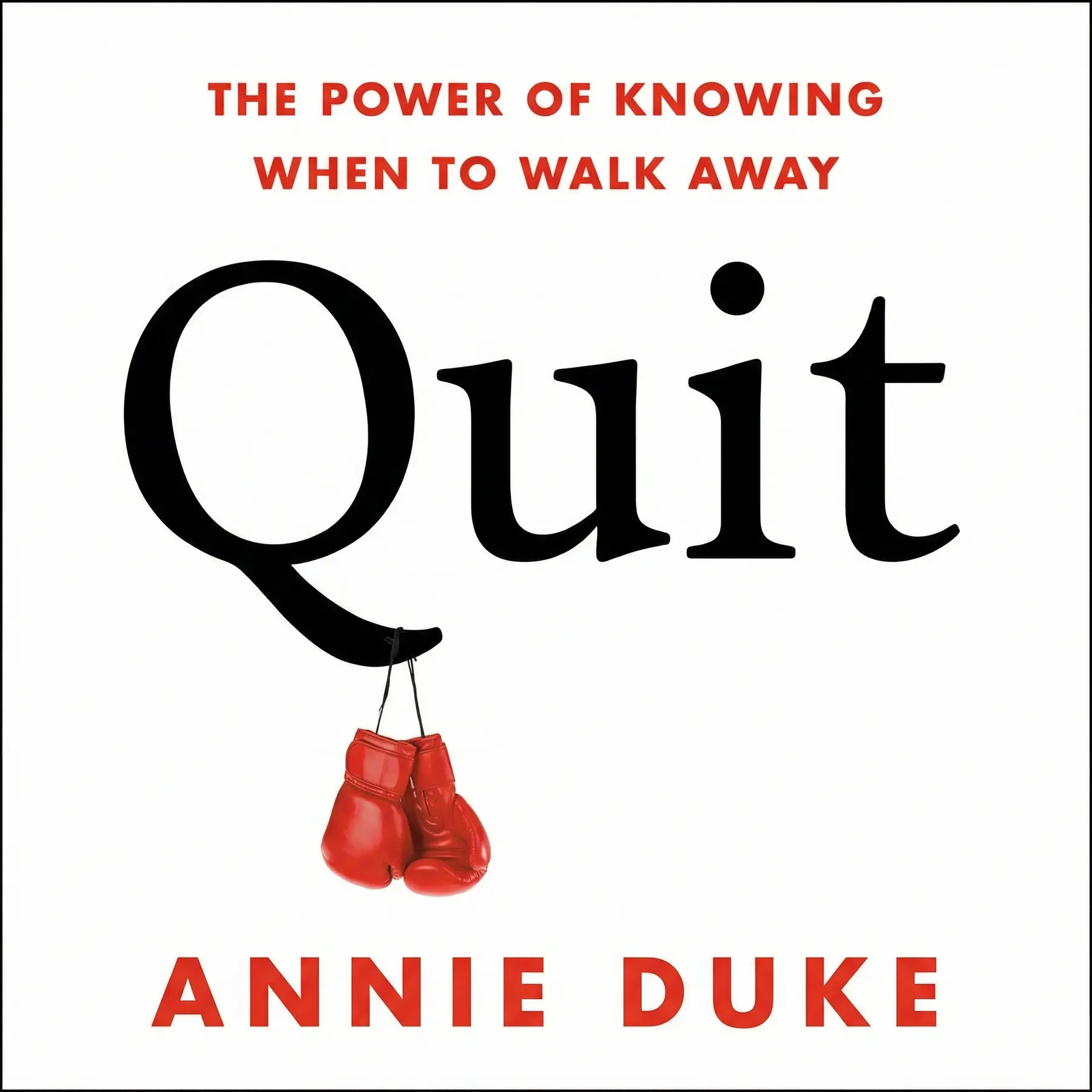
Quit: The Power of Knowing When to Walk Away
By Annie Duke
Examine the strategic advantages of walking away. This guide explores how quitting is a high-level decision-making skill that prevents waste and opens doors to superior opportunities and personal growth.
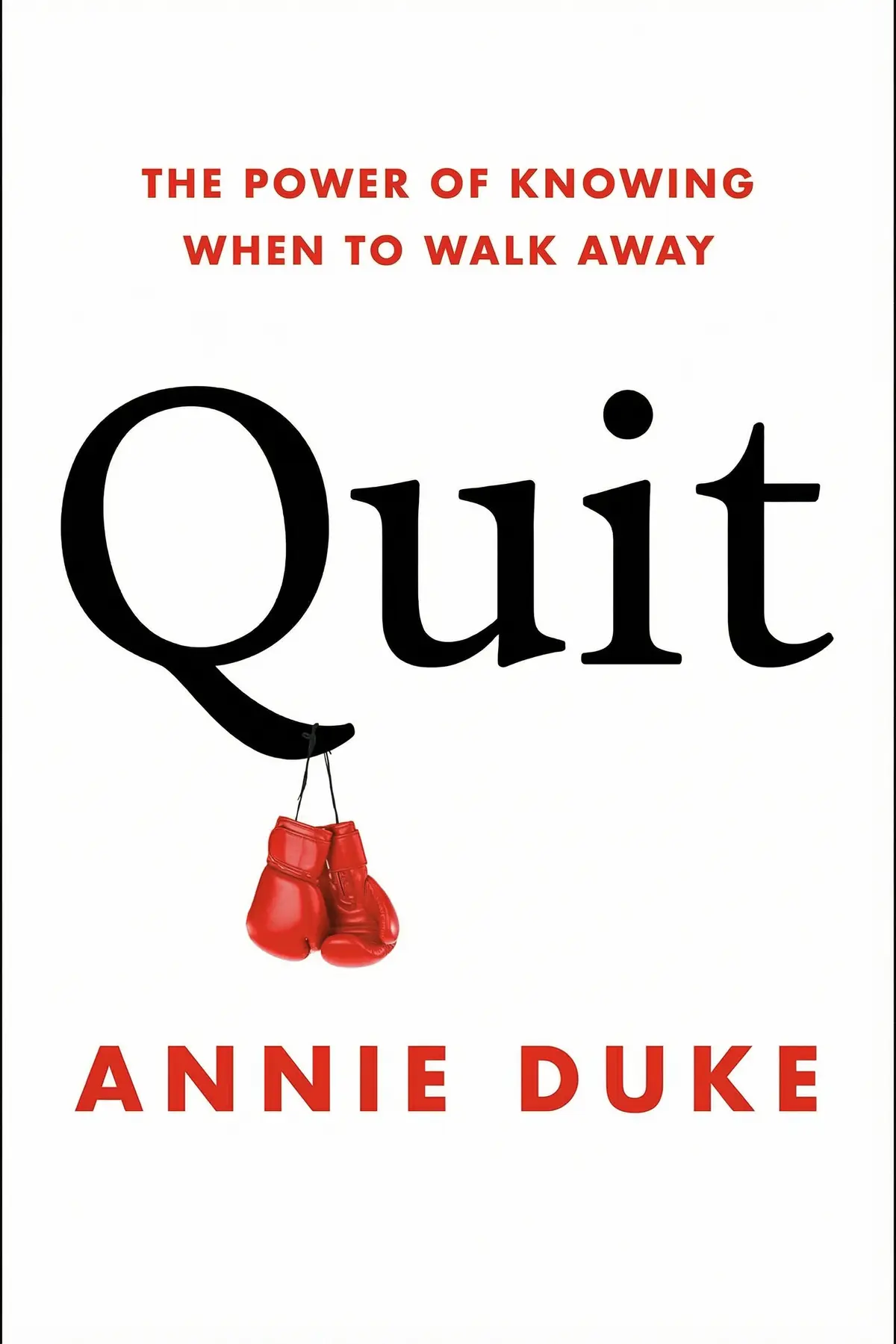
Table of Content
1. Introduction
2 min 03 sec
There is a deeply ingrained mantra in our culture that tells us winners never quit and quitters never win. From a young age, we are taught that perseverance is the ultimate virtue and that success is simply a matter of outlasting the competition. We hold up figures who pushed through impossible odds as heroes, while those who walked away are often forgotten or dismissed as lacking ‘grit.’ But what if this cultural obsession with staying the course is actually holding you back? What if the ability to walk away is not a sign of weakness, but one of the most sophisticated skills a person can possess?
Think about the typical advice given to someone struggling with a project or a career path. Usually, it’s a variation of ‘just keep going’ or ‘don’t give up five minutes before the miracle happens.’ While determination is important, there is a dark side to blind persistence. When we refuse to quit, we are essentially choosing to continue pouring our limited time, energy, and money into a path that may no longer be serving us. By saying ‘yes’ to staying in a losing situation, we are automatically saying ‘no’ to every other opportunity that could have been.
In this exploration of Annie Duke’s insights, we are going to flip the script on abandonment. We will look at why our brains are hardwired to keep us stuck and how the most successful people in the world—from elite poker players to innovative entrepreneurs—actually quit more often than the average person. The goal here isn’t to encourage laziness; it’s to help you identify the point at which your effort turns into waste.
We’ll dive into the psychological traps like the sunk cost fallacy and the endowment effect that make us feel like we’re losing something when we walk away, even when that ‘something’ is a sinking ship. We will also learn practical frameworks to help you make these tough calls before it’s too late. By the end of this journey, you’ll see that quitting isn’t the opposite of success; it’s a necessary part of the path toward it. Let’s change the way we look at the exit door.
2. The Strategic Value of Folding
2 min 22 sec
Explore why professional poker players walk away from most hands and how this calculated restraint separates the elite from the amateurs.
3. Opportunity Cost and the Logic of Pivoting
2 min 28 sec
Discover how a failing game company transformed into a multi-billion dollar communications giant by choosing to walk away at the peak of their effort.
4. Overcoming the Sunk Cost Trap
2 min 38 sec
Unpack the psychological ‘optical illusion’ that forces us to finish bad movies, stay in wrong careers, and even prolong unwinnable wars.
5. The Weight of Identity on Decision Making
2 min 39 sec
Learn how our sense of self can become an anchor that drags down our success, and why breaking free from who we ‘are’ is essential for growth.
6. Monkeys, Pedestals, and Kill Criteria
2 min 39 sec
Discover the ‘Alphabet X’ strategy for identifying fatal flaws early and learn how to set ‘kill criteria’ to take the emotion out of quitting.
7. The Finish Line Trap and Flexible Goals
2 min 25 sec
Understand why rigid goals can actually be dangerous and how to use ‘unless’ clauses to stay agile in an unpredictable world.
8. Conclusion
1 min 53 sec
As we wrap up this look into the power of walking away, the most important takeaway is a fundamental shift in how we define failure. We have been conditioned to think that quitting is the same as losing, but as we’ve seen, the true loss comes from staying in a situation that has no future. Success is not a straight line of constant persistence; it is a series of strategic choices about where to put your limited resources. The most successful people aren’t those who never quit; they are the ones who quit the wrong things so they can double down on the right things.
We’ve explored the psychological gravity of sunk costs and how our very identity can keep us anchored to a sinking ship. We’ve looked at the importance of tackling the ‘monkey’ before building the ‘pedestal’ and the necessity of setting kill criteria before we are too emotionally invested to see the truth. These aren’t just business tactics; they are life skills that can save you years of frustration and thousands of dollars in wasted effort.
If you want to start applying this today, consider finding yourself a ‘quitting coach.’ This is someone—a friend, a mentor, or a colleague—who isn’t emotionally involved in your projects and is willing to tell you the hard truth. We are often the last people to see our own biases. We need someone who can look at our situation from the outside and ask, ‘If you weren’t already doing this, would you start doing it today?’ If the answer is no, then your coach can help you find the courage to walk away.
Remember, your life is a portfolio of bets. Some will pay off, and many won’t. The secret to a life well-lived isn’t winning every bet; it’s knowing when to take your chips off the table so you have enough left to play the next hand. Quitting is the tool that gives you that power. Use it wisely, and you’ll find that the exit door is often the fastest way to the next great opportunity.
About this book
What is this book about?
Most people view walking away as a sign of failure or a lack of character, but that perspective ignores the reality of risk and opportunity. This summary explores the cognitive biases that keep us trapped in losing ventures, from failing businesses to stagnant relationships. By understanding why we stay too long, we can learn to treat quitting as a powerful tool for success. Through various case studies and psychological frameworks, the promise of this work is a total shift in mindset. You will learn to calculate the expected value of your paths and set clear criteria for when to fold. Ultimately, mastering the art of the exit allows you to redirect your most valuable resources—time, money, and energy—toward the things that truly matter.
Book Information
About the Author
Annie Duke
Annie Duke has spent her professional life mastering the science of decision-making under pressure. She established herself as a top-tier professional poker player, earning over $4 million in career winnings and securing a World Series of Poker Tournament of Champions title. Transitioning from the poker table to the world of consulting and literature, she has become a renowned expert on risk. She is also the author of the best-selling books Thinking in Bets and How to Decide.
Ratings & Reviews
Ratings at a glance
What people think
Listeners find this work highly beneficial and well-composed, commending its actionable advice and relatable life stories. Furthermore, they appreciate the intellectually stimulating material, with one listener observing how it clarifies the psychological reasons for persisting for too long. The book also earns praise for its breakdown of cognitive biases, as one review emphasizes the inclusion of techniques for deciding with confidence. Nevertheless, the caliber of the author’s writing draws mixed responses from listeners.
Top reviews
Brahim
This book is an absolute game-changer for anyone paralyzed by the fear of walking away from a project or career. Annie Duke expertly dismantles the 'grit' narrative that our culture obsesses over, showing that knowing when to fold is just as vital as knowing when to hold. I was particularly struck by the concept of 'kill criteria'—setting hard milestones before you’re emotionally compromised by the heat of the moment. The examples, like the Everest climbers or Mohammed Ali, provide a vivid, almost haunting look at what happens when we ignore the signs to stop. Frankly, it’s rare to find a business-adjacent book that offers such immediate, actionable tools for better decision-making. You might feel like you're quitting too early, but Duke proves that’s often exactly the right time to move on. Knowing when to walk away is incredibly hard, yet this book makes the process feel systematic and rational.
Show moreNoi
As someone who has struggled with the guilt of leaving a high-stakes startup, this book felt like a much-needed therapy session. Duke explains the science of quitting in a way that is both intellectually stimulating and deeply relatable. She highlights how our identity is often tied to 'sticking it out,' making the act of walking away feel like a personal failure rather than a strategic move. The chapter on how we stop tracking information once we quit was a total lightbulb moment for me. Truth is, we deprive ourselves of so much learning when we refuse to look back at our abandoned paths. This should be required reading for every entrepreneur and manager out there. It’s not just about giving up; it’s about having the courage to reallocate your most precious resource—time. Our culture celebrates sticking at it, but this book celebrates the wisdom of the exit.
Show moreEnd
Wow, I didn't expect to feel so seen by a book about decision theory. Duke’s writing style is accessible and engaging, making complex ideas like the 'sunk cost fallacy' feel like common sense. I loved the way she used the Kenny Rogers song as a framing device for the importance of folding. It’s a powerful reminder that the best performers aren't just the ones who work the hardest, but the ones who know when their energy is being wasted. Personally, the most helpful part was the advice on finding a 'quitting coach'—someone who can stay objective when you're too deep in the weeds. If you’re currently stuck in a 'waiting to see' loop, pick this up immediately. The book provides tools to make confident choices without the usual soul-crushing regret. It really helps you realize that the summit isn't everything if the cost is too high.
Show moreSoontorn
Have you ever stayed in a job or a relationship long after you knew it was over just because you didn't want to feel like a failure? This book explains exactly why we do that and, more importantly, how to stop. Duke’s approach is refreshing because she doesn't treat quitting as a weakness, but as a sophisticated skill that requires practice. The way she breaks down the 'monkeys and pedestals' concept for project management was incredibly insightful. It changed how I approach my daily tasks and long-term goals almost immediately. Not gonna lie, I’ve already started applying the kill criteria to several of my current projects with great results. This is one of those rare books that actually changes the way you interact with the world around you. You tend to be more rational when you are thinking ahead than when you are in the moment.
Show moreOn
Finally got around to reading this after hearing so much about Duke’s poker background, and it did not disappoint. She does a fantastic job of explaining the psychological speed bumps that make us stay in losing situations way longer than we should. While the section on sunk cost fallacy is something many of us have heard before, her take on 'expected value' adds a layer of scientific rigor that makes it feel fresh. To be fair, some of the anecdotes at the beginning of chapters felt a bit long-winded, and I found myself skimming the middle sections. However, the summary at the end of each chapter is a lifesaver for busy readers who want the core insights without the fluff. It’s a solid 4-star read that will definitely change how I view my professional commitments and future goals. Every reader should focus on the real point regarding cognitive immunity.
Show moreJun
The chapter on 'kill criteria' alone makes this book worth the purchase price for any serious decision-maker. Annie Duke brings her poker-honed intuition to the page, blending it with rigorous psychological research to explain why we find it so hard to pivot. I appreciated the distinction between quitting for the right reasons and simply giving up when things get difficult. It’s a nuanced take on a topic that is usually treated as a black-and-white issue in most self-help circles. My only gripe is that the focus stays heavily on the professional and high-stakes world, like gambling or corporate ventures. I would have loved to see more examples involving everyday life choices or personal relationships. Still, it’s a very well-written piece of work that offers a lot of cognitive immunity against bad habits. It helps you understand the psychology of persisting way too long in dead-end situations.
Show moreTeng
Quit is a provocative look at why we stay in bad situations for far too long. Annie Duke argues convincingly that our culture’s obsession with grit is actually a double-edged sword that leads to massive inefficiency. The book is filled with fascinating case studies, ranging from the tragic 1996 Everest expedition to the retirement of legendary athletes. I found the analysis of cognitive biases particularly sharp, though the narrative does get a bit repetitive toward the final third. In my experience, most business books suffer from this 'padding' issue, but the quality of the insights here outweighs the occasional tedium. It's a great tool for anyone looking to refine their mental models and stop throwing good money after bad. Definitely a solid addition to the library of anyone interested in behavioral economics and practical decision-making strategies. You will find it invaluable if you struggle with letting go of old goals.
Show morePui
After hearing Annie Duke on a podcast, I was curious to see if her book could live up to the hype. It mostly does, offering a compelling case for why quitting is often the most rational choice we can make. The book is well-researched and provides a lot of 'expected value' for readers who are willing to put in the work. I especially liked the section on how we tend to be more rational when thinking about the future than when we are in the moment. However, I agree with others that it can feel a bit like a padded blog post at times. To be fair, the core message is so important that I can forgive some of the repetition. It’s a valuable guide for anyone wanting to navigate the complex psychology of persistence and loss. The relatable personal anecdotes really help hammer home the difficult scientific concepts.
Show moreThitiwan
Ever wonder if a book could have been a long-form essay instead? That was my constant thought while navigating through these chapters. While I agree with the core thesis that we are biologically wired to persist too long, the writing often felt repetitive and padded with unnecessary detail. The author uses various studies to support her points, but I sometimes felt the descriptions were too high-level to really judge the validity of the research. Not gonna lie, I almost quit reading it halfway through, which would have been the ultimate meta-irony given the subject matter. There are definitely valuable nuggets here regarding decision traps, but you have to dig through a lot of filler to find them. It is just a poorly written book in parts despite the interesting premise. It’s worth a look if you’re a die-hard fan of cognitive bias literature, but otherwise, a summary might suffice.
Show moreSuda
Look, there are some really great points here, but the delivery is a bit hit-or-miss for me. I appreciate the effort to de-stigmatize quitting, but the book feels like it’s trying too hard to be the next Malcolm Gladwell hit. The anecdotes are interesting enough, yet they often go on for pages when the point could have been made in a few paragraphs. I also found myself questioning some of the data interpretations, as they seemed a bit cherry-picked to fit the 'quit early' narrative. That said, the practical advice on setting milestones and thinking ahead is genuinely useful for project management. It’s an okay read if you have the patience for it, but I didn't find it nearly as life-changing as some other reviewers did. Honestly, I think the author could have been much more concise with the scientific descriptions provided.
Show moreReaders also enjoyed
A Liberated Mind: How to Pivot Toward What Matters
Steven C. Hayes
Acting with Power: Why We Are More Powerful Than We Believe
Deborah Gruenfeld
Age of Propaganda: The Everyday Use and Abuse of Persuasion
Anthony Pratkanis
59 Seconds: Change Your Life in Under a Minute
Richard Wiseman
AUDIO SUMMARY AVAILABLE
Listen to Quit in 15 minutes
Get the key ideas from Quit by Annie Duke, plus 5,000+ more titles in English and Thai.
- 5,000+ titles
- Listen as much as you want
- 7-day free trial
- Cancel anytime







