
20 min
Thinking in Bets: Making Smarter Decisions When You Don’t Have All the Facts
By Annie Duke
Thinking in Bets explores how to navigate a world of uncertainty by treating every decision as a wager. Learn to separate luck from skill and improve your choices using poker strategies.
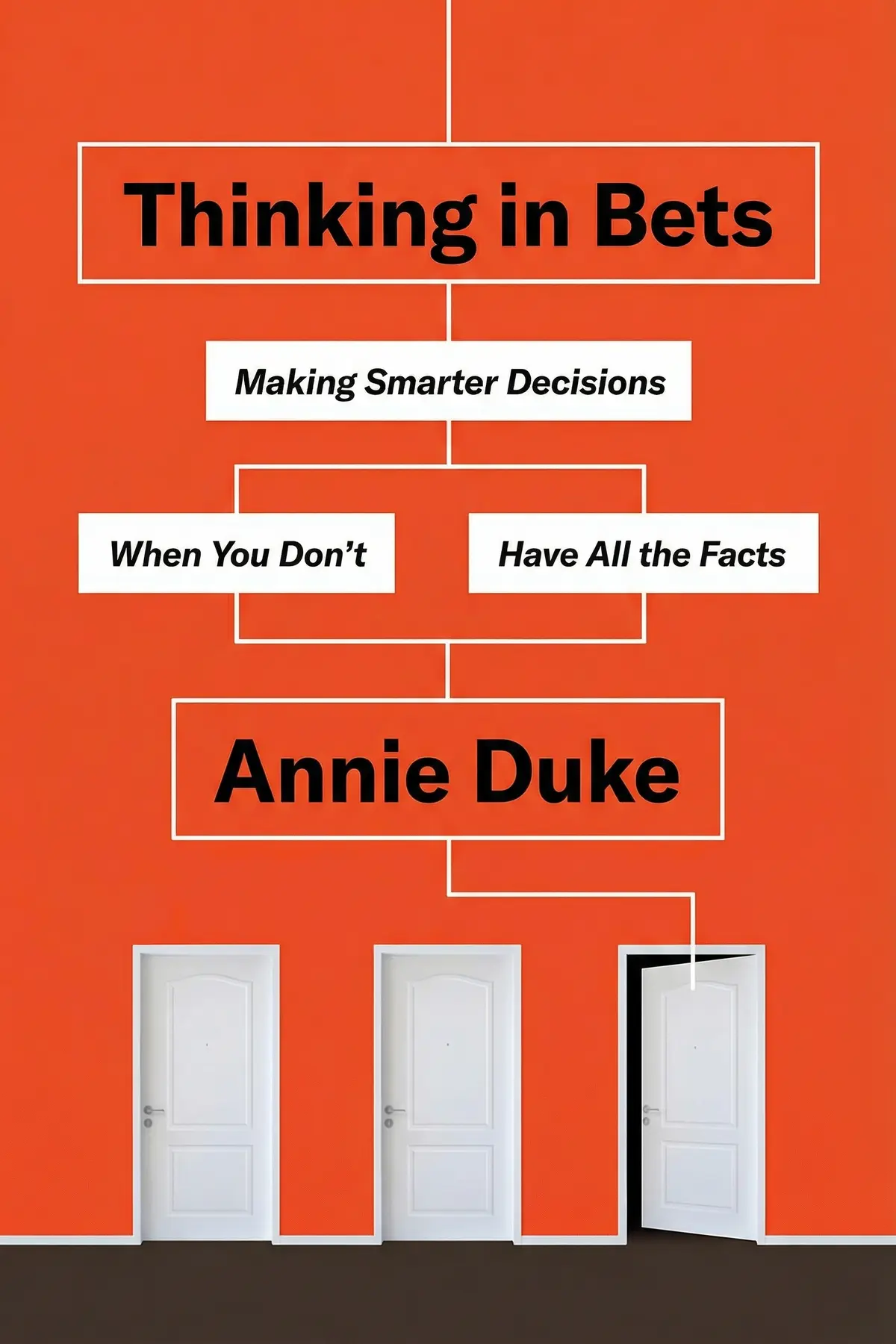
Table of Content
1. Introduction
1 min 51 sec
We often walk through life under the illusion that we are in total control of our destiny. We like to believe that if we work hard, study the facts, and make a logical choice, the result should be exactly what we planned. But as anyone who has ever been blindsided by a sudden change in the economy or a random accident knows, the world doesn’t always play by those rules. In reality, we are constantly operating with missing data. We don’t know what our competitors are thinking, we don’t know what’s happening behind closed doors, and we certainly can’t predict the whims of lady luck.
This is where the wisdom of the poker table comes into play. In her book, Thinking in Bets, Annie Duke explains that life is much more like a high-stakes card game than a predictable game of chess. In chess, there is no hidden information and very little luck; if you lose, it’s almost certainly because you made a mistake. But in poker, you can play a hand perfectly and still lose because of the shuffle of the deck. Conversely, you can play terribly and win because you got lucky.
If we want to be truly successful, we have to stop obsessing over outcomes and start focusing on the quality of our decision-making process. We have to learn how to embrace uncertainty instead of fearing it. This journey involves a deep dive into cognitive psychology to understand why our brains are so prone to bias and how we can rewire our habits to seek the truth. We will explore how to separate our ego from our choices, how to use our social circles to keep us honest, and how to plan for a future that is inherently unpredictable. By the end of this exploration, you’ll see that every choice you make is, in essence, a bet on a specific version of the future. And once you start thinking in bets, you gain a powerful tool for making smarter, more resilient decisions in every area of your life.
2. The Danger of Resulting
2 min 15 sec
Judging a decision based only on its outcome is a common trap that obscures the truth. Discover why even a bad result can come from a great choice.
3. The Truth About Belief Formation
2 min 49 sec
Our brains aren’t naturally wired for objective truth. Learn how we form beliefs almost instantly and why we fight so hard to keep them, even when they’re wrong.
4. Fielding Outcomes and the Ego
2 min 53 sec
We are experts at blaming luck for our failures and taking credit for our wins. Discover how to stop this bias and start learning from every result.
5. Rewiring the Habit Loop for Accuracy
2 min 45 sec
Habits are the foundation of our choices. Learn how to hijack your brain’s natural reward system to value truth over being right.
6. The Architecture of a Truth-Seeking Group
2 min 48 sec
It’s almost impossible to spot your own biases alone. Discover why a specialized group with a clear charter is your most powerful tool for objectivity.
7. Mental Time Travel for Better Choices
2 min 46 sec
We are often our own worst enemies when it comes to short-term thinking. Learn how to use your future self to guide your present decisions.
8. Conclusion
1 min 53 sec
The world we live in is messy, unpredictable, and full of hidden information. But as we’ve seen through the lens of Annie Duke’s experiences in both poker and psychology, we aren’t helpless in the face of this uncertainty. The secret to making better decisions isn’t about finding a way to be one hundred percent sure—it’s about accepting that we never will be. By shifting our mindset to think in bets, we can finally stop the exhausting game of trying to be right and start playing the much more rewarding game of being accurate.
We’ve explored the trap of resulting and how it blinds us to the quality of our process. we’ve seen how our brains are naturally wired to believe first and ask questions later, and how the simple phrase Wanna bet? can act as a circuit breaker for our biases. We’ve learned about the importance of outcome fielding and the need for a truth-seeking group that follows the CUDOS principles to keep us honest. And finally, we’ve looked at how mental time travel can help us protect our future selves from the impulsive decisions of the present.
The most actionable takeaway from all of this is the practice of mental contrasting. If you have a goal you want to reach, don’t just sit around and visualize the victory. Instead, take a moment to honestly visualize all the things that could go wrong. Think about the temptations that will pull you off course and the random strokes of bad luck that might hit you. By preparing for these obstacles now, you are placing a smarter bet on your future.
Remember, life is a long game. You will have bad beats and you will have lucky wins. But if you focus on the process, remain open to new information, and keep refining your beliefs, the odds will eventually shift in your favor. So, next time you are faced with a tough choice, don’t ask yourself what the right answer is. Ask yourself what the best bet is. Embrace the uncertainty, stay curious, and keep playing your hand as well as you can.
About this book
What is this book about?
Most of us treat life like a game of chess, believing that if we make the right moves, we are guaranteed a specific outcome. But Annie Duke, a former world-class poker player and cognitive psychologist, argues that life is actually far more like poker. It is a game defined by incomplete information and a significant degree of luck. When we fail to realize this, we fall into the trap of judging our decisions based solely on how they turned out, rather than the process we used to make them. This summary provides a roadmap for shifting your mindset from absolute certainty to probabilistic thinking. By viewing your beliefs and choices as bets, you can protect yourself from the emotional highs and lows of luck and start making more objective, truth-seeking decisions. You will learn how to build better habits, leverage the power of a supportive group, and even use mental time travel to safeguard your future. The promise of this book is not that you will always win, but that you will become a much smarter player in the game of life.
Book Information
About the Author
Annie Duke
Annie Duke is a celebrated author, speaker, and consultant who spent over two decades as one of the most successful professional poker players in the world. Her impressive career includes winning a World Series of Poker gold bracelet in 2004 and the WSOP Tournament of Champions in 2010. Beyond the poker table, Duke is a scholar of the mind, having completed her doctoral coursework in cognitive psychology at the University of Pennsylvania. She has authored several books, including her 2005 autobiography that chronicles her journey through the high-stakes world of professional gambling.
Ratings & Reviews
Ratings at a glance
What people think
Listeners describe the content as captivating and clear, highlighting the in-depth psychological perspectives and functional strategies for making choices. They also value the book's utility for individuals in decision-making roles and its intellectually stimulating themes. Opinions differ regarding the total length, as some listeners find it too short while others consider it too long.
Top reviews
Priya
Ever wonder why you make a 'good' decision and still end up with a terrible outcome? This book finally explains that phenomenon in a way that clicked for me. Not gonna lie, the section on the 2016 election pollsters changed how I view data and predictions forever. Duke explains that a 30% chance of an event happening isn't a failure of the model if that event actually occurs; it’s just the nature of probability. I’ve started applying the 'Thinking in Bets' framework to my own career moves and even small daily choices. It’s incredibly freeing to realize that you can only control the process, not the results. This is an engaging, thought-provoking resource that provides actual mental frameworks instead of just vague self-help advice. It’s easily one of the most useful books on my shelf for navigating an uncertain world.
Show moreKwame
As someone who manages a large team, I found the strategies for group decision-making to be the most valuable part of the book. We often fall into the trap of 'groupthink' or following the loudest voice in the room. Duke’s suggestion to conduct 'pre-mortems'—imagining a project has failed before it even starts—has already saved us from a few major blunders. I’ll be blunt: it’s hard to look at your own mistakes objectively. We are all biased. But by adopting a probabilistic mindset and viewing every choice as a bet, it becomes much easier to trade ego for accuracy. The prose is sharp and the concepts are immediately applicable to real-world scenarios. I’ve already recommended this to three of my colleagues. It’s a game-changer for anyone who has to make tough calls under pressure.
Show moreAmelia
Annie Duke brings a fascinating perspective from the high-stakes world of professional poker to the mundane decisions we face daily. In my experience, most business books try to simplify success into a series of 'right' moves, but Duke correctly identifies that life is more like poker than chess. There is hidden information and a massive element of luck that we usually ignore to protect our egos. I loved the deep dive into 'resulting'—the tendency to equate the quality of a decision with the quality of the outcome. The writing is conversational and accessible, even when she’s discussing statistical probability and cognitive biases. My only minor gripe is that the book could have been tightened up by about fifty pages. Still, the practical techniques for creating a 'decision pod' and acting as each other’s bullshit detectors are worth the price of admission for any serious leader.
Show moreAir
After hearing about Duke's career as a poker champion, I expected more 'tells' and 'bluffs,' but I was pleasantly surprised by the deep dive into cognitive science. The distinction between luck and skill is a fraught endeavor for most of us, especially when our pride is on the line. Personally, I found the chapter on 'hindsight bias' and how we rewrite our own history to be incredibly convicting. We tend to attribute our wins to skill and our losses to bad luck, which is a recipe for stagnation. Duke’s advice on how to build a support network that challenges your biases rather than affirming them is pure gold. While the book is a bit repetitive in the latter half, the quality of the core insights makes it a must-read for anyone in a high-stakes environment.
Show moreOrathai
Picked this up on a whim and ended up highlighting half the pages. The way Duke breaks down the 'resulting' fallacy is eye-opening. We are so conditioned to look at the scoreboard to tell us if we did a good job, but in reality, the scoreboard can be a liar. Gotta say, the narrative style is very engaging, and I enjoyed the glimpses into the poker world even if I wish there were more of them. It’s a very well-written book that manages to make complex behavioral economics feel intuitive. My only complaint is that the author sometimes summarizes other researchers' work in a way that feels a bit redundant if you've read much in this space. However, for a general audience, this is an excellent and practical guide to better thinking.
Show moreMontri
Finally got around to reading this after seeing it on every 'must-read' list for business leaders. Bottom line: it lives up to the hype for the most part. The central takeaway—that a 90% probability of success still means you will lose 10% of the time—is something we intellectually know but emotionally refuse to accept. Duke teaches you how to embrace that uncertainty rather than fear it. The writing is punchy, though some of the examples feel a bit dated now. I appreciated the step-by-step plan for assessing risk before making a move. It’s a solid resource for decision makers, even if it does repeat its primary thesis a few too many times across the six chapters. Definitely worth a spot on your nightstand if you're looking to sharpen your mental frameworks.
Show moreMaria
The distinction between chess and poker as a metaphor for life is worth the price of admission alone. In chess, all the pieces are on the board and the game is theoretically solvable. Life isn't like that. Life is messy, full of hidden information, and driven by luck. For what it's worth, I think Annie Duke does a masterful job of bridging the gap between academic psychology and the 'street wisdom' of the poker table. Some reviews mention the repetition, and while it’s there, I think it helps solidify the concepts for readers who aren't used to thinking in percentages. It’s a delightful, refreshing vantage point on how we often sabotage our own growth by fearing the 'bad' outcome of a 'good' decision. A very solid 4-star read.
Show moreKoi
If you’ve already spent time with Kahneman or Thaler, you might find a lot of this material redundant. Look, the central takeaway is solid: make decisions based on the facts you have, and don't beat yourself up if luck goes against you. However, the author spends a significant amount of time paraphrasing existing psychological research without adding enough of her own unique poker-earned wisdom to make it feel fresh. The poker stories are the best part, but they are surprisingly sparse compared to the academic summaries. It’s a decent introductory text for someone brand new to decision science, but for a seasoned reader of the genre, there isn't much new information here. It’s a well-written book, but it lacks the depth of the 'street wisdom' I was hoping for based on Duke’s impressive professional background.
Show moreBunyarit
The core concept is brilliant, but it feels like it was stretched out to meet a publisher's page requirement. Truth is, this book could have been a tweetstorm or a very effective 30-page white paper. I found myself skipping ahead several pages at a time only to find the author still hammering home the same point about the Pete Carroll play or the difference between poker and chess. It’s not a bad book, but the signal-to-noise ratio is a bit off. To be fair, the conversational tone makes it a quick read, and the scientific concepts are explained in a way that anyone can understand. It just lacks the 'meat' I expected from a professional gambler. If you want a light introduction to probabilistic thinking, this is a safe bet, but don't expect a masterclass in strategy.
Show moreJong
This book should have been a long-form essay rather than a full-length publication. The core premise—that we shouldn't judge a decision solely by its outcome—is powerful, but it's repeated ad nauseam until it loses its impact. Frankly, the middle section felt like a shallow literature review of behavioral economics that I’ve already encountered in much better books like 'Thinking, Fast and Slow.' The author leans heavily on the Pete Carroll Superbowl call, which is a fine anecdote, but it doesn't justify the filler that pads out the remaining chapters. I was disappointed to find that nearly 40% of the page count is just notes and references. It feels like a word-count quota was the primary driver here. If you’ve spent any time on productivity Twitter, you've likely already absorbed the best parts of this book without having to trudge through the repetitive prose.
Show moreReaders also enjoyed
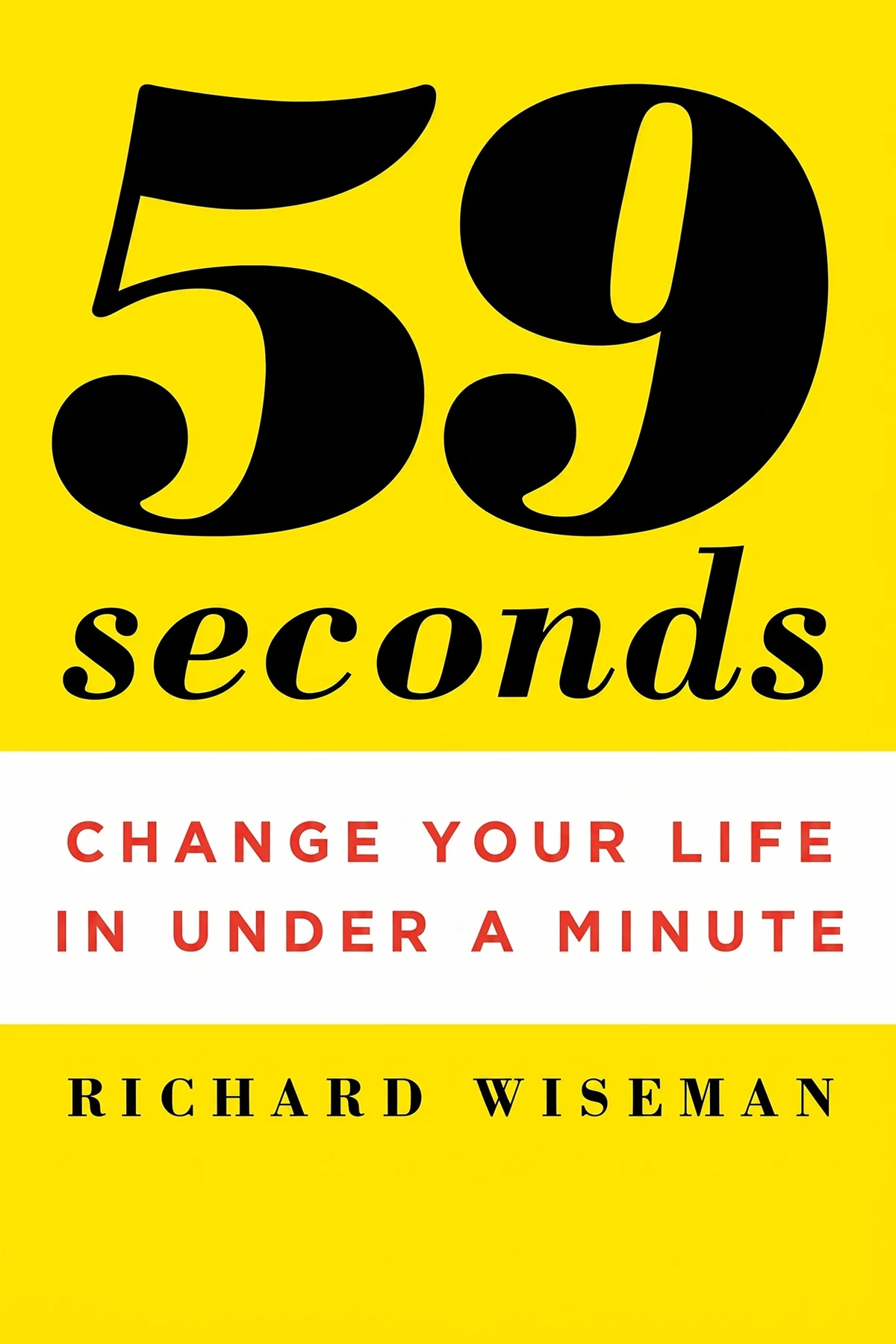
59 Seconds: Change Your Life in Under a Minute
Richard Wiseman
A Liberated Mind: How to Pivot Toward What Matters
Steven C. Hayes
Acting with Power: Why We Are More Powerful Than We Believe
Deborah Gruenfeld
Age of Propaganda: The Everyday Use and Abuse of Persuasion
Anthony Pratkanis
AUDIO SUMMARY AVAILABLE
Listen to Thinking in Bets in 15 minutes
Get the key ideas from Thinking in Bets by Annie Duke, plus 5,000+ more titles in English and Thai.
- 5,000+ titles
- Listen as much as you want
- 7-day free trial
- Cancel anytime







