
16 min 05 sec
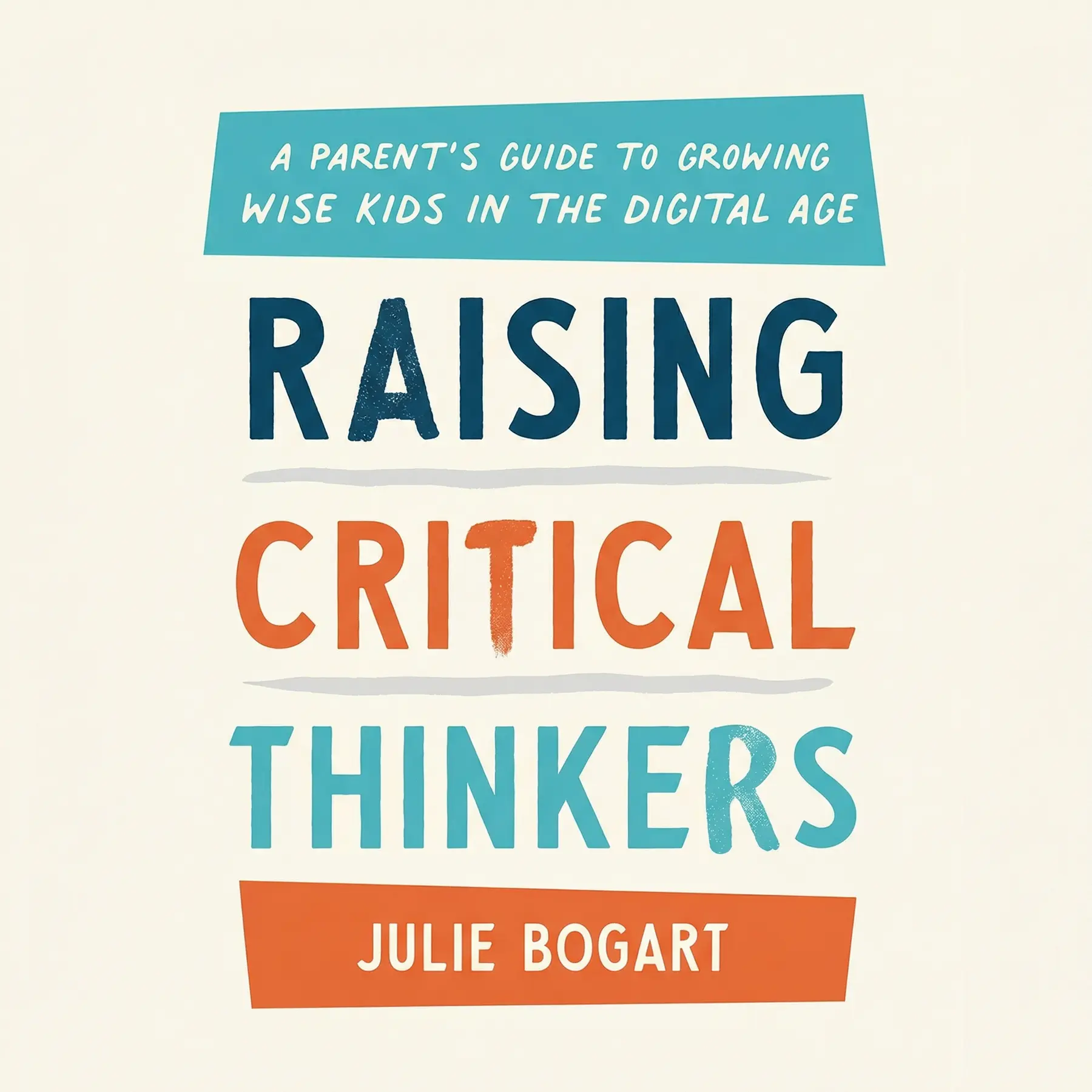
Raising Critical Thinkers: A Parent's Guide to Growing Wise Kids in the Digital Age
By Julie Bogart
Raising Critical Thinkers provides a comprehensive guide for parents to help children navigate a complex world of information by developing discernment, self-awareness, and the ability to evaluate multiple perspectives with empathy.
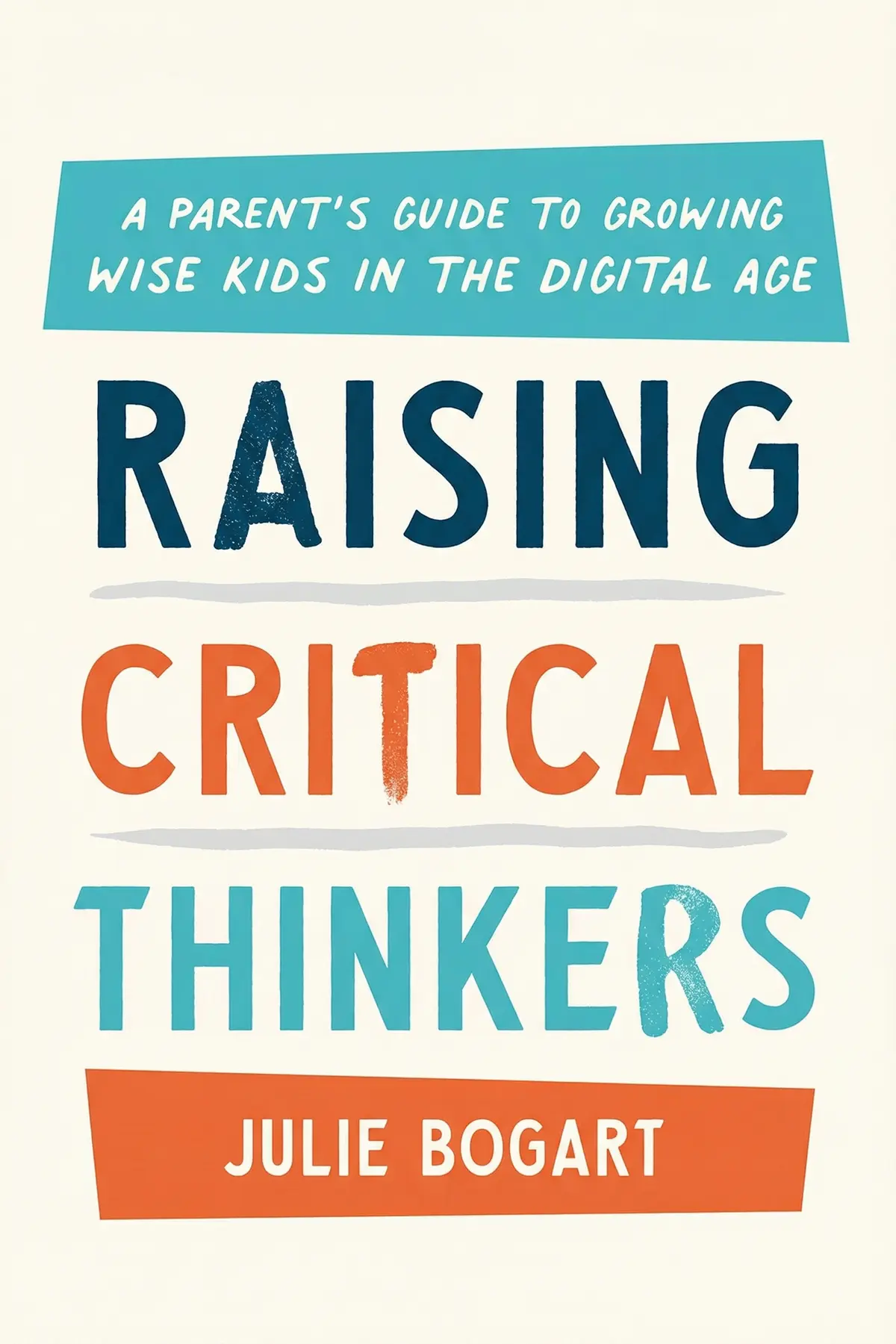
Table of Content
1. Introduction
1 min 20 sec
We live in an era where information is more accessible than it has ever been in human history. However, this convenience comes with a significant price: it is increasingly difficult to separate genuine reality from carefully crafted fiction. For children growing up today, the challenge is immense. They are bombarded with data, opinions, and marketing from every direction, making it essential for them to develop a internal compass of discernment. The goal isn’t just to make them smarter, but to help them understand who they should trust, why they believe what they believe, and how to remain open-minded in a polarized world.
This journey begins with a fundamental shift in how we view education and parenting. It’s about moving away from the traditional model of providing ‘the right answer’ and moving toward a model of asking the right questions. We want our children to grow into individuals who aren’t just compliant or good at following instructions, but who possess the mental fortitude to analyze the world with both a sharp mind and a kind heart. Over the course of this exploration, we will look at how to build these skills through self-reflection, understanding the nature of storytelling, and learning the crucial differences between raw facts and the interpretations we wrap around them. By the end, you will have a clear framework for shepherding your children toward a life of independent and critical thought.
2. Starting with Internal Awareness
2 min 16 sec
Before we can help our children evaluate the world around them, we must first look inward at our own hidden biases and educational backgrounds.
3. Deciphering the Source and the Storyteller
2 min 10 sec
Every piece of information has a source, and learning to identify the narrator’s perspective is vital for discerning the truth.
4. The Language of Critical Analysis
2 min 23 sec
By learning the specific differences between facts, interpretations, and beliefs, children gain a technical framework for evaluating any claim.
5. Purposeful Learning and the Power of Play
2 min 19 sec
True critical thinking is fueled by caring, and games provide a unique environment for children to develop strategy and problem-solving skills.
6. Active Encounter Versus Passive Consumption
2 min 13 sec
Moving learning from the sidelines into real-world experiences allows children to grasp the constructed nature of the world around them.
7. Managing the Friction of Disagreement
2 min 02 sec
Teaching children to handle opposing views with curiosity rather than defensiveness is the final step in creating a compassionate critical thinker.
8. Conclusion
1 min 22 sec
Raising a child who can think for themselves is one of the greatest gifts a parent can provide. It is a process that begins with our own willingness to be honest about our biases and continues as we invite our children to question the world with both rigor and empathy. By teaching them to look past the surface of a story, to distinguish between facts and the meanings we give them, and to manage their own emotional reactions to new ideas, we equip them with a shield against manipulation and a compass for their own truth.
As you move forward, remember that this isn’t about reaching a final destination where your child has all the right opinions. It is about fostering a lifelong habit of inquiry. Encourage their curiosity, celebrate their ‘what if’ questions, and allow them the space to struggle with complex problems. When we emphasize compassion alongside critical thought, we do more than just improve their grades; we help them develop the character necessary to lead a meaningful life. In a world that often demands we pick a side and stop thinking, a truly independent mind is a rare and beautiful thing. By following these principles, you are helping your child become an individual who can stand firm in their values while remaining forever open to the wonders of a complicated, diverse, and ever-changing world.
About this book
What is this book about?
In a world saturated with digital noise, social media echoes, and conflicting news reports, the ability to think clearly is no longer just an academic skill—it is a survival skill. This guide explores how parents can move beyond the rote memorization often found in traditional schooling to foster true intellectual independence in their children. It addresses the fundamental challenge of teaching kids not just what to think, but how to process the overwhelming volume of information they encounter daily. The promise of this approach is to transform the home into a laboratory of curiosity. By shifting from a focus on 'correct' answers to a focus on the process of inquiry, parents can raise individuals who are capable of recognizing bias, questioning narrators, and managing their own emotional responses to challenging ideas. It offers a roadmap for developing a family culture where disagreement is seen as an opportunity for growth and where critical thinking is paired with deep compassion, preparing the next generation to be engaged, thoughtful citizens.
Book Information
About the Author
Julie Bogart
Julie Bogart is a highly regarded author, writing coach, and expert in the field of homeschooling. She is best known for her book The Brave Learner, which has become a foundational resource for home educators globally. Bogart is also the visionary behind Brave Writer, an award-winning online program that has reached students in over 191 countries. With experience as both a teacher and a mother to five adult children, she brings a wealth of practical insight to her work. She continues to support the educational community through her popular podcast, dedicated coaching groups, and insightful publications.
Ratings & Reviews
Ratings at a glance
What people think
Listeners find the book informative and well-grounded, with one person pointing out its meticulously researched content. Furthermore, the writing style is captivating, and one listener emphasizes its conversational tone. The text also provides stimulating exercises designed for specific age ranges, and listeners value its thought-provoking approach to teaching critical thinking. They consider it a mandatory read for parents, while one listener mentions how the book helps create connection through disagreements.
Top reviews
Monthon
As a father of a teenager in the era of TikTok and deepfakes, I often worry about my son getting sucked into conspiracy theories or online echo chambers. This book was exactly the resource I needed to stop worrying and start acting. Julie Bogart fills these pages with enriching activities that help kids fact-check sources and understand their own cognitive biases. I loved the reminder that even as parents, we have our own thinking errors to clean up first. It’s not just about the kids; it’s about educating ourselves to level up our own mindsets. This is a meticulously researched must-read for anyone who wants to ensure their children can navigate a digital world without being easily manipulated by misinformation. Truly an essential guide for modern parenting.
Show moreManee
Julie Bogart has a way of making you realize that being right isn't nearly as important as being curious. This book completely changed how I handle disagreements with my kids. Instead of shutting them down, I’m learning to use those moments to create a deeper connection through questioning and exploration. The tone is incredibly engaging and conversational, making complex topics like logical fallacies feel accessible. I especially appreciated the sections on how to look at multiple points of view without feeling like you're losing your own identity. It’s a refreshing take that moves beyond the typical 'open-mindedness' cliche and gets into the actual mechanics of self-awareness. If you want to foster a spirit of inquiry in your home, look no further than this brilliant work.
Show morePatchara
After hearing so many mixed things from my homeschooling circles, I had to see for myself if this book was as controversial as people claimed. In my experience, Bogart isn't trying to dismantle anyone's faith; she’s trying to strengthen it by encouraging kids to actually understand why they believe what they believe. The book is packed with age-appropriate activities that teach teens how to step out of their assumptions and evaluate evidence fairly. I loved the emphasis on checking credibility and putting together solid research projects. It’s a brave book that puts cultivating insight ahead of just being 'right.' Honestly, if we don't ask our kids these tough questions at home, the world will ask them eventually, and they won't be prepared.
Show moreSom
Wow, I wish I had read this years ago. It’s rare to find a book that is both meticulously researched and incredibly easy to read, but Julie Bogart nailed it. She manages to take the intimidating concept of critical thinking and break it down into a conversational manual for everyday life. I loved how she highlighted that teaching kids to think is really about a mindset shift for the parent first. The focus on connection over correction is a game changer for our family dynamics. We’ve already started using some of the 'think and rethink' strategies during dinner discussions, and the results have been wonderful. This book is a must-read for anyone who wants to raise compassionate, intelligent, and independent thinkers.
Show moreBoss
Finally got around to finishing this thick manual on parenting, and I have to say the practical insights are worth the effort. Bogart doesn't just give you theories; she provides specific practices and exercises at the end of every chapter that are actually doable for different age groups. It can be a bit dry and overly detailed at times, which made me want to skim certain sections. However, once I shifted my mindset and started treating it as a reference guide rather than a narrative, the content really clicked. The writing style is conversational but backed by what feels like a meticulously researched foundation. To be fair, it requires a significant time investment that might drain some parents, but the goal of raising a child with a spirit of inquiry is too important to ignore.
Show moreSureerat
This book challenged my perspective on education more than I anticipated. Bogart does a fantastic job of critiquing the mainstream system while offering a viable alternative through 'learner autonomy.' I found the exercises at the end of the chapters to be thought-provoking, though they definitely require a lot of energy and time to implement correctly. Some parts felt a bit focused on a very Western, privileged way of seeing the world, which is worth keeping in mind. However, the core message about mindfulness and being aware of our own biases is universal. It’s a well-researched piece that asks parents to do the hard work of looking inward before they try to fix their children's thought processes. Definitely a solid addition to my shelf.
Show moreSoontorn
What sets this apart from other parenting books is the sheer depth of the research involved. Bogart has clearly done her homework on cognitive biases and thinking errors. The writing style is engaging, and it never feels like a lecture, which I really appreciated. I did find the chapter on 'identities' a bit dense, and it took me a while to get through the more philosophical sections. But the payoff is worth it when you get to the practical exercises. These aren't just fluff; they are enriching activities designed to spark real conversation. My 13-year-old actually enjoyed the exercise on evaluating website credibility. It’s a great tool for any parent trying to navigate the complexities of the digital age with their sanity intact.
Show moreAndrei
The content here is undeniably valuable, but the delivery felt scattered and a bit long-winded at points. Julie’s writing style is very stream-of-consciousness, which makes it feel like she’s talking to you over coffee, but it also makes it hard to find a clear focus. I was looking for a solid definition of critical thinking to ground the book, yet it felt like she never quite landed on one. Instead, the chapters often veered into general learning tips that, while helpful, didn't always feel related to the main topic. Some of the practical applications for older kids are excellent and well-researched, but I could have done without the occasional air of arrogance. It’s a decent resource if you have the patience to dig through the fluff to find the gems.
Show moreTuck
Look, I’m all for teaching kids to think for themselves, but parts of this book felt like a recipe for raising entitled contrarians. While I appreciate the emphasis on research and fact-checking, I’m worried that Bogart’s approach to truth is too subjective. She mentions Roe v. Wade and other hot-button issues in a way that suggests truth is just whatever society decides at the moment. As a Christian, her take on the Bible as an unreliable ancient text was a major turn-off. I think there are good ideas here regarding technology and media literacy, but you have to be careful. If you don't have a strong foundation of objective right and wrong, these methods might just lead to kids who argue for the sake of arguing.
Show moreYindee
I really wanted to like this after all the hype, but Bogart lost me almost immediately with her choice of language. It felt like she was trying too hard to be inclusive, using terms like 'pregnant person' that felt jarring in a book supposedly about objective thinking. While there are a few nuggets of wisdom buried in here, the underlying message seems to suggest that there is no such thing as objective truth. As someone who values traditional foundations, I was deeply unsettled by her dismissal of the Bible as just another translated ancient text. It’s hard to teach my kids to think critically when the guide itself seems to have a very specific, modern bias. Frankly, I felt like this was more about conforming to a specific narrative than actually exploring all sides of an issue.
Show moreReaders also enjoyed

AUDIO SUMMARY AVAILABLE
Listen to Raising Critical Thinkers in 15 minutes
Get the key ideas from Raising Critical Thinkers by Julie Bogart, plus 5,000+ more titles in English and Thai.
- 5,000+ titles
- Listen as much as you want
- 7-day free trial
- Cancel anytime







