
16 min 07 sec
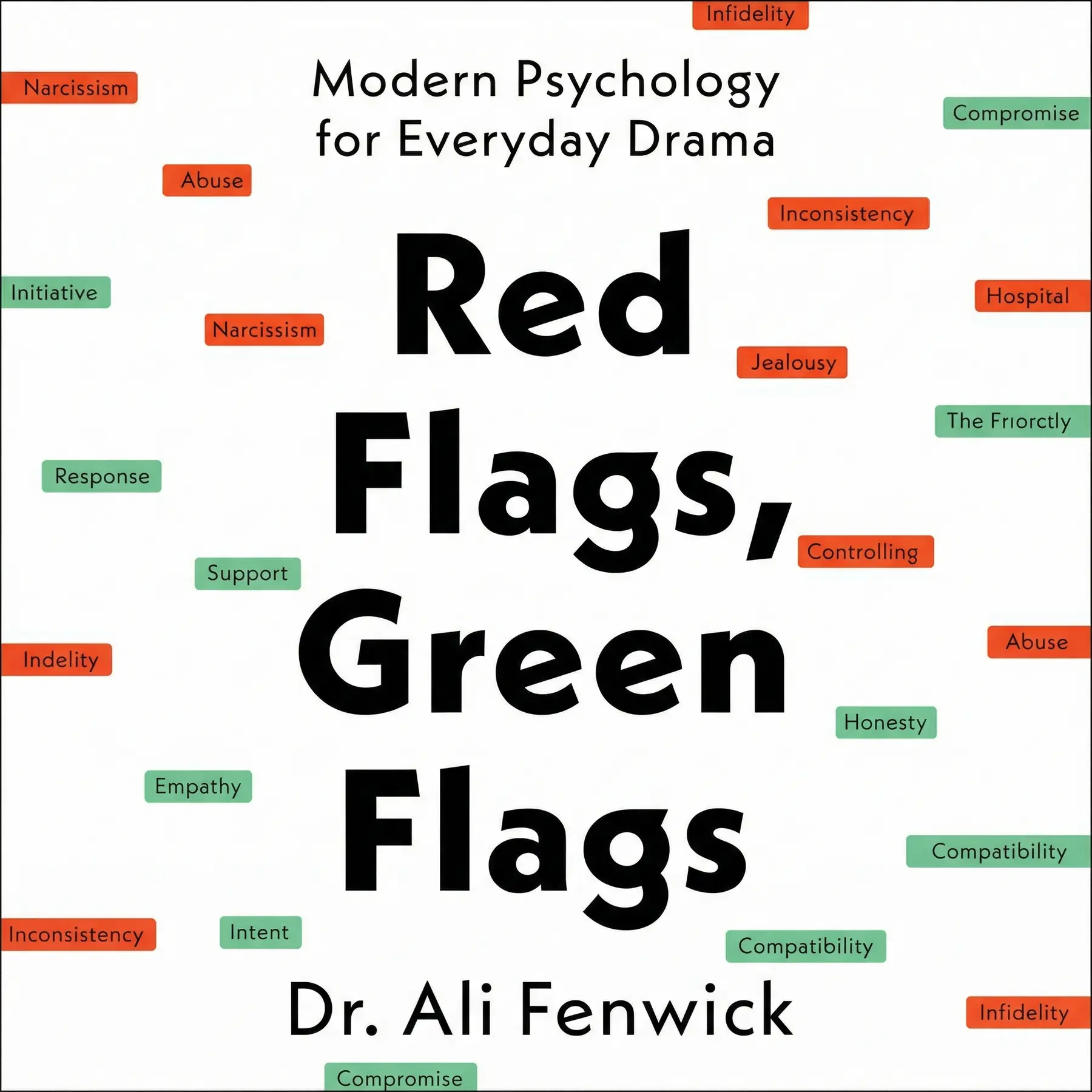
Red Flags, Green Flags: Modern Psychology for Everyday Drama
By Ali Fenwick
Red Flags, Green Flags provides a psychological toolkit for identifying healthy and toxic behaviors in relationships. Learn to navigate personal and professional connections using clear frameworks for reflection, communication, and boundary setting.
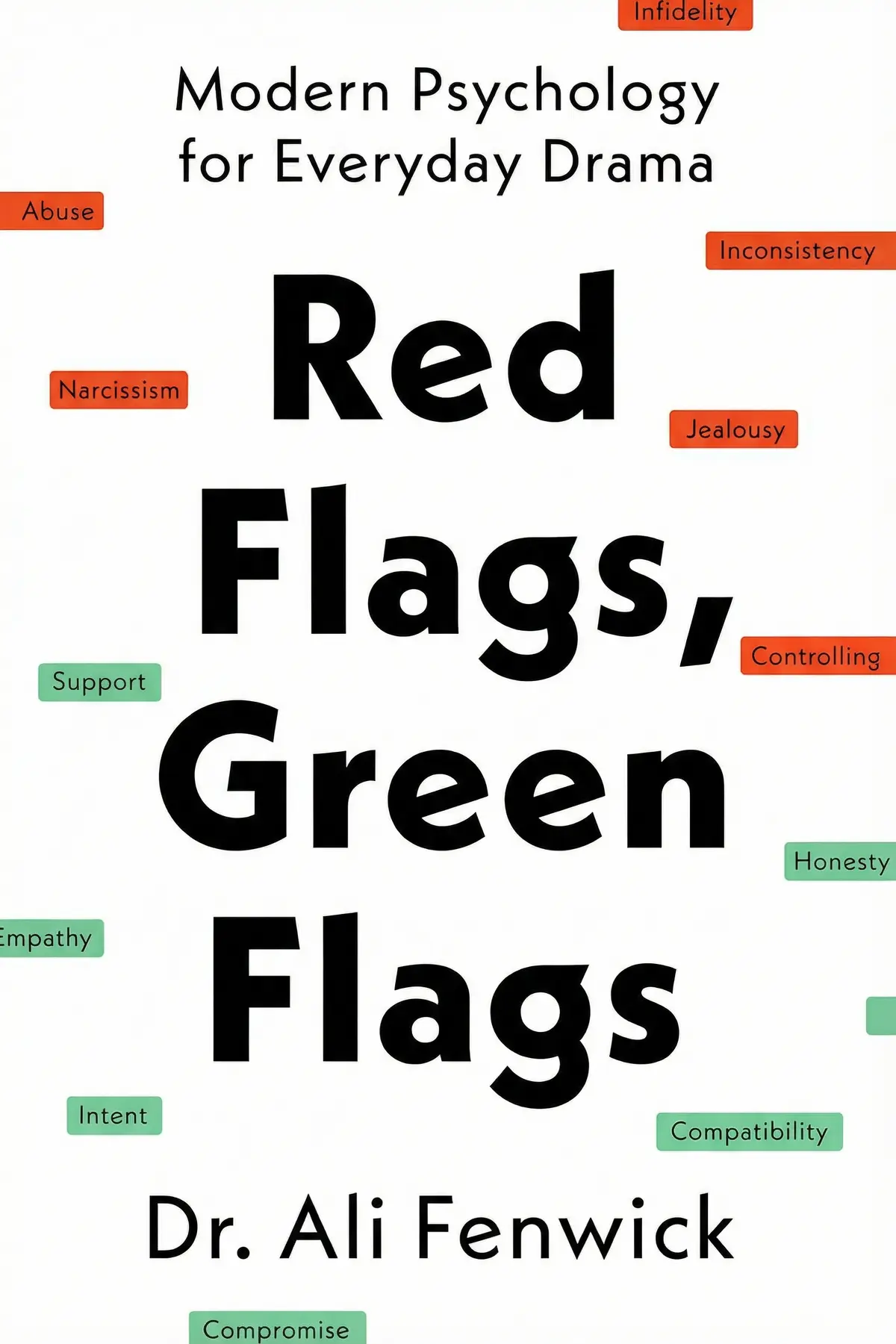
Table of Content
1. Introduction
1 min 32 sec
Think about the last time you felt a knot in your stomach during a conversation with a friend or a supervisor. Or perhaps, recall a moment when a simple interaction left you feeling lighter, more capable, and truly understood. Why is it that some people seem to bring out our best, while others leave us feeling confused and depleted? Most of us enter adulthood without a formal education in how to manage these complex social dynamics. We learn through trial and error, often repeating the same mistakes because we lack a clear framework for understanding what a healthy connection actually looks like.
This exploration into the psychology of human behavior serves as the manual many of us never received. It isn’t just about pointing out who is ‘good’ or ‘bad’; it’s about developing the discernment to see the indicators of health and the warnings of toxicity before they deeply impact our mental health. Whether you are navigating the high-stakes world of modern dating, trying to improve your family life, or looking to survive a difficult office environment, the goal is the same: to move from confusion to confidence.
We will look at how to spot the subtle cues that suggest a relationship has the potential to grow, and how to respond when those cues turn sour. By the end, you will have a structured way to process your social interactions—moving away from reactive emotions and toward intentional decisions. The throughline here is simple but profound: your well-being is heavily influenced by the quality of your connections, and you have the power to curate those connections with clarity and wisdom.
2. The Pillars of a Healthy Connection
2 min 59 sec
Discover how a simple acronym can help you identify the positive traits that sustain long-term happiness and mutual growth in any relationship.
3. Processing Warning Signs with Intention
2 min 36 sec
Learn a three-step framework to handle unsettling interactions without jumping to conclusions or ignoring your own intuition.
4. Drawing the Line on Manipulation
2 min 26 sec
Explore the subtle tactics of control and learn how to maintain your sense of reality when faced with toxic behavior.
5. Healthy Boundaries in the Professional World
2 min 35 sec
Recognize the red flags of a toxic workplace and learn why the ‘we are family’ narrative can often be a warning sign.
6. The Lifelong Practice of Self-Awareness
2 min 33 sec
Understand why we sometimes gravitate toward red flags and how continuous reflection can lead to more fulfilling social circles.
7. Conclusion
1 min 26 sec
As we wrap up this look into the mechanics of human connection, remember that relationships are the very fabric of our daily existence. They have the power to be our greatest source of joy or our most significant cause of stress. By carrying the frameworks of GREEN and RED with you, you are no longer wandering blindly through your social world. You have a lens through which to view every interaction, from a first date to a performance review.
The most important takeaway is that you are not stuck. If you find yourself surrounded by red flags, you have the psychological tools to reflect on your role in that dynamic, engage in honest dialogue, and make a decision that prioritizes your health. Conversely, when you find those rare and beautiful green flags—people who are genuine, respectful, and empathetic—nurture those bonds with everything you have. They are the foundation of a fulfilling life.
Take a moment today to look at your inner circle. Who is elevating you? Who is respecting your boundaries? And just as importantly, are you being a green flag for the people you care about? Relationship health is a two-way street that requires constant attention and a commitment to authenticity. By choosing to be intentional about who you let into your life and how you treat them, you are taking the ultimate step toward a more peaceful and empowered future. Keep practicing, keep reflecting, and always trust your inner compass.
About this book
What is this book about?
Have you ever felt like your relationships were a maze without a map? Red Flags, Green Flags offers that missing guidebook. By applying modern psychological principles to everyday social interactions, this work helps you distinguish between connections that nourish your soul and those that drain your energy. It explores the nuances of human behavior in dating, family dynamics, and the workplace, providing a structured way to evaluate the people in your life. The promise of this exploration is clarity and agency. Instead of feeling like a passive participant in your social world, you will learn how to identify warning signs early and celebrate the positive traits that lead to long-term fulfillment. Through the use of memorable frameworks, it guides you on when to lean in, when to speak up, and when it is finally time to walk away for the sake of your own mental well-being. It is about building a life surrounded by authenticity and respect.
Book Information
About the Author
Ali Fenwick
Dr. Ali Fenwick is a professor who teaches Organizational Behavior and Innovation Design and runs an academic research lab in Transforming Behaviors through Hult International Business School. He is also a principal investigator and consultant for The Center for Applied Behavioral Science & Technology in the Netherlands.
Ratings & Reviews
Ratings at a glance
What people think
Listeners find that while viewpoints differ regarding the level of detail and the author's casual vocabulary, many value the broad examination of social interactions involving family, the workplace, and romance. Listeners appreciate the functional lists of "red" and "green" flags, which aid in detecting both negative tendencies and constructive behaviors in oneself and others. They also note the effectiveness of the integrated communication aids and decision-making exercises, with one listener describing the book as a "clear and concrete" handbook for handling today's social complications. Furthermore, its methodical layout and research-based evidence provide a reachable guide for people aiming to define stronger personal boundaries.
Top reviews
Taweesak
Finally, a psychology book that doesn't just focus on toxic boyfriends. This guide covers the whole spectrum, from overbearing parents to those passive-aggressive colleagues we all deal with. I especially appreciated the sections on family dynamics because those red flags are often the hardest to spot when you've lived with them your whole life. The "time to leave" versus "willingness to stay" prompts were eye-opening. Look, it’s not perfect, and the slang can be a bit much at times, but the practical value is definitely there. It’s rare to find a book that helps you identify your own toxic traits as much as it helps you judge others.
Show moreSuwit
Wow, the 'stay or go' checklists in the final sections are absolute game-changers. I’ve been struggling with a friendship that felt increasingly one-sided, and seeing those behaviors laid out so clearly helped me make a decision I’ve been putting off for months. The book is very visual and structured, which I love. It’s not just theory; it’s a practical manual for life. I think the author’s background in research shows through in the way he categorizes patterns. If you’re tired of being gaslit or ghosted and want to understand the "why" behind it, pick this up. It’s an essential guide for the modern era.
Show morePrayoon
Dr. Fenwick brings his Instagram energy to the page in a way that’s mostly successful. Truth is, I followed him for his reels, so I wasn't sure if a full-length book would work. I was pleasantly surprised by how he categorizes modern social problems. The breakdown of online dating behavior—like ghosting and gaslighting—gave me some much-needed perspective on why people act so weird on apps. The scientific backing adds a layer of credibility that sets it apart from your average TikTok life coach. It’s a fast, punchy read that provides actual tools for communication instead of just vague platitudes.
Show moreZanya
After seeing the reels online, I was curious if the book would have more meat on its bones. It definitely does, though it retains that accessible, conversational feel. What I found most valuable were the concrete tools for setting boundaries. It’s one thing to know someone is "red flag status," but it’s another to know exactly what to say to them. The scientific research sprinkled throughout gives it a more professional feel than a standard self-help book. My only real gripe is that some of the sections felt a bit rushed. I would have loved more depth on the workplace dynamics, but overall, it's a helpful resource for navigating modern social chaos.
Show moreLaor
Identifying my own red flags was a gut punch I didn't see coming. Most books like this just tell you how everyone else is the problem, but Ali Fenwick forces you to look in the mirror. He explains that we can't change others, only how we respond and how we show up in relationships. That perspective shift alone made the book worth it for me. The "Best Version of Yourself" concluding chapter was incredibly motivating. Yes, some of the wording is a bit "cringe" and the formatting is simple, but the message of self-accountability is powerful. It's a quick read that actually makes you think about your own habits.
Show moreJonathan
Most people pick this up for the dating advice, but the sections on workplace dynamics were where I found the most value. In my experience, professional boundaries are the hardest to maintain, and this book provides actual scripts for dealing with toxic colleagues. It’s written in a very punchy, direct style that mirrors the author's online presence. Some might find it a bit too simplistic, but I think that’s the point. It’s meant to be a field guide, not a textbook. It helped me recognize several green flags in my current partner that I was taking for granted, which was a nice bonus. Truly a useful read.
Show moreTaw
Is this book ground-breaking? No, probably not if you've already done a lot of therapy or read plenty of self-help. However, for those just starting to look at their relationship patterns, it’s a solid enough primer. I found the checklists of green flags particularly helpful because we often spend so much time looking for the bad that we forget what the good looks like. The tone is very "social media," which makes it an easy read, but sometimes it lacks the psychological depth I was hoping for. It’s more of a "manual for drama" than a deep dive into human behavior. It's okay, just don't expect a masterclass in clinical psychology.
Show moreSomrutai
The structure of this guide is actually its strongest point. It’s divided into clear sections—family, work, friends, and dating—making it very easy to jump to what you need. I personally found the workplace chapters to be the most insightful. Dealing with an intrusive boss is a nightmare, and Fenwick offers some very practical "green flag" behaviors to look for in a healthy environment. Some of the language is a bit too "modern" for my taste, but the core message is solid. It’s a decent toolkit for anyone feeling overwhelmed by the drama in their life and needing a clear way to categorize social behaviors.
Show moreTern
Not gonna lie, I expected a lot more from a behavioral scientist. While the premise of "Red Flags, Green Flags" is great, the execution felt repetitive and a bit trite. Each chapter follows the same rigid structure which started to feel like a chore by the halfway mark. I kept waiting for more detailed psychological explanations, but instead, I got more lists and slang. It feels like a collection of Instagram captions expanded into a book. To be fair, if you are struggling with a very specific toxic relationship, the communication tools might give you a place to start. For me, it just didn't offer anything new or particularly insightful.
Show morePete
Ditched this after the first few chapters. Frankly, the writing style is just messy and feels like it desperately needed a heavy-handed editor. I can handle a casual tone, but seeing "bae" and "peeps" in a psychology-based book is a major turn-off for me. It felt like an adult trying way too hard to be relatable to Gen Z, and it just came across as cringe. Beyond the tone issues, the actual content felt extremely surface-level. If you’ve spent five minutes on social media, you already know most of these "red flags." It might be a decent starting point for someone who has zero boundaries, but for everyone else, it’s mostly common sense wrapped in poor sentence structure.
Show moreReaders also enjoyed
AUDIO SUMMARY AVAILABLE
Listen to Red Flags, Green Flags in 15 minutes
Get the key ideas from Red Flags, Green Flags by Ali Fenwick, plus 5,000+ more titles in English and Thai.
- 5,000+ titles
- Listen as much as you want
- 7-day free trial
- Cancel anytime







