
59 Seconds: Change Your Life in Under a Minute
Richard Wiseman
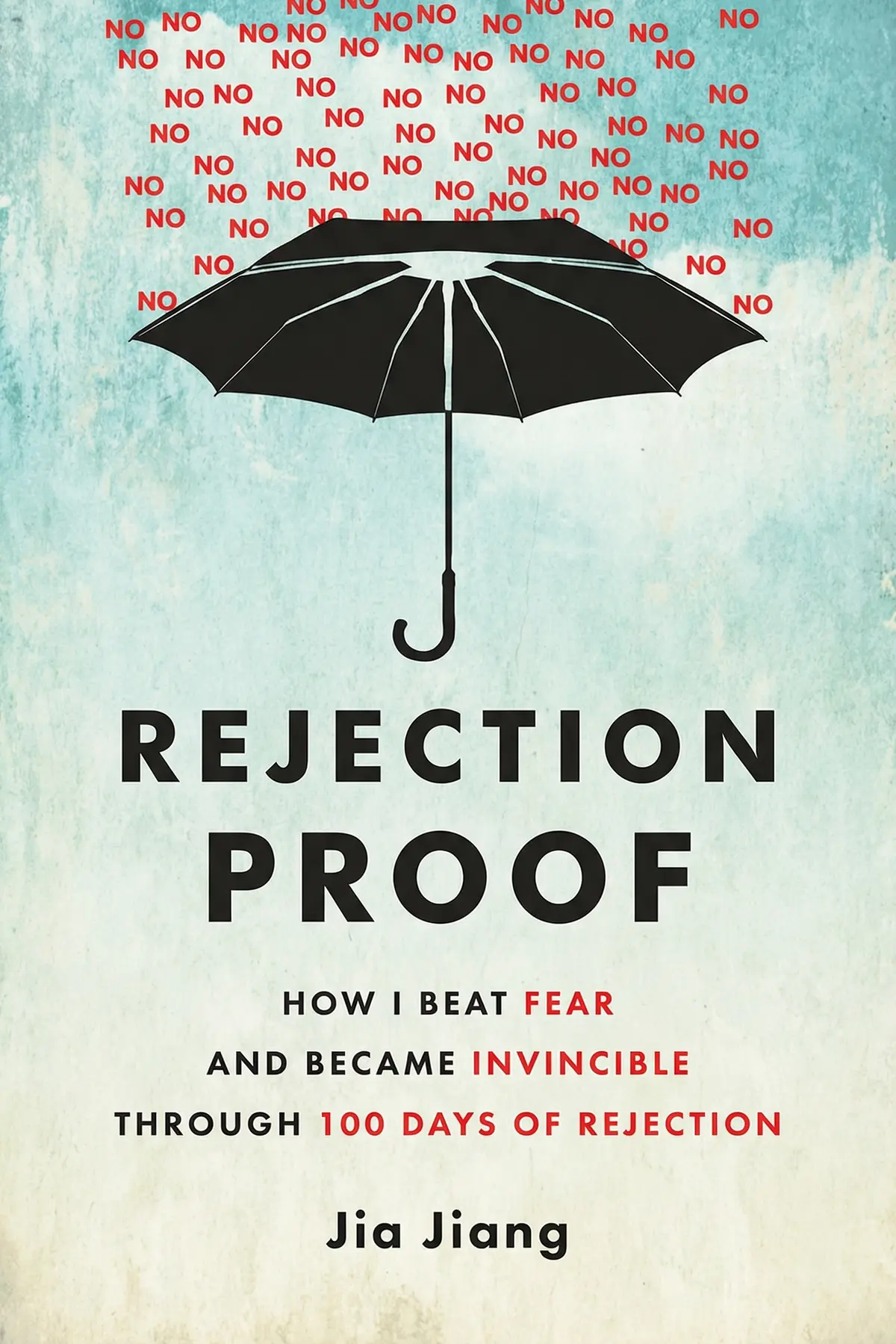
Discover how Jia Jiang conquered his paralyzing fear of hearing no through a bold 100-day experiment. This summary explores how to transform rejection from a source of shame into a powerful tool for growth.
1 min 32 sec
Think back to the last time you were turned down. Maybe it was a promotion you didn’t get, a date that never happened, or an idea that was laughed out of a meeting. That sharp, twisting feeling in your gut wasn’t just disappointment; it was the sting of rejection. For most of us, that feeling is so toxic that we spend our entire lives building fortresses of safety to avoid it. We stop asking. We stop trying. We settle for the middle ground because the edge feels too dangerous.
But what if that pain was actually a signal you could learn to ignore—or even better, a tool you could learn to use? This is the central premise of the journey taken by Jia Jiang. In these pages, we are going to explore how Jiang transformed himself from a man paralyzed by the fear of “no” into someone who viewed every rejection as a data point and an opportunity.
The throughline of this story is simple yet profound: rejection is not a wall; it’s a door. It is a subjective, human interaction that says more about the person giving the rejection than the person receiving it. By the time we finish, you’ll understand the evolutionary biology that makes us fear social exclusion, the tactical shifts that can turn a “no” into a “yes,” and the deep psychological work required to stop seeking external validation. We are going to look at why a billionaire might be rejected while a subway performer is ignored, and how you can apply those lessons to your own life to become truly invincible. Let’s begin by looking at the moment everything changed for Jiang and why he decided that the only way to beat fear was to run straight toward it.
1 min 56 sec
What happens when a comfortable life masks a deep-seated fear? Explore the moment a successful professional realized his dread of rejection was the only thing stopping his true calling.
1 min 48 sec
Rejection isn’t just in your head—it’s in your biology. Discover why our brains process social exclusion the same way they process physical injury and how evolution shaped this response.
1 min 40 sec
Is rejection a final verdict on your worth? Learn why every ‘no’ is actually a subjective opinion and how treating it as a numbers game can change your destiny.
1 min 39 sec
Don’t just run away when you hear ‘no.’ Learn the military-inspired tactic of staying in the conversation to turn a defeat into a learning opportunity.
1 min 51 sec
Getting a ‘yes’ isn’t just about what you ask for, but how you frame the request. Explore the psychology of giving reasons and acknowledging doubts.
1 min 40 sec
Talent alone isn’t enough to avoid rejection. Understand how the environment and the people you choose to ask can make or break your success.
1 min 32 sec
What if rejection was the best thing that ever happened to you? Learn how legends like Michael Jordan and Galileo used disapproval to change the world.
1 min 41 sec
The ultimate goal isn’t to get more yeses, but to stop needing them. Discover the power of focusing on your effort rather than the world’s reaction.
1 min 30 sec
As we wrap up this journey through the world of rejection, let’s bring it back to the central throughline: rejection is not an end, but a beginning. It is a human interaction that is subjective, negotiable, and deeply informative. Jia Jiang’s 100-day experiment shows us that the things we fear most often hold the keys to our greatest growth. By understanding that the sting of “no” is a biological relic, we can learn to feel the pain without being controlled by it. By realizing that rejection is a numbers game, we can find the persistence to keep asking until we find the right audience.
But more than that, we’ve seen that rejection can be engineered. By being authentic, giving reasons for our requests, and staying in the conversation even after a setback, we can transform many “no’s” into “yeses.” And for those rejections that remain final, we can use them as fuel for our motivation and as a compass for our creativity.
The ultimate takeaway is this: your value is not determined by the consensus of others. You are not the sum of your rejections. You are the sum of your efforts. As you move forward, I challenge you to seek out one small rejection this week. Ask for something you think you won’t get. Not because you need the item, but because you need the experience of surviving the “no.” When you realize that the world doesn’t end when you are turned down, you stop playing small. You start taking the risks that lead to a truly fulfilled, adventurous life. Go out there and be rejection-proof.
Have you ever let the fear of being turned down stop you from asking for what you truly want? Rejection Proof tells the story of Jia Jiang, an aspiring entrepreneur who realized his dread of social disapproval was the only thing standing between him and his dreams. To fix this, he embarked on a famous 100-day journey, making increasingly absurd requests to strangers to desensitize himself to the sting of no. Along the way, Jiang discovered that rejection is not an objective verdict on one’s worth but a subjective interaction that can be negotiated, understood, and even invited. This summary provides a roadmap for turning life’s most painful social experiences into opportunities for resilience. It breaks down the biological roots of why rejection hurts like physical pain, why some people say yes when others say no, and how to stay focused on your goals when the world pushes back. By exploring these insights, you will learn how to ask for more, fear less, and build a life based on your own standards rather than the fleeting approval of others.
Jia Jiang is an author and entrepreneur known for founding the blog and YouTube series 100 Days of Rejection. He also created an online course and community designed to help people master their fear of being turned down and build personal resilience.
Listeners view this work as essential for sales professionals, praising its actionable guidance and the witty manner in which it addresses rejection. The narratives are captivating and fun, with one listener observing how laughter helps reduce pain and stress. They appreciate the book's inspiring nature; one review emphasizes its ability to help people face their own fears, while another mentions the useful chapter recaps with important ideas highlighted.
Finally got around to reading this after seeing the author's viral video, and it’s a game-changer for anyone in a high-pressure career. Jiang manages to take a subject that usually feels heavy and turns it into something hilarious and approachable. In my experience, the most valuable part isn't just the '100 days' concept, but the way he teaches you to use laughter to reduce the stinging pain of a 'no.' The chapter recaps are fantastic, especially with the key ideas highlighted for quick reference during a busy workday. I’ve started applying his 'rejection is just an opinion' mantra to my cold calls, and the shift in my mental toughness is already noticeable. It’s a must-read for sales professionals who need to build a thicker skin without losing their sense of humor or humanity.
Show moreJiang’s journey through 100 days of seeking 'no' is both hilarious and surprisingly deep. I loved how he gamified the entire process of facing his fears. Many of us hide from our true wishes because we give other people the power to crush us, but this book shows that a 'no' is often just a starting point for a different conversation. The specific strategies for maximizing the potential of a rejection—like asking for a referral or seeking feedback—are incredibly practical. Not gonna lie, I teared up a bit at the end with the job-related example, even if some critics think he didn't do much. The core message that you won't know unless you ask is a powerful reminder that we often reject ourselves before anyone else even gets the chance. Highly recommended for anyone feeling stuck in their comfort zone.
Show moreAs someone who has always been terrified of public speaking, this book felt like a warm hug and a kick in the pants at the same time. I love how Jiang explores the idea that rejection is essentially just one person's opinion at a specific moment in time. He deconstructs the 'tribe' mentality and helps you realize that a stranger's refusal doesn't actually threaten your survival. The stories are told with such humility and humor that you can't help but root for him, even when he's doing something totally ridiculous. The practical tips on how to frame a request to make it 'rejection proof' are worth the price of the book alone. It's not just about getting to a 'yes,' it's about becoming the kind of person who isn't afraid to ask in the first place.
Show moreWhat would you do if you weren't terrified of what people thought of you? This book attempts to answer that through a series of increasingly bizarre experiments, like asking for 'Olympic donuts' or trying to plant a flower in a stranger's yard. The writing style is breezy and narrative-driven, which makes it a very quick read. To be fair, some of the examples felt a bit manufactured once he gained internet fame, but the underlying psychology is sound. He dives into how our fear of rejection is actually an ancient survival mechanism from our hunter-gatherer days when being cast out of the tribe meant certain death. It’s fascinating stuff. While I’m not sure I’ll be asking to speak over a Costco intercom anytime soon, the lesson that you can always ask 'why' after a rejection is something I'll definitely be using in my own life.
Show moreThe chapter on asking 'why' after a rejection changed my entire perspective on my recent job hunt. I used to just slink away when I didn't get what I wanted, but Jiang shows that treating rejection as a data point rather than a personal verdict is the key to improvement. The book is well-paced and the author's voice is very relatable. I did feel that some of his experiments were a bit annoying for the people on the receiving end, and I felt bad for some of the strangers he approached. However, the bravery it took to even try those things is inspiring. It’s a great resource for entrepreneurs who are constantly pitching and need to learn how to pivot after a 'no.' The insights on 'rejection numbers' and the persistence of people like JK Rowling were a nice touch of motivation.
Show moreNot what I expected, but the stories are certainly entertaining and the lessons are surprisingly sticky. I found myself thinking about the 'Olympic rings' donuts for days after finishing the chapter. It’s a delightful short book that focuses more on the author's personal growth than a list of dry self-help tips. My only real gripe is that he includes some examples of people who already had a lot of privilege, which makes their stories of 'overcoming rejection' feel a bit less relevant to the average person. Still, the core idea of 'building your asking muscles' is brilliant. If you want to be more fearless in your personal or professional life, this is a great starting point. It’s light, funny, and provides a decent framework for looking at social interaction through a new lens.
Show morePicked this up on a whim after a friend recommended it for my sales team. The way Jiang breaks down the fear of being cast out is very insightful, especially the bit about how we perceive the 'power' of the person rejecting us. The book is formatted well with key takeaways that are easy to digest. I particularly liked the focus on being authentic and looking for win-win propositions. Some of the experiments felt a bit like 'annoying stranger' territory, but the lesson that people can often surprise you with their kindness if you just dare to ask is very true. It’s a quick, uplifting read that encourages you to be a little bit weirder and a lot more courageous in your daily life. Definitely worth a read for anyone who feels limited by their own social anxieties.
Show moreFrankly, I have mixed feelings about this one. On one hand, Jiang is an engaging storyteller and the Krispy Kreme story is genuinely heartwarming because of the manager's kindness. On the other hand, it’s hard to ignore that his 'rejections' aren't exactly high-stakes. Asking a stranger for a $100 loan or trying to be a 'bad salesman' for a day is awkward, sure, but it isn't the same as having your life’s work rejected by a publisher or being turned down for a promotion you desperately need. The author mentions people like J.K. Rowling, but her rejection involved years of emotional investment, not a five-minute prank. The book is entertaining as a memoir, but as a practical guide for real-world professional rejection, it feels a little thin. It’s a fun read, just don't expect it to solve your deepest insecurities.
Show moreIs a request for an 'apple refill' really the same as a venture capitalist turning down your life's work? Personally, I struggled with the comparison. While the book is undoubtedly fun and the writing is energetic, I felt there was a disconnect between the silly tasks Jiang performed and the 'real' rejection people face in their careers or relationships. He mentions that he wanted to be an entrepreneur since he was young, and at times it feels like he’s just capitalizing on the fame of his experiments rather than providing a deep psychological study. That being said, his advice on maintaining a detached distance from the results of a request is solid. It’s a decent book if you want a few laughs and a bit of motivation, but it lacks the gravitas I was hoping for.
Show moreLook, I wanted to love this, but it felt a bit like a vanity project once the viral fame kicked in. By day three, he's already famous for the donut video, and from there on out, the 'rejections' feel less like personal growth and more like content creation for his blog. I also found the constant name-dropping of corporate brands and successful figures like Bill Gates to be a bit grating and unnecessary. It started to feel more like a tool for company PR than a genuine exploration of human vulnerability. For the average person, rejection isn't about whether a stranger will let you fly their plane; it’s about the crushing weight of failing at something that actually matters. This book stays on the surface with predictable pranks rather than digging into the grit of real-life failure. It was just okay.
Show moreRichard Wiseman
William B. Irvine
Andrew D. Thompson
Deepak Chopra
AUDIO SUMMARY AVAILABLE
Get the key ideas from Rejection Proof by Jia Jiang, plus 5,000+ more titles in English and Thai.







