
14 min
Rethinking Narcissism: The Secret to Recognizing and Coping with Narcissists
By Craig Malkin
Rethinking Narcissism redefines our understanding of self-importance. Dr. Craig Malkin explores how narcissism exists on a spectrum, revealing that a healthy dose of feeling special is actually essential for a fulfilling life.
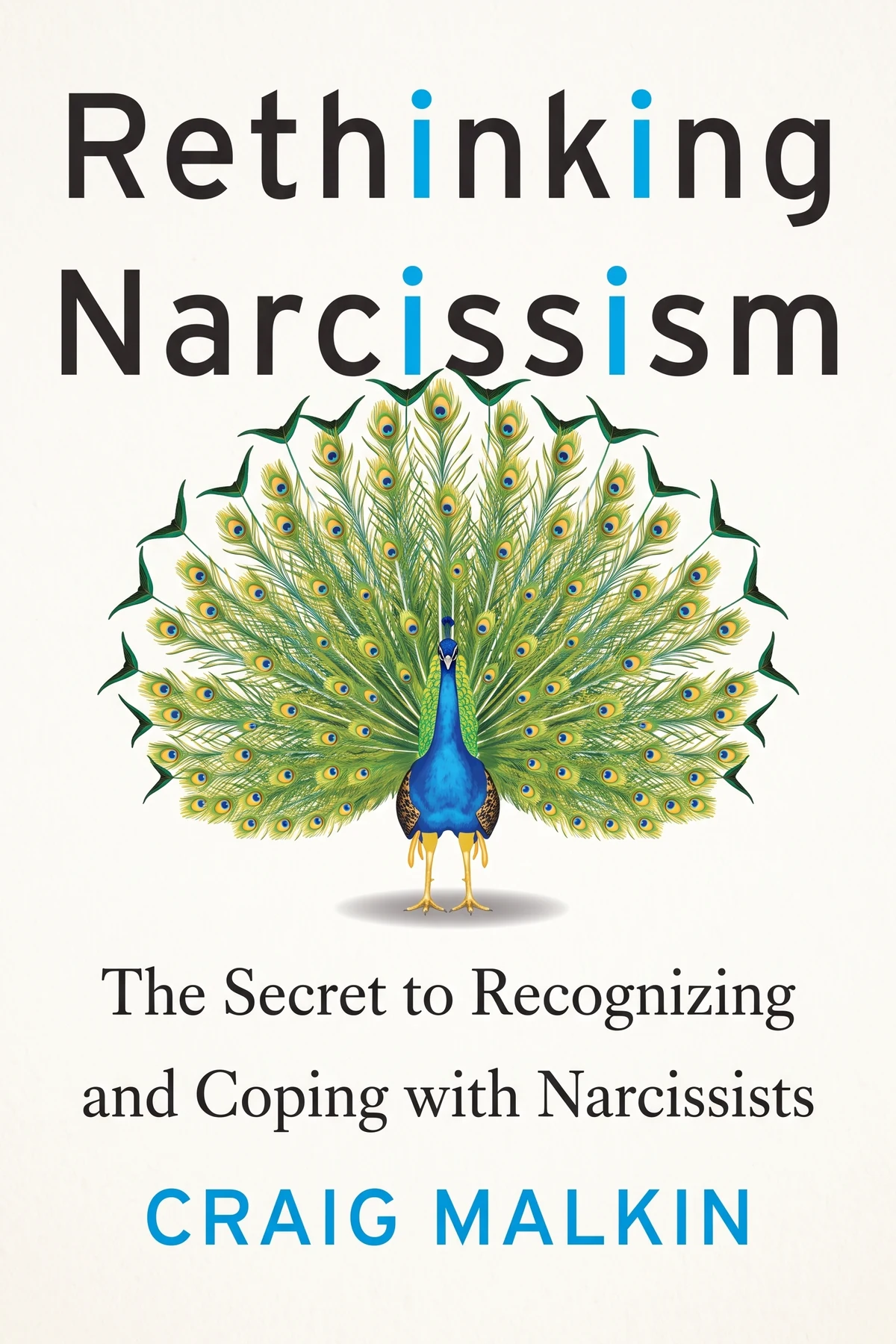
Table of Content
1. Introduction
1 min 34 sec
We have all encountered that one individual who seems to suck all the air out of the room. They are the person who turns every conversation back to their own achievements, the one who expects constant praise, or the friend who seems entirely oblivious to anyone else’s needs. In our modern culture, we are quick to label these people as narcissists, often using the word as a weapon or a definitive diagnosis of a broken character.
But what if our understanding of narcissism is far too narrow? What if, instead of being a simple binary—where you either have it or you don’t—narcissism is actually a spectrum that every single one of us lives on? This is the central premise we are exploring today. We often view the desire to feel special as a moral failing, but the truth is much more complex. A total absence of self-importance can be just as damaging as an excess of it.
In this summary, we are going to look past the caricatures. We’ll dive into the history of how this trait has been viewed since the time of the ancient Greeks and see how modern psychology has reshaped that narrative. We will explore the different ways narcissism hides in plain sight, from the quiet sufferer to the person who prides themselves on being the most helpful person in the world. Most importantly, we’ll discuss how to identify the warning signs in your own life and how to use the power of vulnerability to bridge the gap with the narcissists you love. By the end, you’ll see that the goal isn’t to eliminate narcissism entirely, but to find that healthy middle ground where you can truly thrive.
2. The Deep History and Psychological Evolution of Narcissism
2 min 10 sec
From ancient philosophy to the birth of modern psychoanalysis, the way we view self-love has shifted dramatically, moving from a moral question to a fundamental developmental necessity.
3. Mapping the Spectrum of Self-Importance
2 min 18 sec
Narcissism isn’t black and white—it’s a spectrum where both extremes sabotage your life. Discover why the sweet spot in the middle is where genuine confidence and healthy relationships actually thrive.
4. The Three Hidden Faces of Narcissism
2 min 04 sec
Narcissism isn’t always loud and boastful. It can hide in silence or even behind a mask of extreme generosity, making it much harder to recognize than you might think.
5. Nature, Nurture, and the Roots of Personality
2 min 07 sec
Is a narcissist born or made? The answer lies in a complex dance between our genetic blueprints and the way our parents responded to our early needs.
6. Identifying Warning Signs and the Power of Vulnerability
2 min 25 sec
Dealing with a narcissist requires recognizing their defensive tactics, such as the ’emotional hot potato,’ and learning to use vulnerability to break through their walls.
7. Conclusion
1 min 22 sec
As we wrap up our look at the complex world of narcissism, the most important takeaway is that feeling special isn’t a crime—it’s a spectrum. We all need a bit of that ‘narcissistic fuel’ to get out of bed in the morning, to believe in our ideas, and to pursue the lives we want. The danger only arises when we lose our balance, either by sliding into the self-erasing shadows of Echoism or by becoming addicted to the spotlight of unhealthy narcissism.
By understanding the different faces this trait can wear—whether it’s the loud extrovert, the quiet dreamer, or the moralizing giver—we can stop being baffled by the behavior of those around us. We can see the ’emotional hot potato’ for what it is: a desperate attempt to avoid vulnerability. And by choosing to be vulnerable ourselves, we can often invite others to step down from their pedestals and meet us on level ground.
Moving forward, try to pay attention to your own place on the scale. Are there times when you are too afraid to take up space? Or times when your need to be right outweighs your desire to be kind? The goal isn’t perfection; it’s awareness. When we find that healthy middle, we don’t just become better versions of ourselves—we build the foundation for more authentic and compassionate relationships with everyone in our lives. Remember, you don’t have to be the most special person in the room to be a person who truly matters.
About this book
What is this book about?
When we hear the word narcissist, we often imagine a vain, power-hungry individual who lacks empathy. However, Rethinking Narcissism challenges this narrow stereotype by introducing the concept of a narcissism spectrum. The book explains that narcissism isn't just a personality disorder; it's a fundamental human trait that ranges from a total lack of self-worth to an unhealthy obsession with oneself. Dr. Craig Malkin provides a nuanced look at the different ways this trait manifests, including subtle forms like introverted or communal narcissism. By understanding where we and our loved ones fall on this scale, we can better navigate our relationships. The promise of the book is that by finding the healthy middle ground—where we feel special enough to pursue our dreams but grounded enough to care for others—we can improve our mental well-being and deepen our connections with those around us.
Book Information
About the Author
Craig Malkin
Craig Malkin is a highly respected clinical psychologist and an instructor at Harvard Medical School. With over two decades of experience, he has become a leading voice on the psychology of relationships and personality. His insights have been featured in major publications like Time and Psychology Today. Additionally, Malkin serves as the director of YM Psychotherapy and Consultation, an organization that provides specialized workshops and guidance for couples looking to strengthen their emotional bonds.
Ratings & Reviews
Ratings at a glance
What people think
Listeners find the material educational and thoroughly investigated, with one listener noting it provides sufficient detail to back up its logic. Furthermore, the writing is clear and concise, which makes it simple to track. The book also helps in identifying narcissistic individuals, introduces a spectrum of the trait, and applies to all relationship types, fostering a sense of connection. Listeners value its practicality, with one listener highlighting its usefulness for childcare professionals, and they find the experience both invigorating and pleasant.
Top reviews
Ratchanee
Picked this up after realizing I might be an 'echoist,' a term Malkin uses to describe people who feel uncomfortable being special. It was a total lightbulb moment for me. The way he describes the 0-10 scale is incredibly intuitive and less judgmental than most books on this topic. Honestly, the sections on how childhood experiences shape our place on that spectrum were hauntingly accurate. I loved the smooth flow of the prose—it didn't feel like a dry textbook at all. Truth is, I’ve already started using some of the 'empathy prompts' he suggests with my partner, and the results are promising. This isn't just a book about toxic people; it’s a guide for building genuine intimacy by finding a healthy middle ground. Highly recommended for those who always put others first.
Show moreAom
Finally, a psychology book that doesn't make me feel like everyone I dislike is a sociopath! Malkin’s 'Rethinking Narcissism' is a breath of fresh air because it treats the trait as a human spectrum rather than a binary 'good vs. evil.' The stories he chooses are relatable and illustrate his points perfectly without being overly dramatic. I found the chapter on 'passing the hot potato'—how narcissists project their shame onto others—to be particularly eye-opening. It explained so many confusing interactions I've had in the past. The writing is clear, the research is deep, and the tone is surprisingly hopeful. It’s rare to find a book that manages to be both academic and deeply empathetic at the same time. This is essential reading for anyone trying to navigate modern relationships.
Show moreGame
After hearing so much about this on social media, I decided to give it a go. It’s definitely more academic than your average self-help book, but still very readable. Malkin’s distinction between healthy and unhealthy narcissism is the most useful part of the book. We often forget that having no ego at all (echoism) is just as damaging as having too much of one. I appreciated the test included in the book; it gave me a lot to think about regarding my own score. My only complaint is that the audiobook version is a bit of a nightmare to navigate because the chapters aren't labeled. But content-wise? It’s a very well-researched and succinct look at a very misunderstood topic. It helps you see the 'why' behind the behavior, which is empowering in its own way.
Show moreSoontorn
Malkin’s take on the Narcissus myth is a masterclass in psychological reinterpretation. By focusing on Echo, he highlights a side of the personality dynamic that almost everyone else ignores. I found the section on communal narcissists—those who think they are the 'most helpful'—to be incredibly sharp and accurate. Not gonna lie, I saw a few people I know in those descriptions! The book is succinct and avoids the sensationalism that usually follows this topic. It’s more about understanding human connection and how to set boundaries without losing your empathy. It’s a refreshing, well-written, and ultimately very practical book that applies to bosses, partners, and parents alike. If you want to move past the name-calling and actually understand the mechanics of self-worth, this is the book to buy.
Show moreTan
This book offers a much-needed nuance to the current cultural obsession with 'narcissism' as a pure evil. Malkin argues that we all exist on a spectrum, which is a refreshing pivot from the usual demonization found in pop psychology. To be fair, seeing it as a scale from 1 to 10 makes a lot of sense, especially with the concept of 'echoism' on the low end. I appreciated the succinct writing style and how he grounds his arguments in clinical experience. However, I did find some of the advice for dealing with those on the higher end of the scale a bit too optimistic. It’s hard to imagine 'collaborating' with someone who is a level 9. Still, the research is top-notch and it really helped me reflect on my own tendencies. A solid read for anyone tired of the sensationalized headlines.
Show moreA
As a childcare professional, I found Malkin’s insights into the development of narcissism absolutely fascinating. The way he breaks down how we can raise children to have a healthy sense of self without tipping into entitlement is practical and well-reasoned. He avoids the typical alarmist tone of many modern psych books. The 1 to 10 scale provides a great framework for understanding classroom dynamics too. My only gripe is that the editor missed a few things—the 'could care less' vs 'couldn't care less' error drove me slightly crazy. Regardless, the core message about the necessity of feeling 'special' in a balanced way is a powerful one. It’s a succinct, informative guide that offers more than just labels; it offers a way to foster connection in all types of relationships.
Show morePacharapol
The insights are solid, but the delivery is a bit of a mixed bag. On one hand, Malkin is a Harvard-level expert who clearly knows his stuff, and his 'echoism' concept is a brilliant addition to the conversation. On the other hand, the writing tries a little too hard to be hip with terms like 'SoMe' for social media. It felt out of place. Personally, I think he spends too much time on the 'middle of the road' folks and doesn't give enough actionable advice for people stuck at the extreme ends of the spectrum. If you’re a 2 or a 3, you get told you deserve to feel special, but then what? It’s a good introductory text for understanding the theory, but I left wanting more concrete steps for personal growth.
Show moreTar
Ever wonder why some people are just... a lot? Malkin attempts to answer that by moving away from the 'all or nothing' view of narcissism. The scale is a cool concept, but the book feels a bit lopsided. He spends a lot of time telling us how to manage level 7s and 8s, yet the advice for the 'echoists' at the bottom feels like an afterthought. I wanted more on how to bootstrap myself out of that 0-1 range. Instead, I got a lot of 'you deserve to feel special too.' Thanks, I guess? The writing is smooth, and his Harvard credentials definitely show in the depth of research, but I think the book aims for a 'middle road' that might be a bit too safe. It’s informative, sure, but maybe not the life-changing manual for abuse survivors that some might be looking for.
Show moreSurasit
I’m genuinely baffled by the positive reviews here. Malkin’s suggestion that victims should essentially 'parent' the narcissists in their lives is dangerous and tone-deaf. If you are dealing with a true emotional hyena, 'voicing your fragility' will only give them more ammunition to use against you. He treats narcissism like a childhood phase that just needs more love, rather than the destructive, manipulative force it actually is. Not to mention, the constant use of 'SoMe' for social media was incredibly grating. Look, I get the desire to find a middle road, but some people are just plain toxic and shouldn't be handled with kid gloves. This book feels like it’s written for people dealing with slightly selfish friends, not those suffering under real narcissistic abuse. Disappointing and potentially harmful.
Show moreClara
If you’ve actually been through the wringer with a true narcissist, this book will feel like a slap in the face. Malkin seems more interested in defending the 'spectrum' than protecting the victims. He suggests that we should show our vulnerability to people who literally thrive on exploiting it. That's not clinical advice; it's a recipe for disaster. The book minimizes the soul-crushing reality of narcissistic abuse by turning it into a 'scale' where most people are just slightly off-center. Also, the author’s use of 'SoMe' is just cringey. Frankly, it feels like pop-psychology written by someone who hasn't spent enough time in the trenches with people whose lives have been destroyed by these manipulators. If I wanted someone to tell me my abuser just needs a hug, I'd talk to the abuser.
Show moreReaders also enjoyed

59 Seconds: Change Your Life in Under a Minute
Richard Wiseman
A Liberated Mind: How to Pivot Toward What Matters
Steven C. Hayes

Acting with Power: Why We Are More Powerful Than We Believe
Deborah Gruenfeld
Age of Propaganda: The Everyday Use and Abuse of Persuasion
Anthony Pratkanis
AUDIO SUMMARY AVAILABLE
Listen to Rethinking Narcissism in 15 minutes
Get the key ideas from Rethinking Narcissism by Craig Malkin, plus 5,000+ more titles in English and Thai.
- 5,000+ titles
- Listen as much as you want
- 7-day free trial
- Cancel anytime







