
Rewire Your Anxious Brain: How to Use the Neuroscience of Fear to End Anxiety,
Catherine M. Pittman
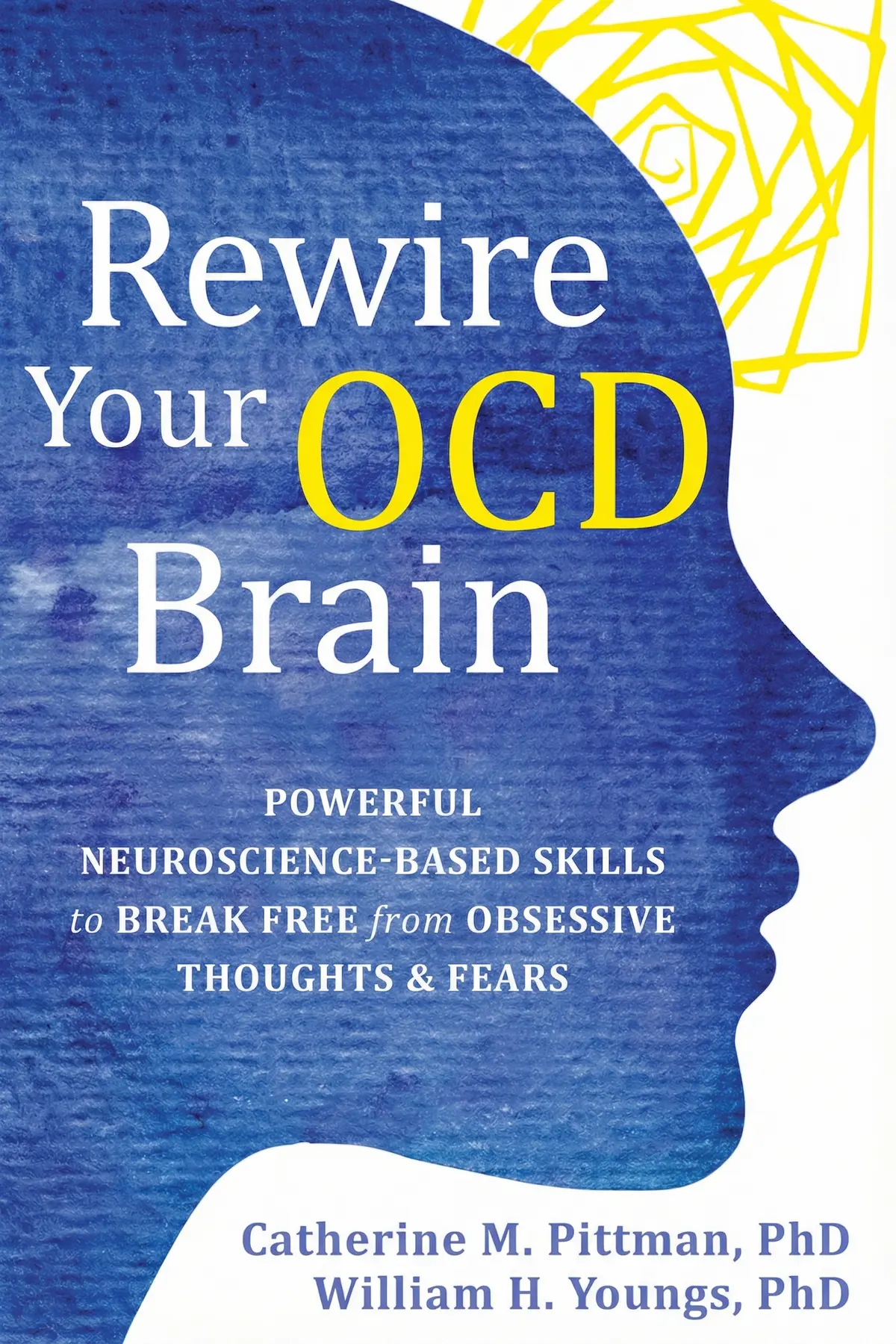
Discover how neuroscience can help you dismantle the cycles of OCD. Learn to identify the brain pathways driving your anxiety and use evidence-based strategies to physically rewire your mind for lasting relief.
1 min 43 sec
Imagine your mind is like a house equipped with a state-of-the-art security system. In a healthy scenario, the alarm only sounds when there is a genuine intruder. But for someone living with obsessive-compulsive tendencies, that alarm is malfunctioning. It blares at full volume because a leaf brushed against the window or simply because the system ‘thinks’ someone might be outside. This is the reality for people like Manuel, a professional who finds himself paralyzed by an upcoming presentation. It isn’t just nerves; it’s a relentless scrutinizing of every sentence and a physical reaction so intense it feels like a life-or-death struggle.
This experience—the feeling of being hijacked by your own thoughts—is at the heart of OCD. Whether it’s an obsession with perfection, a fear of germs, or intrusive images that feel impossible to shake, these patterns can slowly shrink a person’s world. However, the most important thing to understand is that this isn’t a character flaw. It is a biological event happening in the brain.
Thanks to modern breakthroughs in neuroscience and brain imaging, we now have a clearer picture of the machinery behind these obsessions. We can actually see which parts of the brain are overactive and why they refuse to let go of a perceived threat. In this summary, we are going to explore the roadmap provided by Catherine M. Pittman and William H. Youngs. We will dive into the two primary pathways that generate anxiety and, more importantly, learn the specific skills needed to intervene. By the end, you’ll see how you can use the brain’s own power of neuroplasticity to quiet the false alarms and regain control of your life. It’s about more than just managing symptoms; it’s about physically rewiring the way your brain processes fear.
2 min 40 sec
What separates a passing worry from a true obsession? Discover why some thoughts become stuck in a loop and how temporary relief can actually fuel a long-term problem.
2 min 25 sec
Learn about the small, almond-shaped part of your brain that triggers the fight-or-flight response before you even have a chance to think.
2 min 20 sec
Your ability to plan and imagine is a superpower, but for some, it becomes a source of endless ‘what-if’ scenarios that fuel anxiety.
2 min 27 sec
Discover how to handle a spike in anxiety without falling back on old habits. Learn the power of diversion, exercise, and active observation.
2 min 09 sec
Your brain is not fixed in stone. Learn how to use exposure therapy to create new neural pathways and permanently weaken the grip of OCD.
1 min 39 sec
In conclusion, overcoming the relentless cycle of OCD is not about having a ‘stronger’ will; it’s about having a smarter strategy based on how the human brain actually functions. We have seen that your distress is driven by two main players: an overactive, ‘illiterate’ amygdala that sounds false alarms, and a cortex that gets caught in the trap of over-analyzing ‘what-if’ scenarios. By recognizing that these thoughts and feelings are biological events rather than reflections of reality, you can begin to create space between yourself and the disorder.
Throughout this journey, remember that your brain is incredibly resilient. Through the power of neuroplasticity, you have the ability to weaken old, destructive habits and forge new pathways of peace and resilience. This happens every time you choose to observe your anxiety rather than fuse with it, every time you burn off adrenaline through movement, and every time you courageously face a fear without resorting to a compulsion.
The path to recovery is often gradual, built on small, consistent victories. But with each step, you are teaching your amygdala that it can stand down. You are reclaiming the territory that OCD has occupied for too long. By applying these neuroscience-based skills, you aren’t just managing a condition—you are participating in the profound process of rewiring your mind for a life defined by freedom rather than fear. Take these tools, stay present in the moment, and trust in your brain’s remarkable capacity to change.
Obsessive-Compulsive Disorder is often misunderstood as a personality quirk, but at its core, it is a biological process driven by specific regions of the brain. This summary explores how the amygdala and the cortex—two distinct parts of the human mind—collaborate to create the distressing loops of intrusive thoughts and repetitive compulsions. By understanding the mechanics of these neural pathways, readers can learn to stop fighting their thoughts and start retraining their brain's response to fear. The book promises a practical, science-based roadmap to recovery, utilizing neuroplasticity and exposure-based techniques to weaken old habits and build new, healthier mental structures. It’s an empowering look at how we can literally change our brains through intentional action and perspective shifts.
Catherine M. Pittman has taught psychology at Saint Mary's College in Notre Dame, Indiana, for more than thirty years. She is a recognized expert in the field of anxiety, having published several influential books including Rewire Your Anxious Brain and Taming Your Amygdala. William H. Youngs, who passed away in 2023, was a seasoned clinical neuropsychologist with twenty-five years of experience in a hospital setting and a private practice. He also contributed to the academic community as a visiting assistant professor at Notre Dame University.
Catherine M. Pittman
Listeners describe this work as a perceptive manual for grasping how anxiety works, even if some feel the technical explanations can be redundant. Many listeners value the way the authors detail the functions of the cortex and amygdala, and one listener observes that this neurological viewpoint helps to de-stigmatize intrusive thoughts. Furthermore, they prize the practical methods for reshaping brain pathways using exposure therapy and mindfulness. They also suggest it is an excellent starting point, with one listener emphasizing that centering on brain biology makes the path to recovery seem more attainable.
If you've ever felt like your own mind is a runaway train, this book offers the emergency brake you've been looking for. The authors do an incredible job of explaining the "why" behind the panic, specifically focusing on how the amygdala and the cortex interact to create those loops of dread. I loved the biological perspective because it removes the shame; it’s not a character flaw, it’s just a misfiring safety mechanism. The idea that my brain is actually trying to protect me from a "tiger" that doesn't exist was a total lightbulb moment. While the middle chapters can feel a bit dense with terminology, the payoff is worth it. Understanding the mechanics made the exposure exercises feel much more logical and less like torture. It’s a must-read for anyone who wants to stop fighting their thoughts and start retraining their neural pathways.
Show moreThe biological approach taken by Pittman and Youngs is a refreshing departure from standard self-help fluff. Instead of just telling you to "stop worrying," they explain exactly how your neural circuitry is keeping you stuck in a loop. I found the explanation of the amygdala’s role particularly helpful; knowing that it’s essentially an overzealous bodyguard makes it much easier to ignore the false alarms. The book is very clear and the steps are simple to follow, though you do have to be prepared for some heavy terminology early on. Not gonna lie, I had to read the first few chapters twice to really grasp the differences in how the left and right hemispheres contribute to obsessions. Once you get past the jargon, it’s incredibly empowering. It’s easily one of the best resources I’ve found for normalizing the intrusive thought experience.
Show moreWow, I finally understand that my "broken" brain is actually just a hyper-vigilant one trying to do its job. This book does a phenomenal job of explaining that OCD isn't a choice or a personality flaw, but a physiological process involving the amygdala and the cortex. The authors use clear language to describe how the amygdala "learns" to be afraid of things that aren't actually dangerous, and more importantly, how to teach it to relax. I loved the focus on Exposure and Response Prevention (ERP) as the primary way to rewire those circuits. It’s tough work, but knowing the biological reason why you have to face your fears makes it so much easier to stay motivated. This should be required reading for anyone newly diagnosed with OCD.
Show moreThis book serves as a fantastic bridge between complex neuroscience and practical, everyday management of OCD symptoms. I’ve looked at a lot of material on this topic, but none have explained the "fight-flight-freeze" response quite as effectively as this one. The authors emphasize that the feeling of going crazy is actually a logical result of how the brain communicates with itself during a spike. I especially liked the sections on how to handle verbal intrusions from the left hemisphere versus visual ones from the right—it gave me a whole new set of tools for my mental health toolbox. While it can be a bit repetitive, I think that's actually helpful for drilling in the core concepts. It’s an insightful guide that truly helps normalize what can otherwise be a very isolating condition.
Show moreThe chapter on how the left and right hemispheres process verbal versus visual intrusions changed how I view my mental "movies" entirely. I’m rounding this up to five stars because the information is just so vital, even if the writing style is a little dry in places. The authors break down the neural pathways of OCD with surgical precision, showing exactly where the "loop" happens. I appreciated that they didn't just focus on the thoughts, but also on the physical sensations that drive the compulsions. The focus on mindfulness and "rewiring" through consistent practice is exactly what I needed to hear. Gotta say, the content itself is top-tier. If you want to understand the "nuts and bolts" of why your brain does what it does, buy this book.
Show moreFinally got around to finishing this, and while the science is top-notch, I have to admit it got a little repetitive in the middle sections. It felt like the authors were explaining the same amygdala-response concepts over and over again, just slightly reworded. However, the actionable advice is where this book truly shines. Truth is, I’d heard about deep breathing and exercise before, but never framed in such a biological way—as a physical way to burn off the adrenaline your brain is dumping into your system. It makes the recovery process feel much more manageable when you know what’s happening under the hood. Some of the examples of intrusive thoughts were a bit jarring too, which might be tough for sensitive readers. Still, it's a solid resource for anyone needing a grounded, science-based approach to mental health.
Show moreEver wonder why your brain treats a harmless thought like a life-or-death emergency? This book answers that question by breaking down the "defense reaction" of the amygdala in a way that finally made sense to me. I appreciated the emphasis on the fact that thoughts are just thoughts—the trouble starts when we "fuse" with them and treat them as absolute truth. The authors offer a variety of strategies for rewiring these responses, including mindfulness and exposure techniques that are explained through the lens of brain function. Personally, I found the section on "obsession-free" times a bit contradictory to the overall message of acceptance, but the rest of the advice was gold. It’s a very useful guide for individuals who want to understand the nuts and bolts of their anxiety.
Show moreAs someone who struggles with both general anxiety and specific intrusive thoughts, I found the distinction between cortex-based and amygdala-based reactions incredibly enlightening. The book explains that while your cortex might be where the "story" of the obsession happens, it’s the amygdala that provides the terrifying physical reaction. Learning to calm the physical side through deep breathing and exercise before tackling the cognitive side was a game-changer for me. My only real complaint is the repetitive nature of the writing—I kept checking if I had accidentally swiped back to a previous page because the phrasing was so similar. In my experience, the core message could have been delivered in about half the page count. Despite the fluff, the actual techniques for rewiring your brain are practical and easy to implement.
Show moreTo be fair, this is a solid entry-level guide, but for those of us who have been in the trenches with OCD for years, it felt a bit surface-level. I was really excited for a deep dive into neuroscience, which the first section delivers, but then it quickly devolves into the standard "sleep more and exercise" advice. Don't get me wrong, that stuff is important, but it felt like a letdown after such a technical opening. Look, if you’re new to the diagnosis, the breakdown of how the cortex processes verbal thoughts versus the right hemisphere's visuals will be eye-opening. For the veterans, though, you might find yourself skimming through sections that feel like CBT 101. It’s not layman-friendly in the science parts, yet too basic in the solution parts. A weird middle ground that didn't quite hit the mark for me.
Show moreFrankly, I found some of the specific examples used for intrusive thoughts to be unnecessarily graphic and even a bit triggering. I understand that the authors are trying to cover the full spectrum of OCD, including the darker "taboo" thoughts, but the way they repeated these specific, disturbing scenarios felt excessive. Beyond that, the book felt like a standard CBT manual disguised as a neuroscience text. If you’ve been to therapy once or twice, you’ve already heard about exposure therapy and "sitting with the discomfort." The science parts were dense and not very layman-friendly, making it a chore to get through the first half. It might work for some, but for me, the tone was off and the advice felt like stuff I could have found on a basic mental health blog. Just wasn't the right fit.
Show more
Leanne Maskell

Alcoholics Anonymous World Services
Steven C. Hayes
AUDIO SUMMARY AVAILABLE
Get the key ideas from Rewire Your Ocd Brain by Catherine M. Pittman, plus 5,000+ more titles in English and Thai.







