
17 min 48 sec
Rewire: Change Your Brain to Break Bad Habits, Overcome Addictions, Conquer Self-Destructive Behavior
Rewire explores the neuroscience of self-sabotage, revealing how our conscious and automatic minds clash. Richard O’Connor provides practical strategies to reshape brain patterns, overcome addictions, and build lasting, healthy habits.
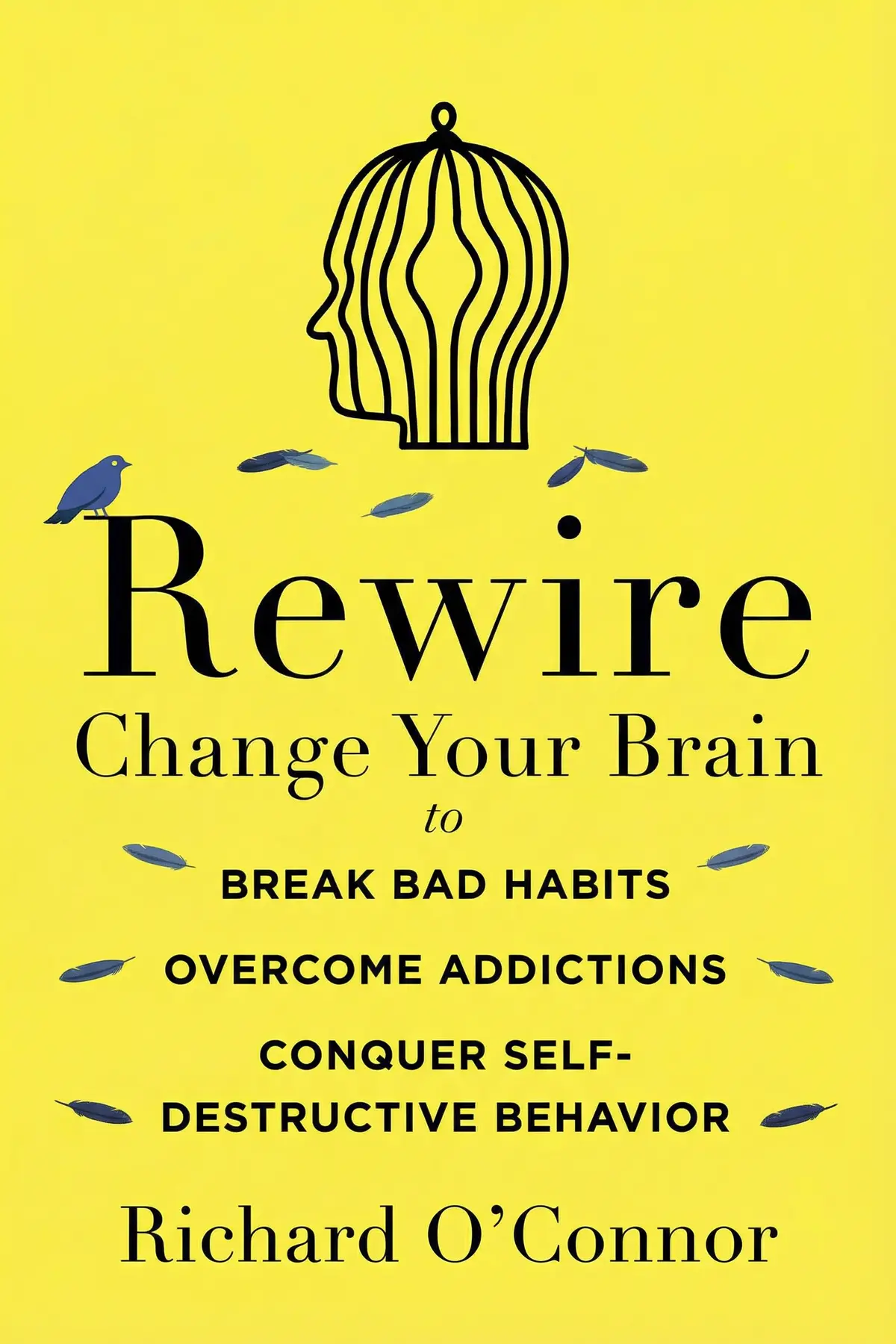
Table of Content
1. Introduction
1 min 25 sec
We have all experienced those moments of profound frustration where we find ourselves looking back at a recent decision and wondering, ‘What was I thinking?’ It might be a small slip-up, like a careless comment that hurts a friend’s feelings, or something with much deeper consequences, such as relapsing into an old addiction after months of progress. These moments of self-sabotage are often followed by a crushing wave of guilt, anger, and self-loathing. We feel as though we are at war with ourselves, trapped in a cycle where we know what is best for us, yet we repeatedly choose the opposite.
The central throughline of Richard O’Connor’s work is that these failures aren’t just personality flaws or signs of a weak will; they are the result of the way our brains are physically and functionally wired. We aren’t single, unified decision-makers. Instead, we are governed by two distinct systems that don’t always communicate well with one another. When these systems are out of sync, we fall into destructive patterns that seem impossible to break.
However, the good news is that the brain is not a static machine. It is dynamic and capable of profound change. By understanding the mechanics of why we do what we do—from the influence of repressed emotions to the power of our automatic habits—we can begin the process of rewiring our neural circuitry. This summary will guide you through the transition from being a victim of your impulses to being the architect of a healthier, happier life.
2. The Duality of the Mind
1 min 53 sec
Explore the constant tug-of-war between your rational thoughts and your reflexive actions, and see why your brain often defaults to the path of least resistance.
3. The Physical Reality of Brain Change
1 min 53 sec
Discover the science of neuroplasticity and how your daily repetitions actually reshape the physical structure of your neural networks.
4. The Distorted Lens of Self-Serving Biases
1 min 43 sec
Uncover the hidden psychological filters that prevent us from seeing our faults clearly and how these biases keep us stuck in cycles of denial.
5. The Pressure Cooker of Repressed Emotions
1 min 51 sec
Understand how buried feelings like anger and guilt act as hidden fuel for self-destructive behavior and why they must be addressed.
6. Cries for Help and the Exhaustion of Defeat
1 min 54 sec
Explore why we sometimes sabotage ourselves just to get noticed, and how repeated failures can lead to a paralyzing loss of motivation.
7. The Mechanics of Addiction and the Undertow
1 min 55 sec
Examine the biological ‘undertow’ that pulls us back into old habits just when we think we’ve escaped, and the role of dopamine in this cycle.
8. Cultivating the Power of Mindfulness
1 min 45 sec
Learn how the simple act of objective self-observation can create the ‘gap’ necessary to choose a new response over an old habit.
9. The Path of Intentional Practice
1 min 54 sec
Understand why ‘faking it’ is a legitimate neurological strategy and how your environment can support your long-term success.
10. Conclusion
1 min 35 sec
In the journey of self-improvement, the most important realization is that you are not a finished product. Your brain is a living, changing organ that is constantly being reshaped by the life you lead. The cycles of self-destruction and regret that have plagued you in the past are not a life sentence; they are simply the result of old wiring that is no longer serving you. By understanding the tug-of-war between your conscious and automatic selves, you can begin the work of taking back control.
We have explored how repressed emotions act as fuel for sabotage, how self-serving biases keep us in the dark, and how the ‘undertow’ of old habits can pull us back just when we think we’re safe. But we have also seen the power of mindfulness to create the space for new choices and the physical reality of neuroplasticity that allows us to build better ‘highways’ in our minds. The path forward is one of persistence and intentionality.
As you move forward, keep the ‘fake it till you make it’ philosophy in mind. Do not be discouraged when new habits feel difficult or unnatural. That friction is simply the feeling of your brain building new connections. Stay committed to the process of self-observation, treat yourself with the compassion you would offer a friend, and keep taking those small, incremental steps. By consistently choosing the person you want to become, you will eventually find that you no longer have to try to be that person—you simply are that person. The power to rewire your life is already within you; it’s time to start the work.
About this book
What is this book about?
Have you ever wondered why we repeatedly fall into the same traps of regret and self-sabotage? Rewire delves into the inner workings of the human brain to explain the hidden mechanics behind our most frustrating behaviors. Richard O’Connor bridges the gap between complex neuroscience and everyday life, showing that our struggles aren’t just failures of character, but the result of how our brains are physically organized. The book promises a path toward transformation by explaining the two distinct systems that drive our choices: the conscious self and the automatic self. By understanding how these systems interact, you can learn to stop being a spectator to your own mistakes. O'Connor provides a roadmap for building new neural pathways, replacing destructive impulses with healthier responses through mindfulness and consistent practice. It’s an exploration of how we can take the wheel of our own psychology, moving from a life of unconscious reactions to one of intentional, positive action.
Book Information
About the Author
Richard O'Connor
Richard O'Connor brings a wealth of clinical experience to his writing as a professional psychotherapist. Beyond his private practice, he has held significant leadership roles in the mental health field, most notably serving as the former executive director of the Northwest Center for Family Service and Mental Health, located in Connecticut, USA. His career is dedicated to helping individuals navigate the complexities of human behavior and emotional well-being.
Ratings & Reviews
Ratings at a glance
What people think
Listeners find this content compelling and accessible, providing deep insights that help clarify their personal challenges. They also value the explanations of psychological methods and the way the material describes restoring brain function. Furthermore, the writing is high-quality and supported by numerous studies, leading listeners to believe it is well worth their time and money.
Top reviews
Ploy
This book provides an incredibly lucid look at how we can actually change our neural pathways through intentional practice. O'Connor manages to bridge the gap between complex neuroscience and everyday habit formation without losing the reader in too much academic fluff. I found the sections on neuroplasticity particularly empowering because they remind us that our brains aren't fixed at birth. It’s like a workout for your mind; the more you practice equanimity, the easier it becomes to stay calm in stressful situations. While some of the psychological concepts felt a bit familiar, the way they are synthesized here makes them feel fresh and actionable for anyone struggling with self-sabotage.
Show moreAria
Richard O'Connor writes with a refreshing, 'no-bullshit' honesty that is often missing from the self-help genre. He doesn’t sugarcoat how difficult it is to change our compulsive patterns, but he provides a realistic roadmap for doing so anyway. I was moved by his downbeat yet kindly assessment of human nature and our tendency to stay deluded about our own weaknesses. The focus on how fear acts as a prompt for self-destructive behavior really resonated with my personal struggles with anxiety. This isn't just a book of theories; it’s a manual for stopping what you don't want to do and changing your brain so you aren't even tempted. It's a 'refreshingly astringent' read that I would recommend to any adult serious about personal growth.
Show moreWin
Ever wonder why we keep making the same mistakes even when we know better? Rewire dives deep into the 'wise brain' versus the impulsive one, explaining how anxiety often pushes us toward self-destructive behaviors. The truth is, modern life bombards us with so many choices that we end up in a state of constant, intolerable stress. I really appreciated how the author discusses the fundamental attribution error—the way we judge our own intentions while judging others solely by their actions. It’s a bit dense in the beginning, and you might need to take notes to keep the different brain regions straight. However, the second half provides very practical exercises that make the clinical information feel worth the effort.
Show moreJirapat
After hearing so much about mindfulness lately, I wanted a book that explained the actual 'why' behind it, and this delivered. O'Connor explains that intelligence and emotional regulation are skills we can learn, much like lifting weights at the gym to build muscle. I particularly enjoyed the discussion on how our addictions or depressive episodes are often just our brains trying to cope with fear. The book is well-written and filled with various studies that back up his claims, making it feel more credible than your average self-help fluff. My only gripe is that it feels a little disorganized at times, jumping between different research findings without a clear central metaphor. Still, it’s a very insightful guide for anyone looking to renew their brain function.
Show moreZoey
Finally got around to finishing this, and I have to say the second half really saved it for me. While the beginning felt like a challenge from work—very clinical and outside my comfort zone—the later chapters are packed with practical ideas. I loved the concept that we can literally exercise our brains to become freer from our short-term cravings and aversions. It really puts the power back in your hands when you realize that your brain is a system shaped by experience. The stories he uses to illustrate different situations made the complex theories much easier to digest and visualize. It's a solid four-star read, even if the 'cliché psychological chestnuts' get a bit repetitive after a while.
Show moreTong
As someone who works in the behavioral sciences, I appreciate the mandate for evidence-based practices that this book champions. O'Connor does a fantastic job explaining how fMRI technology has proven that we can actually strengthen our psychological skills through meditation. The book highlights how we often lose touch with our 'wise brain' during periods of high anxiety, leading to impulsive decisions we later regret. It’s a very encouraging read that frames recovery and change as a matter of going against the grain of our initial cravings. While I didn't find any 'new' solutions per se, the relentless honesty about our deluded ways of dealing with stress was incredibly grounding. This is a well-written, deep dive into the mechanics of self-sabotage.
Show moreGabriel
Not what I expected at first, but I ended up finding a lot of value in the specific ways this book addresses fear. We often think our mistakes are due to character flaws, yet O'Connor argues they are usually just responses to an intolerable state of anxiety. I found the chapter on the fundamental attribution error to be a real eye-opener for how I view both myself and my coworkers. The prose is clear, and although there are a lot of studies cited, it never feels like a dry textbook. It’s more of a guidebook for anyone who feels stuck in a loop of procrastination or impulsive habits. You might find some of the popular psychology terms a bit dated, but the practical tips for rewiring your responses are excellent.
Show moreFelix
Picked this up because I wanted a new perspective on breaking my procrastination habits, but the execution was a bit of a mixed bag. The first half is exceptionally clinical and heavy on jargon, which made it a slog to get through during my morning commute. To be fair, the information regarding how our life experiences teach our brains what to do is scientifically solid and important. I just wish it didn't feel so dated with all the psychodynamic talk about 'daddy issues' and other clichés that feel a bit past their prime. If you can push through the dry academic sections, there are some decent tips on mindfulness and meditation towards the end. It's a useful resource, but definitely not the most engaging read in the field.
Show morePat
Look, there is an enormous wealth of good information here, but the book desperately needs a better organizational structure. I felt like I was constantly losing the thread as O'Connor moved from one study to the next without a strong central argument. He covers a lot of ground, from addiction to codependency, but the foundation feels a bit stuck in the past. To be fair, his inclusion of 3rd wave mindfulness techniques is great, but the psychodynamic underpinnings were a bit of a deal breaker for me. It’s a decent enough overview of the field if you’re a beginner, but it lacks the 'earth-shaking' impact of newer neuroscience books. It’s worth the time if you’re patient, but it won't be for everyone.
Show morePong
Frankly, I found this to be a frustrating experience, especially as an audiobook listener. Listening to a narrator drone on through lists of clinical pathologies and dense jargon was almost painful. It's a real shame because the core message about neuroplasticity is incredibly valuable, but the presentation is just so inaccessible for a general audience. The author relies heavily on old-school psychodynamic theories that felt a bit 'pop-psych' and outdated compared to contemporary behavioral science. I kept waiting for a clear, orienting through-line to emerge, but the book just felt like a collection of random research findings tossed together. If you’re interested in this topic, I’d suggest looking into John Medina instead for something more structured and engaging.
Show moreReaders also enjoyed
59 Seconds: Change Your Life in Under a Minute
Richard Wiseman
ADHD an A-Z: Figuring It Out Step by Step
Leanne Maskell
AUDIO SUMMARY AVAILABLE
Listen to Rewire in 15 minutes
Get the key ideas from Rewire by Richard O'Connor, plus 5,000+ more titles in English and Thai.
- 5,000+ titles
- Listen as much as you want
- 7-day free trial
- Cancel anytime







