
A Liberated Mind: How to Pivot Toward What Matters
Steven C. Hayes
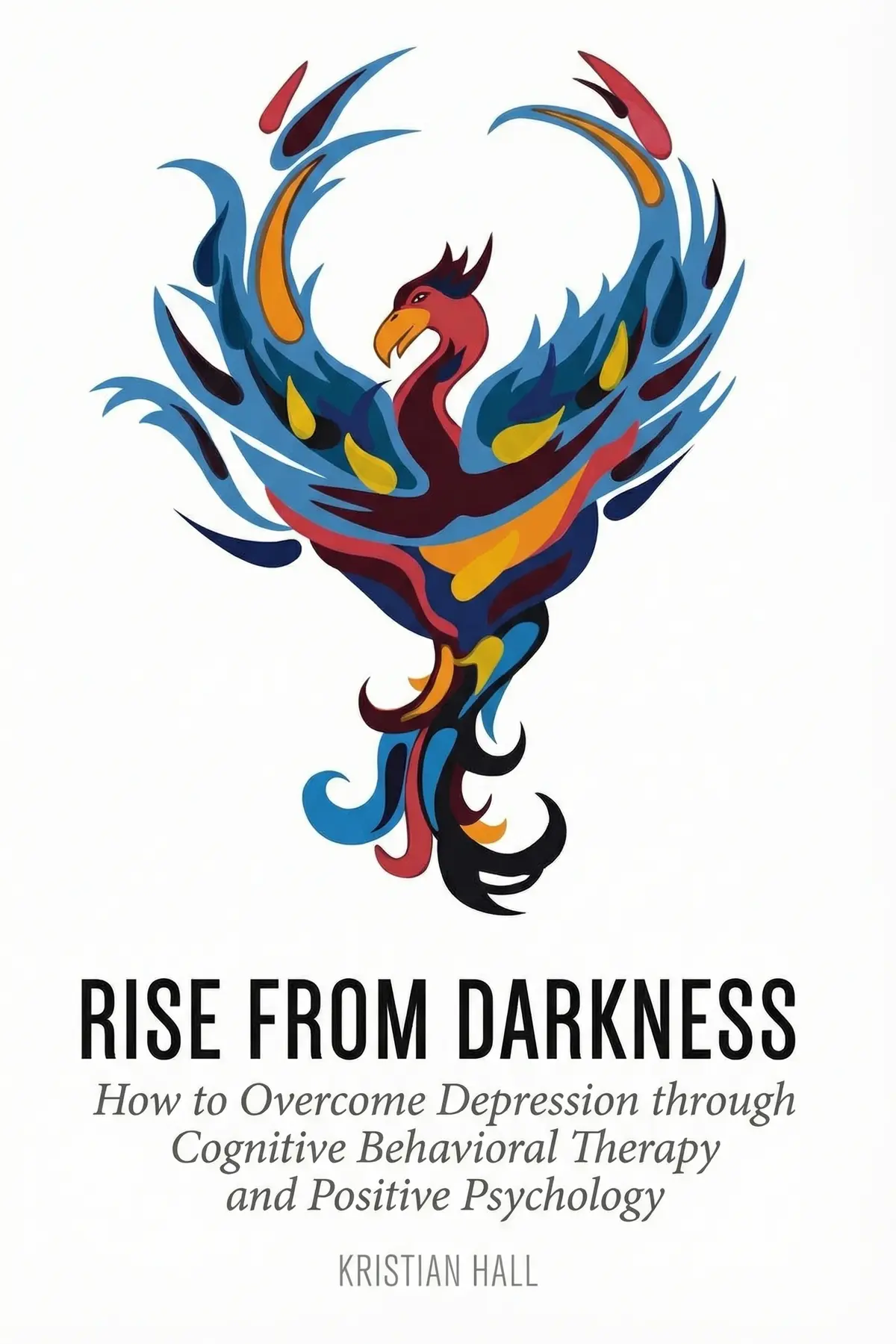
Rise from Darkness provides a practical roadmap for overcoming depression and anxiety using evidence-based techniques from cognitive behavioral therapy and positive psychology to reshape your mental outlook.
1 min 45 sec
Imagine waking up every day under a heavy, gray cloud that refuses to dissipate. For those living with depression and chronic anxiety, this isn’t just a metaphor; it’s a daily reality. The world often feels muted, threats seem magnified, and the simple act of finding joy can feel like an impossible task. But what if the path out of that darkness didn’t require a radical overhaul of your entire life all at once? What if it started with understanding the mechanics of your own mind?
In this exploration of the book Rise from Darkness, we are looking at a blueprint for mental recovery. The core idea here is that while depression is a formidable foe, it is not an invincible one. By using specific, proven techniques from fields like Cognitive Behavioral Therapy and Positive Psychology, individuals can begin to dismantle the structures of their own unhappiness. This journey isn’t about ignoring life’s problems; it’s about changing the way we perceive and react to them.
Over the next several chapters, we will walk through practical steps that range from rewriting your internal scripts to utilizing the power of your subconscious mind. We’ll examine how our brains naturally filter information—and how those filters can sometimes malfunction. We will also look at the ‘ruts’ our thoughts get stuck in and how we can steer ourselves onto a smoother road. By the end of this summary, you’ll have a clear understanding of how to use small, daily interventions to foster a more resilient and positive state of mind. Whether you are currently struggling or simply want to bolster your emotional health, these insights provide a way to rise and move forward.
2 min 28 sec
Discover how your brain’s internal processing system can distort your reality and why some experiences stick to us like Velcro while others slide away.
2 min 13 sec
Learn why your mind gets stuck in repetitive cycles of despair and how to identify common logical fallacies like mind-reading.
2 min 22 sec
Find out how shifting your focus from ‘fixing flaws’ to ‘building joy’ can create a tangible roadmap for emotional recovery.
2 min 14 sec
Discover simple mental ‘circuit breakers’ that can stop a panic spiral in its tracks and put your daily worries into perspective.
1 min 54 sec
Explore how to access your brain’s ‘operating system’ to delete old habits and install more supportive mental software.
2 min 09 sec
Uncover the brain’s inability to distinguish between vivid imagination and reality, and how to use this to your advantage.
1 min 23 sec
As we wrap up this journey through the strategies found in Rise from Darkness, it’s important to acknowledge that the climb out of depression is rarely a straight line. However, the tools we’ve discussed—from updating our mental filters to using the power of self-hypnosis and visualization—offer a practical way to start that ascent. We’ve learned that our brains are not fixed; they are dynamic systems that can be retrained through consistency and the right psychological techniques.
One final, simple piece of advice to carry with you is the strategic use of music. Sound has an almost immediate bridge to our emotional centers. While upbeat music can lift your spirits, sometimes listening to something that matches a sad or angry mood can actually help you process those feelings so you can eventually move past them. The key is to be an active participant in your own mental state.
Recovery is a process of small wins. By choosing to focus on gratitude, by challenging your internal ‘mind-reader,’ and by visualizing a brighter future, you are slowly but surely reclaiming your life from the shadows. You have the ability to rewrite your story, one thought at a time. Now, take one of these techniques—perhaps the gratitude journal or the catastrophe scale—and try it today. The path to a lighter, more vibrant life is right in front of you.
Many people find themselves trapped in the heavy, suffocating fog of depression, feeling as though there is no clear path back to the light. Rise from Darkness serves as a compassionate and practical guide for those navigating these difficult emotional waters. Written by Kristian Hall, who personally spent a decade battling clinical depression, the book moves beyond theory to offer actionable strategies that worked for him and can work for others. The book promises a toolkit of mental exercises derived from the worlds of Cognitive Behavioral Therapy and Positive Psychology. It explores how our internal filters shape our reality, how we can break the cycle of negative thought loops, and how simple habits like gratitude and visualization can physically and mentally rewire our brains. By combining personal experience with established psychological practices, the book offers a sense of hope and a step-by-step methodology to transition from a state of despair to one of enduring well-being.
Kristian Hall is a writer based in Norway. He spent ten years struggling with deep depression before finding a path to recovery through extensive research into positive psychology and cognitive behavioral therapy. By applying these techniques to his own life, he successfully overcame his illness. Rise from Darkness is his first book.
Listeners find the work to be well-crafted and functional, offering a wealth of beneficial details regarding depression prevention. They value its efficacy, with one listener highlighting the self-improvement drills provided, while another explains it assists in building a more optimistic life perspective. The book earns praise for its worth, with one listener characterizing it as "amazing."
Wow, I didn't expect to find such a visceral connection to the author's story right from the first page. This isn't just another dry medical text; it is an amazing, practical toolkit for anyone feeling powerless. The exercises for self-improvement are clearly defined and easy to integrate into a busy life. I felt my outlook shifting as I worked through the journaling prompts. Hall has a way of making you feel understood. The 'Super Week' plan is a game-changer for building momentum. If you want to cultivate a more positive outlook, this is worth every penny.
Show moreFinally got around to reading this, and the timing couldn't have been more perfect. Being depressed is like living on another planet, and Hall captures that isolation perfectly. He doesn't just offer platitudes; he provides a huge amount of useful information about prevention. I loved the small boxes with definitions and the practical tips on comforting clothes and nature walks. It reminded me that small steps lead to big changes. The emphasis on choosing to change is vital. This book gave me the courage to start my own 'Super Week' and actually stick to it. Truly an inspiring read.
Show moreThis book provides a pragmatic roadmap for anyone feeling powerless against their own thoughts. I was struggling with seasonal slumps and found the holistic approach here to be exactly what I needed. Hall covers everything from the clothes you wear to the way you talk to yourself in the mirror. It’s about building a fortress against the darkness. The 'Super Week' concept helped me organize my recovery in a way that didn't feel overwhelming. I’ve read a lot on this topic, and this is one of the few books that feels like it was written by someone who actually lived it. Truly a valuable resource for depression prevention.
Show moreEver wonder why some people bounce back while others stay stuck in the shadows for years? Kristian Hall explores this through a blend of personal anecdote and cognitive science. The book acts as a gentle friend offering advice gleaned from painful experience. I particularly appreciated the sections on breaking destructive thought patterns. Hall explains neural pathways in a way that makes sense to a layperson without being condescending. Some of the advice is common sense, like eating better and exercising, but seeing it all laid out in a cohesive plan makes it feel achievable. The tone is supportive, though I did find the repetitive use of certain terms a bit monotonous after a while. Still, it’s a very well-written guide for self-improvement.
Show moreAfter hearing so much about Kristian Hall’s 14 Steps to Happiness, I decided to give this earlier work a go. It is a comprehensive roadmap for those dealing with anxiety and the weight of the world. Frankly, the focus on stopping the retreading of old mental wounds was the most beneficial part for me. Hall uses simple analogies to describe the brain’s makeup, making the science accessible. I did feel that some of the examples he used, like the references to Timothy Leary or certain political ideologies, were a bit extreme and distracting from his main points. Regardless, the core message is powerful. You aren't a victim of your biology. You can choose a new direction.
Show moreAs someone who hasn't personally faced deep depression, I picked this up to better understand a friend's struggle. The book was incredibly eye-opening. It describes the powerlessness of the condition with such clarity that I felt I could finally 'see' what my friend goes through. Hall’s mission to help others is noble and clear on every page. Personally, I found the advice on forgiving those who hurt you to be the most moving section. It’s not just for the depressed; it’s for anyone wanting to move on from hate. The writing style is helpful and caring. I’ll be recommending this to anyone who wants to be a better support system for their loved ones.
Show moreTruth is, self-help is a crowded market, yet Hall manages to carve out a space by being incredibly vulnerable. This book is a deep dive into the author's personal rise from the dark. He doesn't claim to be a doctor, but his research is clearly extensive. I appreciated the mention of counseling as a necessary step for many. The book acts as a bridge between feeling hopeless and taking that first step toward a therapist's office. It’s well-written and focuses on creating a more positive life through manageable daily actions. The exercises are actually fun to do. It’s a grounded, realistic approach to a very difficult subject.
Show moreRise from Darkness is a solid resource for those navigating life's rougher patches, but it feels incomplete in some areas. To be fair, the author’s vulnerability is admirable. He speaks from the heart about his own climb out of the pit. However, the book leans heavily on situational issues. It glosses over major depressive disorder and the genetic components of mental illness that often require psychiatric intervention. I have watched family members struggle with conditions that a walk in nature or a change in diet simply cannot fix. While the CBT exercises are practical, the narrative lacks a balanced view of medication. It is a helpful primer for milder episodes, but it shouldn't be your only tool if you’re in a deep, clinical crisis.
Show moreThe chapter on journaling was arguably the highlight of the book for me, though the rest felt a bit hit-or-miss. Not gonna lie, the narrative can be quite preaching at times. Hall repeats his points over and over, which makes the book longer than it needs to be. For instance, explaining that people feel misunderstood and then immediately saying people don't understand them is just redundant. That said, the actual tactics for combating negative thoughts are grounded in real-life application. It’s a decent primer for someone entirely clueless about CBT, but seasoned self-help readers might find it a bit basic. A good developmental editor could have tightened this up significantly.
Show moreLook, I admire anyone who fights through their demons, but this book felt like a series of repetitive lectures. The author spends a lot of time telling you how to read the book, which felt a bit self-important to me. My father passed when I was young, and I learned that grit is often the only way through. Hall’s tone is a bit too soft for my liking, almost contributing to a culture of whining. Some of the analogies are just bizarre—why am I reading about a communist’s perception of reality in a self-help book? Most of the advice is common sense that anyone could find on a quick Google search. If you’ve never heard that exercise helps your mood, then maybe this is for you, but it wasn't for me.
Show moreSteven C. Hayes

Leanne Maskell

AUDIO SUMMARY AVAILABLE
Get the key ideas from Rise from Darkness by Kristian Hall, plus 5,000+ more titles in English and Thai.







