
22 min 39 sec
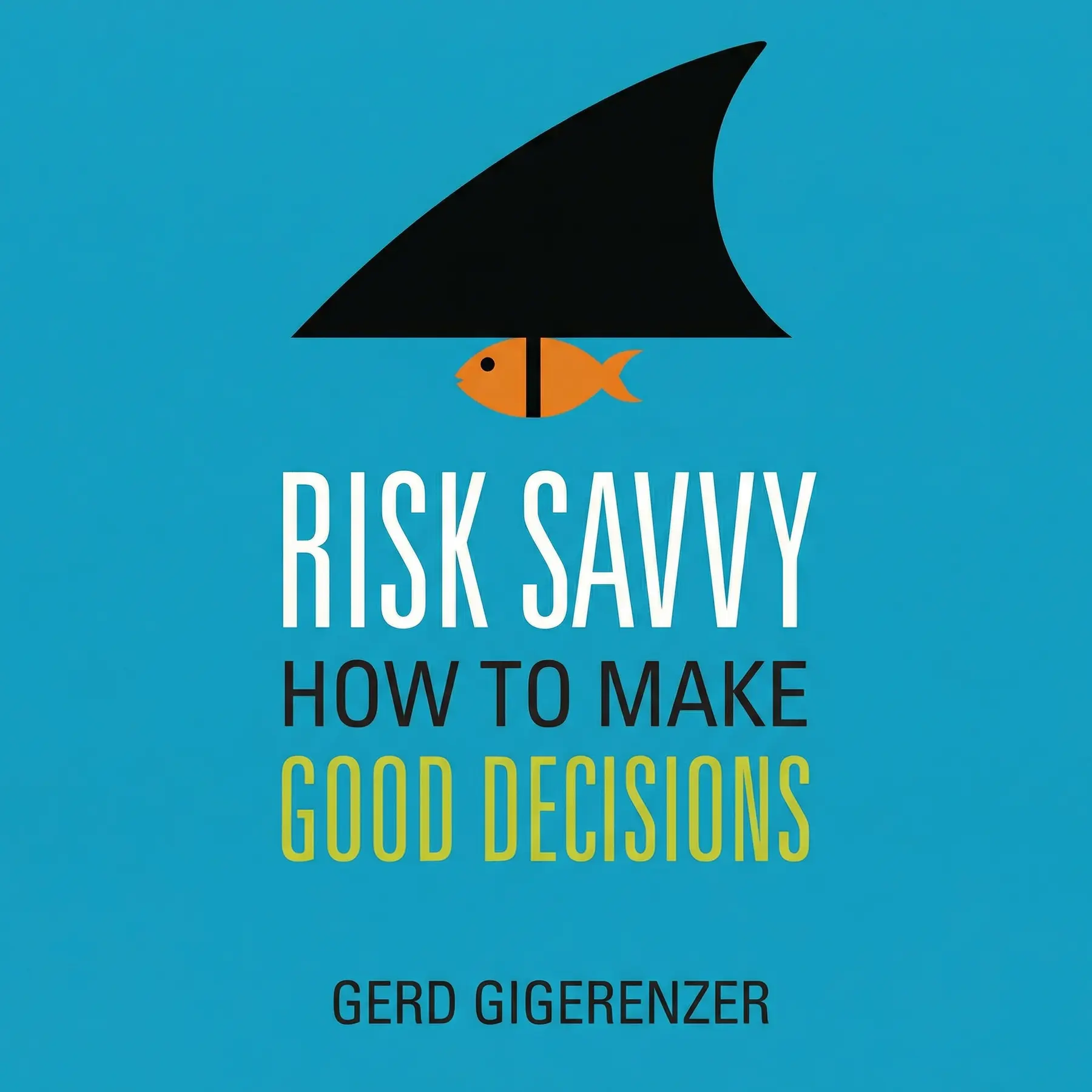
Risk Savvy: How To Make Good Decisions
Risk Savvy reveals why we struggle with complex decisions and how to improve our choices by distinguishing between known risks and total uncertainty through simple, effective rules of thumb.
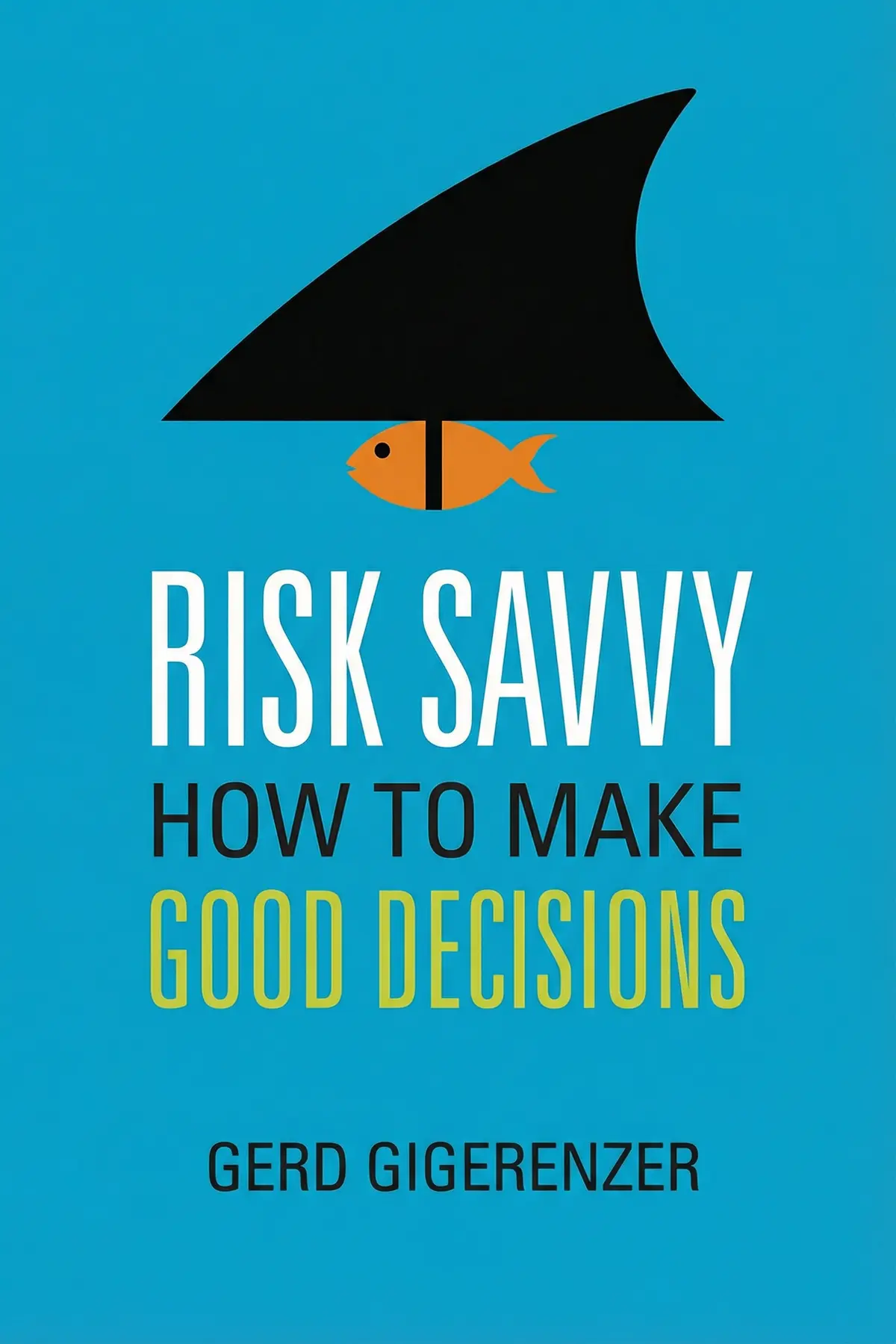
Table of Content
1. Introduction
1 min 46 sec
Every morning, from the second you open your eyes, you are a participant in a grand game of chance. You decide whether to linger in bed or rush to start your day. You choose a route to work, a meal for lunch, and perhaps a financial path for your future. We like to think of ourselves as rational agents, weighing the pros and cons of every move, but the reality is much more complex. Often, we find ourselves paralyzed by the sheer volume of information available to us, or worse, we make choices based on a fundamental misunderstanding of the odds.
The throughline of our exploration today is the concept of risk literacy. It is the idea that being truly ‘savvy’ doesn’t mean having a supercomputer in your brain to calculate every possible variable. Instead, it means knowing what can be known and, perhaps more importantly, recognizing what cannot. Most of us go through life confusing two very different types of unpredictability: situations where we know the rules and probabilities, and situations where we are flying blind.
In the following sections, we are going to unpack the tools you need to navigate this landscape. We will look at why ‘more information’ isn’t always ‘better information’ and how a simple rule of thumb can be more lifesaving than a thick manual of instructions. We will explore the hidden ways statistics are used to scare us and why your gut might actually be smarter than you think. By the end, you’ll see that making good decisions isn’t about being perfect; it’s about being brave enough to acknowledge uncertainty and smart enough to keep things simple. Let’s dive into how you can cut through the noise and start making choices with real confidence.
2. Defining the Gap Between Risk and Uncertainty
2 min 03 sec
Discover why the world isn’t just a giant casino and why treating every unpredictable situation like a game of chance leads to major errors in judgment.
3. The Dangers of Misidentifying Our Circumstances
2 min 17 sec
Understand how mistaking uncertainty for risk can lead to devastating surprises and how mistaking risk for certainty causes unnecessary panic.
4. Decoding the Foundations of Statistical Claims
2 min 23 sec
Learn to look behind the numbers by questioning the three pillars of risk calculation: frequency, design, and believability.
5. Harnessing the Power of Heuristics and Rules of Thumb
2 min 16 sec
Discover why simple mental shortcuts are often more effective than complex calculations when faced with life-or-death uncertainty.
6. The Wisdom of Choosing Good Enough Over Best
2 min 10 sec
Find out why searching for the perfect choice often leads to regret and how ‘satisficing’ can improve your happiness and outcomes.
7. Reframing Mistakes as Essential Learning Tools
1 min 58 sec
Learn why the fear of making errors leads to ‘defensive’ decisions that hurt us and how embracing mistakes can lead to breakthroughs.
8. The Subtle Art of Framing Risks and Rewards
2 min 08 sec
Uncover how the way information is presented can trigger unnecessary panic and how ‘natural frequencies’ can provide a clearer picture.
9. Cultivating Personal Autonomy in an Expert-Driven World
1 min 56 sec
Discover how ‘fact boxes’ and a skeptical mind can help you reclaim your decision-making power from paternalistic experts.
10. Investing in a Risk-Literate Future for the Next Generation
2 min 01 sec
Learn why teaching children the fundamentals of risk and statistical thinking is the key to creating a more resilient and confident society.
11. Conclusion
1 min 41 sec
As we wrap up our journey through the landscape of risk and uncertainty, the most important takeaway is that you are more capable of navigating this world than you have been led to believe. We live in an era that worships complexity, but we have seen that when the future is truly unknown, simplicity is our greatest ally. By distinguishing between the ‘casino’ risks of known odds and the ‘weather’ uncertainty of the real world, you can stop searching for perfect calculations and start looking for robust, simple strategies.
Remember that risk literacy is not about having all the answers. It’s about having the right questions. It’s about asking for the absolute numbers behind the scary headlines. It’s about recognizing when an expert is speaking from fear rather than facts. It’s about trusting your gut when your experience is speaking to you, and having the courage to make a ‘good enough’ choice so that you can move forward with your life.
Ultimately, being risk savvy is a form of freedom. It frees you from the manipulation of those who use statistics to incite panic. It frees you from the paralysis of trying to find a ‘best’ that doesn’t exist. And it frees you to learn from your mistakes rather than being crushed by them. As you go out into the world today, take these simple rules of thumb with you. Look for the ‘natural frequencies’ in the stories you hear, and don’t be afraid to embrace a little uncertainty. The world may be unpredictable, but with the right mental tools, you can face it with a steady hand and a clear mind. The path to a better life isn’t paved with more data; it’s paved with the wisdom to know which data truly matters.
About this book
What is this book about?
Risk Savvy addresses a fundamental problem in modern society: our collective inability to understand and process risk. We often feel overwhelmed by a flood of data, experts, and probabilities, yet we frequently make choices that are counter to our own best interests. This book breaks down the mental barriers that prevent us from being risk-literate, starting with the crucial distinction between situations where the odds are known and situations where the future is truly unpredictable. The promise of this work is to transform the way you approach everything from medical diagnoses to financial investments. Instead of relying on complex algorithms or blindly following authority figures, you will learn to utilize heuristics—simple rules of thumb—and trust your own intuition. By understanding how information is often framed to manipulate our emotions, you can take control of your life's trajectory. Ultimately, the book offers a roadmap for creating a more informed, confident society by prioritizing statistical thinking and the courage to admit what we do not know.
Book Information
About the Author
Gerd Gigerenzer
Gerd Gigerenzer is a psychologist and director of the Center for Adaptive Behavior and Cognition at the Max Planck Institute and director of the Harding Center for Risk Literacy, both of which are in Germany. In addition, he has authored several books on decision making such as Reckoning with Risk: Learning to Live with Uncertainty and Gut Feelings: The Intelligence of the Unconscious.
Ratings & Reviews
Ratings at a glance
What people think
Listeners find this work remarkably educational and straightforward, with one person noting that it merges broad intellectual concepts with actionable tips. Additionally, the prose is well-liked, and listeners feel the book is worth the cost. They also value the method for teaching risk awareness, with one individual stating it improves survival by a factor of two. However, the material gets some conflicting feedback, and one listener points out that it does not work effectively as a reference source.
Top reviews
Jonathan
Ever wonder why your doctor seems so confident about confusing statistics that don't quite add up? This book acts as a powerful bullshit detector for anyone trying to navigate health, finance, or even romance in an age of data overload. Gigerenzer explains concepts like lead-time bias with remarkable clarity, showing why a '98% survival rate' doesn't always mean what we think it does. I was genuinely shocked to read about the gynecologists who couldn't solve a simple probability problem regarding breast cancer screenings. It makes you realize that experts are often just as probability-blind as the rest of us, which is terrifying but necessary to know. Not gonna lie, some of the calculations require a second read, but the practical advice here could literally save your life. It’s an essential manual for the modern citizen.
Show moreSuthee
Wow, talk about a wake-up call for how we process health data and personal safety in the 21st century. This book completely changed how I look at cancer screening statistics and the fear-mongering that often dominates our news cycles. The distinction between survival rates and mortality rates is something every single adult needs to understand before they walk into a clinic. Gigerenzer has a blunt, no-nonsense style that cuts through the noise and forces you to ask better questions of your doctors and financial advisors. It’s depressing that our education system doesn't teach these basic concepts, but this book is the perfect remedy for that failure. I’ve already recommended it to several friends who struggle with anxiety over health screenings or investment decisions. It’s a life-changing read that equips you with a mental toolkit for surviving a world designed to keep you afraid.
Show moreTeng
Finally got around to reading this and I’m convinced that gut feelings aren't just 'magic'—they're based on years of subconscious pattern recognition. Gigerenzer does a fantastic job of explaining why 'simpler is better' when we are dealing with things that cannot be perfectly predicted. I loved the practical breakdown of how to use icon boxes to understand relative versus absolute risk, which is a total game-changer. The book is written in a very accessible way, making it easy to share these concepts with family members who might be intimidated by math. It’s not just an intellectual exercise; it’s a survival guide for making better choices in every area of your life. The author's passion for improving human wellbeing really shines through in every chapter, even when he's being a bit cynical about the experts. A must-read for anyone who feels overwhelmed by the 'data' being thrown at us every day.
Show moreCaleb
This book is a fascinating dive into why we fear the wrong things and how we can regain control through simple logic. Gigerenzer takes a bold stance against the popular idea that humans are naturally 'irrational,' arguing instead that we simply lack the right tools for a world of uncertainty. While he occasionally misrepresents the work of Kahneman and Tversky, his core message about 'fast and frugal' heuristics is genuinely empowering for the average reader. I loved the practical breakdown of how to interpret medical screenings, as it makes the complex math of false positives feel intuitive. It’s a bit long-winded in parts, following the classic business book structure of anecdote-then-explanation, but the payoff is worth the effort. Ultimately, it’s a refreshing take that challenges the status quo of expert-led decision making.
Show moreKae
Picked this up after seeing a recommendation for improving general decision-making, and I wasn't disappointed by the practical tools it offers. Gigerenzer makes a compelling case that simple rules of thumb—heuristics—often outperform complex mathematical models in the real world where uncertainty reigns. I particularly enjoyed the section on how we misunderstand daily probabilities, like the weather report or the chance of rain over a full weekend. It’s written in a way that’s incredibly easy to understand for laypeople, even if you haven't touched a math textbook since high school. My only gripe is that it feels a bit light on the data-heavy side, making it more of an introductory guide than a deep dive. Still, it’s a great way to sharpen your critical thinking skills and stop being intimidated by 'experts.' It’s a solid four-star read for anyone wanting to be more risk literate.
Show moreChee
After hearing Gerd Gigerenzer speak, I expected a dense academic text, but this is surprisingly accessible for a general audience. The book focuses on the difference between known risk and true uncertainty, which is a distinction most people (and banks) completely ignore. I found the 'icon boxes' for visualising data to be a brilliant way to make sense of confusing percentages that doctors usually throw at you. Personally, I think the section on financial advisors was the most valuable, as it exposes how little 'professional' models actually contribute to success. The writing style is casual and punchy, though it does get a bit repetitive by the middle chapters. It’s definitely worth the price of admission for the health chapters alone, though I wish it were organized better for quick reference. It definitely helps you see the world through a much more skeptical lens.
Show moreBrahim
As someone who has always been a fan of 'Thinking, Fast and Slow,' reading this was a bit of a shock to the system. Gigerenzer takes a contrarian approach, arguing that our gut feelings are actually sophisticated tools evolved to handle complex, uncertain environments. While I don’t agree with everything he says—especially his habit of over-simplifying his opponents’ views—the logic behind simple heuristics is very hard to ignore. The examples from the healthcare industry are particularly damning and provide a much-needed critique of how statistics are used to manipulate patient choices. It’s a bit wordy in places, and the business-style anecdotes can get a little tiresome after a while. However, the core message about becoming 'risk savvy' through rules of thumb is a vital perspective for any modern thinker. It’s a healthy challenge to the idea that we are all just 'predictably irrational' beings.
Show moreCamila
Look, the truth is that we are mostly illiterate when it comes to probability, and that makes us easy targets for manipulation. Gigerenzer's book is an attempt to fix that by teaching us how to think clearly about risk without needing a PhD in mathematics. He uses simple examples, like the Monty Hall problem and rain forecasts, to show how easily our intuition can be led astray—or how it can be trained. I appreciated the bluntness of the writing; it’s refreshing to see someone call out the 'greedy schemes' that sometimes hide behind medical statistics. My only real issue is that the book can feel a bit scattered as it jumps from terrorism to romance to finance. It’s more of a collection of insights than a cohesive manual, but each insight is incredibly valuable. It’s an eye-opening read that makes a strong case for teaching risk literacy in every high school.
Show moreAnong
In my experience, most business-focused non-fiction could be condensed into a long-form essay, and this book definitely falls into that trap. While the information is incredibly informative, the author repeats his main points about heuristics versus complex models far more than necessary. To be fair, the specific advice on how to talk to your doctor and how to evaluate financial risk is worth the slog. Gigerenzer is at his best when he’s explaining why simple rules work better in high-uncertainty environments than sophisticated computer algorithms. I just found the constant jabs at other psychologists to be a bit distracting and unnecessary for the point he was trying to make. It’s a good book with a very important message, but it requires some patience to get through the fluff. If you can handle the 'business book' pacing, there is a lot of gold to be found here.
Show moreLuckana
Frankly, the author spends way too much time attacking straw men rather than engaging with actual psychological research. While Gigerenzer has some interesting points about the value of intuition, his dismissal of Kahneman and Tversky feels intellectually dishonest and undermines his overall credibility. The book follows that tired business-book formula where a single idea is stretched across hundreds of pages using repetitive anecdotes and vague generalizations. He lauds the 'gut feeling' of business leaders without acknowledging that intuition requires years of feedback in stable environments to be even remotely reliable. To be fair, the section on medical statistics is eye-opening and provides some genuine utility for those facing health decisions. However, the patronizing tone and the constant overreaching make this a frustrating read for anyone looking for a balanced scientific discussion. It’s not suitable as a reference source if you want a rigorous understanding of cognition.
Show moreFeatured in
Readers also enjoyed


A Liberated Mind: How to Pivot Toward What Matters
Steven C. Hayes
Acting with Power: Why We Are More Powerful Than We Believe
Deborah Gruenfeld
Age of Propaganda: The Everyday Use and Abuse of Persuasion
Anthony Pratkanis
AUDIO SUMMARY AVAILABLE
Listen to Risk Savvy in 15 minutes
Get the key ideas from Risk Savvy by Gerd Gigerenzer, plus 5,000+ more titles in English and Thai.
- 5,000+ titles
- Listen as much as you want
- 7-day free trial
- Cancel anytime







