
19 min 10 sec
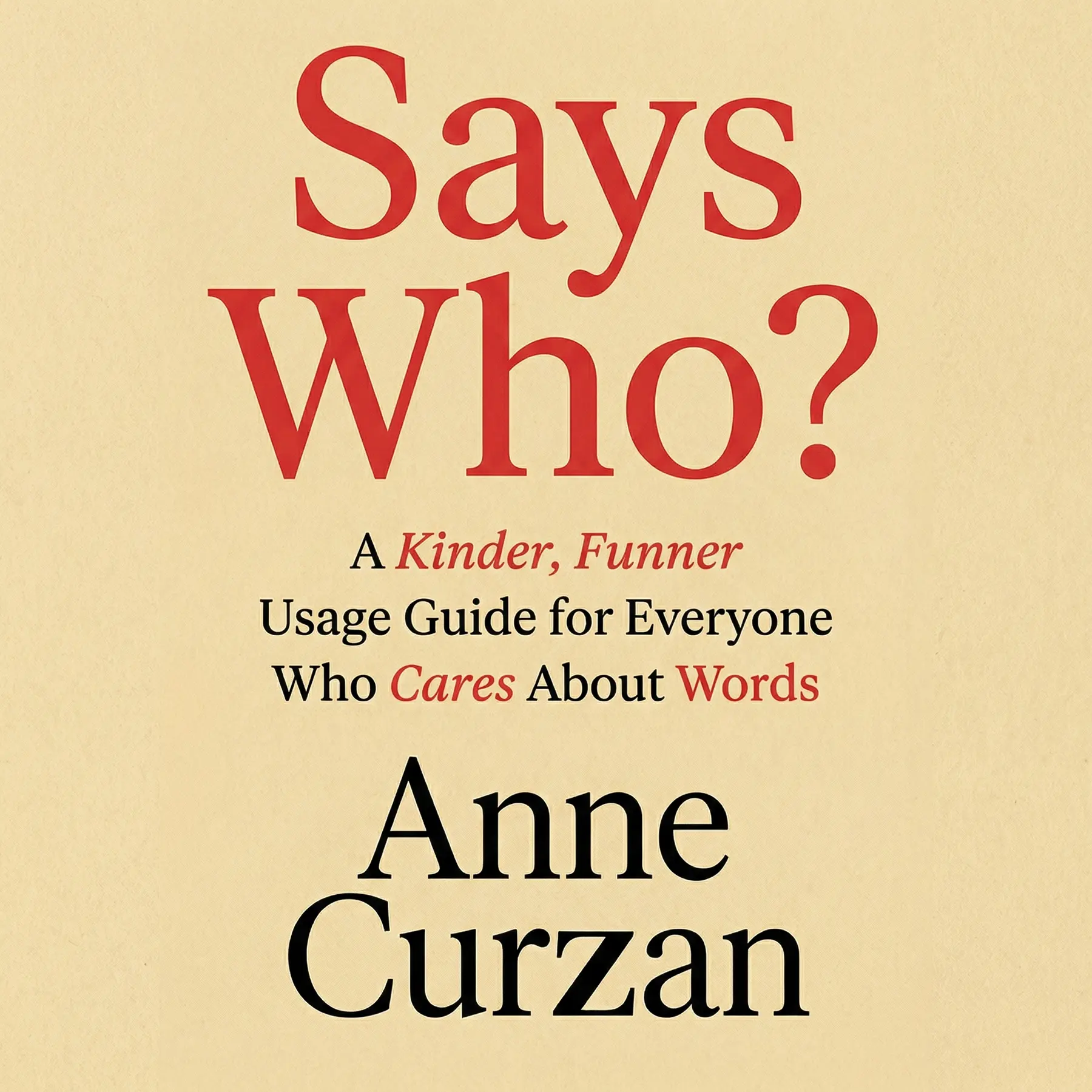
Says Who?: A Kinder, Funner Usage Guide for Everyone Who Cares About Words
By Anne Curzan
Linguist Anne Curzan challenges rigid grammar rules, exploring how English evolves through social power and everyday usage. Discover the fascinating history behind controversial words and learn to navigate language shifts with empathy.
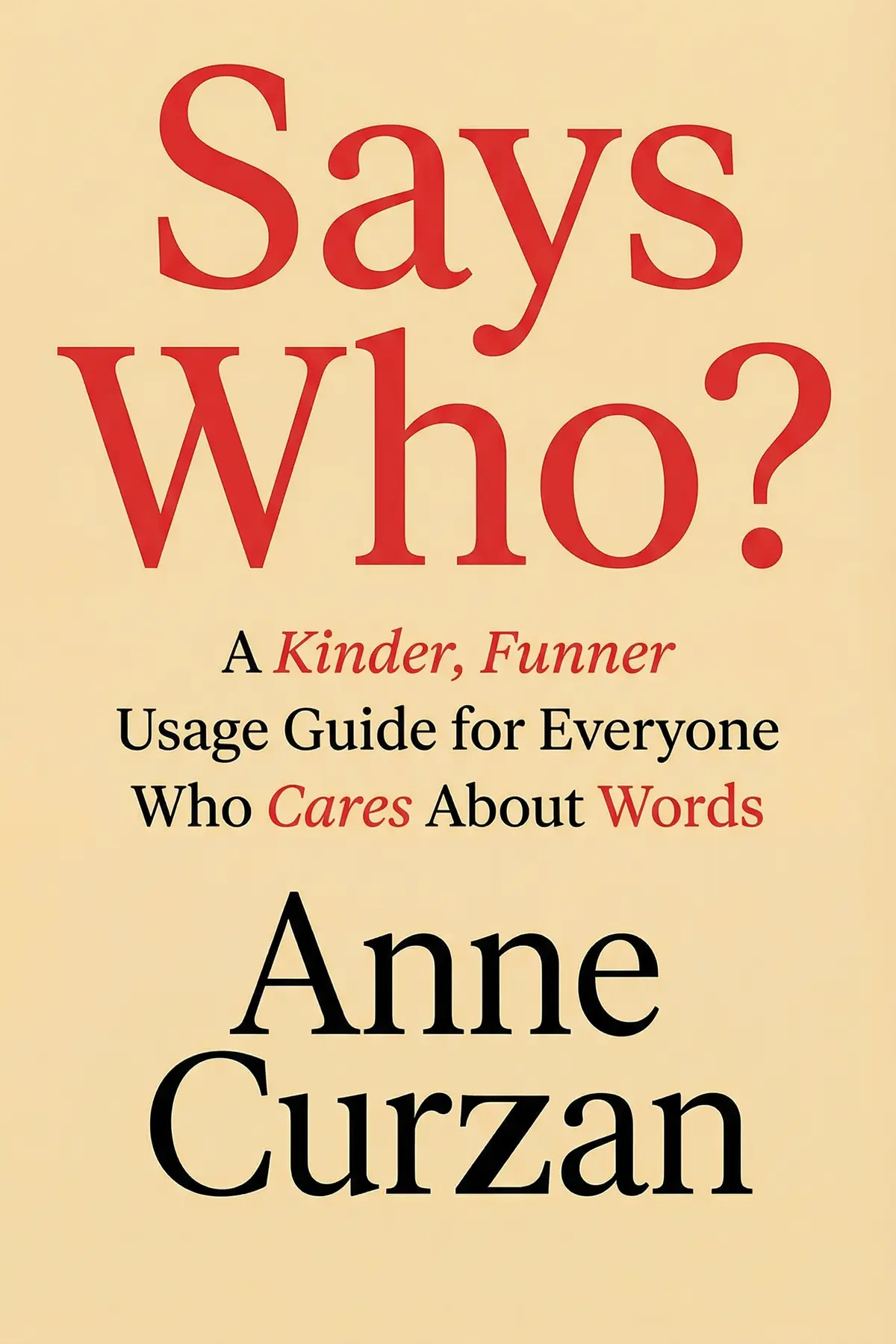
Table of Content
1. Introduction
1 min 36 sec
Every time we open our mouths or set our fingers to a keyboard, we are participating in a grand, ongoing experiment. English is a living organism, constantly shedding old skins and growing new ones. Yet, for many of us, this evolution feels less like growth and more like a slow descent into chaos. You’ve likely felt that familiar prickle of irritation when you see a sign that says “Ten items or less” instead of “fewer,” or when someone drops an “irregardless” into a serious conversation. This inner critic—let’s call it the grammando—is always on duty, ready to defend the borders of proper English against the perceived onslaught of slang and error.
But there is another side to our linguistic nature. There is the wordie—the part of us that finds a strange delight in the way teenagers invent new slang or how a word can shift meaning over the centuries until it’s unrecognizable. The struggle between the grammando and the wordie is at the heart of our relationship with language. How do we decide what counts as “correct”? Is there a middle ground between being a pedantic rule-follower and allowing everything to fall apart into a free-for-all?
This exploration is about finding that middle ground. We are going to look at the social forces, historical quirks, and human power dynamics that actually dictate our linguistic rules. By the end, you’ll see that being an effective communicator isn’t just about following a checklist of do’s and don’ts. It’s about understanding the context, the audience, and the vibrant, messy history of the words we use. Let’s dive into why we say what we say, and more importantly, who gets to decide the rules in the first place.
2. The Evolution of Verbal Impact
2 min 35 sec
Discover why the debate over using impact as a verb is based on a misunderstanding of linguistic history and discover how usage panels influence our perception of correctness.
3. Power Dynamics and Inclusive Language
2 min 23 sec
Explore how our choice of words reflects societal power structures and why the shift toward inclusive terminology is about respect rather than mere political correctness.
4. The Shifting Boundaries of Comparison
2 min 24 sec
Delve into why words like funner and more unique provoke such strong reactions and what their acceptance tells us about the flexibility of English.
5. The Slow Decline of Whom
2 min 20 sec
Unpack the grammatical mechanics of who versus whom and see why the decline of the object form is an inevitable result of how we process language.
6. Punctuation as a Tool for Performance
2 min 08 sec
Trace the history of punctuation from its origins as a guide for speaking aloud to its current state as a codified set of rules, and learn why flexibility might be the best approach.
7. The Art of Flow and the Known-New Contract
2 min 08 sec
Understand the psychological principle of the known-new contract and discover how to guide your readers effortlessly through complex ideas.
8. Breaking the Superstition of Conjunctions
2 min 03 sec
Learn why the prohibition against starting sentences with and or but is a modern myth and how breaking this rule can actually enhance your writing.
9. Conclusion
1 min 33 sec
In the end, the English language is not a static museum piece that needs to be protected from the public. It is a living, breathing, and occasionally messy tool that belongs to everyone who uses it. We’ve seen that many of the rules we were taught to fear are actually based on historical accidents, social biases, or outdated teaching methods. From the verb “impact” to the elusive “whom,” the common thread is change. Language shifts because our needs shift, and our definitions of “correctness” are always in a state of flux.
This doesn’t mean that anything goes or that we should stop caring about clarity. On the contrary, it means we should care more about why we are making certain linguistic choices. Instead of being a “grammando” who uses rules to judge or exclude others, we can become informed “wordies” who use our knowledge to communicate more effectively and empathetically.
As you move forward, try to view language through this more nuanced lens. When you encounter a new word or a shifting grammar rule, don’t immediately reach for your red pen. Instead, ask yourself: Does this help people understand each other better? Does this terminology show respect? By prioritizing the human connection at the heart of every sentence, you become a more powerful communicator. The rules are there to serve us, and as the world changes, we have every right—and every reason—to let our language change with it. Embrace the evolution, stay curious, and remember that the most important question isn’t “what is the rule?” but “how can I be understood?”
About this book
What is this book about?
Have you ever found yourself cringing at a split infinitive or questioning whether to use who or whom? This exploration of the English language dives into the constant tension between prescriptive grammar and the natural, fluid evolution of speech. It reveals that many of the rules we hold dear are less about logic and more about historical accidents or social gatekeeping. The book promises to transform your relationship with words. By examining the history of controversial terms like impact and funner, and investigating the social implications of inclusive language, it provides a more nuanced way to evaluate speech and writing. You will learn to move past the role of a language police officer and toward a more curious, empathetic understanding of how we communicate. Ultimately, it offers tools for making informed linguistic choices that prioritize clarity and respect over rigid adherence to outdated standards.
Book Information
About the Author
Anne Curzan
Ann Curzan is a linguist and professor at the University of Michigan, where she also serves as the dean of the College of Literature, Science, and the Arts. She writes about language for the blog Lingua Franca for the Chronicle of Higher Education and for the column “Talking About Words” in Michigan Today. As a member of the American Heritage Dictionary Usage Panel and the American Dialect, she helps to gauge the acceptability of usages of words and grammatical constructions as well as voting on the Word of the Year.
Ratings & Reviews
Ratings at a glance
What people think
Listeners find the content amusing and intellectually stimulating, with one review characterizing it as an accessible masterclass on language. Additionally, the book earns praise for its scholarship, as one listener points out its spirited discussion of current and historical usage. Listeners also value the tips on grammar, where one review mentions how the author discusses specific issues with words in neat little chapters. On the other hand, the book’s overall readability and approach to language have drawn mixed reactions from listeners.
Top reviews
Eleanor
Curzan has a way of making linguistic history feel like a chat over coffee. I’ve always considered myself a bit of a grammar stickler, but this book gave me permission to finally relax my grip on the red pen. The concept of the 'Grammando' versus the 'Wordie' is a stroke of genius that perfectly captures our internal struggle with language change. It’s a spirited defense of why we shouldn’t panic when a new usage pops up in a text or email. The chapters are organized neatly, making it easy to dip in and out during my morning commute. Frankly, it’s a relief to know that even Ben Franklin was a bit of a language rebel. If you’ve ever felt a pang of annoyance at 'singular they,' this masterclass will help you see the beauty in how we speak now. It’s scholarly yet surprisingly funny and accessible to any reader.
Show moreSam
This book is an absolute delight for anyone who finds themselves getting heated over 'literally' or 'who vs. whom.' Curzan manages to balance rigorous scholarship with a warm, life-and-let-live attitude that is incredibly refreshing. I loved the deep dives into Shakespeare's 'hot mess' of pronouns—it really puts our modern complaints into perspective. The way she describes punctuation as a supporting character rather than the star of the show changed how I view my own editing process. It’s more than just a usage guide; it’s an invitation to be curious instead of judgmental. I found the chapter on collective nouns particularly helpful for my day-to-day writing at work. Look, if you want to understand the 'why' behind the 'what' of English, this is the book for you. It’s accessible, witty, and deeply human in its approach to communication.
Show moreSun
After hearing Curzan on the radio, I knew I had to check out her written work. She has this incredible ability to make grammar feel like an adventure rather than a chore. The distinction between 'good advice' for clarity and 'rules' that have no basis in reality is something every student should be taught. I especially enjoyed the section on the em dash—it's the utility player of punctuation that I use way too often! The book is thought-provoking and encourages a level of empathy that you don't usually find in a grammar guide. It’s a masterclass in how to observe language change without losing your mind. The historical anecdotes about Mark Twain and Benjamin Franklin add a wonderful layer of depth to the discussion. Truly a must-read for any self-proclaimed wordie.
Show moreRoongsak
Wow. I never thought I would describe a book about usage as a page-turner, but here we are. Anne Curzan’s exploration of how we judge one another’s speech is both enlightening and incredibly timely. She tackles the 'singular they' and 'who/whom' debates with a level of grace and humor that is rarely seen in linguistic circles. The 'bird-watcher' analogy is one I’ll be using for years to come. It’s an accessible masterclass that manages to be deeply researched without ever feeling inaccessible to the average reader. I loved learning about the prosodic factors behind split infinitives—it makes so much sense now! This book has genuinely changed how I listen to the people around me. It’s a brilliant reminder that language is a tool for connection, not a weapon for correction. Five stars all the way.
Show morePakpoom
Ever wonder why some grammar rules feel like they were invented just to make us feel stupid? Anne Curzan peels back the curtain on the arbitrary nature of 'correctness' in a way that is both academic and accessible. I particularly loved the section on the Oxford comma, which managed to be both informative and genuinely entertaining. While the scholarship is undeniable, there are moments where the prose feels a bit dense for a casual reader. Not gonna lie, I had to reread a few paragraphs about subject and object pronouns to really grasp the historical shift. However, the overall message of being more 'chill' about language is something every writer needs to hear. It’s a thought-provoking look at the tools we use to communicate every single day. Definitely worth a spot on your shelf if you're a word nerd.
Show moreYuwadee
Finally got around to reading this after hearing so much buzz in my writing group. As a translator, I spend my life obsessing over nuances, so the idea of being a 'skilled bird-watcher' of language really resonated with me. Curzan provides a much-needed masterclass on why we shouldn't let our inner Grammando bully everyone around us. The discussion on 'singular they' was particularly well-handled and provided historical receipts that are hard to argue with. Sometimes the humor felt a little forced, but the insights into how usage varies across communities were eye-opening. It’s a great reminder that language is a living, breathing thing rather than a static set of laws. I’ll definitely be keeping this nearby for those moments when I’m tempted to leave a snarky comment on a split infinitive. It’s a spirited and necessary contribution to the field that most writers will appreciate.
Show moreMaria
Picked this up on a whim and found myself surprisingly sucked into the history of the word 'hopefully.' Anne Curzan has a gift for taking specific, often annoying language issues and turning them into fascinating stories about human nature. The scholarship is evident on every page, but she keeps things grounded with relatable examples from modern life. I appreciated the nuance she brings to the 'unattended this' debate, showing that clarity matters more than rigid adherence to old-school rules. Some of the later chapters felt a bit like they were retreading the same ground, but the information was still valuable. It’s the kind of book that makes you want to stop people on the street to tell them about the origin of the capital 'I.' A solid four stars for anyone who wants to feel more empowered by their language choices.
Show moreMatteo
As someone who struggles with my inner grammarian, this was a very cathartic read. Curzan doesn't just tell you to stop being a 'Grammando'; she explains the historical context that makes being a 'Wordie' so much more rewarding. The chapters are short and focused, which makes the academic bent much more digestible for a busy professional. I found her take on 'try and' versus 'try to' to be particularly enlightening and it has already changed how I proofread my emails. There were a couple of sections that felt a bit redundant, but the overall quality of the grammar guidance is excellent. It’s a spirited defense of English in all its messy, evolving glory. I’d recommend it to anyone who wants to sharpen their writing without becoming a total snob about it. A really solid look at how usage shifts.
Show moreGioia
To be fair, the research in this book is top-notch and Curzan clearly knows her stuff. I picked this up hoping for a lighthearted romp through English quirks, but it leaned much more toward an academic textbook than I anticipated. The chapter-by-chapter structure provides good grammar guidance, but it starts to feel repetitive after the first few examples. Each section follows a similar roadmap: state the rule, explain the history, and then tell us to be more inclusive. While I appreciate the 'wordie' perspective, the delivery felt a bit numbing by the halfway point. It’s a solid resource for reference, but perhaps not the best choice for a straight-through cover-to-cover read. I found myself skimming the later parts about semicolons because the tone just wasn't engaging enough for me. It is informative, just a bit dry for my taste.
Show moreAstrid
Not what I expected when I bought this based on the 'humorous' marketing blurbs. While I respect the author's credentials, the writing style felt incredibly pedantic and weighed down by academic jargon. I was looking for pithy insights into language, but instead, I got long-winded explanations that seemed to circle the same point repeatedly. The constant push to 'relax' about grammar felt less like helpful advice and more like a lecture on why my standards are wrong. To be honest, the structure of the book is quite monotonous, making it a struggle to stay engaged for more than ten pages at a time. I didn't find the 'Grammando' jokes particularly funny after the third or fourth mention. It might work for a linguistics student, but for a general reader, it's a bit of a slog. It just wasn't my cup of tea.
Show moreReaders also enjoyed
AUDIO SUMMARY AVAILABLE
Listen to Says Who? in 15 minutes
Get the key ideas from Says Who? by Anne Curzan, plus 5,000+ more titles in English and Thai.
- 5,000+ titles
- Listen as much as you want
- 7-day free trial
- Cancel anytime







