
13 min 31 sec
Screamfree Parenting: The Revolutionary Approach to Raising Your Kids by Keeping Your Cool
Discover a transformative approach to raising children by focusing on personal emotional regulation. This guide explains how staying calm and setting clear boundaries fosters respect and independence in the family home.
Table of Content
1. Introduction
1 min 20 sec
It is a scene familiar to almost every household: a parent standing in the middle of a room, voice raised, feeling completely pushed to the limit by the actions of their child. In those moments, it feels as though children have a supernatural ability to locate our most sensitive emotional buttons and press them repeatedly. We often tell ourselves that we scream because we care, or because it’s the only way to get results. However, as many of us eventually realize, raising our voices rarely leads to the long-term respect or cooperation we crave. In fact, it often leaves everyone involved feeling exhausted and disconnected.
This is where the concept of becoming a screamfree parent enters the picture. It represents a fundamental shift in how we view the role of a caregiver. Instead of viewing parenting as a mission to manage a child’s behavior, this approach invites us to see it as a journey of self-regulation. The throughline here is simple but profound: you cannot truly lead your children until you can lead yourself. By reclaiming your own calm and focusing on your own needs and boundaries, you actually create a more stable and loving environment for your kids to flourish. Over the next several segments, we will explore how to stop reacting to the chaos and start proactively guiding your family toward a future defined by respect rather than volume.
2. Choosing Proactivity Over Reactivity
1 min 50 sec
Find out why the secret to a peaceful home isn’t about changing your child’s behavior, but about mastering your own internal emotional temperature.
3. The Necessity of Physical and Emotional Space
1 min 55 sec
Understand why giving your child the freedom to make their own choices is the most effective way to help them develop into responsible adults.
4. Encouraging Self-Reliance Through Empathy
1 min 48 sec
Learn how to handle common childhood provocations by shifting the responsibility of problem-solving back to the child.
5. The Role of Authority and Consistent Consequences
1 min 48 sec
Explore the difference between being a boss and being a leader, and why your integrity is your most valuable asset as a parent.
6. The Oxygen Mask Principle of Parenting
1 min 42 sec
Discover why the most selfless thing you can do for your family is to ensure your own needs and happiness are met first.
7. Trusting Your Intuition in a World of Comparison
1 min 43 sec
Learn how to silence the noise of outside opinions and develop the confidence to parent in a way that is right for your unique family.
8. Conclusion
1 min 25 sec
Adopting a screamfree approach to parenting is not a quick fix or a set of magic words; it is a fundamental commitment to personal growth. Throughout this journey, we have seen that the most effective way to influence our children’s behavior is to gain mastery over our own. By shifting from a reactive state—where we are constantly put on the defensive by our children’s actions—to a proactive state, we reclaim our role as the leaders of our homes. We’ve learned that providing space and respecting boundaries are not signs of weakness, but tools for building independence and mutual respect.
As you move forward, remember the importance of that metaphorical oxygen mask. Your ability to stay calm and focused is directly tied to how well you care for your own emotional and physical needs. When you prioritize your well-being, you aren’t being selfish; you are building the capacity to be the stable anchor your children need. Trust in your intuition, remain consistent with your consequences, and focus on the fourth level of love: caring for yourself so that you can better care for others. The path to a screamfree home starts with a single, quiet breath and the realization that you have the power to stay cool, no matter what. Start today by choosing one small area where you usually react, and decide instead to respond with calm, empathetic authority. Your children, and your future self, will thank you for the peace you are creating.
About this book
What is this book about?
Raising children can often feel like an endless cycle of emotional reactions, where parents find themselves shouting just to be heard. Screamfree Parenting challenges this dynamic by proposing a radical shift in perspective. Instead of focusing on how to control a child’s behavior, it teaches parents that the key to a peaceful home is learning to control their own emotional responses. Through a series of practical insights, the book explores the necessity of providing children with the space to fail and grow, the importance of maintaining personal integrity through consistent consequences, and the paradox that the best way to care for your children is to prioritize your own well-being. This approach promises to replace the chaos of reactive parenting with a structured, respectful, and ultimately calmer relationship between parents and their children. By moving toward a proactive stance, caregivers can build a foundation of trust that lasts through the difficult teenage years and beyond.
Book Information
About the Author
Hal Edward Runkel
Hal Edward Runkel is a dedicated family and marriage therapist who also works as a teacher and public speaker, focusing on the intricate dynamics of family relationships. Screamfree Parenting launched his career as a bestselling author and served as the foundational work for a successful series of books exploring how to maintain calm and healthy connections in various types of relationships.
Ratings & Reviews
Ratings at a glance
What people think
Listeners find this parenting guide offers helpful perspectives and actionable tips, concentrating on shifting how parents act and react to enhance connections with their kids. They value the uncomplicated concepts and clear scenarios, making it a straightforward listen that aids them in staying composed with their children. Listeners regard it as a vital resource for any parent, with one listener highlighting that it is worth the investment of both time and money.
Top reviews
Selin
Wow. This wasn't the quick-fix manual for my toddler’s tantrums that I expected, but it was exactly what I needed to hear anyway. Runkel argues that parenting isn't actually about the kids; it’s about our own maturity and emotional regulation. While I initially wanted a list of discipline techniques, I realized that my own anxiety was fueling the chaos in our house. The 'oxygen mask' metaphor really clicked for me this time around. By focusing on my own calm, I’m actually giving my children the space they need to grow into their own people. It’s a challenging shift in perspective because it places the burden of change squarely on the adult. I did find some of the movie references a bit dated, but the core message is timeless and transformative. My home feels noticeably lighter now that I’ve stopped trying to control every single outcome.
Show moreTang
The chapter on emotional ghosts really changed how I look at my reactions during a conflict. I realized I wasn't just reacting to my daughter’s attitude; I was reacting to my own baggage from childhood. Runkel challenges us to grow up so that our kids have a mature adult to model themselves after. It’s a humbling perspective because it stops you from blaming the child for your own loss of temper. I’ve read a lot of these manuals, but the way he phrases the need for personal space and autonomy feels very fresh. He defines 'screaming' as any way we try to manipulate our kids into behaving, which really opened my eyes to my own nagging habits. This isn't just a parenting book; it's a self-growth book that happens to benefit your children. It’s worth the time and the investment for anyone feeling burnt out.
Show morePakpoom
Ever wonder why you’re the one losing your mind when your kid is the one misbehaving? This book tackles that head-on by suggesting that our 'screaming'—which includes pleading, nagging, and shutting down—is actually just a sign of our own internal anxiety. I loved the idea that we need to set boundaries based on our principles rather than our anger. It makes so much sense to stay cool so that the consequences do the talking instead of our vocal cords. However, I’ll be frank: some of the religious overtones felt a bit unnecessary for a secular parenting guide. It didn't ruin the experience, but it was definitely noticeable throughout the chapters. Overall, the writing style is very accessible and the 'scream-free' mindset is something I’m actively trying to adopt every single day now.
Show moreGor
Finally got around to reading this and I’ve already started highlighting sections to show my spouse. The most impactful takeaway for me was the distinction between being a leader and being a dictator in your own home. Runkel’s approach is all about creating a 'calm presence,' which is much harder than it sounds when someone has colored on the walls. I struggle with wanting to fix everything for my kids, so the reminder to let them experience the results of their choices hit home. My only real gripe is that the book can be a bit vague on the actual 'how-to' steps for specific discipline scenarios. It gives you the mindset, but you still have to figure out the logistics on your own. Still, it's a solid four-star read that has helped me lower the volume in our living room significantly.
Show morePim
As someone who prides themselves on being a 'chill' parent, I was surprised by how much this book called me out. I might not literally shout, but I definitely do the 'begging and pleading' version of screaming that Runkel describes. The focus on setting clear, consistent boundaries from a place of calm decision-making is a game changer for our family dynamic. It’s about being a principled parent rather than an emotional one. I do think the author's American-centric examples might not translate perfectly for everyone, and his 'hands-off' approach to chores might be a bridge too far for some households. That said, the core advice about self-regulation is absolutely solid gold. It’s a quick read, but the principles are deep enough that I’ll probably need to revisit them in a few months.
Show moreWorawit
Not what I expected, but I’m glad I stuck with it past the first few chapters. Initially, I thought this would be a step-by-step guide on how to get my kids to listen, but it’s actually a guide on how to listen to yourself. Runkel’s main point is that our kids can't 'make' us scream; we choose to scream because we've lost control of ourselves. That’s a tough pill to swallow, but a necessary one for anyone wanting to break the cycle of shouting. The 'oxygen mask' analogy is used a lot in these types of books, yet it fits perfectly here. My only complaint is that the author relies heavily on anecdotal evidence rather than data. Still, the shifts I’ve made in my own behavior have already led to a much more peaceful household. It turns out that when I stop overreacting, they stop pushing as hard.
Show moreAnthony
Direct and honest, this book forces you to look in the mirror before you look at your children’s behavior. I appreciated the emphasis on giving kids their own space to fail and learn, even if it’s painful to watch. It reminds me that my job is to guide them toward being independent adults, not just to make my own life easier in the short term. The writing is punchy and moves fast, though I did find some of the 'DUH' moments a bit simplistic. Not every situation can be solved by just staying calm and letting natural consequences happen—sometimes you need actual intervention. However, as a foundational philosophy for parenting without the constant power struggles, it’s excellent. I’ve already recommended it to several friends who are struggling with the same 'loop' of asking nicely and then exploding.
Show moreGioia
After hearing so much hype, I finally picked this up at the library to help with my three-year-old’s meltdowns. Truthfully, it feels like this book is geared much more toward parents of teenagers or at least school-aged children. Many of the examples involving homework and messy rooms didn't quite translate to the 'throwing Cheerios' phase of life I'm currently stuck in. Runkel’s philosophy of being responsible 'to' your kids instead of 'for' them is a powerful concept, but it's hard to apply when your child literally can't put on their own shoes yet. I appreciated the emphasis on staying calm, but I was hoping for more concrete strategies for immediate behavior correction. It’s a great philosophical read for the long haul, but if you’re in the trenches with a toddler, you might find it a bit too abstract for your current daily struggles.
Show moreEleanor
Picked this up because the title spoke to my soul, though the content was a bit of a mixed bag for me personally. On one hand, the advice to stop being 'responsible FOR' our kids' every move is incredibly freeing and logical. On the other hand, the book feels like it could have been about fifty pages shorter if the author didn't repeat the same three points in every chapter. It’s very conversational, which makes it an easy afternoon read, but it lacks the scientific or psychological depth I usually prefer in my non-fiction. I also wish there were more examples of what to do when the 'scream-free' approach doesn't work immediately. It feels a bit like he presents a best-case scenario for every interaction. It's a decent starting point for new parents, but seasoned readers might find it a bit light.
Show moreKan
This book started with a promising premise, but it quickly became repetitive and a little too 'common sense' for my liking. The author spends a lot of time quoting movies and using anecdotes that felt a bit shallow or idealized. If you’ve read any modern parenting books about boundaries or self-care, you’ve likely heard these arguments before. He suggests letting kids face their own consequences, which is fine, but he doesn't offer much for when those consequences are actually dangerous or involve other people. I also felt the tone was occasionally condescending toward parents who are genuinely struggling with high-needs children. It’s an easy enough read, but I didn't find the 'revolutionary' insights I was promised by the title. It might work for over-controlling parents, but for the rest of us, it’s just a lot of fluff around a simple idea.
Show moreReaders also enjoyed
Bad Therapy: Why the Kids Aren't Growing Up
Abigail Shrier
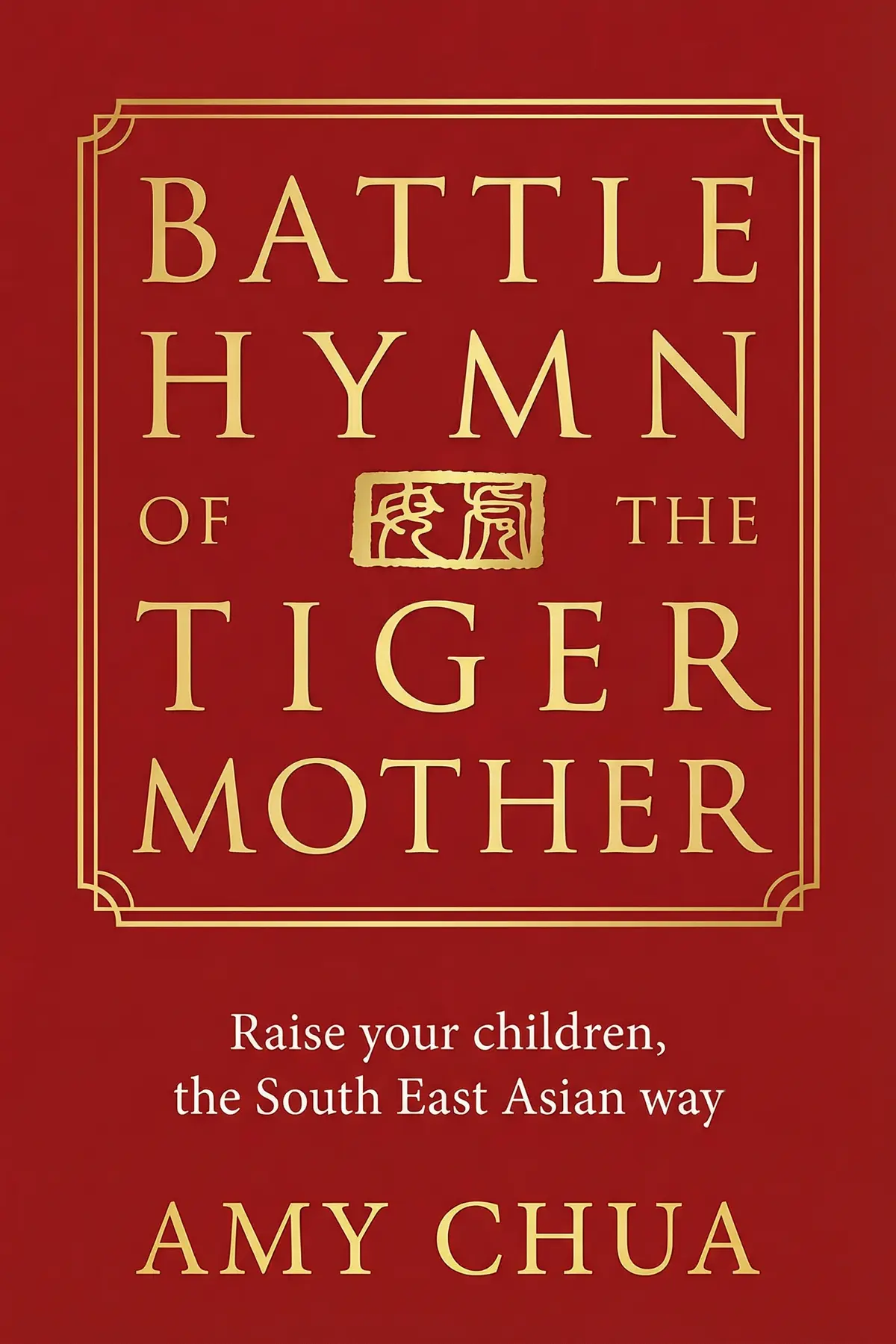
Battle Hymn of the Tiger Mother
Amy Chua
Dear Ijeawele, or A Feminist Manifesto in Fifteen Suggestions
Chimamanda Ngozi Adichie
AUDIO SUMMARY AVAILABLE
Listen to Screamfree Parenting in 15 minutes
Get the key ideas from Screamfree Parenting by Hal Edward Runkel, plus 5,000+ more titles in English and Thai.
- 5,000+ titles
- Listen as much as you want
- 7-day free trial
- Cancel anytime







