

A Promised Land
Barack Obama
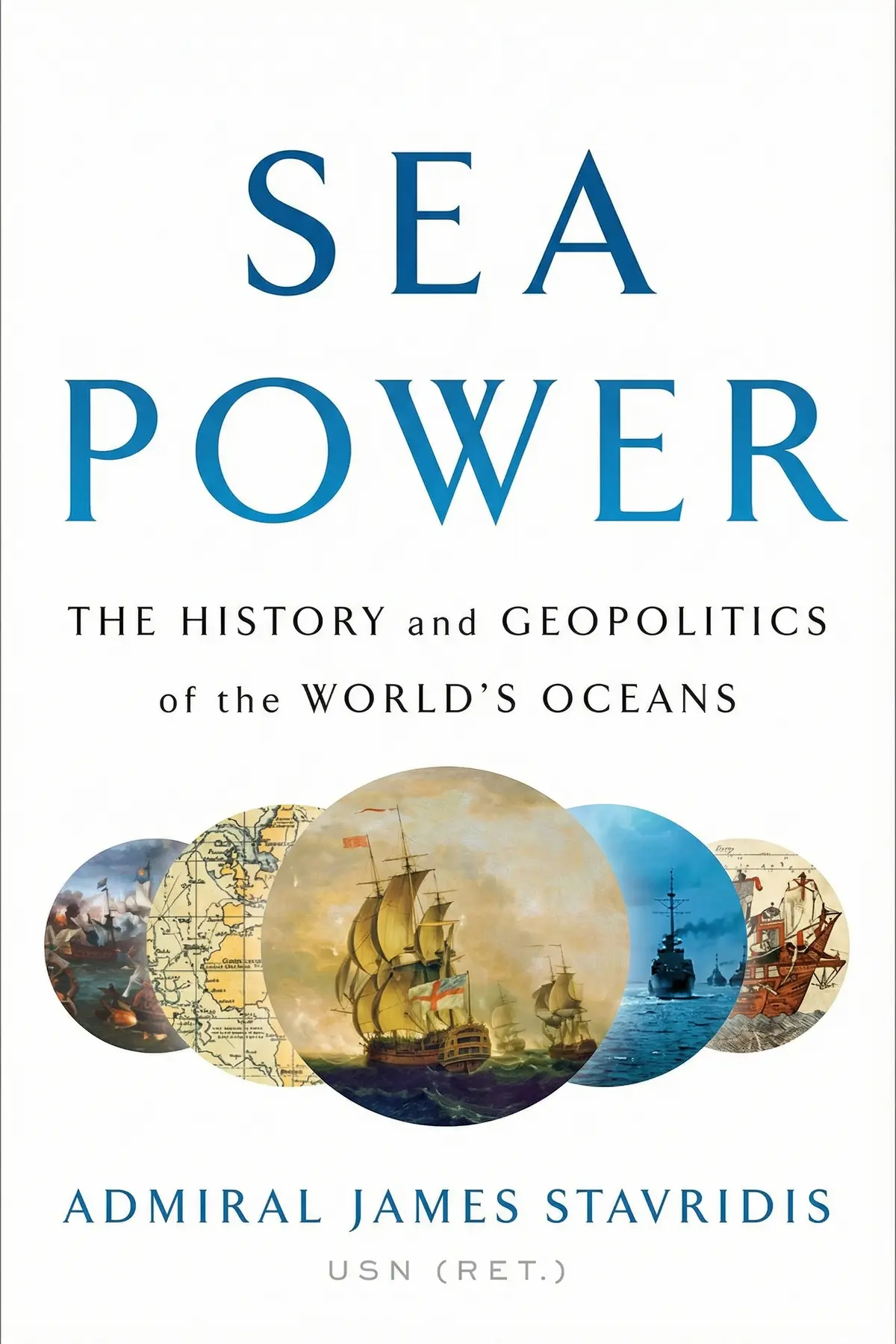
Admiral James Stavridis explores how the world’s oceans shape global geopolitics. From historical naval battles to modern environmental crises, this summary details the strategic importance of our planet’s vast, interconnected waterways.
1 min 56 sec
Imagine for a moment that you are looking down at Earth from high orbit. What you see isn’t a collection of continents, but a brilliant, swirling marble of blue. This perspective reveals a truth we often forget in our land-locked daily lives: our world is dominated by water. More than seventy percent of the planet’s surface is covered by oceans, yet we frequently treat the sea as a mere backdrop to human history rather than its primary stage. In Sea Power, Admiral James Stavridis invites us to change that perspective.
Drawing on nearly forty years of experience in the United States Navy—from commanding individual destroyers to leading NATO as Supreme Allied Commander—Stavridis argues that the story of humanity is, at its heart, the story of the sea. The oceans are not just obstacles to be crossed; they are the highways of global commerce, the front lines of geopolitical rivalry, and the life-support system for our environment.
In this summary, we are going to embark on a journey across the great bodies of water that define our world. We will travel from the massive expanse of the Pacific, where the sun rises on new global superpowers, to the icy, melting frontiers of the Arctic, which may hold the key to the next century’s resources. We will explore how the historical dominance of the British Royal Navy in the Atlantic paved the way for the modern world, and why the Indian Ocean is currently the most volatile and vital trade corridor on Earth.
But this isn’t just a history lesson. We will also confront the pressing challenges of the twenty-first century: the resurgence of piracy, the devastating impact of industrial pollution, and the looming threat of naval conflict in the South China Sea. Through the eyes of a seasoned admiral, we will see how the mastery of the waves has determined the destinies of empires and how it continues to shape the balance of power today. By the end of this journey, you’ll understand why the strength of a nation is often measured by its reach across the deep blue, and what must be done to ensure that these waters remain a source of prosperity rather than a theater of war.
2 min 13 sec
Discover the staggering size of the Pacific Ocean and follow the journeys of the early explorers who mapped this blue desert, changing the map of the world forever.
2 min 02 sec
From the surprise attacks of World War II to the high-stakes arms race of the present day, explore the Pacific’s role as a theater of global conflict.
1 min 57 sec
Trace the early history of the Atlantic Ocean, exploring how the Vikings and Portuguese transformed it from a terrifying void into a highway for global exchange.
2 min 09 sec
Uncover how Great Britain rose to become the world’s premier naval power, dominating the Atlantic for centuries and shaping the modern geopolitical landscape.
2 min 02 sec
Explore the Indian Ocean’s transition from a peaceful trade route to a strategic prize, and why it is now the epicenter of global energy security.
2 min 02 sec
Dive into the complex web of religious rivalries and nuclear tensions that make the Indian Ocean region one of the most volatile areas on the planet today.
2 min 07 sec
Revisit the Mediterranean Sea, where ancient empires first mastered the art of naval warfare and where modern threats continue to challenge global security.
1 min 57 sec
Uncover the Caribbean’s transition from a pirate’s playground to a drug-trafficking corridor, and why the U.S. should adopt a more compassionate naval strategy.
1 min 59 sec
Witness the dramatic transformation of the Arctic Ocean as melting ice opens new shipping routes and sparks a global scramble for untapped resources.
2 min 07 sec
Examine the silent threats of pollution and overfishing that are hollowing out our oceans, and the naval upgrades needed to secure the future.
1 min 54 sec
As we conclude our journey through the world’s oceans, the central message of Admiral James Stavridis becomes clear: the sea is the pulse of our planet. It is the engine of our economy, the site of our greatest historical triumphs, and the primary theater for our most dangerous future conflicts. We have seen how the vast Pacific transitioned from a mystery to a global marketplace, and how the Atlantic’s naval supremacy laid the groundwork for the modern West. We have explored the vital energy corridors of the Indian Ocean and the strategic cradle of the Mediterranean.
But we have also seen the cracks in our management of this great resource. The ‘icebreaker gap’ in the Arctic, the looming threat of nuclear escalation in South Asia, and the silent, devastating impact of overfishing and pollution all point to a single truth: we cannot afford to take the oceans for granted. Sea power is not a relic of the age of sail; it is the fundamental requirement for a stable and prosperous 21st century.
To move forward, we must embrace a multi-faceted approach. This means maintaining a strong, technologically advanced naval presence to deter aggression, but it also means leading with humanitarian aid and environmental stewardship. It means recognizing that our security is tied to the security of our neighbors, from the Caribbean to the South China Sea.
Admiral Stavridis leaves us with a call to action. We must look to the horizon with a sense of responsibility. By understanding the lessons of naval history and anticipating the challenges of the future, we can ensure that the oceans remain a bridge between nations rather than a barrier. The blue marble we saw from space is a fragile one, and its health and safety depend on our ability to master the waves with both strength and compassion. As you move back to your life on land, remember that the sea is always there, moving the goods you use, shaping the weather you feel, and holding the keys to global peace.
Sea Power offers a masterclass in maritime history and international security. Admiral James Stavridis takes us on a journey across the seven seas, revealing how geography determines the rise and fall of nations. The book provides a deep look at why the oceans are more relevant than ever in an era defined by climate change, piracy, and rising nuclear tensions. By examining the history of each major body of water, from the Pacific to the Arctic, Stavridis promises to show how naval strategy has always been the silent architect of global power. The narrative transitions from the age of wooden ships and explorers to the modern era of aircraft carriers and satellite-guided submarines, all while highlighting the urgent need for international cooperation to protect the global commons from overfishing and pollution.
Admiral James Stavridis, USN (Ret.), spent close to four decades as an active member of the US Navy, where he served as commander of combat-ready destroyers and carriers. Before retiring, he was decorated as a four-star admiral with the rare honor of being the Supreme Allied Commander Europe at NATO. He later served as dean of Tufts University’s Fletcher School of Law and Diplomacy.
Listeners describe this work as an educational and polished read that offers a concise summary of global history alongside an explanation of naval influence. They value its accessible nature and captivating storytelling, with one listener characterizing the experience as an intellectual voyage into global maritime affairs. The text is praised for its strategic depth and geopolitical perspectives, although views regarding the geopolitical commentary vary.
James Stavridis brings an incredible depth of real-world experience to a topic that usually feels abstract. Having served as the Supreme Allied Commander of NATO, his perspective on global flashpoints—especially the South China Sea—is invaluable. This isn't just a history lesson; it's a warning about the future. He explains how overfishing, climate change, and rogue states are creating a new era of maritime instability. I loved the "sea stories" interspersed throughout the text. They humanize the command decisions and make the grand strategy feel much more grounded. It’s a masterclass in how oceans shape human destiny.
Show moreFinally got around to reading this, and I’m genuinely impressed by how Stavridis weaves together maritime history and future threats. Most books on geopolitics focus entirely on land borders, so looking at the world from the perspective of the water was eye-opening. The discussion about the shift from the Atlantic to the Pacific as the center of global power was particularly insightful. He also gives some great book recommendations at the end of each chapter, which I really appreciated. It’s an intellectual voyage that leaves you with a much better understanding of why control of the seas remains the ultimate strategic prize.
Show moreAs someone who prefers personal narratives over dry textbooks, I found Stavridis’ approach quite refreshing. He weaves together his own experiences as an Admiral with the broader history of the seven seas. It’s not just about ships; it’s about how the physical geography of the Atlantic or the Indian Ocean dictates the fate of nations. Truth is, the book is a bit light on the "strategy" side if you're an expert, but for a casual reader, it's a fantastic primer. I particularly enjoyed the sections on the Mediterranean and how its legacy of conflict still informs modern politics. A solid, engaging read.
Show moreEver wonder why the South China Sea is constantly in the news? This book breaks it down in a way that’s easy to digest without being patronizing. Stavridis takes us on a literal voyage across the globe, chapter by chapter. While he is definitely biased toward American interests, he’s transparent about it, which I appreciate. The mix of memoir and policy advice makes it feel like you’re sitting down for a coffee with an old sailor who happens to know everything about global trade routes. It’s a highly informative overview for anyone interested in the literal flow of world power.
Show moreThe chapter on the Arctic alone makes this worth the price of admission. Stavridis does a great job explaining how melting ice is opening up new strategic corridors that could lead to future conflict. He isn't just focused on war, though; he spends a good amount of time discussing the ecological health of the oceans. Not gonna lie, I expected a bit more fire and brimstone from an Admiral, but his tone is remarkably measured and even-handed. Some might find his policy suggestions a bit idealistic, but his passion for the sea is infectious. It’s a well-rounded look at our blue planet.
Show moreThis book provides a much-needed perspective for anyone trying to understand global politics through a different lens. Instead of focusing on capital cities, Stavridis focuses on the choke points and trade routes that keep the world running. The writing is clear and accessible, making complex naval concepts easy to grasp. I did find the US-centric focus a bit overwhelming at times—it’s clear who his primary audience is—but the insights into how the Navy views global stability are fascinating. It’s a readable, informative guide that manages to be both a history lesson and a call to action.
Show moreThe core ideas here are solid, but the writing style felt a bit unpolished in places. I kept noticing the phrase "to say the least" popping up way too often, which became a distracting tick after a while. Geographically, it’s a decent tour of the world’s waterways, though I was disappointed by the lack of attention given to the Baltic. It feels like the author is trying to stay so balanced that he ends up sounding a bit spineless on the more controversial policy issues. It’s a helpful summary of US naval thinking, but it lacks the intellectual meat I was expecting from a former Supreme Allied Commander.
Show moreI picked this up hoping for a deep dive into naval strategy, but it’s more of a surface-level skim across the world's oceans. The history segments are a bit cliched and don’t offer much that a history buff wouldn’t already know. I gotta say, the personal anecdotes were the highlight, even if they sometimes felt a bit "phoned in" compared to the heavier geopolitical sections. It’s a good book for a long flight where you want something educational but not overly taxing. Not exactly the definitive text on sea power, but it serves its purpose as a general introduction for those who aren't looking for academic rigor.
Show moreFrankly, the book feels like a collection of essays that were stitched together without much consideration for flow. While the individual chapters on the Pacific and Indian oceans are interesting, the overall narrative feels a bit disjointed. I also found the "dream board" approach to policy a bit unrealistic; he suggests a lot of solutions that would require infinite resources and perfect global cooperation. It’s a bit too optimistic for my taste. However, for those looking for a lighter history text that covers the basics of naval influence, this fits the bill. Just don't expect a rigorous academic study of geostrategy.
Show moreLet’s be real, this is essentially a US Navy recruitment pamphlet masquerading as a serious history book. I was assigned this for a seminar and, like that one student at Bocconi, I’m now dreading the long essay I have to write about it. The history is incredibly shallow—almost like he’s reading off a Wikipedia summary of each ocean before jumping into why the American fleet needs more funding. To be fair, Stavridis seems like a nice enough guy, but his writing is repetitive and lacks any real punch. If you want a deep dive into naval strategy, look elsewhere. This is strictly for beginners.
Show moreBarack Obama


Masaji Ishikawa
William J. Bernstein

John Rawls

Ben Macintyre




James Shapiro
AUDIO SUMMARY AVAILABLE
Get the key ideas from Sea Power by James Stavridis, plus 5,000+ more titles in English and Thai.







