
18 min 20 sec
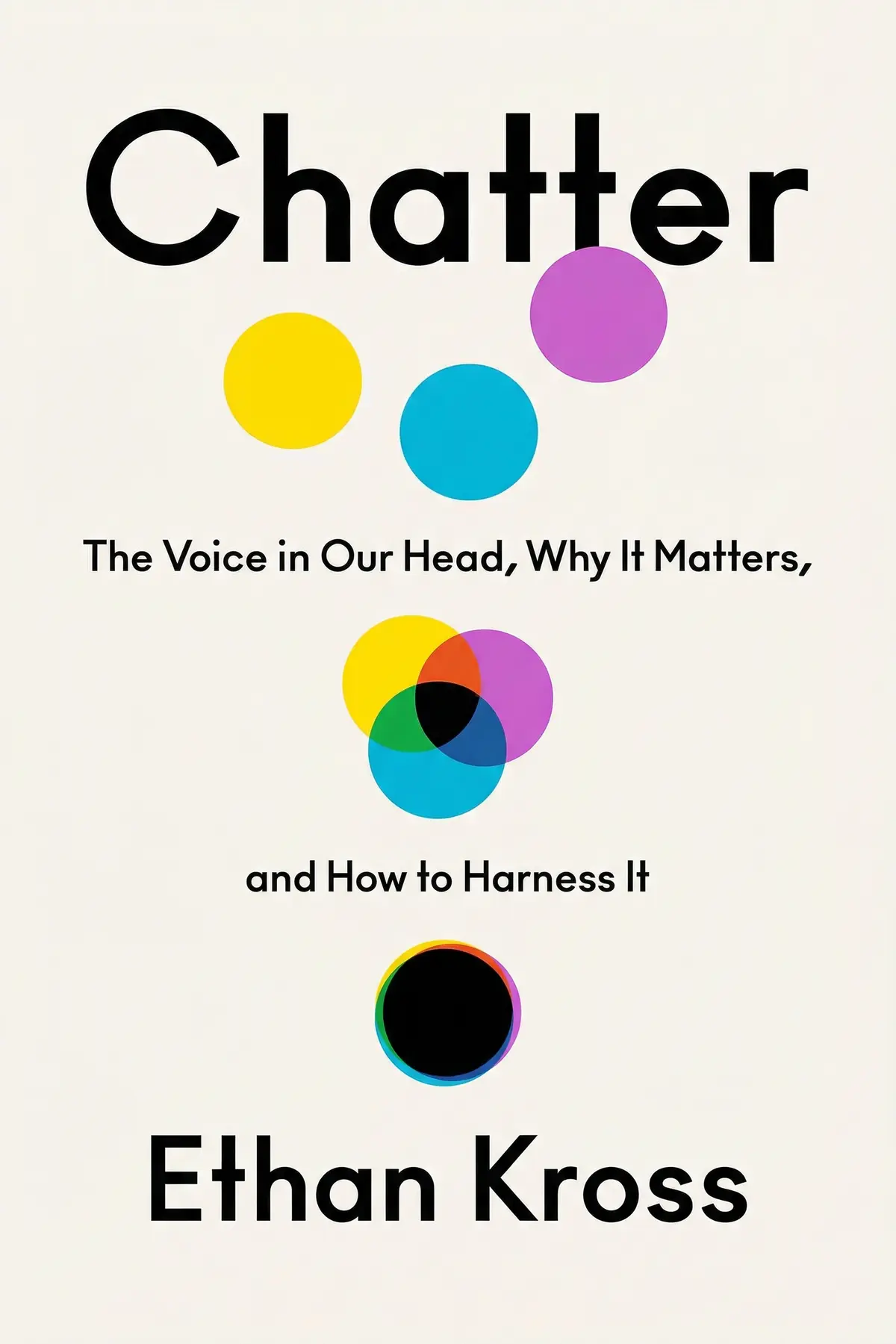
Shift: Managing Your Emotions - So They Don't Manage You
By Ethan Kross
Discover how to reclaim control over your emotional landscape. Ethan Kross provides a toolkit of internal and external shifts to help you navigate life's highs and lows with intention and mastery.
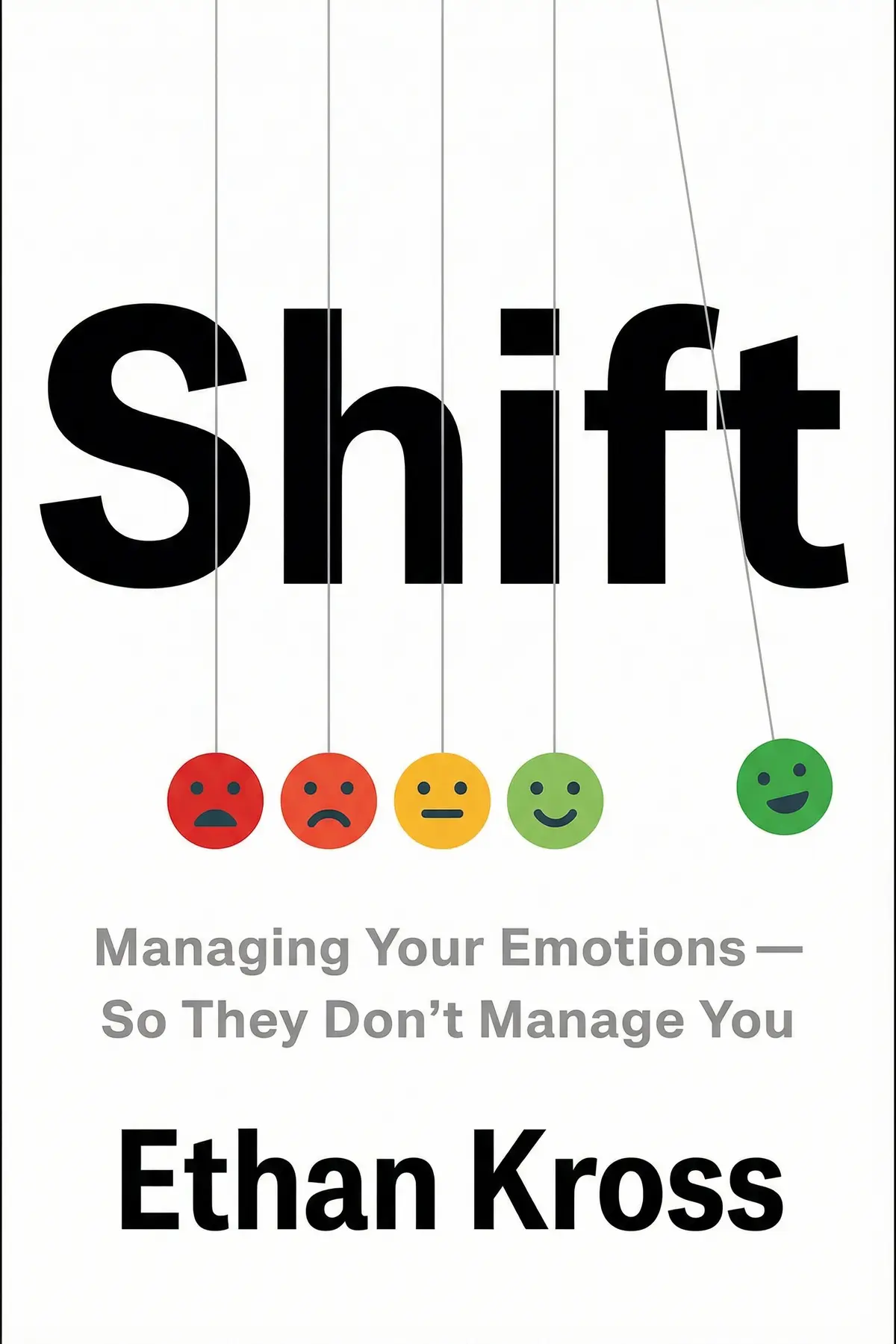
Table of Content
1. Introduction
2 min 02 sec
Think about the last time your emotions felt like an uninvited guest taking over your house. One moment you’re riding high on a wave of success, and the next, a small setback sends you into a tailspin of frustration or doubt. For most of us, this emotional volatility feels like an inevitable part of being human—a rollercoaster we’re strapped into without a seatbelt. We often feel like passengers in our own minds, at the mercy of whatever mood decides to show up that day.
But what if you could step into the driver’s seat? What if, instead of just reacting to your feelings, you could learn to guide them? This is the central premise we’re exploring today: the idea that managing your emotional life is a skill that can be studied, practiced, and eventually mastered. It’s not about becoming a robot or suppressing how you feel. Rather, it’s about calibration. It’s about learning to adjust the volume of your internal world so that your emotions serve you, rather than the other way around.
In this exploration of Ethan Kross’s insights, we are going to look at the powerful tools—both internal and external—that allow us to “shift” our state of mind. We’ll begin by redefining what emotions actually are, moving away from the old idea that feelings and logic are enemies. From there, we’ll dive into your sensory toolkit, discovering how simple sights, sounds, and smells can bypass your conscious mind to settle your nerves or spark your energy.
We’ll also examine the “mental spotlight” of your attention and how learning to zoom in or out can change your entire perspective on a problem. We’ll look outward, too, at how the physical spaces you occupy and the people you spend time with act as invisible hands shaping your mood. Finally, we’ll wrap everything up with a concrete, four-step framework designed to help you turn these insights into lasting habits. By the time we’re done, you’ll have a much clearer understanding of how to navigate the complex weather systems of your inner life, ensuring that you stay on course no matter what the forecast holds.
2. Emotions as Functional Signals
2 min 22 sec
Uncover why your feelings are actually essential data points for survival and how they work in tandem with your rational mind.
3. The Subconscious Power of Senses
2 min 25 sec
Learn how to use your five senses as immediate, low-effort switches to transform your mood and energy levels.
4. Directing the Mental Spotlight
2 min 16 sec
Explore the art of toggling your attention to either confront your feelings or give yourself much-needed space.
5. Environmental Design for Emotional Flow
2 min 10 sec
Discover how the physical spaces around you act as silent architects of your mood and how to audit them for success.
6. Navigating Emotional Contagion
2 min 30 sec
Unpack the invisible ways other people’s moods infect your own and how to protect your mental well-being.
7. The WOOP Framework for Action
2 min 46 sec
Transform your emotional goals into reality using a proven four-step method that bridges the gap between desire and results.
8. Conclusion
1 min 49 sec
As we reach the end of this journey through the art and science of emotional shifting, the most important takeaway is this: you are not a helpless passenger on the rollercoaster of your moods. While you cannot—and should not—eliminate the vast spectrum of human feeling, you have an incredible capacity to influence how those feelings move through you.
We’ve seen that emotions are not the enemy of reason; they are the messengers of our internal world, providing us with vital data if we know how to listen. We’ve explored how your senses can act as immediate shortcuts to calm, and how the spotlight of your attention can be directed to change your entire perspective. We’ve looked at the silent power of the spaces you inhabit and the invisible currents of emotion that flow between you and the people in your life. And finally, we’ve looked at the WOOP framework—a practical way to turn these insights into a reliable plan of action.
The goal of mastering your emotional life isn’t to live in a state of constant, forced positivity. A life well-lived includes the full range of experiences, from deep sorrow to exuberant joy. The real aim is agility. It’s the ability to feel what you’re feeling, understand what it’s telling you, and then shift your state when that emotion is no longer serving its purpose.
By practicing these tools, you build a sense of agency that changes your relationship with yourself and the world around you. You move from a place of reactivity to a place of intention. So, as you move forward into your day, start small. Notice your sensory environment, play with the focus of your attention, or try out an “if-then” plan for a common frustration. Each small shift is a step toward a life where you manage your emotions, ensuring that they never have to manage you. Thank you for listening, and here’s to a more balanced and intentional path ahead.
About this book
What is this book about?
Have you ever felt like your emotions were a rollercoaster you couldn't control? In Shift, psychologist Ethan Kross explores the science of emotion regulation, offering a clear roadmap for anyone looking to master their internal world. The book moves beyond the idea that we are simply victims of our moods, showing instead that we possess a variety of "shifters"—tools we can use to adjust our feelings in real-time. By examining both internal mechanisms, like our sensory perceptions and the focus of our attention, and external factors, such as the environments we inhabit and the people we surround ourselves with, Kross provides a comprehensive strategy for emotional balance. The promise of the book is not the elimination of difficult feelings, but rather the development of the agility to move through them. Readers will learn the WOOP framework—a practical method for turning intentions into action—ensuring that they can maintain their composure and focus even when life gets challenging. This summary distills those insights into actionable steps for a more resilient and intentional life.
Book Information
About the Author
Ethan Kross
Ethan Kross is a professor at the University of Michigan’s Department of Psychology and Ross School of Business. As director of the Emotion & Self-Control Laboratory, Kross’ research focuses on how people can learn to manage and master their internal lives. Kross has spoken at SXSW and TED and consulted for business organizations and government agencies. His first book, Chatter, was a national best-seller.
Ratings & Reviews
Ratings at a glance
What people think
Listeners find the book both educational and approachable, with one listener mentioning it can be consumed in separate segments. They value the actionable strategies for regulating emotions, and one listener specifically points out its importance for individuals managing mood disorders. The writing incorporates gripping anecdotes while simplifying intricate scientific ideas into an understandable format. Listeners appreciate the eye-opening insights, with one review characterizing the experience as an outstanding chance for deep self-reflection.
Top reviews
Phu
This book is essentially the operating manual for life that we should have been handed in middle school. Ethan Kross manages to break down incredibly complex neurobiological concepts into practical steps that anyone can use. I’ve struggled with mood swings for years, and the “attention shifters” mentioned here have given me a sense of control I didn't think was possible. The stories are riveting, and the writing is so engaging that I finished it in just two sittings. I particularly liked how he reframes negative emotions as information rather than bugs in our system. It’s an excellent opportunity for self-reflection that actually provides the tools to change your perspective. If you want to move toward a more balanced life, buy this immediately.
Show moreWissanu
The chapter on culture shifting alone made this entire book worth the price of admission for me. As someone who works in a high-stress corporate environment, understanding how norms and customs shape our collective emotional state was eye-opening. Kross explains that we are not at the mercy of our sensory inputs, but can intentionally curate them to create a desired internal state. I’ve started implementing the WOOP (Wish, Outcome, Obstacle, Plan) method into my daily routine, and it’s helped me navigate workplace irritability much better. The writing is incredibly polished and the research feels rigorous yet totally approachable. It is rare to find a book that offers both deep scientific insight and actionable, day-to-day advice.
Show moreValentina
After hearing Ethan Kross on a podcast, I knew I had to grab a copy of Shift, and it did not disappoint. The way he describes emotions as “weather systems” that we can adapt to is such a helpful metaphor. I was particularly struck by the discussion on emotional contagion and how we unknowingly adopt the tension of those around us. It’s helped me become much more aware of my interactions with my family. The book is filled with practical tools, like the if-then planning for obstacles, which makes the advice feel very concrete. It’s an empowering read that makes you feel like you finally have the steering wheel to your own brain. High-quality science writing at its best.
Show moreWatcharee
Ever wonder why you can walk into a room and immediately feel the tension? Kross does a fantastic job explaining “emotional contagion” and how our relationships act as a lever for our own internal states. I’ve been practicing the sensory bundling technique—using specific scents and music to wind down—and it’s actually made a noticeable difference in my sleep quality. The book is structured in a way that’s easy to digest, though some of the chapters felt slightly longer than necessary. I especially loved the section on “space shifting” and how something as simple as a childhood cafe can disrupt negative thought patterns. It’s an enlightening look at the mechanics of the human heart. Definitely worth a read if you want to be more intentional about your reactions.
Show morePlernpiriya
Picked this up on a whim and was pleasantly surprised by how much I took away from the section on “internal shifters.” The idea that we can use our five senses as levers to calibrate our emotional experience is powerful. I never really thought about how a specific scent or a change in furniture layout could disrupt a habituated thought pattern. Kross writes with a lot of empathy and clarity, avoiding the heavy jargon that usually plagues these kinds of science-based books. My only gripe is that it can be a bit repetitive at times, hammering home the same three or four points in different ways. Still, the ABC framework is a keeper. It’s a solid resource for anyone looking to understand the “why” behind their feelings.
Show moreChaiwat
As someone who tends to overthink everything, the concept of “attention shifters” was a total game-changer for me. Kross explains that our ability to decide where to focus is what sets us apart from other species, and he gives great tips on how to toggle between approaching and avoiding. While I agree with other reviewers that some of the anecdotes feel like filler, the core science is incredibly sound. The book is an excellent opportunity for self-reflection and has genuinely improved how I handle stress at home. It’s easy to read in segments, which I appreciated given my busy schedule. I'd recommend it to anyone who feels like their emotions are currently in the driver's seat of their life.
Show moreJoshua
Is it just me, or are all these modern psychology books starting to sound the same? The author has a very breezy, easy-to-read writing style that makes the science accessible, which I appreciated. However, I didn't find the frequent stories about his life or random corporations all that helpful to the actual application of the tools. The ABC framework and WOOP method are interesting, but they feel like things you could find in any standard lifestyle magazine. I think it’s a decent introductory text for someone struggling to understand their internal “weather systems.” For me, it was a bit too much fluff and not enough “meat” on the bones of the actual research. Not a bad read, but certainly not earth-shattering.
Show moreNutnicha
Finally got around to reading this after seeing it everywhere, and it’s… fine. To be honest, the core message is that while we can’t avoid emotions, we can shift them by changing our environment or our focus. It's good advice, sure, but it felt a little bit like a listicle padded out to meet a publisher's word count. The most fascinating parts were the explanations of how research was conducted and the evolutionary standpoint of why we feel things in the first place. I didn’t find the personal anecdotes about his grandmother or his own life particularly compelling, though they did help illustrate his points. It’s a quick read, but I probably could have just read a summary and gotten the same value out of it.
Show morePaisley
Frankly, this felt like a high-quality blog post that got turned into a 300-page book through sheer willpower. The central premise—that we can manage intensity and duration of emotions by changing our perspective—is solid. But did we really need a dozen different illustrative stories to understand that music changes your mood? The author’s breezy style makes it a fast read, which is good because there is a lot of filler to get through. I did appreciate the “space audit” idea and the concept of sensory bundling. Those are practical takeaways that I will actually use. If you’re looking for a light introduction to emotional regulation, this is a safe bet, but don't expect it to change your entire worldview.
Show moreSomsak
Look, I really wanted to like this, but it felt like a 20-page pamphlet stretched into a full-length book. Ethan Kross definitely knows his stuff, yet he spends a hundred pages explaining things most people already do instinctively, like changing your music to feel better. The “public service” summary is basically: change your thoughts, change your surroundings, and change your people. It’s not that the advice is bad—it’s actually quite solid—it's just that it’s extremely repetitive. I found myself skimming through the endless anecdotes just to find a single nugget of unique information. If you've never read a self-help book in your life, you might find this revolutionary, but for anyone else, it’s mostly filler. To be fair, the “space audit” was a cool concept, but I didn't need 300 pages to get there.
Show more
Readers also enjoyed
Age of Propaganda: The Everyday Use and Abuse of Persuasion
Anthony Pratkanis
Alcoholics Anonymous
Alcoholics Anonymous World Services
59 Seconds: Change Your Life in Under a Minute
Richard Wiseman
AUDIO SUMMARY AVAILABLE
Listen to Shift in 15 minutes
Get the key ideas from Shift by Ethan Kross, plus 5,000+ more titles in English and Thai.
- 5,000+ titles
- Listen as much as you want
- 7-day free trial
- Cancel anytime







