
13 min 37 sec
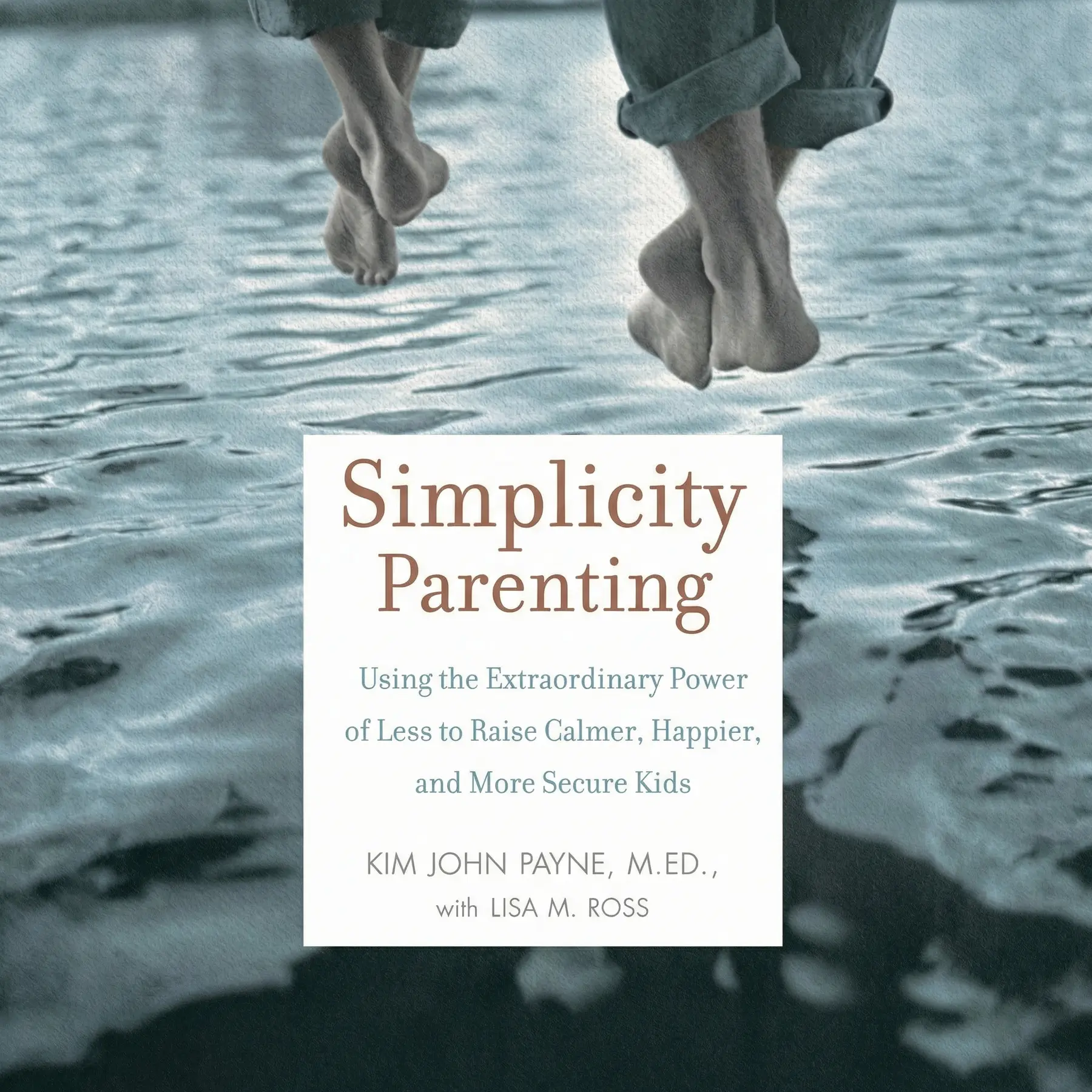
Simplicity Parenting: Using the Extraordinary Power of Less to Raise Calmer, Happier, and More Secure Kids
Simplicity Parenting offers a transformative approach to modern child-rearing by reducing environmental clutter, establishing daily rhythms, and trimming schedules to help children develop resilience and emotional calm in a fast-paced world.
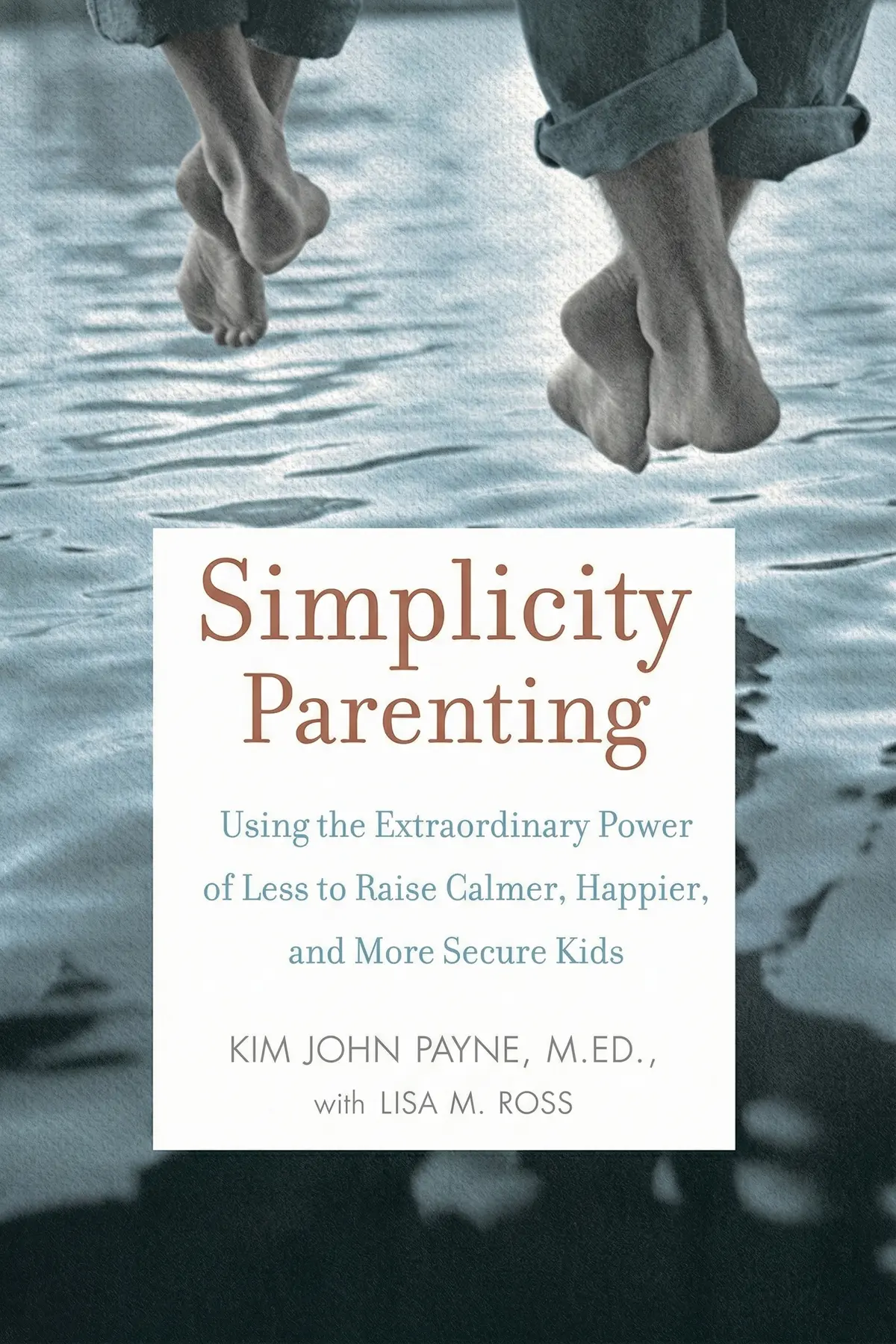
Table of Content
1. Introduction
1 min 46 sec
Have you ever looked around your living room and felt overwhelmed by the sheer volume of plastic, noise, and color? If you find yourself exhausted by the constant rush of extracurricular activities, or if you feel like your children are always ‘on edge,’ you are certainly not alone. Today’s parents are raising children in an environment that is faster, louder, and more demanding than at any other point in human history. We are constantly asking ourselves if we are doing enough. Should we buy that educational tablet? Should our toddler be in music classes or soccer? How much of the evening news is too much for a ten-year-old?
The pressure to provide ‘everything’ often leads to a frantic lifestyle that leaves both parents and children depleted. But what if the secret to better parenting wasn’t adding more, but rather taking things away? This is the core philosophy of Kim John Payne and Lisa M. Ross. They suggest that the modern world is essentially ‘detoxifying’ childhood, and the remedy is simplicity.
In this summary, we are going to explore how to reclaim your family’s peace. We’ll look at the physiological and psychological impact that our high-speed culture has on young minds, and we will walk through practical steps to simplify your home environment. We’ll discuss why fewer toys lead to deeper play, how a predictable daily rhythm can eliminate morning power struggles, and why ‘doing nothing’ is actually one of the most productive things a child can do. By the end of this journey, you’ll see that the extraordinary power of ‘less’ can create a foundation of security that helps your children thrive in a way that ‘more’ never could. Let’s dive into how we can filter out the noise and let the beauty of childhood emerge through simplicity.
2. The Hidden Impact of Modern Stress
2 min 26 sec
Modern life often moves at a pace that exceeds a child’s natural developmental speed, leading to a specific type of chronic anxiety.
3. Reclaiming the Physical Environment
2 min 09 sec
The sheer volume of toys in a modern household often hinders rather than helps a child’s ability to engage in deep, imaginative play.
4. The Security of Daily Rhythm
1 min 56 sec
Establishing a predictable flow to the day provides children with the emotional foundation they need to explore and learn.
5. The Importance of Doing Nothing
1 min 55 sec
Overscheduling can rob children of the downtime necessary for self-discovery and creative growth.
6. Filtering the Adult World
2 min 11 sec
Reducing screen time and sheltering children from adult concerns is essential for healthy neurological and emotional development.
7. Conclusion
1 min 14 sec
The journey toward simplicity isn’t about achieving a perfect, minimalist aesthetic or living a life devoid of fun. It is about making a conscious choice to prioritize your child’s well-being over the demands of a frantic culture. By reducing the number of toys, you clear the physical space for imagination. By establishing a daily rhythm, you provide an emotional anchor. By trimming the schedule and filtering out the adult world, you protect the ‘white space’ where a child’s soul can truly breathe.
As you begin this process, remember the authors’ practical advice: start with the physical environment, and crucially, do it alone. If your child is under nine, trying to declutter with them will likely lead to power struggles. It’s your job to curate their environment.
In the end, simplicity parenting is a gift of time and security. It allows your children to be calmer, more focused, and more resilient. It moves your family away from the ‘cumulative stress’ of the modern world and back toward a life centered on connection and meaning. Start small, be consistent, and watch as the ‘extraordinary power of less’ transforms your home into a sanctuary where your children can truly flourish.
About this book
What is this book about?
In an era of constant digital stimulation and packed schedules, children are increasingly susceptible to stress and anxiety. Simplicity Parenting argues that the 'more is better' philosophy is actually harming our children's development. By creating a 'simplified' environment, parents can protect their children from the pressures of adult life and provide them with the space they need to grow at their own natural pace. The book provides a roadmap for four layers of simplification: environment, rhythm, schedules, and filtering out the adult world. It promises that by reducing the number of toys, establishing predictable daily routines, and limiting screen time, parents can mitigate 'Cumulative Stress Reaction.' The result is a more harmonious household where children are more secure, focused, and capable of imaginative play.
Book Information
About the Author
Kim John Payne
Kim John Payne is an experienced child-rearing authority with over 27 years in family, school, and adult counseling. His work focuses on developmental issues and social challenges, as seen in his other titles like The Games Children Play and Being At Your Best When Your Kids Are At Their Worst. Lisa M. Ross is a professional writer and former literary agent with two decades of experience in the publishing industry. She currently applies her expertise as a writer and ghostwriter.
Ratings & Reviews
Ratings at a glance
What people think
Listeners find this parenting resource offers excellent advice suitable for both toddlers and older children, while remaining straightforward to comprehend and use. The text provides hands-on instructions and significant daily routines for families, which helps lower stress levels and fosters a more tranquil home life. Listeners value the wise counsel regarding slowing down and the focus on removing distractions and tension. They appreciate the book’s concepts, with one listener noting their children's creativity has flourished.
Top reviews
Pridi
After hearing about this approach on several podcasts, I finally dove into the full text. The idea of establishing a "rhythm" in a household sounded like another chore, but it actually became our family's liberation. We started implementing the specific daily rituals Payne suggests, and the shift in my daughter’s behavior was almost immediate. She’s less reactive, more focused, and actually plays with her blocks for more than five minutes now. I appreciated the specific advice on "soul fevers" and taking a mental health day when things get too heavy. It’s a call to slow down in a world that demands we constantly speed up. To be fair, some of the sections on toy decluttering felt a bit extreme at first glance. However, seeing how my children’s creativity flourished once the plastic mountain was gone made me a believer. It’s not just about cleaning up; it’s about giving them space to breathe.
Show moreNarongrit
This book should be handed out at every maternity ward as a survival guide for the 21st century. We’ve all felt that creeping anxiety that our kids have too much stuff, but Payne gives you the permission—and the method—to actually change it. The "half the toys, then half them again" rule sounded brutal, but my kids didn’t even notice the missing items. Instead, they started inventing new games with the few items that remained. It’s amazing how much more peaceful our living room feels without a thousand flashing plastic gadgets everywhere. I also took his advice on limiting media to heart, and bedtime has become so much smoother. Frankly, it’s a relief to know that "doing less" is actually the best thing I can do for my children’s development. It’s a deep, meaningful read that challenges you to prioritize connection over consumption.
Show moreJoe
As someone who has always leaned toward minimalism, I didn't think I'd learn much new here, but I was wrong. Payne’s concept of the "soul fever" changed how I view my son's bad days. Instead of seeing a tantrum as a behavior to be corrected, I now see it as a sign that he’s overwhelmed and needs a "quiet day" to reset. This shift in perspective has been incredibly healing for our relationship. The book is data-driven enough to satisfy my need for evidence while remaining very accessible and warm. I loved the sections on simplifying books—it felt like sacrilege to prune the shelves, but now my kids actually read what’s there. It’s a powerful reminder that our children don't need a perfectly curated life; they just need us to be present. Truly a must-read for the modern parent.
Show moreAlice
Wow, I didn't realize how much the 'clutter' of our daily schedule was affecting my kids' behavior until I started reading this. One of the biggest takeaways for me was the "prescription for boredom." I used to feel guilty if my kids weren't constantly entertained, but now I see boredom as the precursor to creativity. Since we stopped the constant stream of movies and toys, my son has started building elaborate cardboard cities in the garage. The house is more peaceful, and the kids are playing together much more harmoniously. It’s a beautiful book that offers a different way of living that feels much more natural than the current rat race. If you’re feeling burnt out as a parent, this book will give you the permission to just stop and simplify everything. It’s a breath of fresh air.
Show morePichaya
The chapter on filtering out the adult world was exactly what I needed to hear as a parent in today's political climate. We often forget how much our children absorb our own anxieties and the constant noise of the news. Payne’s advice on keeping kids under nine protected from these adult concerns is vital for their emotional security. Since implementing the suggestions in this book, the "vibes" in our home have shifted from chaotic to calm. It’s not just about getting rid of toys; it’s about creating a predictable world where children feel safe to explore. I especially loved the section on "rhythm" as it helped us establish a much better evening routine. My kids are sleeping better, and I’m finally enjoying parenting again instead of just managing it. This book is a true gift for any family.
Show moreNutnicha
Ever wonder why your kids are constantly melting down despite having everything they could ever want? Payne argues that our modern environment is essentially a "pot of boiling water" for children’s nervous systems. The book is dense with research that explains why over-scheduling and constant media exposure lead to behavioral issues. I found the chapter on the four pillars of simplification—environment, rhythm, schedules, and filtering out the adult world—to be incredibly insightful. My only real gripe is that the writing can be quite repetitive, almost as if he’s trying to hit a word count. He makes the same point about "less is more" for a hundred pages. Still, the core message is vital for any parent feeling the weight of the digital age. We’ve cut back on extracurriculars and the difference in our family’s stress level is palpable.
Show moreChamp
Picked this up because I was tired of the constant chaos in our playroom. There is a lot of wisdom here about how we over-stimulate our kids without even realizing it. The advice on not over-explaining feelings to young children under nine was a total game-changer for me. I used to think I was being a "good mom" by processing every emotion, but it turns out I was just overwhelming them. Look, I’ll be honest: this book could have been about 150 pages shorter. It wanders into some preachier territory in the second half that didn't quite land for me. But if you can look past the fluff, the practical guidance on creating a "predictable rhythm" is gold. My toddlers are definitely more settled since we started following a stricter daily routine. It’s a solid resource for anyone looking to simplify their life.
Show moreWatcharin
Finally got around to reading this after seeing it referenced in almost every parenting group I belong to. It’s a very grounding read that makes you question why we’ve let childhood become so hectic. The focus on reducing distractions is particularly relevant for those of us with older children who are starting to navigate the world of social media. I appreciated how Payne connects physical clutter to mental clutter; our house feels much more serene since we did a massive toy and book purge. I did find the "masculine" tone a bit odd in certain sections, but the overall message is sound. It’s not about being a perfect parent, but about creating a "sanctuary" for your kids in a noisy world. It’s definitely helped me feel less stressed about my kids "falling behind" because they aren't in ten different sports.
Show moreTitiluck
Not what I expected, as it felt less like a 'how-to' and more like a philosophical manifesto against modern culture. While I agree that kids have too many toys and too much screen time, the author's tone can be quite condescending. He often ignores the reality of working-class families who can't necessarily afford the "slow life" he champions. To be fair, the specific strategies for decluttering and establishing meal rhythms are helpful and easy to apply. However, I struggled with the constant repetition and the way he compares middle-class over-scheduling to actual PTSD. It felt a bit tone-deaf and hyperbolic at times. I’m glad I read it for the practical takeaways, but I had to skim through several chapters that felt like filler. If you want the meat of the book, just read the first three chapters and you'll get the gist.
Show moreYulia
The irony of a book about simplicity being this incredibly long and repetitive is not lost on me. In my experience, this felt like a collection of common-sense blog posts stretched into a full-length book. Do we really need a dozen pages explaining that kids shouldn't watch too much TV? It’s all part of the current minimalism fad that treats "throwing things away" like a religious experience. While the core message is fine, the author’s tone is often preachy and judgmental toward parents who work long hours or have a messy house. I found it quite dull and struggled to finish the second half because it just kept saying the same thing over and over. You could honestly get the same information from a ten-minute YouTube video on decluttering. Skip the book and just go buy some storage bins.
Show moreReaders also enjoyed

AUDIO SUMMARY AVAILABLE
Listen to Simplicity Parenting in 15 minutes
Get the key ideas from Simplicity Parenting by Kim John Payne, plus 5,000+ more titles in English and Thai.
- 5,000+ titles
- Listen as much as you want
- 7-day free trial
- Cancel anytime







