
All About Love: New Visions
bell hooks
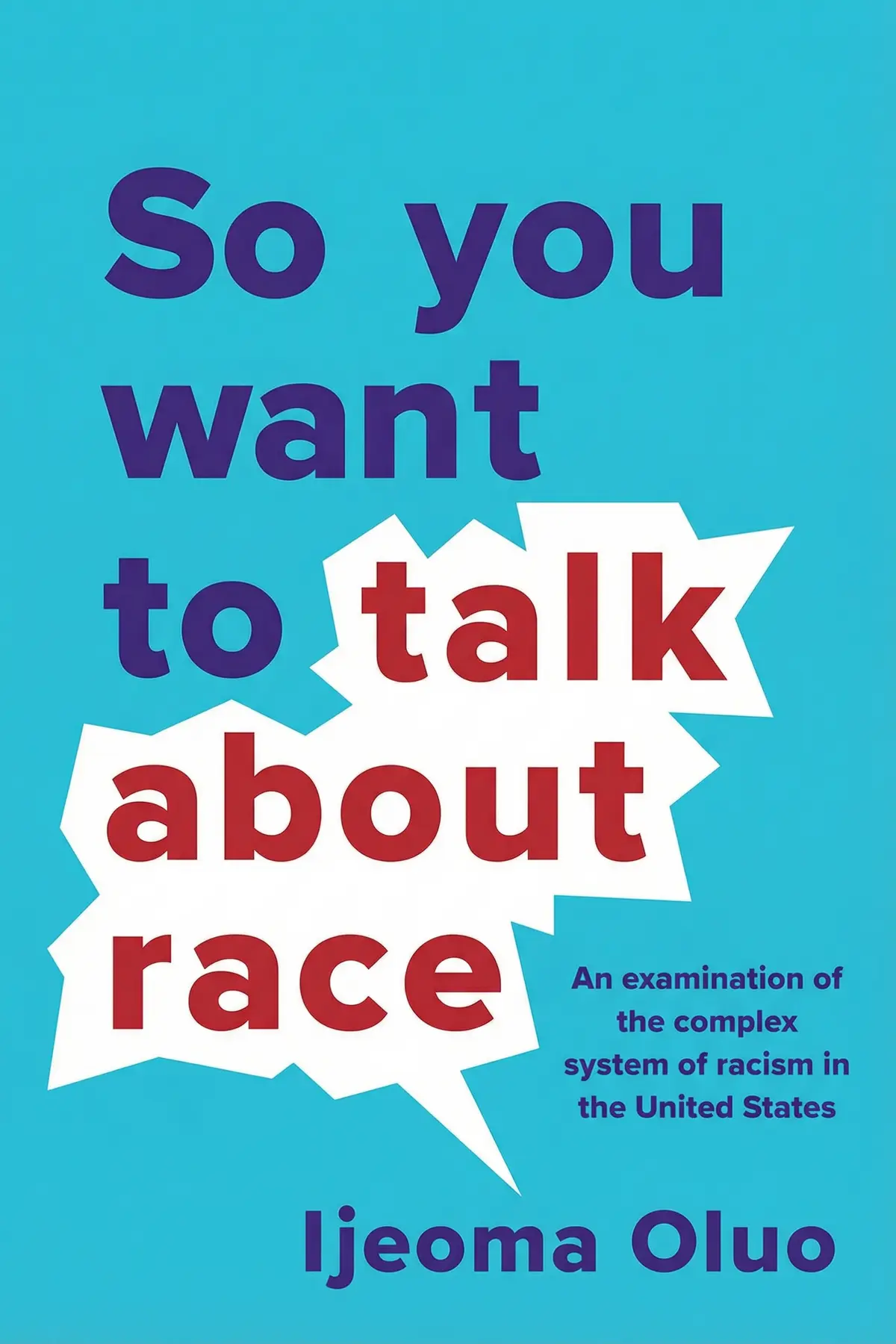
A vital guide to understanding the mechanics of systemic racism in America. This summary provides the language and framework needed to have honest, productive conversations about race and privilege.
2 min 04 sec
How often have you found yourself in a conversation about race, only to feel the air in the room suddenly tighten? Perhaps you said something you thought was harmless, but the reaction you received told you otherwise. Or maybe you were on the receiving end of a comment that felt like a sharp jab, yet you struggled to find the words to explain why. For many of us, talking about race is a minefield. We are terrified of getting it wrong, of being labeled, or of causing harm. So, we stay silent. But as Ijeoma Oluo argues, that silence is a luxury we can no longer afford.
In our journey today, we are going to explore a framework for understanding why these conversations are so difficult and why they are absolutely essential. This isn’t just a guide on how to be polite; it is a deep dive into the machinery of American society. We will look at how racism isn’t just an individual character flaw, but a systemic reality that dictates who gets ahead and who gets left behind.
Oluo’s perspective is rooted in the belief that if we want to change the world, we have to be able to talk about it honestly. She wrote this work to be a tool—a resource that people can return to when they encounter the complexities of privilege, police brutality, or cultural appropriation in their daily lives. The goal isn’t necessarily to reach a place where everyone is comfortable. In fact, discomfort is often a sign of progress. The goal is to build a foundation of understanding that allows us to dismantle the structures of oppression that have existed for centuries.
Throughout this summary, we will navigate through the nuances of identity. We will learn why looking at class alone isn’t enough to solve racial inequality. We will examine the historical roots of modern policing and the ways our education system can inadvertently criminalize children of color. Most importantly, we will look at how each of us, regardless of our background, can move from being a bystander to an active participant in the pursuit of equity. Let’s begin by shifting our perspective on what racism actually is and how it functions as a system of power.
2 min 24 sec
Discover why racism is much more than individual mean-spiritedness and how it functions as an inescapable structural force in American life.
2 min 21 sec
Learn why feeling awkward is a prerequisite for progress and how to navigate the pitfalls of discussing race with those you love.
2 min 06 sec
Move beyond the catchphrases to understand how your unique combination of identities shapes your view of the world and the advantages you carry.
2 min 24 sec
Examine the historical origins of law enforcement in America and how unexamined biases continue to produce deadly outcomes today.
1 min 54 sec
Learn why the debate over ‘merit’ often ignores the head starts provided by systemic advantage and how affirmative action helps bridge the gap.
2 min 02 sec
Follow the tragic trajectory from the classroom to the courtroom and discover how discipline in schools is racially biased.
1 min 58 sec
Explore the power of language in maintaining oppression and why ‘borrowing’ from other cultures isn’t as harmless as it seems.
1 min 43 sec
Uncover the cumulative damage of ‘small’ insults and learn how to respond when you are the one being called out.
1 min 37 sec
Why focusing on *how* someone expresses their pain is often a way to avoid talking about the pain itself.
1 min 56 sec
See how stereotypes about Asian American success are used as a wedge to divide communities of color and ignore real suffering.
1 min 49 sec
The conversation is only the beginning. Discover tangible steps you can take today to help dismantle systemic racism in your community.
2 min 01 sec
As we reach the end of this exploration, it is important to remember the central throughline: racism is a pervasive, systemic force that requires active, intentional effort to dismantle. It isn’t enough to simply ‘not be a racist.’ In a society built on racial hierarchy, the default setting is inequality. To move toward justice, we must be ‘anti-racist,’ which means actively working against the structures of power that maintain the status quo.
We’ve talked about the importance of defining racism as systemic, the necessity of leaning into discomfort, and the power of intersectional thinking. We’ve looked at the grim realities of the school-to-prison pipeline and the history of policing, as well as the subtle but damaging impact of microaggressions and the ‘model minority’ myth. All of these pieces fit together to form a picture of a society that is designed to protect some and exclude others.
But this knowledge shouldn’t lead to despair; it should lead to action. You now have a framework for understanding these complex issues and a set of tools for navigating the conversations that lie ahead. The most important thing you can do is refuse to go back to the comfort of silence. When you see an injustice, speak up. When you realize you have privilege, use it to open doors for others. When you make a mistake, own it and learn from it.
The work of racial justice is not easy, and it is never truly finished. But it is some of the most important work we can do as human beings. By committing to these conversations and these actions, you are helping to build a world where a person’s skin color no longer determines their destiny.
To put this into practice immediately, take a look at your own local environment. Reach out to your school board or attend a city council meeting. Ask about their diversity policies and their disciplinary records. Make it known that equity is a priority for you. Change starts with one conversation, but it survives through consistent, collective action. Keep talking, keep listening, and above all, keep fighting.
Many people avoid discussing race because they fear saying the wrong thing or causing offense. This exploration of Ijeoma Oluo’s work breaks down that wall of silence. It examines how racism is not just about individual prejudice but is a complex system woven into the very fabric of American institutions, from the economic sector to the legal system. By listening to this guide, you will gain a clearer understanding of concepts like intersectionality, white privilege, and the school-to-prison pipeline. It offers practical advice for navigating the discomfort of these discussions and provides a roadmap for moving from talk to tangible action. The promise of this book is to transform paralyzed observers into informed participants in the struggle for racial justice.
Ijeoma Oluo is a writer and speaker. Her work on race has been published in the New York Times, Elle, the Guardian, and the Washington Post. In 2018, she was awarded the Feminist Humanist Award from the American Humanist Society.
Listeners consider this work essential listening, offering actionable tips and direction for navigating tough dialogues surrounding racism. The prose is approachable and informal, ensuring intricate topics such as intersectionality are manageable to grasp. Listeners value the informative perspective on social justice matters, including one listener who highlighted how clearly the book defines intersectionality.
Wow. This isn’t a book you just read; it’s one you internalize and use as a roadmap for real-life interactions. Ijeoma Oluo manages to take concepts that often feel abstract or intimidating—like intersectionality and systemic privilege—and breaks them down into plain, punchy language. The structure is brilliant because each chapter tackles a specific, common question that people are often too afraid to ask out loud. I found the section on microaggressions particularly eye-opening because it shifted my perspective from individual intent to collective impact. Truth is, the conversational tone makes it feel like a necessary, albeit difficult, brunch conversation with a friend who isn't afraid to tell you the hard truths. It’s an essential guide for anyone who wants to stop being part of the noise and start being part of the solution. Every workplace should have a copy of this in the breakroom.
Show moreAfter hearing so much buzz, I finally dove into Oluo’s work and was struck by how she handles the concept of intersectionality with such clarity. She doesn't pull any punches, and frankly, she shouldn't have to. The book focuses heavily on the idea that racism is a system of power rather than just a personal failing, which is a distinction many people still struggle to grasp. I loved how she addressed the 'what if I say the wrong thing?' anxiety right at the start. It gives the reader permission to be imperfect as long as they are committed to doing the work. The chapters are short but dense with insight, making it easy to digest one topic at a time before moving on to the next. This is easily one of the most practical social justice books I have ever encountered. It is required reading for the modern age.
Show morePicked this up because I wanted to understand the 'why' behind movements like BLM beyond just the headlines and social media posts. Oluo provides such a grounded, human perspective on what it means to live in a society built on racial hierarchy. She reminds the reader constantly that it’s not about you or your intent, but about the measurable impact of systemic exclusion. The way she explains cultural appropriation was the first time that concept actually clicked for me without feeling like a list of 'dos and don'ts.' It’s about the power imbalance, not just the action itself. I appreciate that she includes actionable steps at the end of the chapters because it prevents the reader from just wallowing in guilt. Instead, it pushes you toward tangible change. This book is a gift to anyone willing to listen.
Show moreEver wonder why certain conversations about cultural appropriation or privilege always seem to end in a defensive argument? Ijeoma Oluo explains exactly why that happens and how to navigate those moments with more grace and efficacy. She writes with a sense of urgency that is impossible to ignore. The truth is, we have been avoiding these topics for far too long, and her book acts as a catalyst for the hard work we all need to do. I particularly liked the chapter on why it's so hard to talk about race at all. She validates the discomfort while also making it clear that discomfort is a small price to pay for progress. This isn't a book meant to make you feel good; it’s a book meant to make you better. I’ve recommended it to everyone in my book club.
Show moreThe chapter on microaggressions alone is worth the price of admission because it moves the needle from abstract theory to daily behavior. Oluo is a master at explaining how small, everyday actions contribute to a larger environment of exclusion. She writes with an authenticity that is rare, sharing her own frustrations and mistakes alongside her expertise. I found her explanation of privilege to be the most helpful I've ever read. She doesn't treat it like a dirty word, but like a tool that needs to be recognized and utilized for equity. Gotta say, her ability to remain patient while explaining these heavy concepts is impressive. This is the kind of book that stays with you long after you close the back cover. It has genuinely changed the way I interact with my coworkers and friends. A masterpiece of communication.
Show moreLook, if you are serious about dismantling your own biases, you have to be willing to sit with the discomfort this book provides. Ijeoma Oluo doesn't sugarcoat the reality of racism in America, and that’s exactly why this book is so powerful. She provides the language we need to have honest, productive conversations without falling into the trap of white fragility. The section on police brutality was gut-wrenching but essential for understanding the systemic nature of the problem. I loved how she emphasized that it’s not about being a 'good person' but about being an active participant in change. This book is a tool, a weapon, and a mirror all at once. If you only read one book on race this year, make it this one. It’s brilliant, brave, and absolutely necessary for the world we live in today.
Show moreThis book is essentially a manual for those of us who are terrified of saying the wrong thing when the topic of race comes up. Oluo’s writing is incredibly direct, which might feel jarring to some, but I found her honesty refreshing and necessary for growth. She makes a compelling case that these conversations aren't about our personal feelings or whether we are 'good' people, but about dismantling structural injustice. My only minor critique is that some of the sections felt a bit repetitive by the end, as the same core themes are echoed across different topics. However, the chapter on the school-to-prison pipeline was a masterclass in explaining complex sociopolitical issues to a general audience. It isn't always a comfortable read, but it is certainly a transformative one. You will walk away with a much better vocabulary for discussing inequality.
Show moreAs someone who thought they were already 'woke,' this book was a much-needed reality check on the invisible nature of systemic advantage. Oluo has a gift for making the academic feel personal and the personal feel universal. I appreciated the chapter on the 'model minority' myth, as it’s a topic that often gets left out of broader racial discussions. The prose is clear and accessible, though I will say the emotional weight of the stories can be heavy at times. It’s a lot to process in one sitting, so I’d suggest taking it chapter by chapter. While I didn't agree with every single conclusion she drew, the logic was consistently sound and backed by lived experience. It’s a solid 4-star read that offers a lot of value for both beginners and those more familiar with social justice. Definitely worth your time.
Show moreFrankly, while the writing is accessible and the points are valid, it felt a bit like an introductory lecture that didn't go deep enough into policy solutions. It's a great primer for people who are just beginning to think about these issues, but if you've already read a lot of Black feminist theory, you might find it a bit basic. The tone is very 'Education 101,' which is fine, but I was looking for something a bit more analytical. That said, her personal anecdotes are moving and provide a necessary human element to the data. It serves its purpose as a handbook for difficult conversations, but I wish there had been more focus on the historical roots of some of these systems. It’s a good starting point, but it shouldn't be the only book you read on the subject. Useful, but not groundbreaking for me.
Show moreNot what I expected, as the tone felt incredibly confrontational from the very first chapter. I picked this up hoping for a bridge-building exercise, but it felt more like being lectured for things I haven't personally done. The author defines racism in a way that feels very narrow and politically charged, leaving little room for nuance or individual experience. I understand the importance of talking about systemic issues, but the 'if you're white, you're part of the problem' approach felt counterproductive to actual dialogue. To be fair, there are some interesting points about history and policy that I hadn't considered before. But the writing style was just too aggressive for me to really engage with the material in a meaningful way. I think there are other books on this topic that foster a more inclusive conversation. It just wasn't for me.
Show morebell hooks

Fay Bound Alberti
Daniel Goleman
Virginia Woolf
AUDIO SUMMARY AVAILABLE
Get the key ideas from So You Want to Talk About Race by Ijeoma Oluo, plus 5,000+ more titles in English and Thai.







