
27 min 52 sec
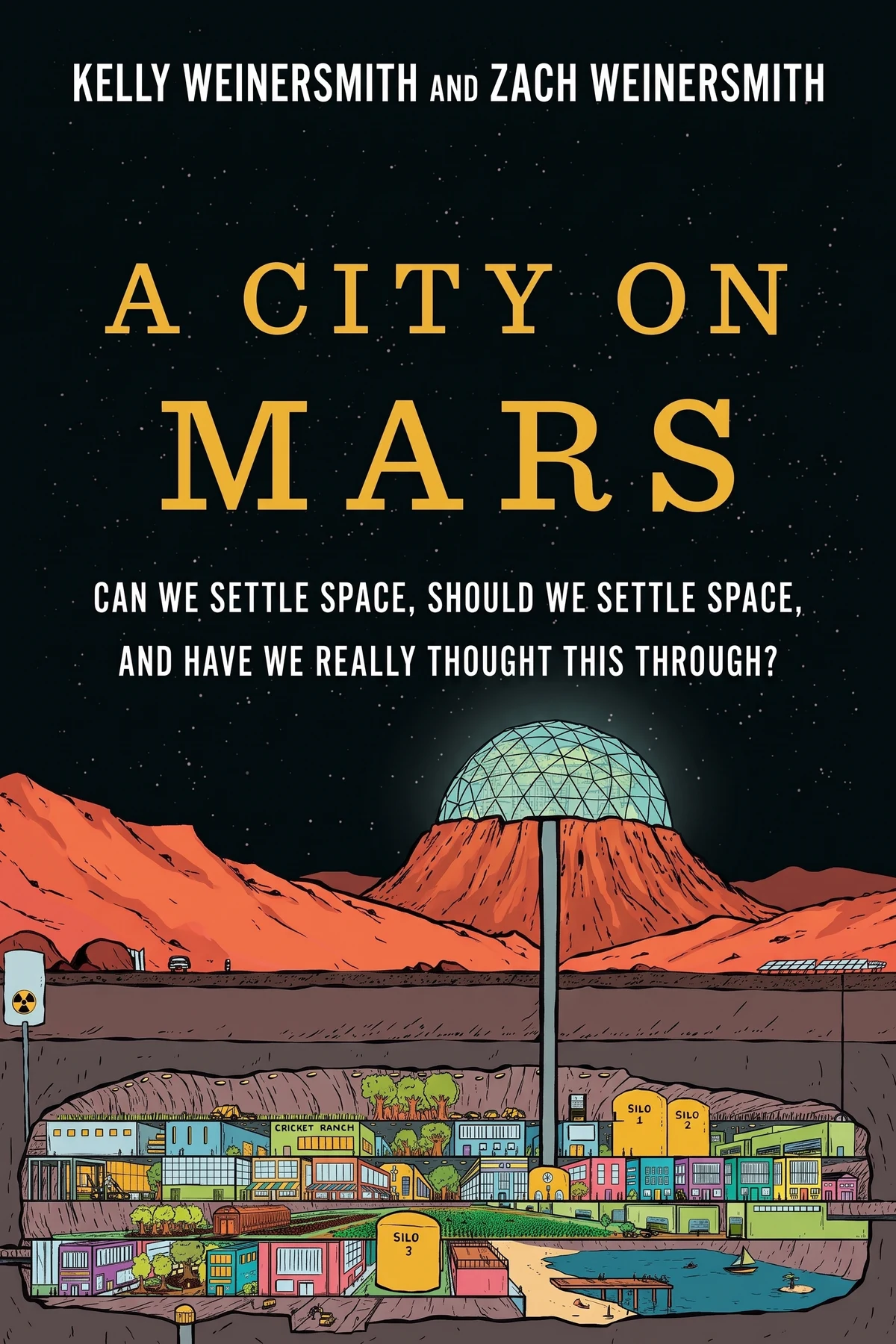
Soonish: Ten Emerging Technologies That’ll Improve and/or Ruin Everything
Explore the frontier of emerging technology in this deep dive into the breakthroughs that could reshape our world, from asteroid mining and fusion energy to bioprinting and the ethics of programmable matter.

Table of Content
1. Introduction
1 min 56 sec
For decades, humanity has been promised a future that looks like a high-budget science fiction movie. We were told to expect sleek flying cars, permanent colonies on the moon, and robots that could handle every mundane aspect of our daily lives. Yet, as we look around today, many of those grand visions seem as distant as ever. This gap between expectation and reality can lead to a sense of technological stagnation, but that feeling is largely an illusion. The truth is that we are standing on the precipice of several revolutions, each of them currently in a state that can best be described as “soonish.”
In this exploration, we aren’t looking at the distant, impossible dreams of the next millennium. Instead, we are focusing on the breakthroughs that are currently being hammered out in laboratories, university departments, and cutting-edge startups. These are technologies that have moved past the realm of pure fantasy and into the difficult, messy phase of engineering and ethical debate. We are talking about advancements like bioprinting human tissue, harnessing the same power that fuels the stars, and creating matter that can be programmed to change its shape on command.
As we navigate these emerging fields, we have to consider a dual reality. Each of these breakthroughs carries the potential to solve some of our most pressing problems—from the organ donor shortage to the global energy crisis—but they also bring along new, complex risks. Whether it’s the privacy concerns of augmented reality or the environmental impact of asteroid mining, the future is rarely a simple upgrade. By diving into the current state of these sciences, we can start to see the shape of the world to come, moving past the headlines to understand the real work happening behind the scenes. Let’s take a look at the technologies that are about to improve, complicate, or entirely transform our way of life.
2. Overcoming the Financial Barriers to Space
2 min 58 sec
Reaching the stars is currently limited by the staggering price of rocket fuel, leading scientists to imagine radical alternatives for leaving our planet.
3. The Quest for Clean Fusion Energy
2 min 52 sec
Harnessing the power of the stars on Earth has been a long-standing goal, promising nearly limitless clean energy if we can solve the containment problem.
4. The Rise of Programmable Matter
2 min 30 sec
Imagine a world where physical objects can reshape themselves on command, leading to everything from medical robots to self-adjusting architecture.
5. Robotic Construction and the Future of Housing
2 min 41 sec
The construction industry is finally entering the age of automation, with 3D-printing robots promising faster, cheaper, and more creative building solutions.
6. The Dual Edge of Augmented Reality
2 min 35 sec
Augmented reality promises to enhance our daily lives with digital information, but it also challenges our concepts of privacy and ownership in the physical world.
7. Synthetic Biology and Rewriting Life
2 min 37 sec
By treating DNA like software, synthetic biology allows us to engineer organisms that can fight disease and solve environmental problems, while raising huge ethical questions.
8. The Arrival of Precision Medicine
2 min 32 sec
Moving away from a one-size-fits-all approach, precision medicine uses individual biological data to provide perfectly tailored healthcare and early diagnosis.
9. Printing Organs and Testing Drugs
2 min 36 sec
Bioprinting is moving beyond simple tissues to the complex task of creating entire human organs, potentially ending the transplant shortage forever.
10. Connecting the Brain to the Machine
2 min 52 sec
Brain-computer interfaces are helping paralyzed patients regain movement and communication, pushing us toward a future of direct interaction between mind and computer.
11. Conclusion
1 min 43 sec
As we have seen, the future isn’t a distant, fixed destination, but a collection of possibilities that are being built right now. From the depths of the ocean to the far reaches of space, and from the microscopic world of our DNA to the complex networks of the human brain, the boundaries of what is possible are constantly shifting. Each of the technologies we’ve explored—be it fusion energy, programmable matter, or bioprinting—carries the same dual promise: the potential to solve ancient human problems and the risk of creating entirely new ones.
The transition from “science fiction” to “soonish” is the most difficult part of the journey. It’s the phase where high-minded ideas meet the cold reality of engineering limits, budget constraints, and ethical debates. But it is also the most exciting phase. This is the time when we get to decide how these technologies will be used. We have a say in whether augmented reality will be a tool for empowerment or a nightmare for privacy, and whether synthetic biology will be used to heal the planet or to further divide us.
The throughline of all these advancements is human curiosity and the refusal to accept the status quo. We are a species that looks at an asteroid and sees a gas station, or looks at a strand of DNA and sees a line of code to be edited. This drive to innovate is what has brought us from the first stone tools to the brink of the stars. As we move into this “soonish” future, the most important thing we can carry with us isn’t just our technical skill, but our ethical compass and our ability to think critically about the world we are creating. The future is coming, and it will be as complex, messy, and wonderful as the people building it.
About this book
What is this book about?
We often wonder why the futuristic promises of mid-century science fiction haven't materialized. Where are the flying cars and the moon colonies? This summary examines the real-world cutting edge, looking at ten specific technological fields that are hovering on the horizon. It covers the immense challenges scientists face—like the high cost of space travel and the complexity of printing human organs—while celebrating the ingenuity of modern research. By exploring fields such as synthetic biology, augmented reality, and brain-computer interfaces, this guide provides a realistic yet optimistic view of the near future. It doesn’t just focus on the 'how' of these technologies, but also the 'why' and the 'what if,' exploring the profound ethical questions that arise when we begin to manipulate DNA or overlay digital realities onto our physical world. It is a journey through the possibilities of 'soonish'—the breakthroughs that aren't quite here today, but might define tomorrow.
Book Information
About the Author
Kelly Weinersmith
Dr. Kelly Weinersmith is a member of the BioSciences department at Rice University and a cohost of the popular science podcast Science... Sort Of. Her research has been highlighted by major publications like National Geographic, the BBC, and the Atlantic. Zach Weinersmith is the renowned creator of the webcomic Saturday Morning Breakfast Cereal. His insightful and humorous work has appeared in the Economist, the Wall Street Journal, Slate, and Forbes.
Ratings & Reviews
Ratings at a glance
What people think
Listeners consider the work to be meticulously documented and charming in its coverage of upcoming scientific breakthroughs. They value the accessible explanations and witty prose, with one listener highlighting how it strikes a good balance between depth and readability. Listeners view it as an entertaining and stimulating experience, as one review notes it takes the inquiring mind on a journey. The tempo of the book draws varied opinions, with some considering it smart while others feel it can be a bit dumb at times.
Top reviews
Divya
After hearing so much about the Weinersmiths' work, I finally dove into this exploration of tomorrow's tech. It is incredibly refreshing to find a popular science book that doesn't treat the reader like they have a PhD or, conversely, like they're a total idiot. Kelly’s expertise shines through every chapter, providing a solid backbone of research that makes even the wildest ideas like asteroid mining feel plausible. Zach’s illustrations add a layer of whimsy that breaks up the dense discussions on orbital mechanics and genetic engineering. While some might find the humor a bit much, I thought it kept the pacing snappy and prevented the 'dry textbook' syndrome. It’s a thought-provoking journey that manages to be both informative and genuinely delightful. If you’ve ever been curious about why we aren’t living on Mars yet, this book provides the nuanced, multi-faceted answers you’ve been looking for without the boring jargon.
Show moreGun
The chapter on programmable matter alone is worth the price of admission. I’ve read a lot of futurist manifestos that are either too utopian or too doomsday-focused, but Soonish strikes a perfect middle ground. It’s a well-researched, delightful romp through the labs of 'mildly crazy' people trying to build the future. The Weinersmiths have a gift for taking high-level concepts like brain-computer interfaces and stripping away the fluff to reveal the actual mechanical problems. Is it funny? Yes, mostly, though your mileage may vary depending on your tolerance for nerd-culture references and puns. I found it to be a refreshing change of pace from the typical, self-important tech non-fiction that litters the 'New Releases' shelf. It’s the kind of book you can leave on your coffee table and pick up for twenty minutes at a time, always walking away with a new conversation starter for your next dinner party.
Show moreHassan
Wow, I didn't think a book about fusion power and synthetic biology could make me laugh out loud while actually teaching me something substantial. The Weinersmiths are a powerhouse duo here. Kelly brings the rigorous scientific background, and Zach brings the sharp, observational wit that fans of his comics will recognize. It’s a brilliant investigation into why the future hasn't arrived yet. The section on 'The road to Mars is paved with small discounts' was particularly insightful, highlighting the economic realities that often get ignored in favor of flashy headlines. Every page feels like it was written by people who genuinely love the search for knowledge. It’s an easy-to-understand masterpiece of science communication that manages to be both incredibly funny and deeply thought-provoking. If you want to feel better about the state of the world while learning about 3D printed organs, buy this book immediately.
Show moreMaria
Ever wonder why we don’t have space elevators yet? Soonish takes that question and runs with it, exploring the massive material science hurdles we still face. I loved how they structured each section: starting with the dream, moving to the current reality, and then looking at the 'ruin everything' potential. It’s a very clever way to frame progress. The writing is snappy, though I’ll admit a few of the jokes felt a bit forced or aimed at a much younger demographic. Still, the breakdown of fusion power was one of the clearest explanations I’ve ever encountered. Personally, I think it’s rare to find a book that balances legitimate skepticism with genuine wonder about the future of humanity. It’s not just about the gadgets; it’s about the 'why' behind the delays. Definitely worth a read if you want a tech overview that isn't just a dry Wikipedia summary.
Show moreBoss
Picked this up on a whim because the cover looked like a fun comic, and I wasn't disappointed by the depth of the actual content. It’s a fantastic bridge for people who love science but hate the academic slog. The authors tackle ten major technologies, from 3D organ printing to augmented reality, and they don't shy away from the gritty details of why these things are taking so long. Frankly, the chapter on 'cheap' access to space was eye-opening because it crushed some of my sci-fi fantasies while replacing them with more interesting realities. The illustrations are sparse but effective at illustrating the more abstract concepts that text alone struggles to convey. My only real gripe is that technology moves so fast that a few sections already feel a bit behind the curve. However, as an introductory text for the inquisitive mind, it really succeeds in making complex systems feel approachable and exciting.
Show moreAnong
As someone who usually finds physics books a bit dry, this was a breath of fresh air. The way the authors explain the intricacies of fusion power without making my eyes glaze over is nothing short of a miracle. I appreciated the honesty about how 'soonish' these things actually are—hint: not very. It’s a rare tech book that admits most of our cool future stuff depends on us getting really good at 'arranging carbon atoms into little straws.' The prose is conversational and energetic, making it easy to devour in just a few sittings. Even the more 'out there' topics like medical nanobots were handled with a level of skepticism that kept the book grounded in reality. While the humor is definitely geared toward a specific internet-savvy crowd, it worked for me. It’s a smart, accessible guide for anyone who wants to know what the next fifty years might actually look like.
Show moreKanokporn
Truth is, the authors have a very specific 'smartass' voice that might rub some people the wrong way, but I found it quite charming. It’s like being at a party with two geniuses who also happen to be incredibly funny and a bit self-deprecating. They take these massive, world-altering concepts—like brain-machine interfaces—and break them down into digestible, relatable chunks. The cartoons are definitely a distinct style, and while they aren’t 'high art,' they serve their purpose of lightening the mood during heavy discussions on the ethics of genetic engineering. I did feel that the chapter on construction robots was a bit weaker than the others, lacking the same 'wow' factor. Nevertheless, the book as a whole is a fantastic primer on the tech that will shape our lives. It’s balanced, well-researched, and doesn't take itself too seriously, which is exactly what popular science needs more of these days.
Show moreJirapat
To be fair, the science here is top-notch, but the delivery felt like a bit of a mixed bag for me. I’m a fan of the SMBC comics, yet somehow the transition to a long-form book felt clunky in places. The humor is very hit-or-miss—sometimes it’s a witty observation about human nature, and other times it’s just a juvenile pun that derails the technical explanation of bioprinting. I felt like I was constantly alternating between being fascinated by the potential of nanobots and being annoyed by a 'smartass' tone that felt slightly condescending. The research is obviously there, and I appreciate the deep dives into the history of these technologies, but the execution left me wanting something more mature. It’s a good starting point for a layman, but if you’re already well-read in tech circles, you might find the 'wacky' presentation more of a distraction than a benefit.
Show moreAhmed
Look, keeping up with emerging technology is a losing battle for any printed book, and this one is no exception. While published a few years ago, some of the specific 'current status' sections on reusable rockets already feel a bit dated. However, the foundational science and the explanation of the hurdles remain incredibly relevant. I enjoyed the 'ruin everything' sections because they offer a grounded look at ethics and unintended consequences. My main issue was the pacing; some chapters felt deeply investigated while others, like the one on augmented reality, felt a bit more superficial. The writing style is definitely 'pop-sci,' so don't expect deep equations or white-paper levels of detail. It’s a light refresher for those who already know the basics, but it could have benefited from a slightly more serious tone to match the weight of the topics being discussed. Three stars for the effort and the clear passion.
Show morePranee
Not what I expected given the hype surrounding the authors. I went into this hoping for something akin to 'Filmish,' where the illustrations and the text work in a tight, sophisticated harmony to explain complex history. Instead, what I got was a text-heavy book interspersed with what I can only describe as amateurish doodles. The humor frequently falls flat, leaning into a 'look how quirky we are' vibe that becomes exhausting after the third chapter. To be honest, I found myself skipping the cartoons entirely just to get to the actual science, which is the only redeeming quality here. The information on asteroid mining and robotics is accurate and well-explained, but it’s buried under so much 'smartass' filler that it’s hard to stay engaged. It feels like it’s trying too hard to be the 'cool' science teacher who makes too many bad jokes. I’d recommend just reading a dedicated technical blog instead.
Show moreReaders also enjoyed


AUDIO SUMMARY AVAILABLE
Listen to Soonish in 15 minutes
Get the key ideas from Soonish by Kelly Weinersmith, plus 5,000+ more titles in English and Thai.
- 5,000+ titles
- Listen as much as you want
- 7-day free trial
- Cancel anytime







