
15 min 28 sec
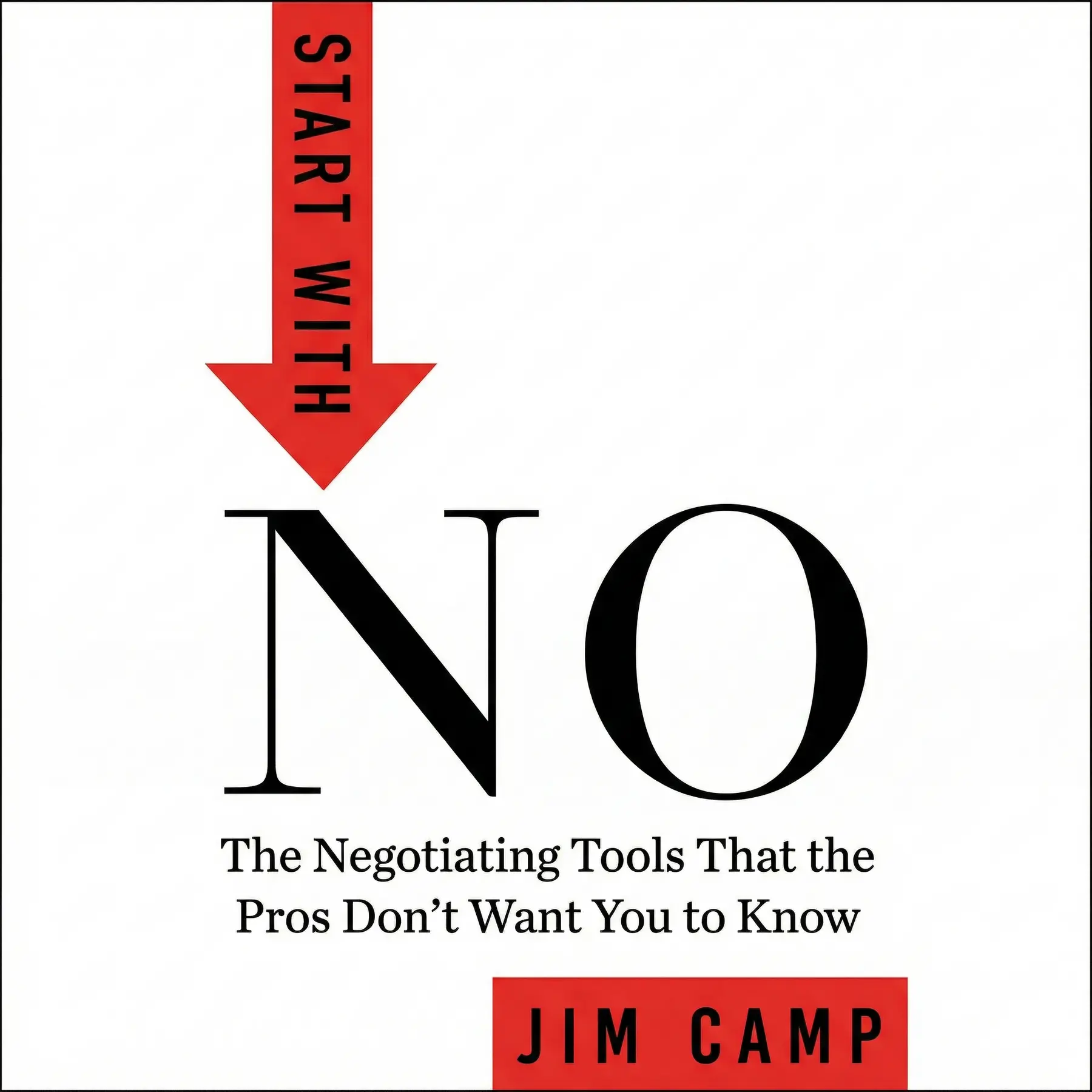
Start with No: The Negotiating Tools That the Pros Don't Want You to Know
By Jim Camp
Start with No challenges traditional negotiation myths, revealing how embracing the word no and managing your emotions can help you maintain control and secure better, more honest agreements in any high-stakes situation.
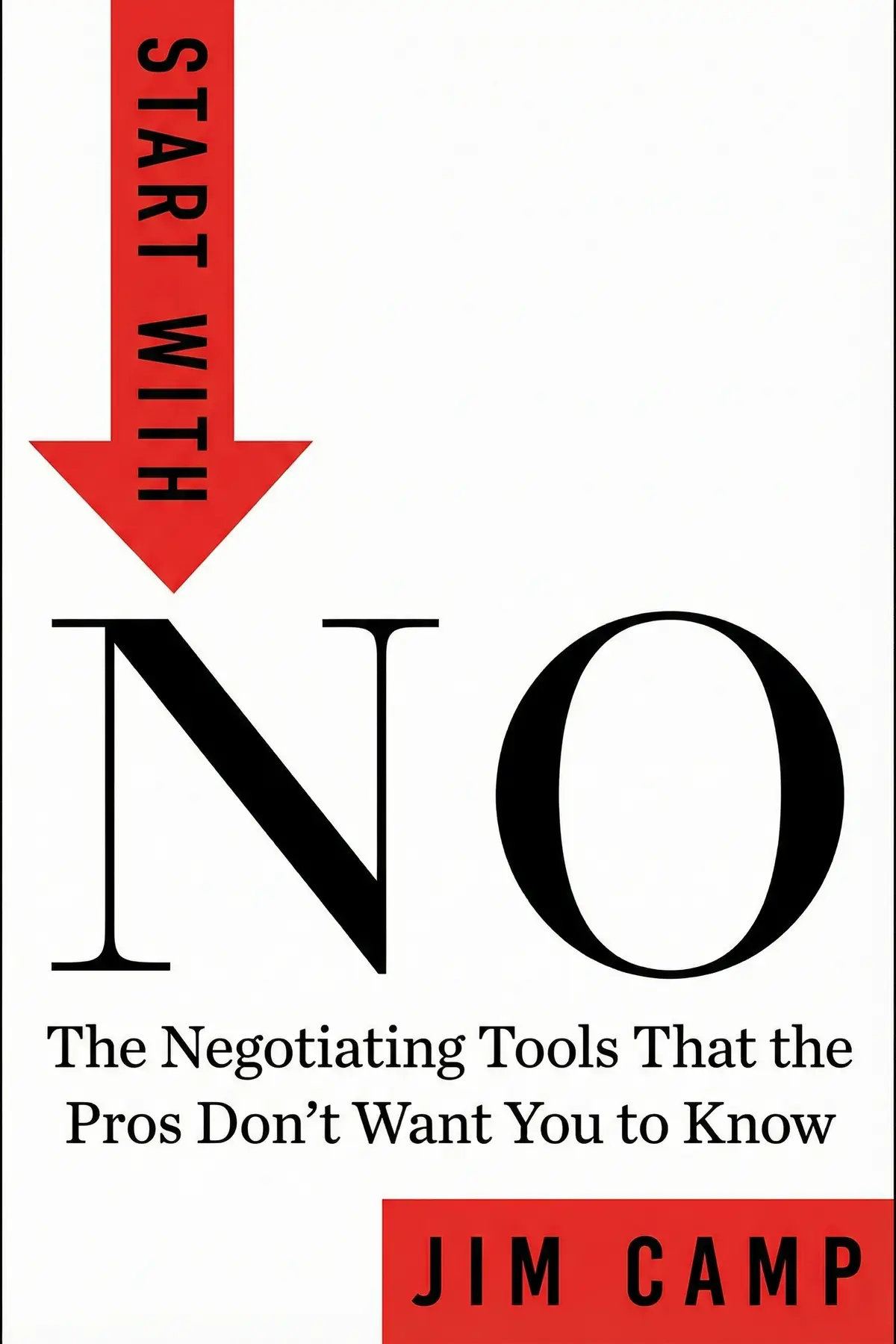
Table of Content
1. Introduction
1 min 43 sec
Have you ever walked away from a negotiation feeling like you gave up too much just to get the deal done? Most of us have been taught that the golden rule of business is the ‘win-win’ agreement. We are told to be likable, to look for common ground, and above all, to get to a ‘yes’ as quickly as possible. But what if that very goal is exactly what’s holding you back? What if the chase for a ‘yes’ is a trap that leaves you vulnerable to more experienced, more predatory negotiators?
This exploration of Jim Camp’s philosophy, Start with No, turns traditional wisdom on its head. It suggests that our obsession with mutual benefit often leads to a position of weakness. When we are desperate for an agreement, we become needy. We start making concessions we shouldn’t make. We ignore red flags because we want the deal so badly. This summary will show you why ‘no’ is actually the most powerful word in your vocabulary. It isn’t a wall; it’s a door to a more honest and effective conversation.
Over the next few minutes, we are going to look at a negotiation system that prioritizes emotional control and strategic thinking over social niceties. We’ll explore why showing your vulnerabilities or your desperation is the quickest way to lose leverage, and how you can use a systematic, daily approach to hone your skills. We will also dive into the art of asking the right questions—not the kind that corner people, but the kind that open them up. By the end, you’ll see how a calm, respectful, and disciplined approach can lead to outcomes that aren’t just ‘fair,’ but truly successful for you. Let’s get started by looking at the primary obstacle to any good deal: the feeling that you absolutely must have it.
2. The Trap of Desperation
2 min 29 sec
Discover why the hidden scent of neediness is a deal-breaker and how learning to detach from the outcome can grant you immediate leverage.
3. The Clarity of a Negative Response
2 min 24 sec
Uncover why a ‘no’ is more valuable than a ‘maybe’ and how it creates a foundation for honest, productive dialogue.
4. The Importance of a Systematic Review
2 min 19 sec
Learn how treating negotiation as a disciplined craft—complete with daily tracking—can sharpen your skills and build unshakeable confidence.
5. The Strategy of Open Inquiry
2 min 37 sec
Master the difference between questions that close doors and those that open minds, ensuring you always gather the most useful information.
6. Creating a Safe Environment for Truth
2 min 35 sec
Explore the power of ‘nurturing’ to lower defenses and how being a little ‘less than perfect’ can actually make you more influential.
7. Conclusion
1 min 21 sec
As we wrap up our look at Start with No by Jim Camp, the throughline is clear: effective negotiation is about emotional discipline and the courage to seek clarity over comfort. We’ve seen how the ‘win-win’ mindset can often be a trap that leads to neediness and poor decisions. By letting go of the desperate need for a ‘yes,’ you reclaim your power. You’ve learned that ‘no’ is the true beginning of a productive conversation, and that ‘maybe’ is a dangerous waste of time.
You now have the tools to change how you approach every deal. Remember to track your behaviors daily, like a pilot reviewing a flight. Focus on the process of asking open-ended questions that start with ‘how’ and ‘what,’ rather than those that corner your opponent. And never forget the power of nurturing—creating a safe, respectful environment where both parties can be honest and move toward a real solution.
The next time you find yourself at a negotiating table, don’t focus on being liked or getting a quick agreement. Instead, focus on your own calm, your own boundaries, and your own willingness to walk away. When you aren’t afraid to hear ‘no,’ and you aren’t afraid to say it, you become the most powerful person in the room. Thank you for listening to this BookBits summary. We hope these insights help you negotiate with a new sense of confidence and control.
About this book
What is this book about?
In a world where we are constantly told to aim for a win-win, this book offers a radical alternative. It argues that the standard approach to negotiation—trying to please the other side and rushing toward a yes—actually puts you at a disadvantage. Instead, Jim Camp introduces a system built on emotional discipline, clear boundaries, and the strategic power of no. The promise of this book is to transform you into a negotiator who cannot be manipulated. By learning to strip away your own neediness and focusing on the decision-making process rather than just the final result, you gain the upper hand. You will discover how to use specific questioning techniques to uncover the truth, how to track your progress with the discipline of a professional, and how to create a conversational environment where honesty thrives. This isn't just about business deals; it is about reclaiming your confidence in every interpersonal exchange.
Book Information
About the Author
Jim Camp
Jim Camp was a renowned expert who guided professionals through thousands of negotiations across more than 150 companies. His methods have been applied in diverse industries worldwide, from technology to manufacturing. As the founder of the Camp Negotiation Institute, he dedicated his career to teaching practical, impactful advice that delivers results. He also shared his expertise as a lecturer at major graduate business schools and was a sought-after speaker at global conferences.
Ratings & Reviews
Ratings at a glance
What people think
Listeners find this negotiation book both compelling and easy to digest, providing excellent tips for pre-meeting preparation. They value its straightforward methodology and its utility as a consistently helpful resource, and one listener mentions how it forces you to view bargaining through a new lens. The work is praised for its uncomplicated concepts and overall value, though perspectives regarding its factual accuracy are varied.
Top reviews
Audrey
Picked this up after hitting a wall in my sales career, and it completely flipped my perspective. While everyone else is pushing for a 'win-win,' Camp suggests that's actually the fastest way to lose your shirt. I loved the emphasis on letting the other person feel in control by giving them the right to say 'no' immediately. It takes the pressure off both parties and allows for a real conversation rather than a scripted dance. To be fair, some of the military anecdotes feel a bit dated and macho, but the core logic is undeniable. If you are tired of feeling desperate during a deal, this is your manual. It’s not just a book; it’s a mindset shift that keeps you from being cornered. I found it much more practical than the academic stuff you usually find in business school.
Show morePichaya
After hearing about 'Start with No' for years, I finally dove in, and I regret waiting so long. The concept of the 'adversary' might sound aggressive, but the book is actually about deep respect and clear communication. You stop being a needy negotiator and start being a professional who respects the other person's boundaries. It's about finding the truth of the situation rather than forcing a fake 'win-win' that leaves everyone unhappy. Not gonna lie, I was skeptical of the anti-compromise stance at first, but it makes total sense when you see it in action. My only gripe is the constant football analogies which didn't always land for me. Aside from that, it's a stellar guide for anyone in a high-stakes environment.
Show moreConnor
Negotiation isn't just for boardrooms, and this book proves it by focusing on the human element of every interaction. I love how it forces you to think about negotiation in a completely different way—one where you don't have to be a shark or a pushover. The simple idea that 'no' is the start of the negotiation, not the end, is incredibly liberating. It takes away the fear of rejection and replaces it with a process for discovery. I've already applied some of the 'mission and purpose' concepts to my personal life with great success. Honestly, the book is incredibly effective because it’s so simple to grasp. It's one of those rare business books that actually has a soul.
Show moreSatit
I've been looking for a negotiation book that actually feels applicable to real-world stress, and this is it. Unlike the dry, theoretical texts from economists, Camp gives you a playbook for when things get messy. He understands that we are emotional creatures, and his system is designed to keep those emotions in check. The focus on identifying the other party's 'pain' is a total game-changer for my sales process. It’s a quick and informative read that doesn't waste time on academic fluff. I appreciated the no-nonsense approach and the clear, actionable steps for preparing for any meeting. Even with the slightly repetitive nature of the business examples, the core message is too important to ignore. It’s a must-read.
Show morePruet
Ever wonder why common negotiation tactics always leave you feeling like you compromised too much? Camp's central thesis is that the standard Harvard 'Getting to Yes' model is fundamentally flawed because it forces unnecessary concessions. Frankly, his alternative approach—focusing on the adversary’s 'pain'—is far more effective in the real world. By identifying what truly bothers the other side, you can tailor your proposal to solve their specific issues without giving away the farm. I did find the writing style a bit repetitive at times, and the author definitely has a high opinion of himself. Still, the underlying techniques are solid and easy to implement right away. It’s a no-nonsense guide that actually delivers value for the money.
Show moreCameron
This book is a refreshing departure from the usual fluffy self-help business guides. The author argues that desperation is the biggest killer of any deal, and he provides a structured system to maintain emotional control throughout the process. I particularly appreciated the advice on being honest with yourself and your goals rather than trying to 'scheme' your way to a win. Look, the anecdotes about corporate giants can feel a bit exaggerated, and I suspect some are smoothed over for dramatic effect. However, the psychological insight that people feel safer when they can say 'no' is pure gold. It makes the whole negotiation process feel less like a battle and more like a collaborative discovery. This is a very quick read with a lasting impact.
Show moreMingkwan
The chapter regarding 'neediness' changed how I approach my clients entirely. Camp explains that appearing too eager to close a deal actually sends people running in the opposite direction. By being prepared to walk away, you ironically gain the upper hand. It’s a counterintuitive strategy that works because it respects the psychological need for autonomy. I think the book is highly engaging and easy to read, even if the 'no-nonsense' persona gets a bit thick in some sections. I would have liked to see more scientific backing for some of his claims, as most of it is just based on his personal experience. Regardless, the tips on preparing for a meeting are worth the price of admission alone. It’s a solid addition to any professional’s library.
Show moreNatnicha
Gotta say, the logic here is surprisingly sound for a book that positions itself against the grain. I used to think that being a 'nice guy' meant always aiming for a middle ground, but that’s just a recipe for mediocrity. Camp teaches you how to present the best possible case for your interests while still solving the other person's problems. It’s about intelligent decision-making, not just making a fast buck off a quick impulse. Some of the military-style terminology is a bit over-the-top, and I could have done without the 'adversary' label for every single person you talk to. But if you can look past the jargon, the advice on staying focused on your mission is excellent. This is a guide I’ll probably revisit every year.
Show moreWaree
To be fair, I found several of the techniques here very useful, but the delivery was hard to stomach. The author’s style is very much 'my way or the highway,' and he spends a lot of time gloating about his past successes. Many of the anecdotes feel like they were invented to perfectly fit his points, which makes the advice feel less grounded in reality. Also, the constant bashing of the Harvard negotiation school felt forced and often misrepresented what those authors actually wrote. That being said, the focus on honesty and ethics in negotiation was a nice surprise. If you can filter out the repetitive stories and the author's abrasive voice, there is a lot of practical value to be found here. Just be prepared for some heavy-handed self-promotion.
Show moreRin
Wait, so everything we've learned about cooperation is a lie? That’s basically what Jim Camp tries to sell you here, but I found his tone incredibly grating. The book reads like a typical self-help manual filled with hyperbole and personal stories that feel way too convenient to be true. Most of the examples involve a generic manufacturing company, and they are repeated so often I felt like I was reading the same chapter twice. He spends half the time bashing other experts, which felt a bit disingenuous since he often ends up recommending the same basic principles of leverage. Truth is, there are much better books like Simon Sinek’s work if you want a different mindset, or more technical manuals if you want to learn the mechanics of a contract.
Show moreReaders also enjoyed

AUDIO SUMMARY AVAILABLE
Listen to Start with No in 15 minutes
Get the key ideas from Start with No by Jim Camp, plus 5,000+ more titles in English and Thai.
- 5,000+ titles
- Listen as much as you want
- 7-day free trial
- Cancel anytime







