

19 min 32 sec
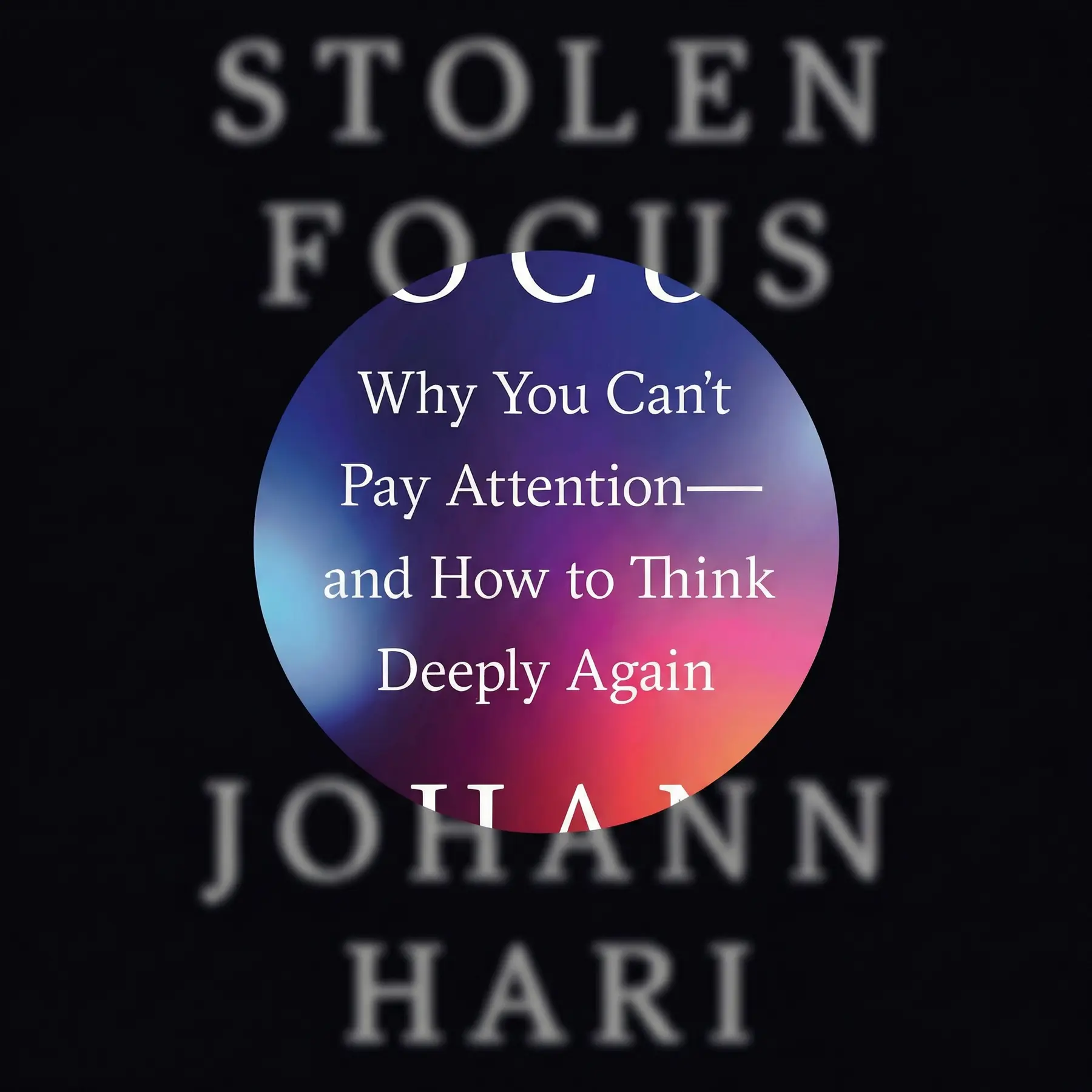
Stolen Focus: Why You Can’t Pay Attention – and How to Think Deeply Again
By Johann Hari
Johann Hari investigates the systemic causes of our modern attention crisis, revealing how technology, work culture, and rapid information flow are depleting our focus and how we can reclaim it.
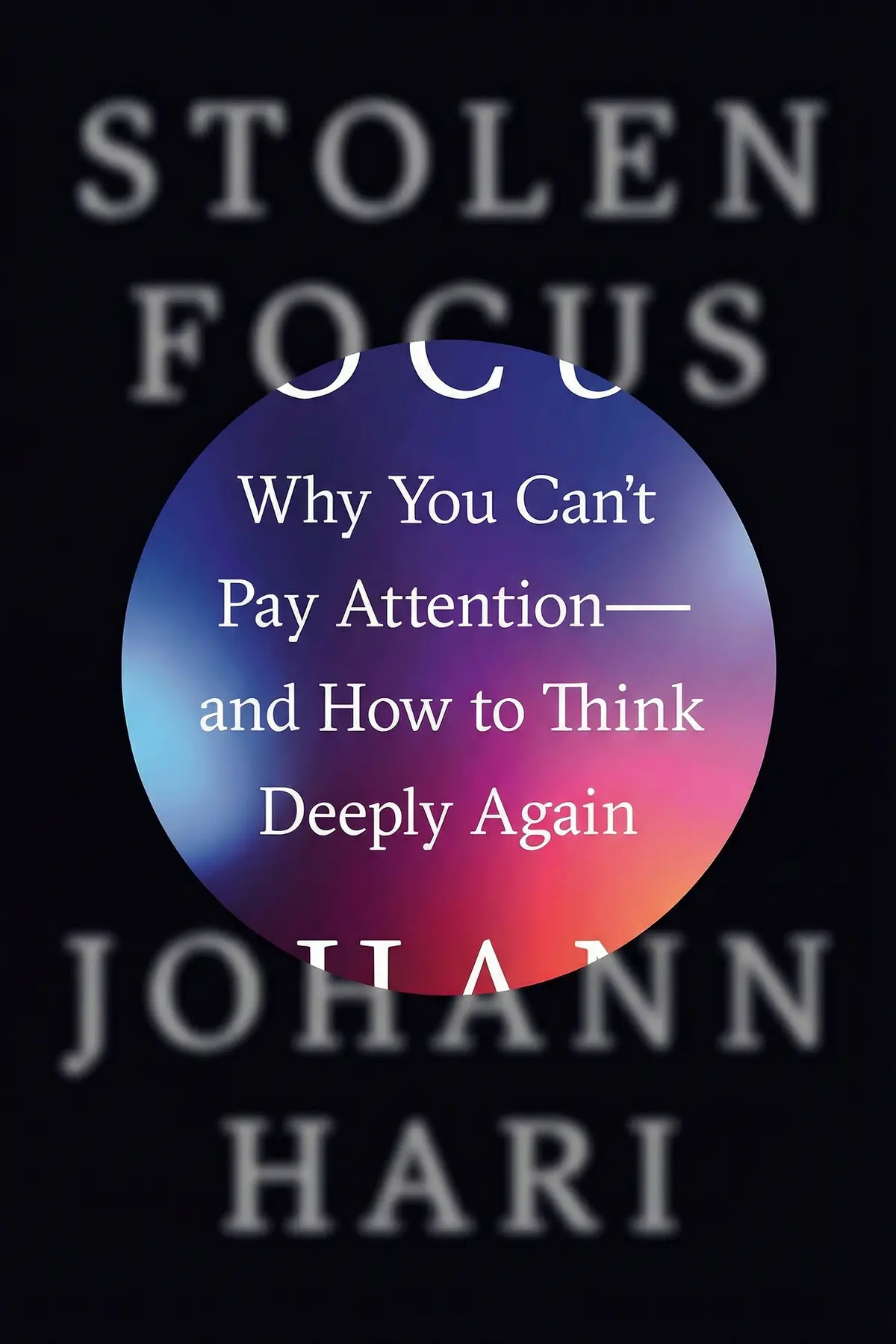
Table of Content
1. Introduction
2 min 01 sec
Imagine you’ve finally carved out an hour of quiet time to tackle a project that truly matters to you. You sit down, open your laptop, and take a deep breath. But before you can even finish the first sentence, your phone vibrates. It’s a text message. As you tap out a quick reply, a news notification flashes across the top of your screen. You click it, just for a second, to see what’s happening in the world. From there, you find yourself on social media, lured in by a notification about a photo you posted earlier. Suddenly, twenty minutes have vanished, and you’re looking at pictures of a high school acquaintance’s vacation. The work you intended to do remains untouched, and that feeling of deep, quiet concentration feels further away than ever.
This experience has become the defining rhythm of modern life. We feel busier than ever, yet we struggle to accomplish the things that require sustained thought. We often blame ourselves for this, assuming we just lack the discipline to stay focused. We buy productivity apps, we try to hide our phones, and we feel a nagging sense of guilt every time we get sucked into a digital rabbit hole. But what if the problem isn’t you? What if the struggle to pay attention is actually the result of a coordinated effort by some of the most powerful forces in our society?
In this exploration of Johann Hari’s work, we are going to look at the story of how our focus was taken from us and, more importantly, how we might start to get it back. We will move past the idea that this is a personal flaw and instead look at the systemic issues—from the way Silicon Valley designs its software to the very structure of our modern workplaces—that are actively depleting our mental resources. This journey takes us through the history of behavioral psychology, the mechanics of social media algorithms, and the profound difference between the frantic state of multitasking and the nourishing state of deep focus. By understanding the throughline of this attention crisis, we can begin to see that reclaiming our minds isn’t just about individual willpower; it’s about changing the systems that surround us. So, as we begin, try to let go of the guilt and the distractions, and let’s dive into the reality of our stolen focus.
2. The Universal Decline of Concentration
2 min 56 sec
Is our collective attention span really getting shorter, or does it just feel that way? Explore the data that proves our focus is accelerating toward a breaking point.
3. The Engineering of Distraction
3 min 02 sec
Discover why your favorite apps are so hard to put down and how the principles of animal behavior were used to turn us into digital ‘users.’
4. Algorithms of Outrage and the Loss of Collective Focus
3 min 16 sec
Explore how the hunt for engagement doesn’t just distract us—it actually changes how we interact as a society by prioritizing anger over understanding.
5. The High Cost of Multitasking and the Power of Flow
3 min 11 sec
Think you’re good at doing five things at once? Learn why multitasking is a biological myth and how you can find a better way to work.
6. A Systemic Path Toward Reclaiming Our Minds
2 min 59 sec
Individual willpower isn’t enough to fix a global crisis. Explore the revolutionary changes in tech and work that could restore our focus for good.
7. Conclusion
2 min 07 sec
As we reach the end of this journey through the landscape of our distracted world, it’s clear that the struggle to focus is much more than a personal hurdle. We have seen how our attention is being eroded by the sheer speed of modern life and the vast amounts of information we are expected to digest. We’ve uncovered the deliberate psychological tricks used by tech companies to keep us hooked, and how their quest for engagement fuels social division and hampers our collective ability to tackle global challenges. We have also explored the heavy cost of the multitasking myth and the incredible, restorative power of finding our flow.
But the most important takeaway is that we are not helpless. While the forces aligned against our focus are powerful, they are not inevitable. By recognizing that this is a systemic problem, we can begin to look for systemic solutions. We can support movements for more ethical technology, advocate for healthier work environments that value depth over speed, and push for laws that protect our right to be offline. We can choose to monotask, to seek out flow, and to value our attention as the finite, sacred resource that it is.
If you want to take one small, immediate step toward reclaiming your focus, here is a simple suggestion: give yourself permission to do absolutely nothing. We often feel that every moment must be productive, but the truth is that our brains need ‘mind-wandering’ time. When we let our thoughts drift without a goal or a screen to guide them, our minds make unexpected connections and associations. This is where true creativity and deep insight are born. So, the next time you have a few spare minutes, don’t reach for your phone. Instead, look out a window, take a walk without a podcast, or just sit quietly. Let your mind wander. You might find that in those quiet moments, you start to find the focus that was stolen from you. The path back to a deep, attentive life starts with a single, focused choice.
About this book
What is this book about?
Have you ever felt like your brain is losing the ability to settle on a single task? In Stolen Focus, journalist Johann Hari examines why our collective attention spans are shrinking at an alarming rate. He argues that this isn't just a personal failure or a lack of willpower, but rather the result of powerful external forces designed to keep us perpetually distracted. The book takes a deep dive into the business models of Silicon Valley, the psychological triggers built into our devices, and the societal pressures that demand constant multitasking. Hari explores the mechanics of how our attention is harvested and sold, the impact of this crisis on our ability to solve complex global problems, and the psychological state of flow that we’ve largely lost. Ultimately, the book promises a roadmap for reclaiming our cognitive sovereignty, moving beyond individual digital detoxes toward systemic changes that could restore our capacity for deep thought and meaningful connection.
Book Information
About the Author
Johann Hari
Johann Hari is a renowned journalist and writer whose work has explored critical societal issues, including mental health and the global war on drugs. His insightful investigative books have reached the top of the New York Times best-seller list and have been translated into 38 languages, reflecting his significant international impact and reach.

Ratings & Reviews
Ratings at a glance
What people think
Listeners find the book engaging and thoroughly investigated, valuing its academic citations and the way it blends scientific depth with approachable prose. They characterize it as stimulating and revelatory, with one listener highlighting how individual narratives are integrated throughout. The prose earns favorable reviews, and listeners view the work as significant, with one mentioning it should be mandatory reading for high school students. Responses to the book's central theme are varied; while some celebrate its capacity to boost attention spans, others observe that the writer's own focus drifts mid-way. Additionally, the political perspectives included face pushback for being biased.
Top reviews
Vimolwan
This book felt like a bucket of cold water to the face. Hari masterfully articulates why we feel so fragmented, arguing that our loss of focus isn't a personal failing but a systemic theft. Truth is, I always blamed my own lack of willpower for my late-night scrolling habits. However, after reading about "surveillance capitalism" and the way algorithms are literally designed to hijack our dopamine loops, my perspective has shifted entirely. The writing is incredibly propulsive and readable, making complex sociological concepts feel urgent and personal. While he does lean into his own political leanings at times, the core message about reclaiming our collective attention is too important to ignore. It’s a sobering look at how Big Tech treats our minds as natural resources to be mined for profit. I found the chapters on the importance of "flow states" particularly life-changing. Every person with a smartphone needs to grapple with these ideas before our ability to think deeply vanishes for good.
Show moreThitima
After hearing so much buzz about this, I finally dove in and wasn't disappointed. Hari's journey to a tech-free beach town serves as a poignant backdrop for a much larger investigation into the twelve forces ruining our concentration. Not gonna lie, I was skeptical at first, but the interviews with former Silicon Valley engineers are chilling. They confirm our worst fears about how these platforms are engineered for addiction. I particularly appreciated the distinction between "cruel optimism"—the idea that we can just buy a "phone jail" to fix ourselves—and the need for actual political regulation. The book is well-researched, though some might find the narrative style a bit meandering in the middle sections. Still, the way he connects sleep deprivation and poor nutrition to our cognitive decline is fascinating. It’s a call to arms for anyone who misses the feeling of being fully immersed in a long book or a deep conversation.
Show moreEye
Wow, I didn't realize how much my 'mind-wandering' time had been replaced by the orange glow of social media algorithms. This book is a hauntingly beautiful exploration of what it means to be human in an age of digital distraction. Hari’s writing is poetic and evocative, especially when he describes the simple joy of sinking into a long novel without the itch to check a notification. I was captivated by the stories of the engineers who regret their creations; it felt like a modern Frankenstein tale. The book argues that we are losing our ability to solve big problems because we can’t even focus on small ones anymore. Some critics say he’s too pessimistic, but I found his call for a "pro-attention" movement to be incredibly inspiring. It’s not just about being more productive at work—it’s about having a soul and a life that belongs to you, not a billionaire in California.
Show moreKru
Ever wonder why you can't even sit through a movie without checking your phone three times? This book explains exactly why that is, and the answer is terrifying. Hari takes us on a global tour to meet the people who are fighting to save our focus, from activists in France to scientists in the UK. The most powerful takeaway for me was the idea that our attention hasn't collapsed—it was stolen. That shift in language is so important because it moves us from guilt to anger and, hopefully, to action. The book is well-paced and balances heavy data with human stories effectively. I especially loved the section on how "multi-tasking" is actually just our brains rapidly switching and losing IQ points in the process. It’s a wake-up call that should be mandatory reading for anyone who feels like their life is slipping away one scroll at a time.
Show moreChamnong
Picked this up during a particularly bad bout of burnout and it was exactly the medicine I needed. The book is an urgent, deeply researched plea for us to reclaim our lives from the "outrage economy." Hari argues that our inability to focus is why we can't solve major societal issues, and that connection alone makes the book worth reading. I was particularly struck by the research on sleep; it turns out we are all essentially walking around in a permanent state of "attention hangovers." The prose is engaging and never feels dry, even when he's diving into the nitty-gritty of algorithmic design. Frankly, it’s one of those rare books that changes the way you see the world the moment you step outside. It’s not just about "digital detoxing"—it’s about demanding a world that is built for human beings instead of for profit. A truly essential read for the modern age.
Show moreWatchara
As a high school teacher, I found myself nodding along to almost every page regarding our students' dwindling attention spans. Hari makes a compelling case that we are living through a massive ecological crisis of the mind. The chapters regarding the "confinement of children" and the lack of free play were especially resonant for me. Frankly, it explains so much of the anxiety and lack of focus I see in the classroom every single day. I do have to mention that the author's political bias is quite prominent, which might alienate some readers who aren't on board with his critique of capitalism. Also, his writing style is very journalistic—it's a breeze to read, but sometimes it feels like he simplifies complex scientific debates to fit a neat story. Regardless of those minor gripes, the central thesis is undeniable. We are losing something precious, and we need to fight to get it back.
Show moreChon
Johann Hari has this unique ability to weave personal anecdotes with high-level sociological research. Picked this up hoping for some productivity hacks, but I got something much deeper instead. The book shifts the blame away from the individual and places it squarely on the corporations that profit from our distraction. Look, it’s refreshing to hear someone say that it’s not just your fault that you can’t stop checking Instagram. The concept of "flow" and how it is being systematically destroyed by constant interruptions was a huge "aha" moment for me. However, I did find that the book loses a bit of steam toward the end when it tries to link everything to climate change. It felt like a bit of a reach, even if the underlying sentiment was well-intentioned. Overall, it’s an eye-opening read that will make you want to toss your phone into the nearest body of water.
Show moreNit
Gotta say, I'm a huge fan of Lost Connections, so I had very high expectations for this one. While it didn't quite hit the same emotional heights for me, it’s still a fantastic piece of investigative journalism. Hari has a knack for finding the right people to interview, and his conversation with the "flow" expert Mihaly Csikszentmihalyi was a highlight. He covers a lot of ground—from the impact of lead in our air to the way our offices are designed. My only real complaint is that some of the solutions felt a bit vague or overly idealistic. Is a "grassroots movement" against Big Tech really feasible when we are all so addicted to the tools we’d need to organize? It’s a bit of a catch-22. Regardless, the book is incredibly thought-provoking and has definitely changed the way I interact with my devices. I’ve already started implementing his "phone jail" suggestion for a few hours every evening.
Show moreSam
Wait, did we just ignore the biological reality of neurodivergence for the sake of a narrative? While I found the first half of the book about Big Tech and surveillance capitalism to be absolutely brilliant, the section on ADHD was incredibly frustrating. In my experience, suggesting that ADHD is primarily an environmental byproduct of a fast-paced world feels dangerously close to ableism. He minimizes the role of executive function and dopamine regulation, which are very real struggles for those of us who are neurodivergent. It felt like he was cherry-picking certain scientists to support a "nature vs. nurture" argument that has already caused so much stigma. That said, his points about the "outrage economy" and the death of sustained reading are spot on. It’s a frustratingly uneven read; half of it is a five-star masterpiece on modern technology, while the other half feels like a poorly researched opinion piece on mental health. Proceed with caution.
Show morePete
Personally, I find it hard to separate the message from the messenger given Hari's history of journalistic issues. I went into this wanting to like it because the topic is so relevant, but the "confirmation bias" is just too loud to ignore. He presents complex scientific theories as settled facts when they are actually highly disputed in the academic community. To be fair, he is a gifted storyteller, and the prose flows smoothly, but I kept asking myself: "Is this the whole truth?" The way he dismisses the biological basis of ADHD to suit his environmental narrative is particularly egregious and feels quite dated. He seems to prioritize a compelling "aha!" moment over nuanced scientific accuracy. If you want a fun, breezy read about why the internet is bad, this is fine. But if you’re looking for a rigorous, trustworthy analysis of human attention, I’d suggest looking elsewhere. It felt more like an elongated magazine article than a serious non-fiction book.
Show more
Readers also enjoyed
AUDIO SUMMARY AVAILABLE
Listen to Stolen Focus in 15 minutes
Get the key ideas from Stolen Focus by Johann Hari, plus 5,000+ more titles in English and Thai.
- 5,000+ titles
- Listen as much as you want
- 7-day free trial
- Cancel anytime







