

22 min 58 sec
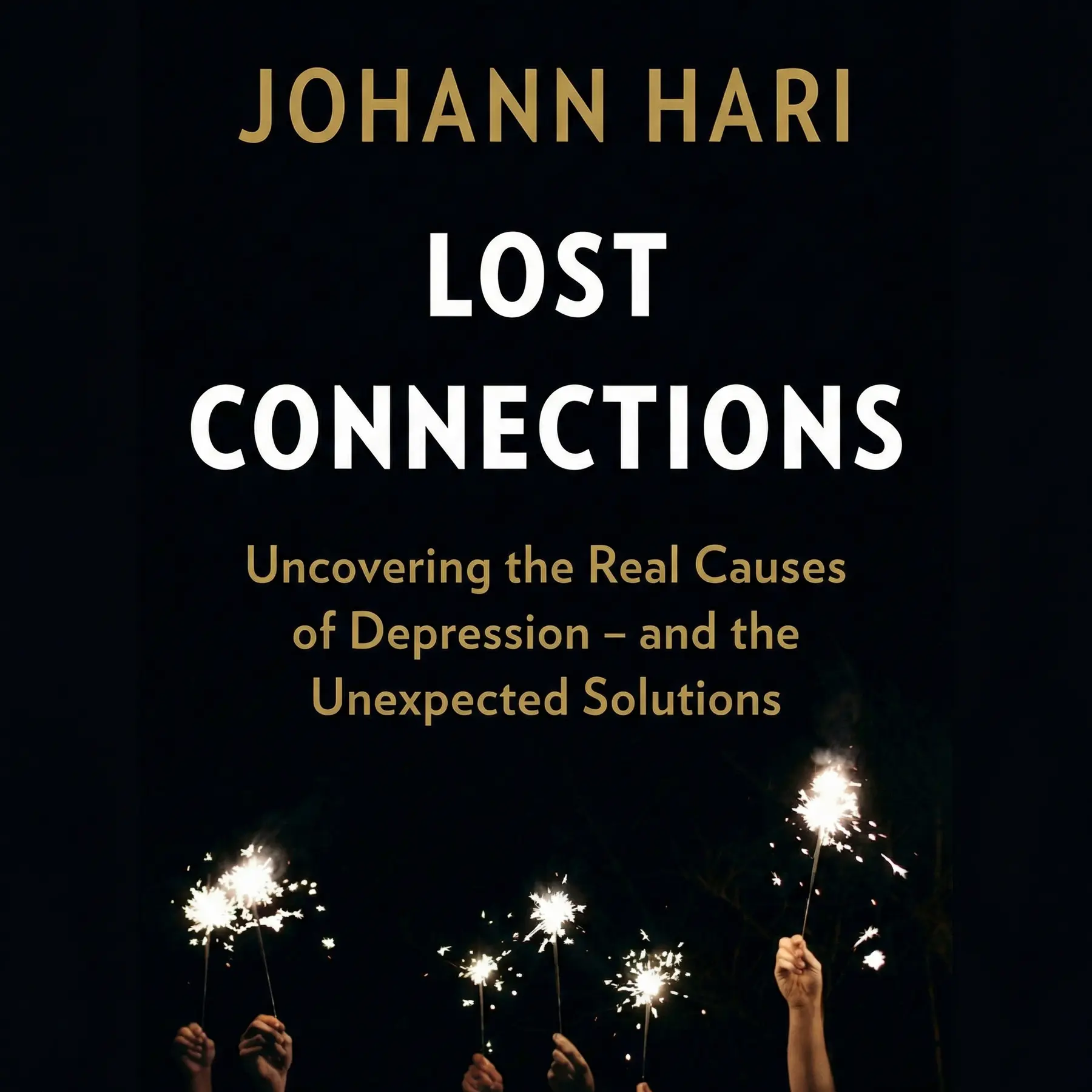
Lost Connections: Uncovering the Real Causes of Depression – and the Unexpected Solutions
By Johann Hari
Lost Connections investigates the social and environmental roots of depression, arguing that mental health is tied to our relationships, work, and values rather than just chemical imbalances in the brain.
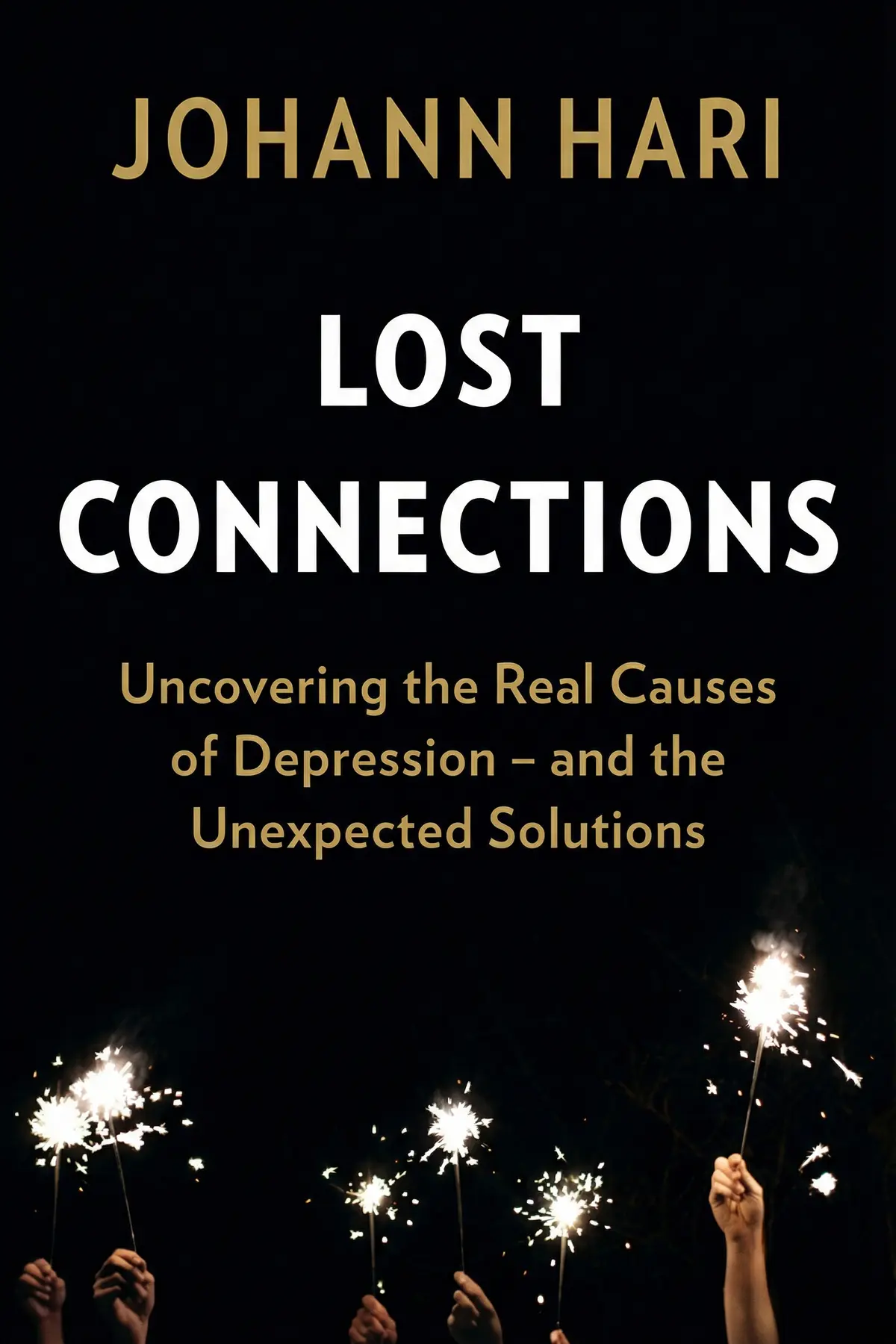
Table of Content
1. Introduction
1 min 31 sec
If you have ever felt the heavy, suffocating blanket of depression settle over your life, you know it feels like more than just sadness. It is a profound sense of being lost, of being out of sync with the world around you. For a long time, the medical community has handed us a very specific explanation for this feeling: they told us our brains were simply lacking the right chemicals. They told us we had a biological glitch that could be corrected with a daily dose of medication. But what if that story is only a small part of a much larger picture? What if the pain you feel isn’t a malfunction, but a logical response to the way we live today?
In this exploration of Lost Connections, we are going to look at the work of Johann Hari, who spent years investigating why depression and anxiety are skyrocketing across the globe. We will move past the simple biological explanations and look at the structural, social, and psychological disconnections that define modern existence. This isn’t just about identifying what is wrong; it’s about uncovering a new way to think about healing. We will discover how our jobs, our values, our loneliness, and even our relationship with the natural world all play a role in our mental well-being. By the end of this journey, you will see that the solutions to our deepest despairs might not be found in a pharmacy, but in the radical act of reconnecting with ourselves and the people around us. Let’s begin by looking at the story we’ve been told for decades and why it might be time to rewrite it from the ground up.
2. The Fragile Foundation of the Chemical Narrative
2 min 18 sec
Explore why the widely accepted theory of chemical imbalances might be more of a marketing success than a scientific certainty, and what research actually reveals.
3. The Psychological Weight of Powerless Work
2 min 12 sec
Discover how the structure of our modern jobs, specifically the lack of control and autonomy, contributes significantly to our collective levels of anxiety.
4. The Silent Crisis of Modern Loneliness
2 min 16 sec
Learn why the current epidemic of isolation is more than just a social issue, functioning as a physical stressor as damaging as a punch to the face.
5. Escaping the Trap of Materialistic Values
2 min 08 sec
Analyze how consumer culture pushes us toward extrinsic rewards that leave us feeling empty, and how to shift back toward intrinsic fulfillment.
6. The Long Shadow of Unresolved Trauma
2 min 01 sec
Understand why the question ‘What happened to you?’ is far more important for treating depression than ‘What is wrong with you?’
7. The Biological Necessity of Nature and Status
2 min 11 sec
Examine how our primate heritage reveals the necessity of being in nature and the devastating effects of being at the bottom of a social hierarchy.
8. Finding Safety in a Predictable Future
2 min 09 sec
Learn how the erosion of job security and the loss of local control contribute to a pervasive sense of hopelessness that fuels depression.
9. Understanding Biology Through the Lens of Environment
2 min 00 sec
Refining the role of genetics and brain structure, this idea explains how our experiences actually shape our biology, rather than the other way around.
10. Cultivating Healing Through Radical Connection
2 min 12 sec
Discover unconventional but effective paths to recovery, from ‘social prescribing’ to the ego-dissolving potential of meditation and psychedelics.
11. Conclusion
2 min 00 sec
As we wrap up our look at the insights from Johann Hari’s Lost Connections, it becomes clear that the epidemic of depression and anxiety in our world isn’t a sign of mass biological failure. It is, instead, a perfectly rational reaction to a world that has become increasingly disconnected from our fundamental human needs. We have traded community for isolation, meaningful work for mindless tasks, and intrinsic joy for material consumption. We have tried to solve these deep, structural problems with a narrow biological fix, and as the rising rates of depression show, that fix isn’t enough on its own.
The throughline of this journey is hope—but it’s a different kind of hope. It’s not the hope that you can find the perfect pill to make the world feel okay. It’s the hope that by acknowledging your pain as a legitimate signal that something is missing, you can begin the work of finding it. You are not a machine with a broken part; you are a human being with unmet needs. The path out of the darkness involves looking at your life and asking which of your connections have been severed. Is it your connection to others? To nature? To a future you can believe in?
As a final, actionable step, try to incorporate a few minutes of ‘sympathetic joy’ meditation into your day. Sit quietly and think of someone you know who has had a recent success or a moment of happiness. Instead of letting that familiar pang of envy or ‘why not me’ take over, consciously try to feel glad for them. Visualize their joy and let it warm you. This simple act is a small, daily rebellion against the isolation and competition that fuel our modern despair. It is a tiny bridge built back toward the rest of humanity. By doing this, and by seeking out larger ways to reconnect with your community and your values, you can begin to transform the lost connections of your life into a web of support that can carry you through even the hardest times.
About this book
What is this book about?
For decades, the dominant narrative surrounding depression has been one of biological malfunction. We are told that our brains are simply missing certain chemicals and that the solution lies in a pill. In Lost Connections, Johann Hari challenges this consensus by exploring why so many of us feel increasingly anxious and hopeless in the modern world. Drawing on his own long battle with depression and extensive interviews with leading researchers, Hari suggests that our suffering isn't necessarily a sign of a broken brain, but a sign of a broken way of living. The book identifies nine distinct causes of depression—most of which are rooted in our environment and social structures rather than our biology. From the lack of control in our workplaces to the isolation of our suburban lives, the text maps out the various ways we have become disconnected from the things we truly need to thrive. By shifting the focus from internal chemistry to external circumstances, Lost Connections offers a radical new path forward. It promises that by repairing our connections to others, to nature, and to meaningful work, we can begin to heal a society that is currently in deep emotional pain.
Book Information
About the Author
Johann Hari
Johann Hari is a New York Times best-selling author known for his deep dives into complex social issues. He wrote Chasing the Scream, which examined the history and impact of the war on drugs. He is also widely recognized for his popular TED Talk titled Everything You Think You Know About Addiction Is Wrong, which has garnered millions of views globally.

Ratings & Reviews
Ratings at a glance
What people think
Listeners find this work captivating and skillfully composed, with one portraying it as an immersive exploration of the social roots of anxiety and depression. Furthermore, the book earns praise for its extensive investigative depth, as one listener points out the author’s dedication to following numerous research paths to validate his arguments. Listeners also value its actionable advice and evocative material, noting its power to shift perspectives on the topic of mental wellness.
Top reviews
Ubolrat
Johann Hari has a way of taking complex sociological data and weaving it into a narrative that feels incredibly personal. This book is a compelling exploration of why so many of us feel empty despite living in an era of material abundance. The way he tracks down various threads of research—from the social lives of baboons to a localized gardening group in London—is nothing short of brilliant. Truth is, we've focused so much on the biology of the brain that we've ignored the biology of our environment. While some might find his dismissal of the 'chemical imbalance' theory a bit extreme, his arguments for social prescribing are deeply thought-provoking. It made me look at my own isolation through a completely different lens. This isn't just a book about depression; it’s a manifesto for a more connected way of living. Highly recommended for anyone who feels like something is missing in their modern life.
Show morePia
Finally, a book that doesn't just tell me my brain is broken. For years, I’ve been told that my struggles were purely down to a lack of serotonin, but that never quite sat right with me given the state of the world. Hari’s investigation into the 'lost connections' we suffer from resonated with me on a primal level. The chapter on childhood trauma was particularly eye-opening and handled with a lot of empathy. Frankly, the idea that our pain is a rational response to our circumstances rather than a malfunction is a life-changing perspective. I appreciated the thorough research and the author's willingness to travel the world to speak with scientists and activists. It’s well-written, fast-paced, and filled with hope. I’ve already suggested this to several friends who have felt stuck in the traditional medical loop. It’s a powerful reminder that we are social creatures who need more than just a pill to feel whole again.
Show moreConnor
Wow, this really makes you question the 'biological' narrative we've been fed for decades. The author’s journey from being a long-term antidepressant user to an advocate for social change is deeply moving and relatable. I loved the practical suggestions for 'reconnecting' with things like meaningful values and sympathetic joy. It’s a refreshing change from the usual self-help books that focus only on the individual. Instead, Hari looks at the tribe. The research he cites regarding the Amish and the way they handle grief and depression was fascinating. It makes so much sense that our modern, hyper-individualistic culture is the root of the problem. This book is compelling, empathetic, and ultimately very empowering. It doesn't just diagnose the problem; it points toward a path out of the darkness. If you’ve ever felt like your 'treatment' was missing a crucial piece of the puzzle, read this.
Show moreNew
Ever wonder why, despite all our modern comforts, we’ve never been more miserable? Lost Connections answers that question with staggering clarity and heart. Hari’s writing style is punchy and direct, making even the more technical research easy to digest. I was particularly struck by the idea of 'extrinsic values'—how chasing status and money is literally making us sick. The book is filled with these 'aha' moments that make you rethink how you spend your time and energy. Personally, it encouraged me to spend more time outdoors and to prioritize deep conversations over social media scrolling. It’s a well-written, necessary critique of a society that has lost its way. This is the kind of book that stays with you long after you've finished the last page. It’s not just about depression; it’s about what it means to be a human being in the 21st century.
Show moreMattanee
This is one of those rare non-fiction books that reads like a page-turner. From the opening story about the author's own experience with Paxil to the final chapters on social change, I was completely hooked. The way Hari tracks down various threads of research across the globe is impressive and gives the book a lot of weight. He doesn't just offer opinions; he backs them up with conversations from the world’s leading experts. I found the section on 'disconnection from a hopeful future' to be incredibly poignant in our current climate. It’s a compelling discourse on why we feel the way we do, and it offers a much-needed sense of validation. The book is well-researched, deeply empathetic, and remarkably easy to read. It changed the way I think about my own mental health and the health of my community. Truly a must-read for everyone.
Show moreJackson
Picked this up during a particularly low point and it provided a perspective I desperately needed. For so long, I felt like a failure because 'fixing' my brain chemistry wasn't working. Hari’s book helped me see that my symptoms were actually signals telling me that my needs weren't being met. The focus on reconnection—to other people, to nature, to meaningful work—is so much more helpful than just being told to 'stay positive.' The research on the impact of loneliness was especially convicting for me. It’s a well-written, thorough, and incredibly compassionate book. Even the more controversial parts about the pharmaceutical industry felt necessary to hear. It’s not about being anti-medicine; it’s about being pro-connection. This book gave me the courage to start making small changes in my life that have already made a huge difference. I can't recommend it enough for anyone struggling with anxiety or depression.
Show moreMilk
Is it groundbreaking or just common sense packaged in a very shiny, journalistic wrapper? To be fair, it’s probably a bit of both. Hari is an excellent storyteller, and he uses that Gladwell-esque style of starting with an emotive anecdote to suck you in before hitting you with the statistics. I found his breakdown of the nine causes of depression—ranging from meaningless work to the loss of nature—to be incredibly well-researched and articulate. However, I do think he builds a bit of a straw man when it comes to the medical profession. Most doctors I know already acknowledge that life stressors play a huge role in mental health. Still, his focus on systemic social solutions rather than just individual coping mechanisms is a breath of fresh air. It’s a very engaging discourse that actually offers practical suggestions for reconnection. Even if you don't agree with every conclusion, it will certainly make you think differently.
Show morePaiboon
After hearing about this on a podcast, I decided to dive in, and I'm mostly glad I did. The book is genuinely thought-provoking and challenges the standard narrative of mental health in a way that feels urgent. I particularly enjoyed the sections on 'meaningful work' and how the lack of control in our jobs leads to chronic stress. It’s a well-researched piece of investigative journalism that connects the dots between our economic systems and our internal well-being. Not gonna lie, the end gets a bit political with the talk of universal basic income and socialism, which might turn some readers off. But even if you don't buy into his political solutions, the core message about our need for community and purpose is undeniable. It’s a lengthy read, but the stories are so engaging that it never feels like a chore. It certainly gave me a lot to discuss in my next therapy session.
Show moreRatthapong
The first half of the book is a masterclass in investigative journalism, but the second half lost me a bit. I think Hari is right about the causes—isolation, trauma, and lack of nature are obviously bad for the soul. However, his solutions felt a bit idealistic and, at times, overly simplistic. Not everyone can just quit their soul-crushing job or find a supportive commune to join. To be fair, he does acknowledge that these are systemic issues, but that almost makes the book feel more depressing because the solutions are out of our individual reach. His tone can also be a little arrogant, as if he's the first person to ever realize that having friends is good for you. Still, the research into the history of the DSM and the influence of drug companies was eye-opening. It's a decent read with some solid points, but it definitely feels a bit over-hyped.
Show moreThitima
As a clinician, I found this book to be an exercise in extreme frustration. Look, I agree that social factors are huge, but Hari presents the biological model as a total conspiracy, which is just dangerous. He claims that 'everyone' thinks depression is just a chemical imbalance, yet every modern medical textbook describes it as a complex bio-psycho-social disorder. By dismissing antidepressants as largely ineffective, he risks alienating people who rely on them to simply function. The truth is that for many, medication provides the stability needed to actually go out and make those social connections he raves about. Also, telling a severely depressed person to just 'join a gardening group' can feel incredibly patronizing. The writing is certainly compelling and he's clearly a talented journalist, but the logic is flawed and oversimplified. It’s a collection of old ideas rebranded as a revolutionary discovery. I'd take his 'Big Pharma' claims with a massive grain of salt.
Show moreFeatured in

Readers also enjoyed
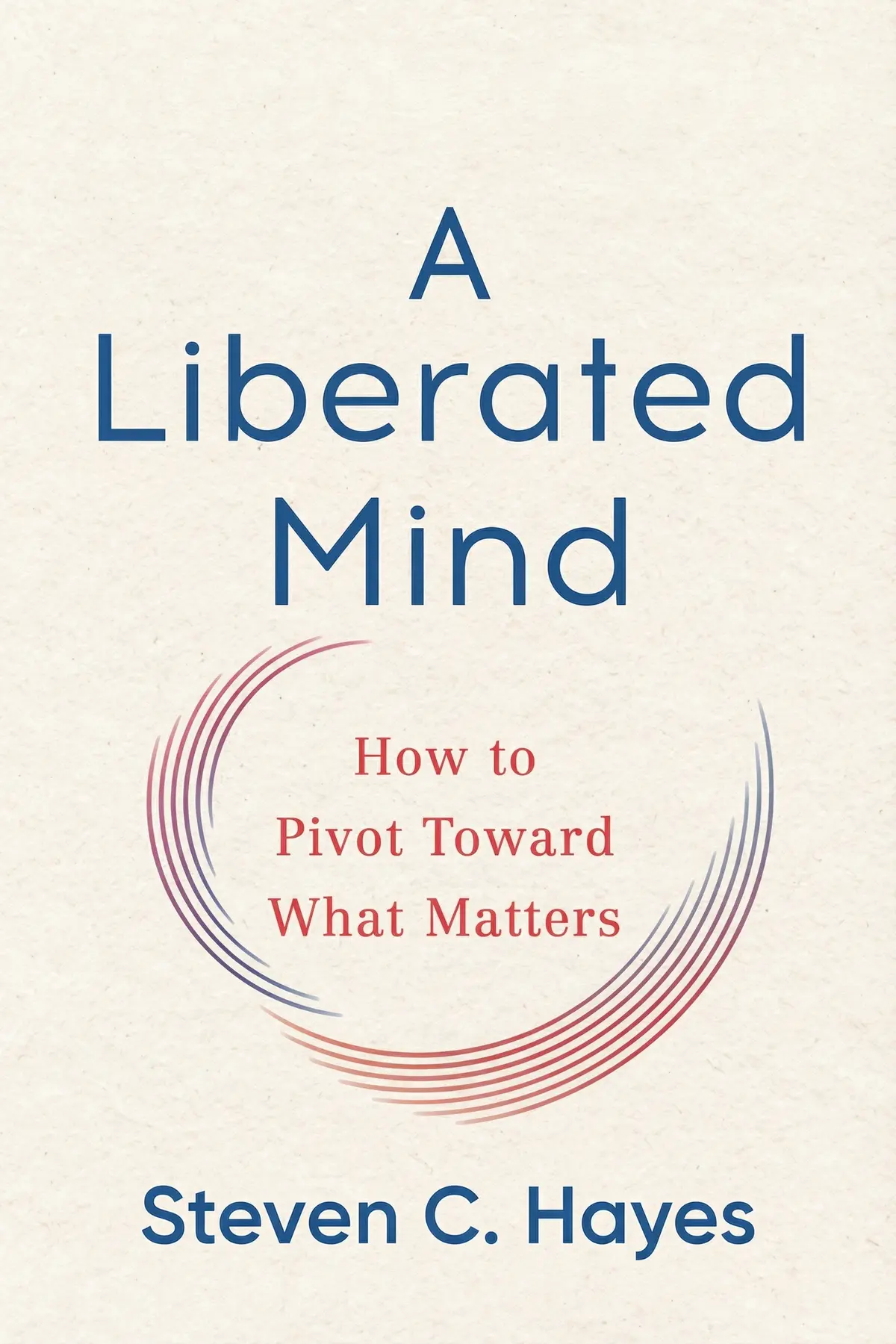
A Liberated Mind: How to Pivot Toward What Matters
Steven C. Hayes



ADHD an A-Z: Figuring It Out Step by Step
Leanne Maskell


AUDIO SUMMARY AVAILABLE
Listen to Lost Connections in 15 minutes
Get the key ideas from Lost Connections by Johann Hari, plus 5,000+ more titles in English and Thai.
- 5,000+ titles
- Listen as much as you want
- 7-day free trial
- Cancel anytime







