

20 min 08 sec
Magic Pill: The Extraordinary Benefits and Disturbing Risks of the New Weight-Loss Drugs
By Johann Hari
Johann Hari investigates the rise of groundbreaking weight-loss drugs like Ozempic, exploring their transformative potential to combat obesity alongside the significant health risks and societal shifts they bring to our modern world.
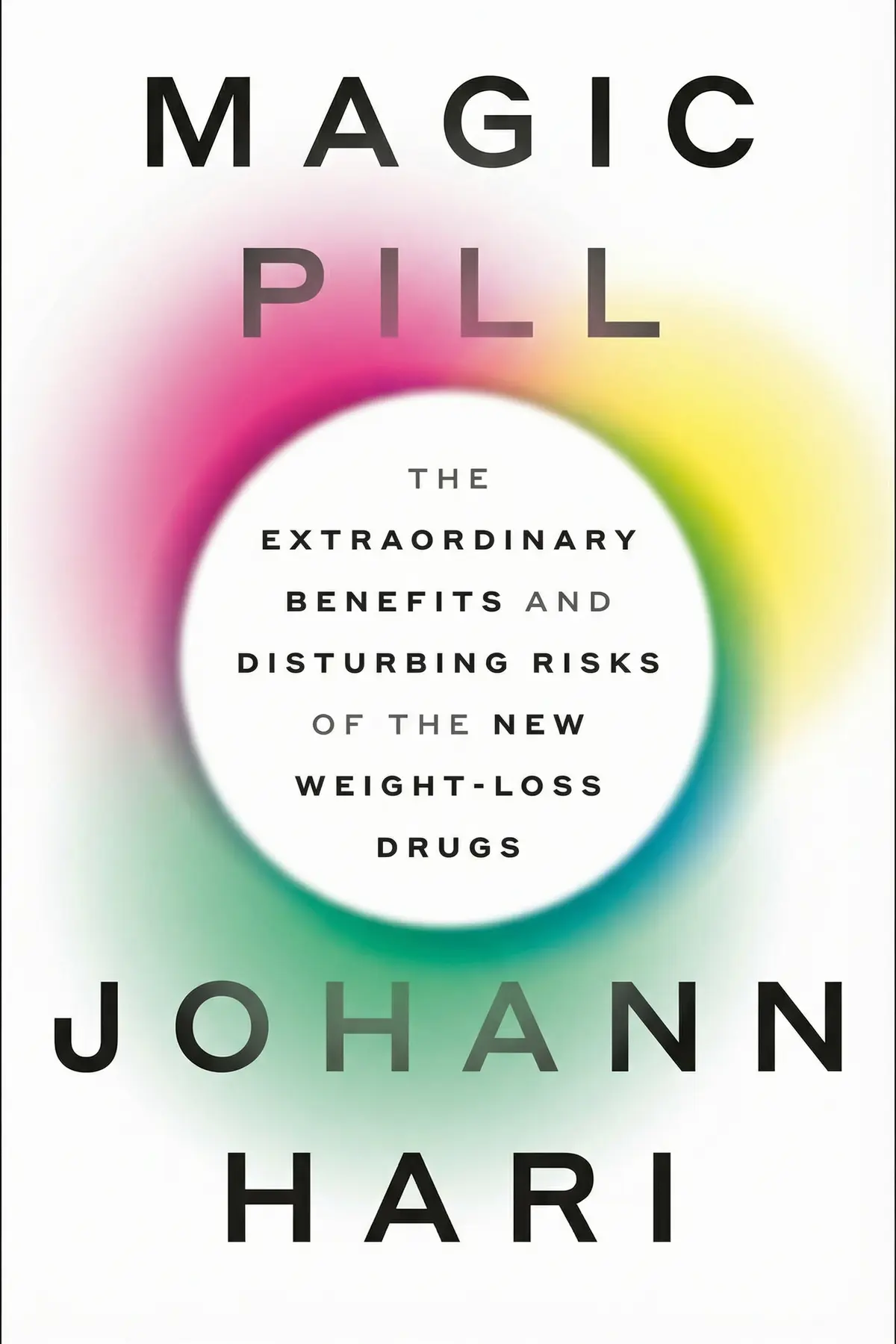
Table of Content
1. Introduction
1 min 35 sec
We are currently living through one of the most significant shifts in public health history, though the revolution isn’t happening in hospitals—it’s happening in pharmacies and at kitchen tables. For the last half-century, obesity has become one of the most stubborn and dangerous challenges facing modern society. It is a leading cause of avoidable death in wealthy nations, yet for all our dieting, exercising, and public health warnings, the numbers have only continued to climb. Today, more than half of all adults in the United States struggle with obesity, a condition that opens the door to hundreds of other medical complications.
But a new class of drugs has suddenly appeared on the horizon, promising to do what decades of willpower could not. Originally intended to manage diabetes, these medications—known by names like Ozempic and Wegovy—are being hailed as a “magic pill” for weight loss. They have become so popular that the company behind them has reached a valuation higher than almost any other in Europe.
However, as with any breakthrough that seems too good to be true, we must look closer. This journey isn’t just about shedding pounds; it’s about understanding how these drugs work, what they might be doing to our long-term health, and how they could fundamentally rewire our society’s relationship with food. Over the next several sections, we will explore the science, the risks, and the deep psychological shifts that come when we choose to solve a biological crisis with a chemical intervention. This is the story of a medical revolution that is as full of promise as it is shadowed by uncertainty.
2. A Chemical Mimicry of Fullness
1 min 53 sec
Discover the biological breakthrough behind a new class of medication that tricks the brain into believing it has already eaten, regardless of how much food is present.
3. The Weight of Success and the Echo of History
1 min 55 sec
Explore the staggering efficacy of modern weight-loss treatments while reflecting on the historical cycle of miracle cures that often preceded unexpected consequences.
4. Immediate Health Triumphs
1 min 44 sec
Learn about the significant and rapid improvements in cardiovascular health that occur when these medications help reverse the effects of chronic obesity.
5. Shadows of Concern and the Risk of Cancer
1 min 48 sec
Examine the sobering research regarding potential long-term risks, including specific links to thyroid issues and the importance of clinical caution.
6. The Vulnerability of the Unborn
1 min 31 sec
Understand why researchers are raising alarms about the unknown effects of weight-loss drugs on pregnancy and fetal brain development.
7. The iPhone of Medicine and Societal Shifts
1 min 37 sec
Consider how weight-loss drugs are poised to disrupt the global economy and daily life in ways that rival the invention of the smartphone.
8. The Paradox of the Vanishing Pleasure
1 min 36 sec
Explore the psychological consequences of a dampened reward system, where the loss of appetite can lead to an unexpected loss of joy in life.
9. The Pressure of the New Aesthetic
1 min 34 sec
Analyze how the accessibility of rapid weight loss might intensify societal beauty standards and exacerbate the struggle with eating disorders.
10. The Modern Diet and the Broken Compass
1 min 44 sec
Trace the roots of the obesity crisis back to the rise of processed foods and a haunting experiment that reveals why we have lost our natural ability to feel full.
11. A Panacea or a Patch?
1 min 31 sec
Reflect on whether pharmaceutical interventions can truly solve a crisis rooted in our environment, or if they are merely masking a deeper systemic failure.
12. Conclusion
1 min 40 sec
In the end, the emergence of drugs like Ozempic and Wegovy represents a true crossroads for humanity. We have developed a powerful technology that can effectively bypass the struggle of the ‘willpower’ narrative, offering a chemical bridge back to health for millions of people. The benefits—specifically for heart health and the reduction of chronic obesity-related diseases—are undeniable and historic.
Yet, as we have seen, this revolution is far from simple. We are stepping into a future where our most basic human drive—hunger—is being managed by global pharmaceutical giants. This brings with it a host of uncertainties, from the potential for rare cancers and developmental risks during pregnancy to the psychological toll of a muted reward system. We are also facing a societal shift that could further entrench narrow beauty standards and disrupt entire sectors of the global economy.
Ultimately, Johann Hari’s exploration reminds us that these drugs are a response to a world we built—a world of processed foods and environments that are disconnected from our evolutionary needs. While the ‘magic pill’ can help us survive this environment, it cannot fix the environment for us. The challenge moving forward is to use these new tools wisely and with caution, while never losing sight of the need to create a world where health doesn’t require a weekly injection. As you consider the role these treatments might play in your life or society, remember that true well-being is a tapestry woven from biology, environment, and our deeply human relationship with the food that sustains us.
About this book
What is this book about?
For decades, the global obesity crisis has seemed like an unstoppable force, resisting every public health intervention thrown its way. However, a new era of pharmaceutical intervention has arrived, promising a level of weight loss previously only achievable through surgery. This summary dives into the mechanics of these new GLP-1 agonists, explaining how they rewire our internal signals of hunger and fullness. Beyond the biological mechanics, the summary explores the profound questions these drugs raise. Are we witnessing the end of an epidemic, or are we simply masking the symptoms of a broken food system? By examining everything from the risk of serious side effects to the potential economic collapse of the snack food industry, this exploration offers a balanced view of a medical revolution. It provides a look at how these medications might change our relationships with our bodies, our emotions, and the multi-billion-dollar industries that feed us.
Book Information
About the Author
Johann Hari
Johann Hari is a Scottish writer and journalist known for his work with the Independent newspaper and Huffington Post. He has authored several best-selling books addressing complex societal issues, including Chasing the Scream, which explores the war on drugs, and Lost Connections, a study of depression. His writings often challenge conventional views, providing insights into the intersections of health, policy, and human behavior.
Ratings & Reviews
Ratings at a glance
What people think
Listeners consider the book a gripping and accessible read, featuring thoroughly documented material that explores multiple dimensions of weight loss medications. The prose is both lucid and captivating, and listeners value the stimulating observations alongside the author's fascinating personal narrative. They praise the caliber of the information, with one listener highlighting how the text effectively synthesizes a wide range of data in a succinct manner. Opinions remain divided among listeners concerning the author’s viewpoint and the ultimate advantages discussed.
Top reviews
Rungrat
After hearing about the 'Ozempic era' for months, I finally dove into Hari’s latest, and it’s a total rollercoaster that manages to be both terrifying and hopeful. He doesn't just look at the shots; he travels to Japan to see a culture that actually works and then pivots back to the horrifying reality of 'meat glue' in the West. Frankly, the writing is so fluid that I finished it in two sittings, though I wish he’d spent less time on his own nausea and more on the long-term metabolic data. It’s an incredibly accessible synthesis of how we got this heavy and whether a needle is truly the solution. While his past is controversial, this felt like solid, boots-on-the-ground reporting mixed with a very human vulnerability. He asks the uncomfortable questions about vanity versus health that most of us are already whispering about.
Show moreWanida
The chapter on Japan was a massive eye-opener for me because it highlighted just how much our environment dictates our biology. Johann Hari has a knack for taking complex medical jargon about GLP-1 receptors and turning it into a narrative that feels like a conversation over coffee. Not gonna lie, I was skeptical because of his reputation, but the sheer volume of interviews with researchers from places like Novo Nordisk won me over. He captures the nuance of the 'Health at Every Size' movement while still being honest about the physical toll of carrying excess weight. It’s a brave book that admits 'we don't know yet' more often than it claims to have all the answers. If you’re considering the shot, or just hate how much control Big Food has over your cravings, you need this.
Show moreRatchanee
Picked this up because I wanted to understand the Ozempic craze without reading a dry medical textbook, and Hari delivered exactly that. He manages to balance the miraculous weight-loss stories with the chilling reality that we are essentially guinea pigs for a massive societal experiment. The book is well-researched, covering everything from the way these drugs silence 'food noise' to the potential for increased thyroid cancer risks. Personally, I found his honesty about using shame as a motivator—and then realizing how toxic that is—to be the most moving part of the book. It’s a compelling look at the pharmaceutical industry’s new gold mine. He doesn’t offer a simple 'yes' or 'no' to the drugs, which is exactly why the book feels so authentic and trustworthy.
Show moreChanpen
Wow. This was such a page-turner. I’ve always found the topic of weight loss to be so loaded and judgmental, but Hari manages to strip away the stigma and look at the biological machinery behind our appetites. The way he explains how our 'set point' fights against us was both discouraging and liberating to read. I loved the global perspective, especially comparing the UK's approach to other nations. It’s a quick read but it stays with you, making you question every ingredient on the back of a cereal box. This is the first book that actually made me feel sorry for our bodies instead of angry at them.
Show moreKofi
In my experience, most books about dieting are either preachy or boring, but Magic Pill is neither. It’s a fascinating, deeply human look at the intersection of technology and biology. Hari doesn't just give you the 'what,' he gives you the 'why,' tracing the history of our broken food system back to the corporate boardrooms. I found the segments on 'food noise' particularly relatable—it’s a concept that finally puts words to what so many people struggle with daily. Even if you have no intention of ever taking a weight-loss drug, the insights into how our environment is rigged against us are worth the price of admission. It’s a smart, compassionate, and incredibly timely piece of science journalism that everyone should read.
Show moreUbolrat
Ever wonder why we're suddenly treating obesity like a localized infection rather than a systemic collapse of our food environment? Magic Pill tries to answer that by weaving Hari's personal injections with a deep dive into the 'ultra-processed' nightmare we live in. I appreciate that he doesn't just demonize the drugs—he acknowledges they are a lifeline for many while pointing out the absurdity of needing a chemical fix for an artificial problem. Truth is, the sections on the food industry’s greed were more impactful to me than the clinical trials. My only gripe is the occasional 'both-sides-ism' where he seems to hedge his bets a little too much to avoid offending anyone. Still, it’s a thought-provoking read that moves way beyond the surface-level headlines you see on social media.
Show moreWoravit
As a therapist who works with body image issues, I went into this expecting to hate it, but I found myself surprisingly engaged by the nuance Hari attempts to bring. He doesn't shy away from the racist implications of BMI or the ways fatphobia has poisoned our healthcare system, even if those sections felt a bit brief. The discussion on how Ozempic might interact with disordered eating patterns is absolutely crucial and something I haven't seen enough of in mainstream media. To be fair, he does lean a bit too much into his own experience at times, which can feel a bit narrow-minded given the global scale of the issue. However, his critique of the 'hustle culture' and the lack of mental health resources as drivers of the obesity epidemic hit the nail on the head.
Show moreA
Finally got around to reading this after seeing it everywhere, and I think it’s a necessary contribution to the conversation about GLP-1s. Hari is a gifted storyteller who knows how to pace a narrative, even when he’s talking about complex hormonal pathways. I appreciated his willingness to include 'equivocatory reasoning' because, frankly, the science on these drugs is still evolving and there are no easy answers. The book loses a point for not spending enough time on the accessibility and cost issues for marginalized communities, focusing instead on his own ability to afford the treatment. Still, the information quality is high. It pulls together a lot of disparate threads into one cohesive, albeit slightly terrifying, picture of our modern health crisis.
Show moreAndrew
This book is a bit of a mixed bag, offering about 20% fascinating pharmaceutical history and 80% Johann Hari’s personal musings on his waistline. While his writing style is undeniably clear and engaging, I often found myself wishing for a more detached, investigative approach. He spends a lot of time 'pearl-clutching' about the grossness of processed food, which feels a bit late to the party—haven't we known this since the 90s? In my experience, the most valuable parts were the interviews with actual scientists, but those were frequently interrupted by his own anecdotal drama. It’s an okay primer if you’re totally new to the subject. Just don't expect a definitive scientific tome; it's a memoir disguised as journalism.
Show moreMai
Not what I expected given the hype, and honestly, it felt more like a diary of a man obsessed with his own reflection than a rigorous scientific exploration. Look, if I wanted to read about someone’s nausea and anxiety for 200 pages, I’d check my own journal. The 'science' here feels cherry-picked to support a pre-determined narrative, and his constant use of 'emotional' anecdotes to replace data is frustrating. He brings up 'meat glue' and other buzzwords to scare the reader without providing the necessary chemical context. I found it hard to trust the conclusions knowing the author’s history with fabrication, and the way he dismisses fat-liberation activists felt shallow and unearned. It's a surface-level look at a very deep problem, written with a frantic tone that prioritizes sensationalism over substance.
Show moreReaders also enjoyed
AUDIO SUMMARY AVAILABLE
Listen to Magic Pill in 15 minutes
Get the key ideas from Magic Pill by Johann Hari, plus 5,000+ more titles in English and Thai.
- 5,000+ titles
- Listen as much as you want
- 7-day free trial
- Cancel anytime







