
23 min 47 sec
Superior: The Return of Race Science
By Angela Saini
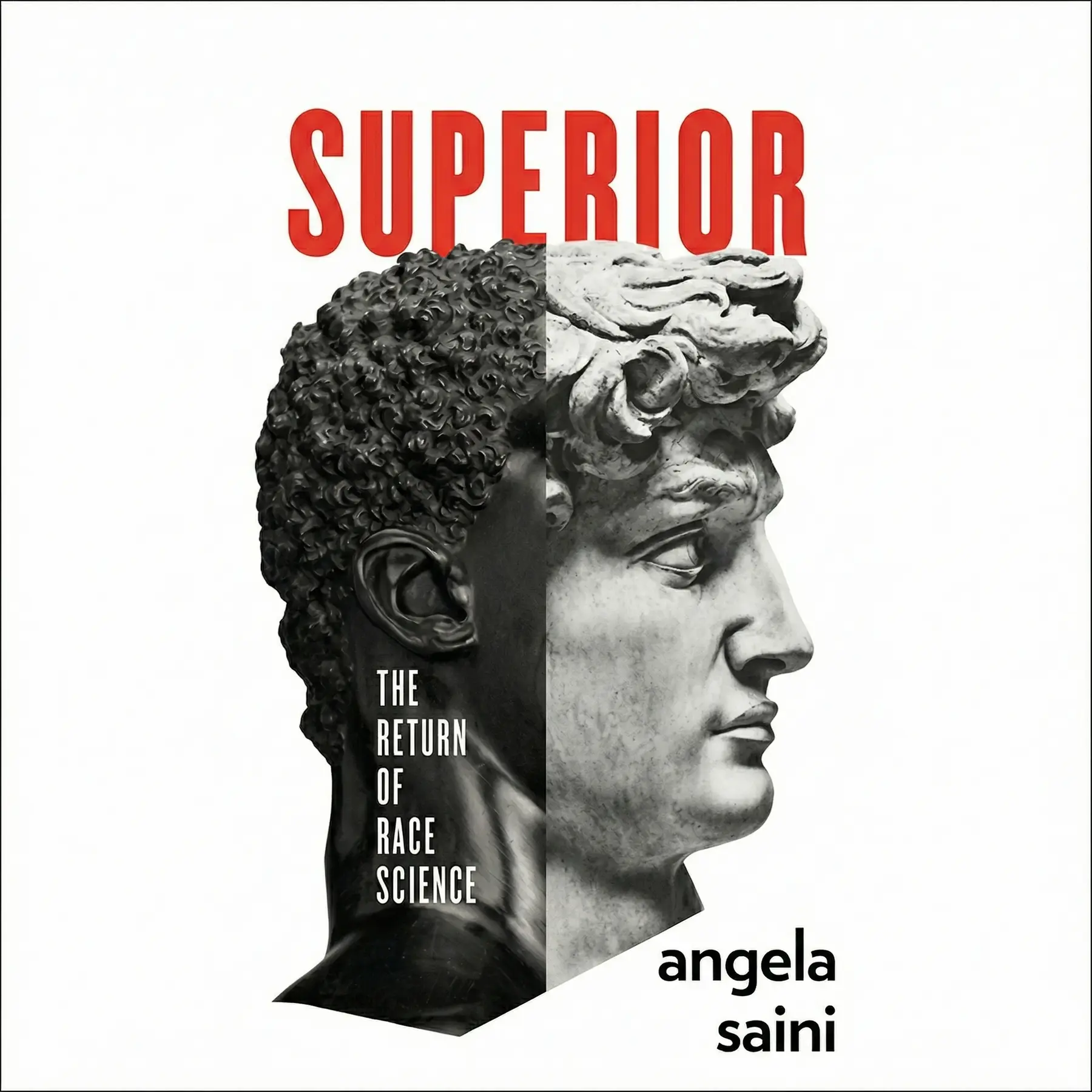
Angela Saini’s Superior uncovers the troubling history and persistence of race science. It reveals how flawed biological classifications continue to influence politics and healthcare, despite genetic evidence of our shared humanity.
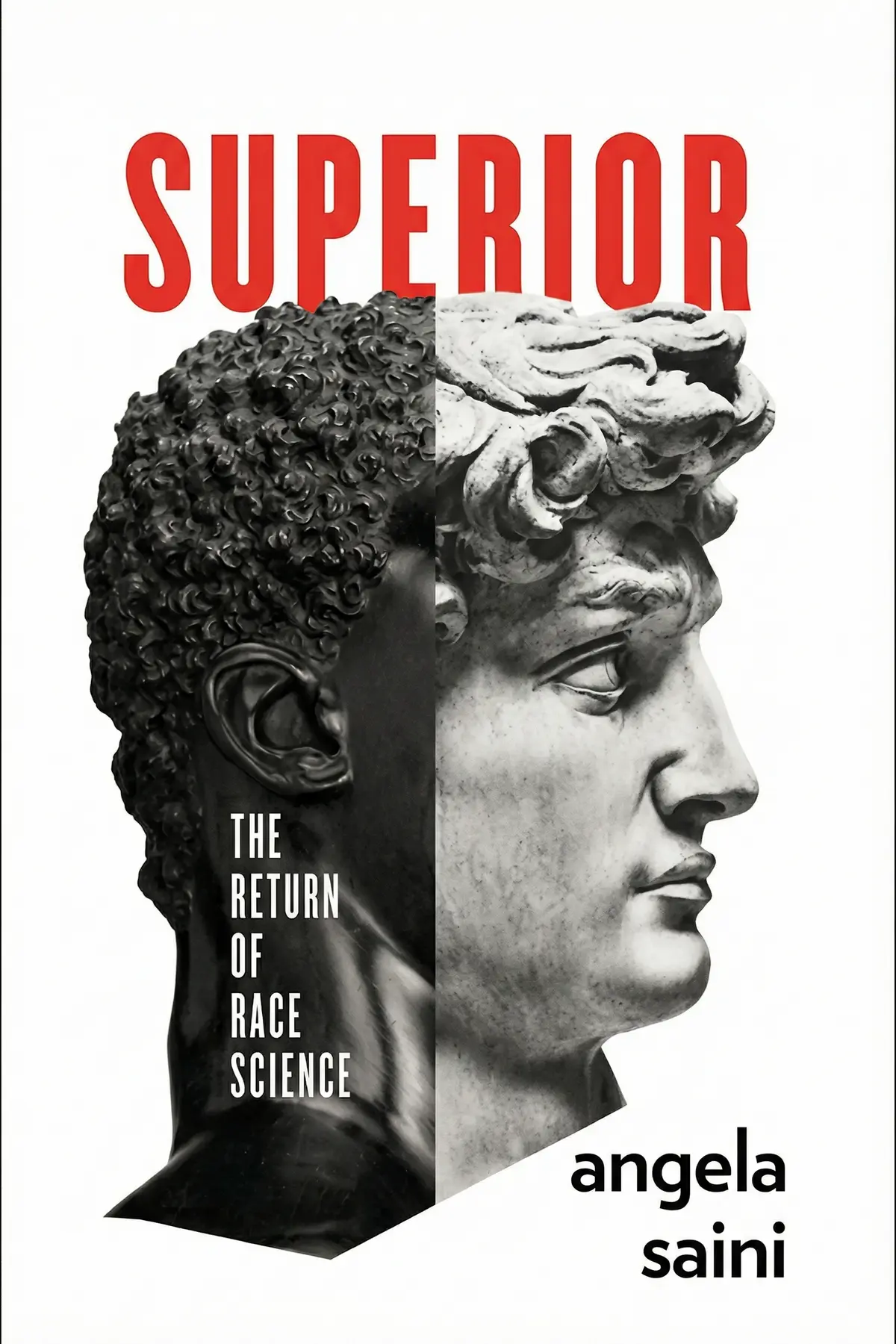
Table of Content
1. Introduction
1 min 52 sec
When you walk through the hallowed halls of a major cultural institution—perhaps the Metropolitan Museum of Art or the British Museum—where does your internal compass point you first? For many of us, there is a magnetic pull toward the galleries that reflect our own heritage. We look for the artifacts of the Tang dynasty, the Athenian marbles, or the ancient treasures of the Indus Valley because we are looking for ourselves. We seek a connection to our ancestors, a tether to the past that helps define who we are in the present.
But this search for origins carries a deeper, more complex weight. Why do we feel that our personal identity is so inextricably linked to our racial background? And why does the world around us insist on categorizing us into these specific groups? The most rigorous and contemporary scientific research tells us a consistent story: race is not a biological fact. It is a social construct built from language, culture, and history. Yet, despite this, the ghost of race science continues to haunt our institutions, our politics, and even our medicine.
In this exploration of Angela Saini’s work, we are going to trace the history of how the concept of race was manufactured and how it has been maintained through the centuries. We will see how early scientists tried to map human difference onto a hierarchy and how those flawed ideas paved the way for some of humanity’s greatest tragedies. More importantly, we will look at why these debunked theories are making a comeback today under new names like “human biodiversity” or “race realism.” This is a journey through archaeology, genetics, and psychology that ultimately brings us back to a singular, powerful truth: our shared humanity is far more profound than the superficial categories that have been used to divide us.
2. The Interpretation of Origins
2 min 35 sec
Explore how our understanding of early human history and the migration out of Africa can be distorted to support modern narratives of racial hierarchy and superiority.
3. The Scientific Veneer of Bias
2 min 38 sec
Uncover how early classification systems designed by botanists and physicians were influenced by cultural prejudices, turning biological observation into social hierarchy.
4. The Persistent Ghost of Race Science
2 min 32 sec
Learn why the concept of biological race refused to die even after the horrors of the Holocaust and the genetic proof of human similarity.
5. The Rebranding of Racial Ideology
2 min 32 sec
Examine how modern extremists use terms like ‘race realism’ and ‘human biodiversity’ to bypass social taboos and give old prejudices a new, scientific-sounding voice.
6. Identity, Nationalism, and the Invention of History
2 min 24 sec
See how nations and political groups use genetics and archaeology to create ‘national myths,’ even when the science contradicts their preferred narrative.
7. The Environmental Reality of IQ Gaps
2 min 34 sec
Break down the persistent myth that intelligence is a fixed, racial trait, and discover how socioeconomic factors are the true drivers of performance gaps.
8. Genetic Determinism in Modern Medicine
2 min 34 sec
Discover how the alluring but flawed idea that ‘we are our genes’ can lead to racial profiling in healthcare and the misdiagnosis of common illnesses.
9. The Social Construction of the Human Family
2 min 25 sec
Conclude with a powerful reminder that our need to categorize is a human habit, not a biological necessity, and that unity is our true natural state.
10. Conclusion
1 min 41 sec
The investigation into the history and present state of race science leads us to a vital realization: the categories we use to define each other are far more fragile than we’ve been led to believe. Angela Saini has shown us that from the earliest days of the Enlightenment to the cutting-edge labs of today, the search for a biological basis for race has been driven more by social agendas than by objective truth. We have seen how eugenics moved from mainstream science to the catalyst for genocide, and how it is attempting to creep back into the public consciousness today under the guise of “realism.”
But the facts remain steadfast. We are a single, closely related species. The gaps we see in IQ scores or health outcomes are not the result of our DNA, but the result of the world we have built—a world that still provides vastly different levels of opportunity and safety based on the very categories it invented. To move forward, we must stop looking for excuses in our biology and start taking responsibility for our society.
As you leave this summary, consider how you perceive the differences you see in others. Are you seeing biology, or are you seeing the effects of history and culture? The challenge for us all is to resist the easy path of categorization and instead embrace the complex, beautiful reality of our shared humanity. By recognizing race as a social construct, we don’t lose our identity; we gain the freedom to define ourselves on our own terms, unburdened by the flawed hierarchies of the past. The truth is simple: there is no “superior” race, only the shared potential of the human spirit.
About this book
What is this book about?
In Superior, Angela Saini takes us on a deep dive into the disturbing history and modern-day resurgence of what is often called race science. For centuries, various thinkers and researchers have attempted to prove that human beings are fundamentally divided into distinct biological categories, often with the specific goal of establishing a social or intellectual hierarchy. Saini meticulously dismantles these efforts, showing that race is far more of a social construct than a biological reality. The book explores how early classification systems, such as those by Carl Linnaeus, laid the groundwork for the eugenics movement and how these ideas eventually fueled some of the darkest chapters of the twentieth century. Even today, as genetic research proves that humans are more alike than they are different, the vocabulary of race science is evolving and finding new life in certain political and medical circles. Superior promises to reveal the biases that still lurk within the scientific community and the ways in which our desire for a specific identity can lead to dangerous distortions of truth. It is an essential investigation into how we understand human difference and a celebration of our shared genetic heritage.
Book Information
About the Author
Angela Saini
Angela Saini is a highly regarded British journalist and presenter for the BBC. Recognized for her excellence in science communication, she was named European Young Science Writer of the Year in 2009 and later earned a Gold Award from the American Association for the Advancement of Science. Her literary contributions include Geek Nation, which explores Indian science, and the critically acclaimed Inferior, a look at how science has historically misunderstood women. Inferior was notably honored as the Physics World Book of the Year in 2017.
Ratings & Reviews
Ratings at a glance
What people think
Listeners find this work to be a bold historical deep dive into the roots of scientific racism, with one listener highlighting its efficient presentation of data and arguments. Additionally, the prose is described as sophisticated and polished, and listeners consider the subject matter to be both captivating and deeply moving.
Top reviews
Elias
Saini's investigation into the persistent phantom of 'race science' is nothing short of chilling. She weaves a complex narrative that stretches from Victorian skull-measuring obsessions to the modern, tech-funded resurgence of 'human biodiversity' groups. The writing is incredibly eloquent, making a dense subject feel urgent and accessible. I found the section on how certain journals still provide a platform for pseudoscientific racism particularly eye-opening. It is a poignant reminder that science is a human endeavor, often stained by the same biases that plague society at large. The book doesn't just debunk; it deconstructs the very foundations of how we think about human variation. Essential reading for anyone who thinks we live in a post-racial scientific era.
Show moreSaranya
Wow. This isn't just a science book; it’s a necessary autopsy of how we’ve been lied to for centuries. Saini manages to be both a rigorous journalist and a passionate advocate for the truth. Her breakdown of the 'Cheddar Man' discovery was a highlight, showing how DNA evidence can dismantle nationalist myths in a heartbeat. The prose is sharp, moving with a rhythm that keeps you hooked even when the history gets dark. While the final chapters feel like a quiet shout of rage against the alt-right's appropriation of genetics, the tone remains largely objective. We need more books that challenge the 'neutrality' of the laboratory. It definitely changed how I view population genetics.
Show moreRohan
The chapter on the 'Cheddar Man' discovery was the absolute highlight for me, serving as a blunt instrument against the nationalist myths currently gripping the UK. Saini is a phenomenal writer who knows exactly how to balance scientific data with human-interest reporting. She doesn't just tell you that race is a construct; she shows you the blood-soaked history of how that construct was built. The way she links the atrocities of the Third Reich to the 'polite' eugenics of the 1920s American elite is terrifyingly well-done. It is an ambitious book that covers a lot of ground without losing its emotional core. If you want to understand why 'scientific' racism keeps coming back like a zombie, read this.
Show moreJong
To be fair, I expected a dry academic text, but Saini writes with a refined eloquence that makes even the most infuriating history of eugenics feel like a page-turner. She masterfully connects the dots between the 'scientific' justifications for slavery and the modern-day obsession with IQ disparities. The research is deep, the tone is measured, and the impact is profound. I was particularly struck by the stories of scientists who lost their careers for refusing to play along with the racial hierarchies of their time. This is a poignant reminder that the 'truth' in science is often whatever the people in power want it to be. It’s an ambitious work that deserves a spot on every shelf.
Show moreOlivia
As someone who grew up in India, seeing Saini tackle the genetic justifications for the caste system was incredibly validating. She takes a global perspective on racism, proving that this isn't just a European or American problem. Her writing is sophisticated yet clear, stripping away the 'sciency' jargon that racists use to hide their prejudice. The way she explores the intersection of history, culture, and biology is brilliant. She makes a compelling case that our obsession with dividing humanity into neat little boxes says more about our politics than our DNA. It is an extraordinary examination of how power uses science as a shield. I haven't been this challenged by a book in years. Absolutely brilliant.
Show moreLuke
After hearing so much buzz about Saini’s previous work, I finally dove into Superior and found it to be a masterclass in journalistic storytelling. She takes a very ambitious historical analysis of scientific racism and makes it personal. The truth is, the book does get slightly repetitive in the middle sections when she’s interviewing fringe academics. However, her core argument—that race is a social reality rather than a biological one—is supported with such impressive data that it's hard to look away. I appreciated her honesty about how even well-meaning anti-racist scientists accidentally fall into the trap of using racial categories. It’s a bit long-winded at times, but the poignancy of her conclusion makes it worth the effort.
Show moreMichael
Picked this up because I’ve always been skeptical of how IQ scores are used to categorize entire populations like they’re fixed biological markers. Saini does a brilliant job comparing these 'scientific' metrics to the hollow personality tests used in corporate offices—they offer the veneer of data without any of the necessary context. Her critique of 'p-hacking' and sloppy methodologies in behavioral genetics is spot on. My only minor gripe is that she occasionally paints with a broad brush when discussing modern geneticists. Not every population study is a eugenics project in disguise. Still, the historical context she provides on the funding of 'race science' is absolutely vital. It’s a dense read but undeniably important for our current political moment.
Show moreEli
Ever wonder why we still use 18th-century classifications for 21st-century genetics? Superior provides a fascinating, if sometimes frustrating, answer to that question. Saini’s style is very much that of a broadcast journalist—quick, engaging, and heavy on the interviews. I found the sections on the Indian caste system particularly interesting, as it showed that 'race science' isn't just a Western obsession. Some of the arguments felt a little bit one-sided, and I wish she had engaged more deeply with the counter-arguments from population geneticists. However, her exposé on the shady funding sources behind 'human biodiversity' research is worth the price of the book alone. It's a solid, thought-provoking read that definitely sparks conversation.
Show moreThitiwan
Frankly, Saini's treatment of population genetics feels a bit shallow compared to the work of specialists like David Reich. She’s an excellent journalist, but there are moments where she seems out of her depth regarding the actual mechanics of the genome. She tends to focus more on the 'shady characters' of the alt-right than on the actual science of human variation. While it’s important to expose the racists, I wanted more depth on how we *should* talk about diversity if the old categories are broken. It’s a well-crafted book with a lot of interesting history, but it feels like it’s more interested in winning a political argument than exploring the nuances of biology. A decent introduction, but incomplete.
Show moreMason
Look, while the author's heart might be in the right place, this book feels more like a political manifesto than a rigorous scientific inquiry. Saini seems to suggest that any mention of biological differences between populations is a gateway to the Holocaust. She ignores a vast amount of genomic data that allows scientists to cluster individuals by ancestry with high precision. For instance, her dismissal of Mendelian genetics feels sophomoric and driven by a need to fit a politically correct narrative rather than follow the data where it leads. By equating every hereditarian claim with racism, she does a disservice to the complexity of the field. It’s an eloquent book, sure, but it’s scientifically unsound. If you want real population genetics, read David Reich instead.
Show moreReaders also enjoyed

A Biography of Loneliness: The History of an Emotion
Fay Bound Alberti
A Life Decoded: My Genome: My Life
J. Craig Venter
A Force for Good: The Dalai Lama's Vision for Our World
Daniel Goleman
A Planet of Viruses
Carl Zimmer
AUDIO SUMMARY AVAILABLE
Listen to Superior in 15 minutes
Get the key ideas from Superior by Angela Saini, plus 5,000+ more titles in English and Thai.
- 5,000+ titles
- Listen as much as you want
- 7-day free trial
- Cancel anytime







