
19 min 11 sec
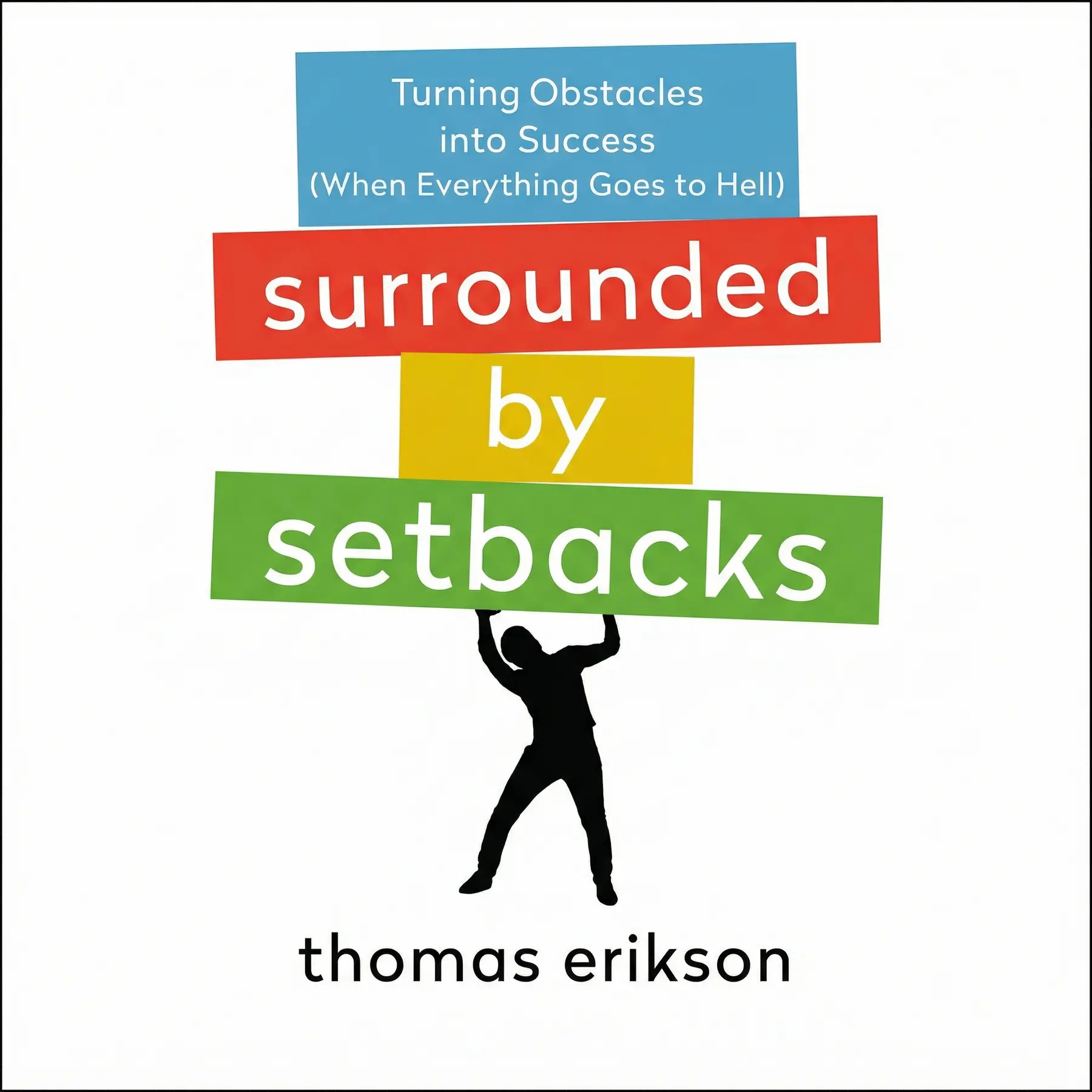
Surrounded by Setbacks: Turning Obstacles into Success (When Everything Goes to Hell)
Learn to transform failures into fuel for future success. This guide provides actionable strategies to overcome life's obstacles by mastering self-responsibility, understanding behavioral types, and maintaining persistence during difficult transitions.
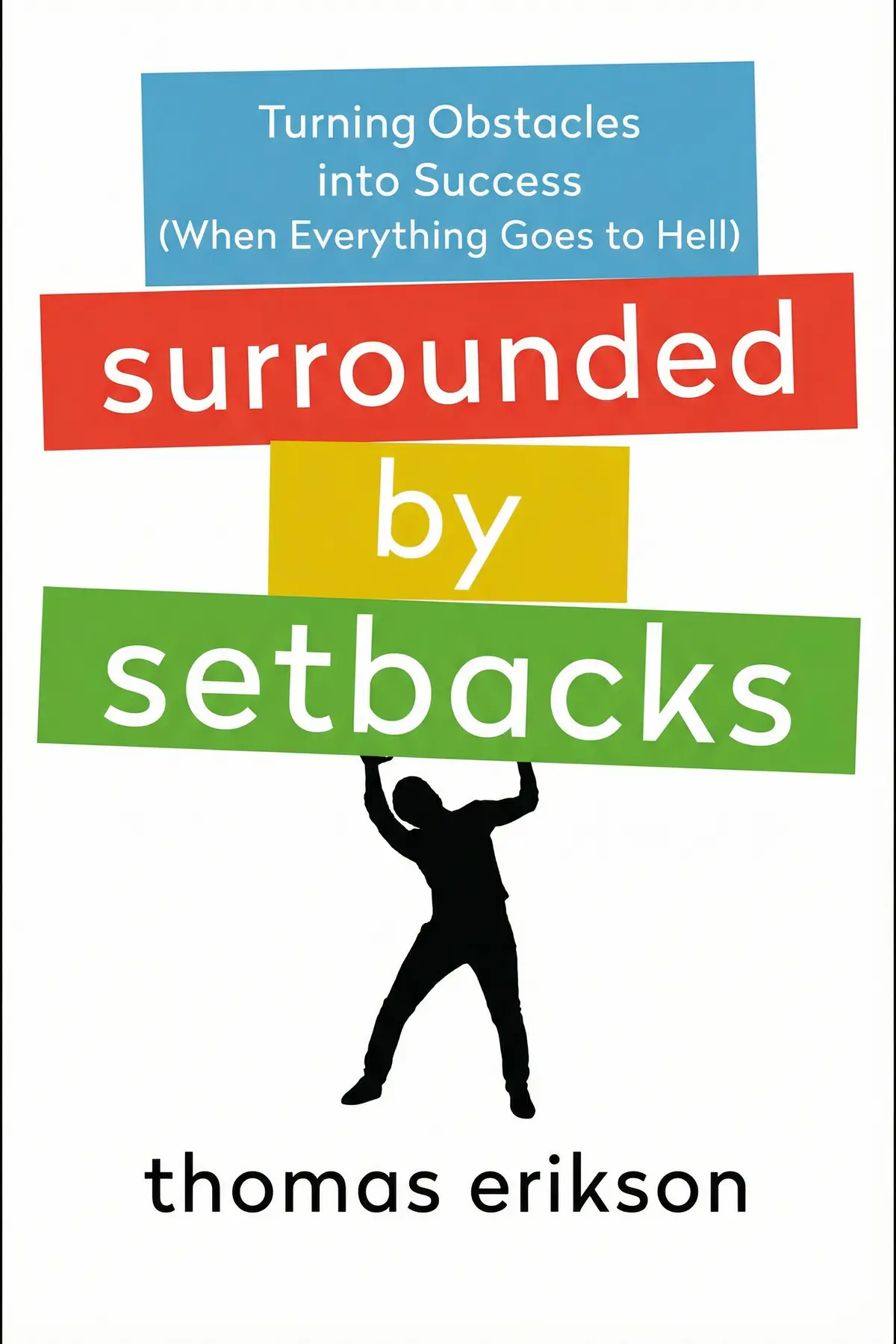
Table of Content
1. Introduction
2 min 12 sec
Imagine spending two decades pursuing a single dream, only to be met with a constant stream of rejection. For twenty years, Thomas Erikson meticulously crafted manuscripts, sent them to publishers, and received nothing but polite versions of ‘no.’ He didn’t just have a few letters; he had a thick, heavy file filled with evidence that the world wasn’t ready for his work. Most people would have viewed that file as a sign to give up, to settle for a more traditional path, and to assume that their dreams were simply out of reach. But Erikson saw it differently. He used that feedback to refine his craft, and eventually, his book *Surrounded by Idiots* became a global phenomenon, selling millions of copies and proving that the long road of setbacks was actually a path toward massive success.
This story isn’t just about literary success; it’s a masterclass in how we handle the moments when things go wrong. We all face barriers—some are minor inconveniences, like a missed deadline, while others are life-altering, like the end of a relationship or the loss of a job. The throughline of this summary is that setbacks are not the end of the journey; they are the markers that tell us we are actually moving forward. In the chapters ahead, we are going to explore why we get stuck in cycles of complaining and how we can break free by taking radical responsibility for our lives.
We’ll look at the psychology of fear and denial, and why we often ignore the warning signs of a problem until it’s too late. You’ll also discover why the ‘big bang’ approach to life changes—the radical, overnight makeovers—almost always ends in failure, and what you should do instead to make progress that actually sticks. We will dive into personality types to understand why your specific nature might make certain obstacles feel harder than they should, and how to build a support network that compensates for your natural weaknesses. Finally, we’ll talk about what it really means to be successful in an age where social media makes us feel like we’re always losing. By the end of this, you’ll have a clear strategy for navigating the messy, difficult, and ultimately rewarding process of turning your biggest obstacles into your greatest wins.
2. Taking Total Ownership of Your Journey
2 min 08 sec
Discover why living in the suburb of ‘Laterville’ prevents you from reaching your goals and how a shift in accountability can change your reality.
3. Confronting the Fears and Denials That Hold You Back
2 min 07 sec
Learn to trust your intuition and address problems before they escalate by understanding the difference between safety and stagnation.
4. The Power of Incremental Progress Over Radical Shifts
2 min 14 sec
Why sudden, massive life makeovers usually fail and why a slower, more deliberate approach is the secret to lasting success.
5. Using Personality Awareness to Solve Problems
2 min 17 sec
Understand how your natural behavioral style influences your response to adversity and learn to mitigate your specific blind spots.
6. Building a Diversified Support System
2 min 08 sec
Learn why high-performers never work alone and how to recruit ‘co-pilots’ who possess the qualities you lack.
7. Redefining Success in the Age of Comparison
2 min 03 sec
Break free from the social media trap and learn to measure your achievements through personal values rather than external validation.
8. Cultivating the Twin Virtues of Persistence and Adaptability
2 min 12 sec
Understand why staying on course requires a balance of stubbornness and flexibility, using the ‘one-degree’ rule of navigation.
9. Conclusion
1 min 50 sec
As we reach the end of this journey, the core message is clear: the only thing standing between you and the life you want is your reaction to the obstacles in your path. We’ve seen through Thomas Erikson’s own twenty-year struggle that success isn’t about the absence of failure; it’s about the refusal to let failure have the final word. By leaving the comfortable but stagnant suburb of Laterville and taking total ownership of your choices, you transform from a passive observer of your life into its active director.
You now understand that fear and denial are just signals that you are approaching something meaningful, and that the best way to handle them is through small, consistent actions rather than radical, unsustainable leaps. You’ve learned how your personality color influences your stress response and how to build a team that makes you stronger than you could ever be alone. Most importantly, you’ve been challenged to define success for yourself, freeing you from the exhaustion of modern comparison.
As a final piece of actionable advice, I want you to put your current problems into perspective. When we are in the middle of a setback, it feels like the world is ending. But you have survived 100 percent of your bad days so far. Create a ‘Perspective List.’ Write down the three hardest things you have ever gone through and how you eventually made it out the other side. Then, look at the problem you are facing today. Does it really compare to those major life events? By reminding yourself of your own resilience, you take the ‘teeth’ out of your current challenges. You have turned obstacles into success before, and you have everything you need to do it again. The throughline of your life is not your setbacks, but your ability to rise above them. Now, go take that first small step.
About this book
What is this book about?
Surrounded by Setbacks explores why some people collapse under pressure while others thrive. It suggests that challenges are not just inevitable but are actually necessary components of personal development. The book promises to equip readers with the mental resilience required to move past rejection and stagnant routines. By examining the intersection of behavioral psychology and personal accountability, the text provides a roadmap for leaving your comfort zone. It breaks down the common pitfalls of radical life changes and explains why small, consistent steps lead to lasting transformation. Ultimately, it offers a guide to defining and pursuing success on your own terms rather than chasing societal expectations.
Book Information
About the Author
Thomas Erikson
Thomas Erikson is a renowned behavioral expert and best-selling author whose work focuses on human interaction and communication. His most famous title, Surrounded by Idiots, has reached a global audience, selling more than three million copies and being translated into 42 different languages. Beyond his writing, Erikson is a highly regarded public speaker who has consulted for and lectured at major international organizations, including household names like IKEA, Coca-Cola, Microsoft, and Volvo.
Ratings & Reviews
Ratings at a glance
What people think
Listeners describe *Surrounded by Setbacks* as an inspiring resource for mastering self-accountability and developing mental toughness using clear, practical strategies. Even though some listeners believe the writer's assertions are missing formal scientific references and could minimize complicated mental health concerns, many appreciate how the four-color personality system assists them in recognizing their individual responses to hardship. Furthermore, they find value in the text's emphasis on reversing negative patterns and maintaining perseverance when encountering defeat. They likewise highlight the usefulness of the included activities, as one listener pointed out that ranking past setbacks helped them put current obstacles into a much healthier perspective.
Top reviews
Yui
Finally got around to finishing this latest installment from Erikson. I've been a fan of the "Surrounded by" series, and this one hits home because we all face obstacles eventually. The way he applies the Red, Yellow, Green, and Blue personality framework to how we handle failure is genuinely eye-opening. Personally, I found the advice on taking 100% responsibility for my reactions to be a needed wake-up call. It’s not about what happens to you, but how you choose to pivot. The tone is encouraging but firm, pushing you to stop making excuses. I particularly liked the section on identifying small, manageable actions to rebuild momentum. If you’re feeling stuck in a rut or "laterville," this is the push you need to get moving again. It’s practical, actionable, and doesn't drown you in academic jargon.
Show moreAom
This book arrived at the perfect time in my life. I was dealing with a major professional setback and felt like I was spinning my wheels. Erikson doesn't offer fluff; he offers a mirror. He forces you to look at your own habits and realize how much time you waste on "the wrong things." The concept of "laterville"—that place where we put off our dreams until some magical future—was a gut punch. I loved the emphasis on surrounding yourself with a "co-pilot" who keeps you accountable. The four-color system helped me realize that as a "Green," I tend to avoid conflict when things go wrong, which only makes the setback worse. I’m now working on being more assertive and persistent. Truly a motivating read for anyone ready to take charge of their destiny.
Show moreChai
Wow, what a punchy and useful guide to navigating the rough patches of life. I’ve read a lot of self-help, and what I liked here was the lack of "woo-woo" nonsense. It’s straight to the point: identify your behavior type, fix your bad habits, and keep moving forward. The advice about finding a co-pilot and staying publicly accountable really works—I’ve already started implementing the "red cross on the door" method for my own goals. It’s a very practical book that focuses on action rather than just theory. Even if you don't agree with every single point about personal responsibility, you'll find something here that helps you handle your next obstacle with more grace and grit. Highly recommended for fans of the color series.
Show moreChanikarn
After hearing so much about Erikson's color system, I decided to dive into this guide on resilience. The story of "Harry" the former athlete really resonated with me because I’ve definitely tried to overhaul my entire life overnight and failed miserably. Erikson explains that big changes come from tiny, consistent steps rather than radical, unsustainable shifts. I appreciated the exercise where you rank your past setbacks to put your current problems into a better perspective; it really helped calm my anxiety about a recent work issue. While some parts feel a bit repetitive if you’ve read his other books, the focus on persistence is solid. It’s a great reminder that being "Red" or "Blue" changes how you view a hurdle, and knowing your type helps you plan a better escape route from failure.
Show moreElena
As someone who struggles with staying motivated when things get tough, I found this quite helpful. Erikson's writing style is very accessible and easy to digest, which is great when you’re already feeling overwhelmed by life. The bit about the pilot drifting off course by just one degree and ending up in the Atlantic was a powerful metaphor for how small bad habits accumulate. I do wish there were more scientific references to support some of the psychological claims made throughout the chapters. Sometimes it felt like I was just listening to one man's very strong opinions. Still, the core message of staying the course and being adaptable is one I needed to hear. It’s a solid 4-star read for the practical "tough love" sections alone.
Show moreTod
The chapter on habits was the standout for me. I’ve read Atomic Habits, and while this isn't as detailed, it complements it well by adding the personality layer. Knowing that my "Yellow" tendencies make me prone to losing focus helps me set up better systems to stay on track. Truth is, I needed the reminder that I am responsible for my own reactions. Life throws a lot of junk at us, and it’s easy to play the victim. This book discourages that entirely. My only complaint is that the tone can be a bit repetitive, and he hammers the same points over and over. But maybe that’s what it takes to get the message to sink in. Decent advice for anyone needing to build some mental toughness.
Show moreWei
Ever wonder why some people bounce back while others just crumble? This book attempts to answer that using the four-color behavior model, but it feels a bit oversimplified at times. To be honest, I felt like the advice was mostly common sense dressed up in bright colors. The concepts of Choice Theory are there, but they aren't explored with much depth. I did like the Netflix analogy about being adaptable to market changes, which can be applied to our personal careers too. However, the writing can be quite patronizing, almost like he’s lecturing a child. It’s a decent introductory text for someone who hasn’t read much self-help, but for those of us who have, it’s mostly things we’ve heard before from the Stoics or other modern authors.
Show morePete
Look, I appreciate the "get off your butt" message, but I have mixed feelings about the delivery. On one hand, the DISC model application is a fun way to analyze your reactions to stress. On the other hand, the author's personal anecdotes—like having four car wrecks—made me question his advice a little bit! It’s very much a "first-world problems" type of book. He tells you to stop complaining about a low salary or a bad childhood, which feels a bit tone-deaf to reality. If you can filter out the more extreme "it’s all your fault" rhetoric, there are some gems about habit formation and goal setting. It’s not groundbreaking, but it might be the kick in the pants some people need to stop procrastinating.
Show moreGabriel
Frankly, Erikson's style is an acquired taste. If you like direct, blunt advice that doesn't sugarcoat things, you'll probably love this. If you prefer your self-help with a side of empathy and clinical data, you might be disappointed. I fall somewhere in the middle. I found the 4-color personality types interesting to revisit, though assigning colors to them still feels a bit arbitrary. The book lacks a bibliography, which is a major pet peeve of mine for non-fiction. He quotes "researchers" constantly without naming them. However, I can't deny that his advice on breaking down goals into manageable parts is effective. It's a quick read that serves as a decent motivational tool, even if it lacks the scientific rigor I usually look for.
Show moreJack
Not what I expected from a supposed psychology book. To be fair, I enjoyed Surrounded by Idiots, but this felt like a collection of anecdotal "bro-science" without a single credible citation to back up the wild claims. He makes massive generalizations about happiness and success—like stating that money and marriage are the keys—without referencing a single peer-reviewed paper. The whole "everything is your fault" attitude feels incredibly toxic, especially for people dealing with genuine mental health struggles or systemic issues. He brushes off a "sad childhood" as a choice of attitude, which is frankly insulting. It promotes a grind-culture mindset where you’re failing if you aren’t productive every waking second. Unless you want to feel guilty for resting or watching TV, skip this. It's just a repackaging of 100-year-old DISC theory with a heavy dose of meritocracy worship.
Show moreReaders also enjoyed

A Guide to the Good Life: The Ancient Art of Stoic Joy
William B. Irvine
A High-Performing Mind: Strengthen Your Mind and Live Your Best Life
Andrew D. Thompson
Abundance: The Inner Path to Wealth
Deepak Chopra
59 Seconds: Change Your Life in Under a Minute
Richard Wiseman
AUDIO SUMMARY AVAILABLE
Listen to Surrounded by Setbacks in 15 minutes
Get the key ideas from Surrounded by Setbacks by Thomas Erikson, plus 5,000+ more titles in English and Thai.
- 5,000+ titles
- Listen as much as you want
- 7-day free trial
- Cancel anytime







