
A Liberated Mind: How to Pivot Toward What Matters
Steven C. Hayes
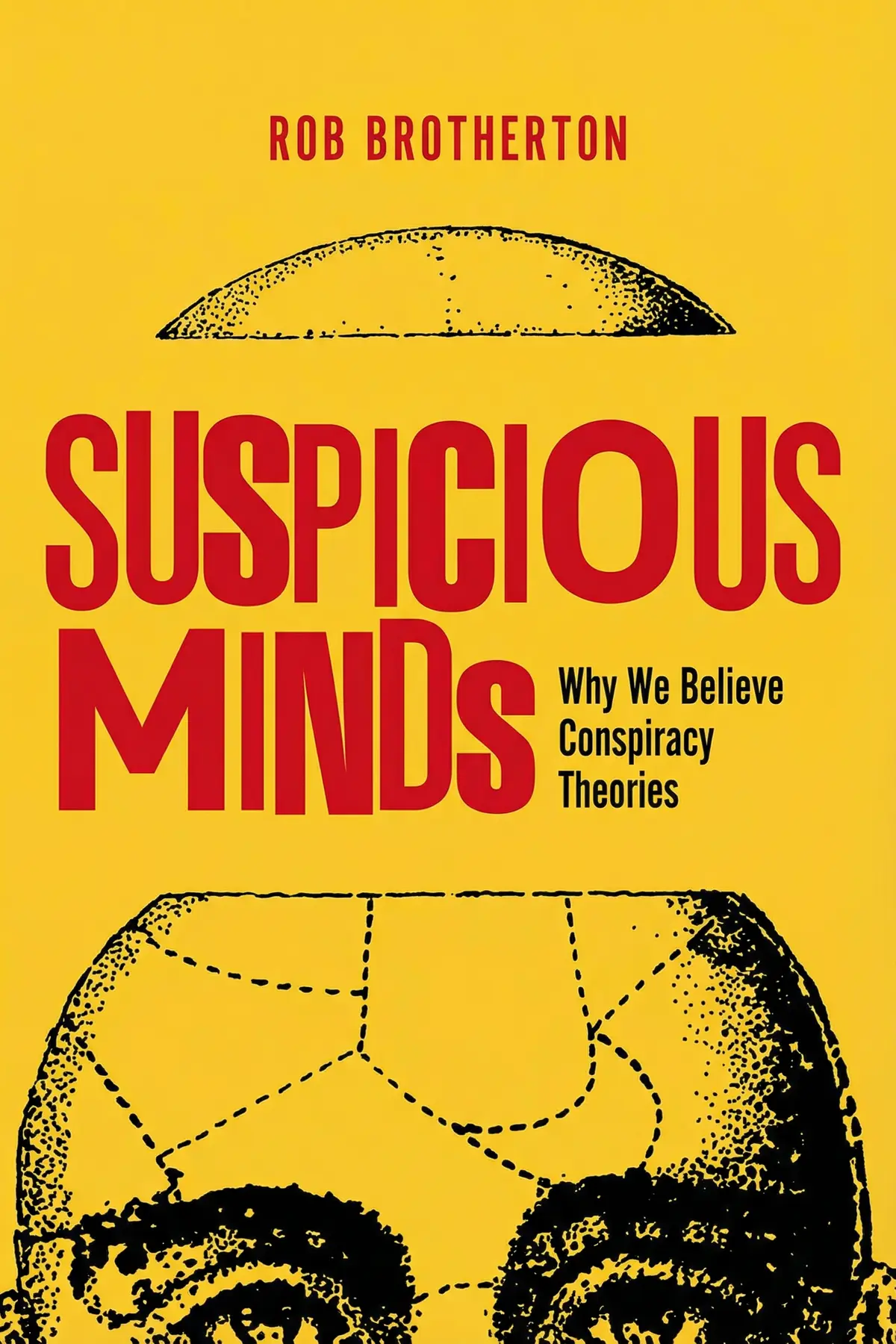
Explore the psychological foundations of why humans are naturally inclined toward conspiracy theories. This analysis reveals how our evolutionary instincts, narrative-seeking brains, and inherent biases create a fertile ground for alternative histories.
1 min 40 sec
When most of us think about conspiracy theorists, a very specific image usually comes to mind. We might imagine a reclusive individual, perhaps slightly disheveled, living in isolation and obsessively tracking perceived threats from a basement computer. We tend to view these people as outliers—strange, antisocial figures who are fundamentally different from the rest of us. We treat the world of paranoia as a distant land inhabited only by the fringe.
However, it is time to set those stereotypes aside and look closer at ourselves. The truth is far more unsettling and far more interesting: conspiracy theories are not confined to the outskirts of society. They are woven into the very fabric of how humans think. In fact, if you look closely at your own suspicions and the way you process the world, you might find that you have more in common with a conspiracy theorist than you’d like to admit.
In this exploration of the book Suspicious Minds, we are going to look at the underlying mechanics of belief. We will move beyond the specific claims about the Illuminati or secret government plots and instead ask why these stories are so incredibly persistent across time and culture. We will uncover how our natural instincts, which once helped us survive in the wild, now make us prone to seeing hidden agendas in every headline. This journey will show us how unanswered questions create a vacuum that our minds are desperate to fill, why these theories can have devastating real-world consequences, and how our brains are capable of holding onto contradictory ideas as long as they serve a deeper narrative. By the end, you’ll see that being suspicious is not a sign of a broken mind, but a fundamental part of being human.
2 min 12 sec
Discover how our natural drive to solve mysteries and find patterns leads us to embrace alternative explanations when the official story leaves us wanting more.
2 min 10 sec
Conspiracy theories are often blamed on the internet age, but they have actually been a part of human society since the days of the Roman Empire.
2 min 11 sec
Explore the dangerous real-world impact of conspiracy theories and how they have been used to justify violence and persecution throughout the ages.
2 min 16 sec
Uncover why those who doubt mainstream accounts are often willing to believe multiple, even contradictory, alternative theories simultaneously.
2 min 10 sec
See how our brains use the same templates found in popular movies and books to construct complex conspiracy theories that feel like epic battles of good vs. evil.
2 min 12 sec
Understand why we are biased toward finding hidden intentions in every event and why it is so difficult to change a mind once a belief has taken root.
1 min 49 sec
As we wrap up our look into the mechanics of the suspicious mind, the most important takeaway is that conspiracy theories are not a sign of some rare mental defect. Instead, they are the byproduct of the very qualities that make us human. Our drive to find patterns, our love for narrative, our evolutionary need to detect threats, and our discomfort with the unknown all work together to create a mind that is naturally fertile ground for alternative histories and secret plots.
We find comfort in these stories, even the frightening ones. There is a strange kind of solace in believing that someone—even if it’s an evil group—is in control of the world. The alternative, that the world is often chaotic, unpredictable, and governed by people who are just as fallible as we are, can be much scarier to contemplate. A conspiracy theory offers a world where things happen for a reason, where there are clear villains to fight, and where the truth is out there waiting to be discovered by those brave enough to look.
But as we’ve seen, this comfort can come at a high cost. When we stop tethering our beliefs to evidence and start viewing every contradiction as part of a cover-up, we lose the ability to engage with reality and with each other. The challenge for all of us is to recognize these natural biases in ourselves. The next time you feel a surge of suspicion or find yourself drawn to a story that seems too perfectly ‘evil’ to be true, take a moment to pause. Ask yourself if you are seeing a pattern because it’s there, or because your brain is simply doing what it was evolved to do: tell a story. By understanding the psychology of suspicion, we can learn to navigate a complex world with a critical eye, remaining open to the truth while staying wary of the traps our own minds set for us.
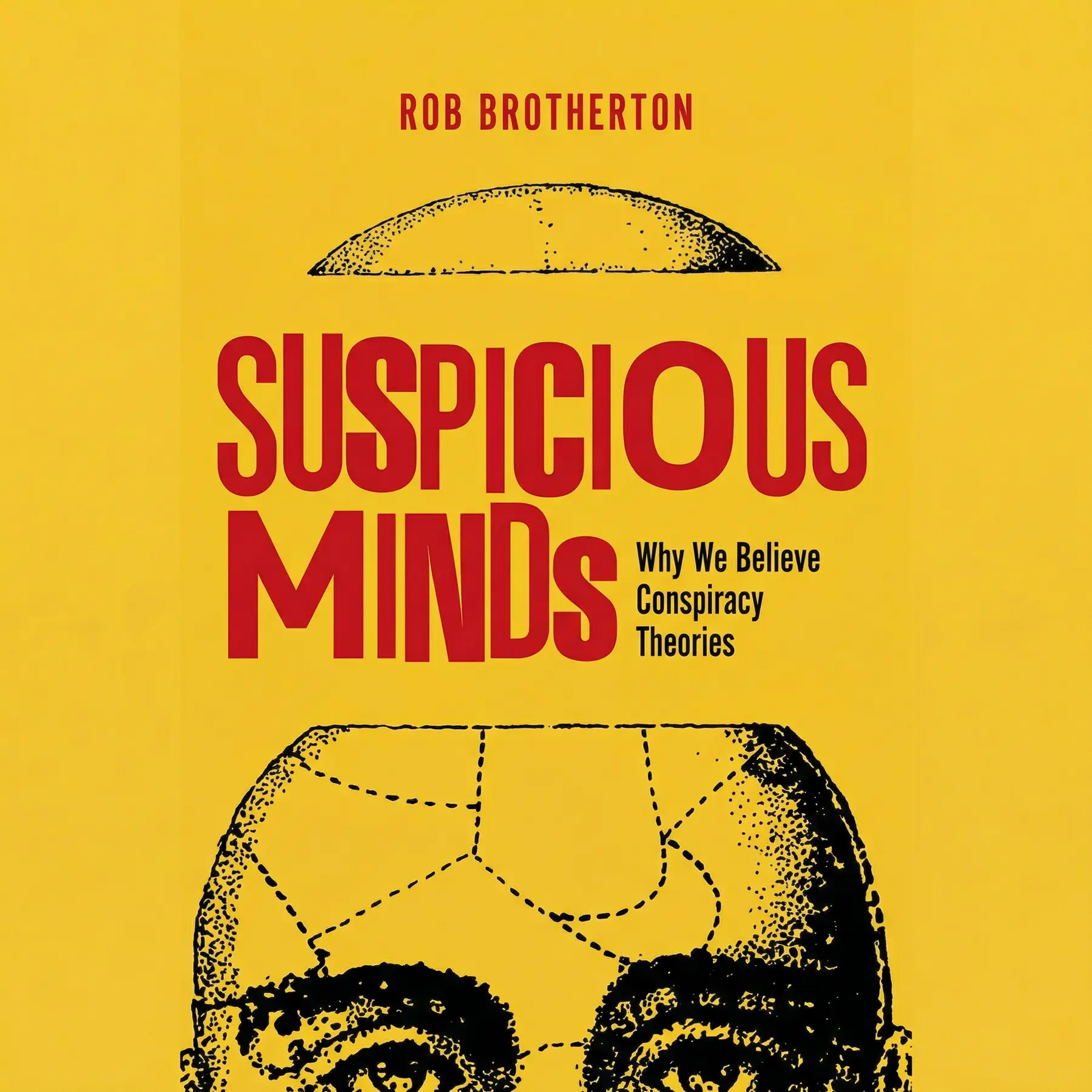
Have you ever wondered why seemingly rational people fall for elaborate, unproven stories about secret societies or government cover-ups? Suspicious Minds delves into the fascinating world of conspiracy theories, not as a study of fringe lunacy, but as a mirror held up to the human psyche. It argues that these beliefs are not the result of a few odd individuals, but rather a byproduct of the way every human brain is wired to function. By examining history, psychology, and the mechanics of storytelling, the book promises to show you how our natural need for cause-and-effect and our inherent suspicion of power can lead us down rabbit holes of misinformation. You will discover the evolutionary reasons behind our tendency to see patterns where none exist and learn why our minds often prefer a complex, malevolent explanation over a simple, mundane one. This exploration challenges the way you view information and encourages a deeper understanding of the mental shortcuts we all use every day.
Rob Brotherton is a writer and academic psychologist who has dedicated much of his professional life to understanding the inner workings of belief. He serves as an Adjunct Assistant Professor at both Barnard College and Columbia University. His specialized research focuses on the psychology behind conspiracy theories, bridging the gap between clinical observation and popular culture.
Listeners find the book an engaging and thoroughly researched read that is well-crafted, with one listener describing it as a must-read in a world infested by grifters. They also value its stimulating content, as one review mentions it offers understanding instead of judgment, and another points out its great insight into modern political thought. Additionally, the book details various conspiracy theories while examining this psychologically intricate subject. However, listeners have expressed conflicting views regarding the pacing of the narrative.
Rob Brotherton has written a genuinely eye-opening guide to the strange architecture of the human mind. Instead of just mocking 'tinfoil hat' types, he explores why our brains are essentially hardwired to find patterns in the chaos. The book offers a refreshing amount of empathy for a topic that usually invites nothing but ridicule. I found the section on 'proportionality bias'—the idea that big events must have big causes—completely transformed how I view the JFK assassination. It’s a necessary anchor in a modern world increasingly infested by grifters and bad actors. While it’s technically pop-psychology, the research feels robust enough to satisfy a curious layman. If you have ever wondered why otherwise rational people fall down rabbit holes, this is your map.
Show moreIn a world that feels increasingly fragmented by misinformation, this book provides some much-needed clarity. Brotherton avoids the trap of just debunking theories; instead, he provides a toolkit for understanding the psychological machinery behind them. I loved the revelation about how New York City pedestrian buttons are mostly disabled yet still light up to give us a sense of agency. It’s these small details that make the larger points about government suspicion hit home. The writing is irreverent and engaging, never feeling like a dry lecture. Personally, I think this should be mandatory reading for anyone active on social media today. It offers understanding instead of judgment, which is a rare perspective in this field. Absolutely a must-read for fans of Jon Ronson.
Show moreWhy do we see sinister patterns where none actually exist? This book tries to answer that by looking at our innate psychological biases rather than just listing debunked theories. To be fair, the author relies heavily on psychological studies involving 'ordinary college students,' which can feel a bit repetitive after a while. However, the insights into how we all engage in 'join-the-dots' thinking are profound. I particularly enjoyed the discussion on the 'Umbrella Man' from the Zapruder film. It’s a perfect example of how a harmless detail can be warped into something nefarious by a suspicious mind. The writing is colloquial and fast-paced, making complex sociological concepts feel accessible. It is a thought-provoking read that forces you to question your own assumptions about the world.
Show moreEver wonder why you keep pressing the 'close door' button on an elevator even when it clearly does nothing? Brotherton uses these small, everyday superstitions to bridge the gap toward more extreme conspiratorial thinking. It’s a brilliant way to domesticate the 'bonkers' theories we see online. He shows that the urge to believe in a hidden, sinister world is actually a very human desire for control. The truth is that a chaotic universe where bad things happen by chance is much scarier than a world run by a secret cabal. The book is well-researched and avoids being mean-spirited toward believers. I appreciated how it touched on 'false flag' rhetoric without becoming a political screed. It’s a solid 4-star read for anyone interested in the 'why' behind the 'what'.
Show moreThis is a solid introduction to the psychology of belief, though it often prioritizes accessibility over deep academic rigor. Brotherton is a great storyteller, and he weaves historical forgeries like the Protocols of the Elders of Zion into modern context quite deftly. I did find the constant citing of university lab studies a bit tiresome, as they don't always reflect how people act in the real world. Still, his point that we are all prone to this type of thinking is well-taken. The book provides great insight into modern political thought without becoming overly partisan. It’s a healthy reminder to check your own biases before laughing at someone else’s tinfoil hat. Not gonna lie, the section on the Queen being a reptilian was pretty entertaining too.
Show moreThe historical context provided in the first few chapters was easily my favorite part of the book. It’s comforting, in a weird way, to know that humans have been obsessed with secret plots for centuries. Brotherton does a great job of showing how the internet has only amplified an existing human condition. My only real gripe is that I wish there was more practical advice on how to talk to family members who have fallen for these grifts. He explains the 'echo chamber' effect well, but leaves the solution a bit open-ended. Regardless, the prose is sharp and the chapters move quickly. It’s a very readable Bloomsbury Sigma entry that holds your attention from start to finish. A great gift for the skeptic in your life.
Show moreFinally got around to reading this and I’m pleasantly surprised by how empathetic it is toward the human brain. We are pattern-seeking animals, and Brotherton shows that conspiracy theories are just a byproduct of our 'brilliant but stupid' minds. He covers everything from the moon landing to the tragic Sandy Hook 'false flag' claims with a steady hand. The book is heavily researched, even if the pacing stalls occasionally during the descriptions of lab experiments. I particularly liked the analysis of how people who believe in one theory are statistically likely to believe in them all. It’s a fascinating look at the 'join-the-dots' mental breathing we do every day. Definitely worth a spot on your shelf if you're into social psychology.
Show morePicked this up because I wanted to understand the 'truther' mindset better, but I left with mixed feelings. On one hand, the historical context regarding the Protocols of Zion was incredibly well-documented and fascinating. On the other hand, the pacing is quite uneven. There were moments where I felt bogged down by a parade of uninteresting non-information from minor psychological experiments. Look, the author is clearly talented at synthesizing information, yet he sometimes makes broad generalizations that feel a bit speculative. He suggests we are all conspiracy theorists, which is an interesting premise, but it felt a bit stretched by the final chapter. It is a decent introduction for beginners, though seasoned skeptics might find it a bit light on new evidence.
Show moreGotta say, I expected more debunking and less theorizing about 'patterns.' The author spends a lot of time on the history of conspiracy thinking, which is fine, but it gets repetitive. He makes a lot of wholesale generalizations about how we perceive the world that don't always feel backed up by solid proof. For instance, equating a small superstition with the belief in a global New World Order feels like a bit of a leap. To be fair, the book is quite well-written and the tone is pleasant. It just feels a bit like a collection of interesting anecdotes rather than a cohesive psychological study. It’s a light, breezy read for a plane ride, but don't expect it to change your life.
Show moreWhile the premise is fascinating, the execution felt surprisingly sloppy in places for a book that prides itself on scientific rigor. The author makes several egregious generalizations about mental health, specifically regarding how paranoia relates to schizophrenia and bipolar disorder. Frankly, his dismissive tone toward certain historical complexities, like the nuances of the Warren Commission, was a major turn-off. He even implies that figures like Bertrand Russell were essentially participating in a conspiracy just by asking questions. I didn't expect a dense academic tome, but the cherry-picking of sources became too obvious to ignore by the halfway point. It’s a readable enough pop-science book, but the lack of depth regarding the actual evidence for these theories makes it feel superficial. My head actually started to hurt after the section on anti-vaxxers.
Show moreSteven C. Hayes

Deborah Gruenfeld
Anthony Pratkanis

Richard Wiseman
AUDIO SUMMARY AVAILABLE
Get the key ideas from Suspicious Minds by Rob Brotherton, plus 5,000+ more titles in English and Thai.







