

20 min 17 sec
Swipe to Unlock: The Primer on Technology and Business Strategy
Swipe to Unlock provides a comprehensive look into the technological and business strategies that power our modern world, explaining complex concepts from operating systems to internet infrastructure in accessible language.
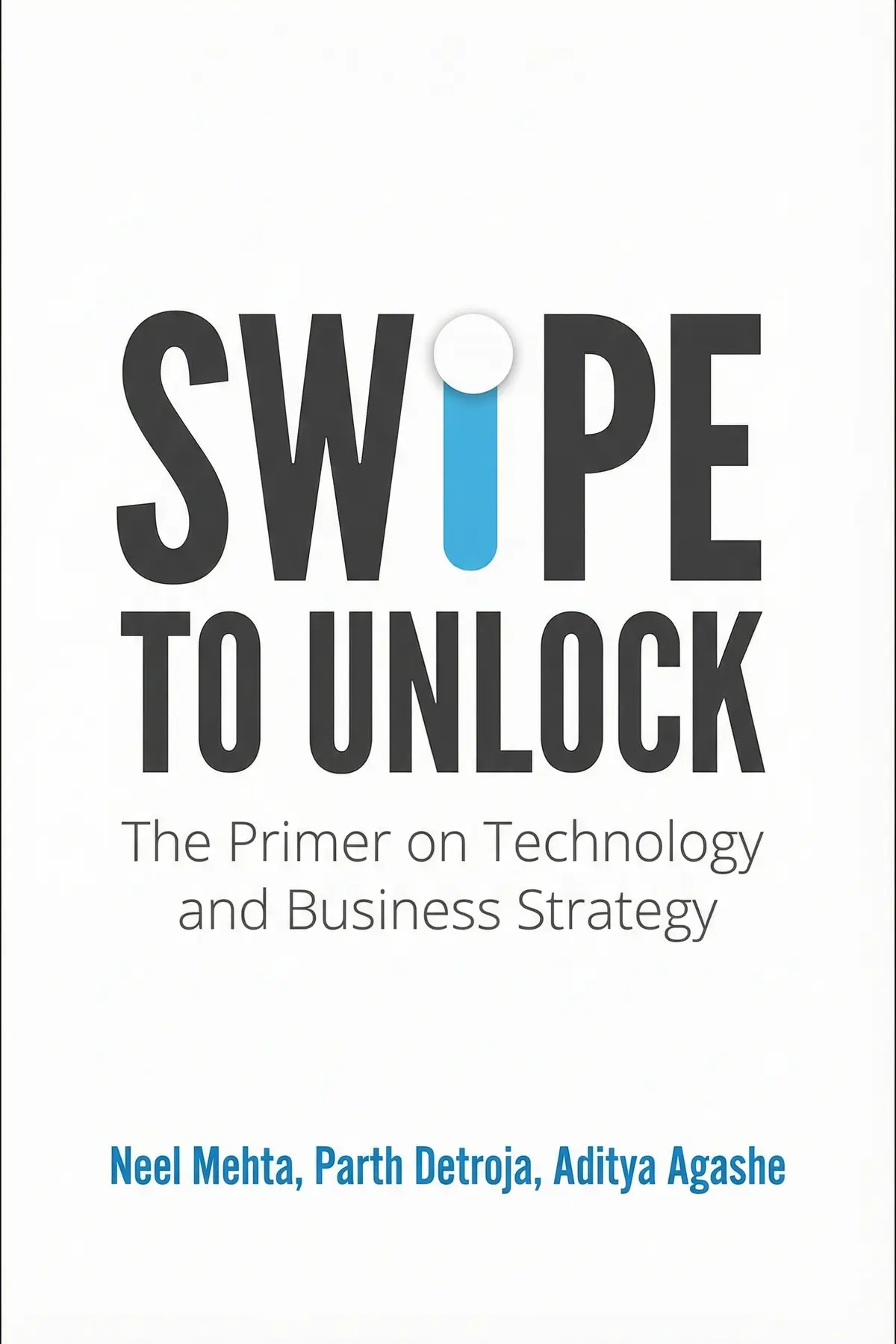
Table of Content
1. Introduction
1 min 47 sec
In the modern era, technology has transitioned from being a niche interest for enthusiasts to being the very fabric of our daily existence. It doesn’t matter if you are a farmer using drones to monitor crop health, a banker managing digital transactions, or a student attending classes over a video link—technology is the silent engine driving every sector of our global economy. However, for many of us, this engine remains a complete mystery. We use these tools every hour of the day, yet the underlying logic and the business strategies that govern them feel like a foreign language.
This is where the transition happens from being a passive consumer to an informed participant. The goal today is to bridge that gap. We are going to dive into the core principles that define the tech industry. We will look at how the internet actually functions beneath the surface and why certain business models have made tech companies the most powerful entities on earth. We will clarify the terminology that often sounds like buzzwords, such as big data, APIs, and net neutrality, turning them into clear, actionable concepts.
What this really means is that you don’t need to be a software engineer to understand the digital world. By focusing on the strategy and the broader architecture of technology, you can gain the literacy required to navigate a landscape dominated by tech giants. This isn’t just about learning how to code; it’s about understanding the decisions made by the people who build the products we love. As we walk through these insights, you’ll start to see the digital world not as a collection of magic boxes, but as a series of logical systems designed to solve problems and generate value. Let’s begin this journey by looking at the foundational layer of our devices: the operating system.
2. The Role and Security of Operating Systems
2 min 44 sec
Explore the hidden backbone of your digital life and discover why the long-standing debate over computer security is more complex than just choosing a brand.
3. The Mechanics of Modern Software
3 min 05 sec
Uncover the invisible logic of algorithms and the digital bridges known as APIs that allow your favorite applications to work together seamlessly.
4. The Physical and Digital Infrastructure of the Internet
3 min 04 sec
Go beyond the screen to discover the global network of cables and protocols that allow data to travel across the world in milliseconds.
5. Innovative Business Models in the App Economy
2 min 52 sec
Learn how the tech industry turned ‘free’ into a multi-billion dollar business through clever monetization strategies and user engagement.
6. The Power and Perils of Big Data
2 min 25 sec
Discover how the massive influx of digital information allows companies to predict human behavior with startling accuracy, and the privacy questions it raises.
7. Policy, Neutrality, and the Future of Digital Rights
2 min 43 sec
Examine the legal battles over how the internet is controlled, from the debate over net neutrality to the controversial ‘right to be forgotten.’
8. Conclusion
1 min 37 sec
As we have explored, the digital world is built on a foundation of logical systems, physical infrastructure, and innovative business strategies. From the way an operating system manages your device’s hardware to the complex packet-switching that allows a video to stream across the globe, technology is a marvel of human ingenuity. We’ve seen how companies use algorithms to personalize our experiences and how they have turned the concept of ‘free’ into a massive economic engine through advertising and data analysis.
However, with this incredible power comes significant responsibility and ongoing debate. The stories of big data’s predictive capabilities and the legal fights over net neutrality remind us that technology is not just about gadgets; it’s about the values we choose to uphold in a connected society. Understanding these concepts is the first step in moving from being a mere user to becoming a tech-literate citizen.
The throughline here is clear: technology is a tool that reflects the goals and strategies of those who create it. By demystifying the jargon and looking at the ‘why’ behind the ‘how,’ you are now better equipped to navigate the digital age. Whether you are looking to enter the tech workforce or simply want to be a more informed consumer, the knowledge of how these systems intersect with business and policy is your most valuable asset. The next time you swipe to unlock your phone, you won’t just be looking at a screen—you’ll be looking at a global network of strategy and innovation.
About this book
What is this book about?
Have you ever wondered how your favorite apps make money even when they are free to download? Or how a retailer might know you are pregnant before your own family does? Swipe to Unlock explores the invisible forces of the digital age, breaking down the essential concepts of technology and business strategy. This guide demystifies the technical jargon that often creates a barrier between the tech industry and the general public. By exploring the mechanics of the internet, the logic of algorithms, and the ethics of big data, the book promises to turn any reader into a tech-literate observer of the modern world. Whether you are looking to pivot your career or simply want to understand the device in your pocket, this summary provides the necessary roadmap.
Book Information
About the Author
Neel Mehta
Neel Mehta is a Product Manager at Google and a former John Harvard Scholar at Harvard University. He has worked at Microsoft, Khan Academy, and the US Census Bureau, where he founded the first fully-funded tech internship program. Parth Detroja is a Product Manager at Facebook and a former Merrill Presidential Scholar at Cornell University. He co-founded the Cornell International Business Association and has worked for Microsoft, Amazon, and IBM. Aditya Agashe is a Program Manager at Microsoft and a former Merrill Presidential Scholar at Cornell University. There, he founded Belle Applications, a venture focused on creating and enhancing software platforms for businesses.
Ratings & Reviews
Ratings at a glance
What people think
Listeners find the book to be extensively researched and packed with excellent insights, offering a full picture of the technology sector by breaking down difficult ideas with relatable, daily comparisons. Furthermore, the tone is captivating and easy to follow, ensuring it is appropriate for people of all educational backgrounds. Listeners also value the way the text clarifies corporate strategies and acts as an essential tool for those in product roles, with one listener highlighting its organization into 12 straightforward chapters.
Top reviews
Pornthip
After hearing about this from several colleagues, I decided to give it a shot despite having zero technical training. What a relief! The authors break down intimidating jargon like 'the cloud' and 'big data' using simple, everyday analogies that actually make sense. I finally understand why Amazon pushes Prime so hard and how Uber’s surge pricing actually works under the hood. The writing style is breezy and engaging, making it feel less like a textbook and more like a series of insightful blog posts. My only minor gripe is that it occasionally skims over the actual 'how-to' of the algorithms, but for a high-level overview, it’s unbeatable. If you're looking for a Rosetta Stone to translate tech-speak into English, this is your best bet. It really helped me feel more confident in meetings where these keywords are tossed around like confetti.
Show moreMaya
As someone pivoting from marketing into the tech sector, this was exactly the bridge I needed. The authors have a gift for taking things like A/B testing or the Dark Web and explaining them in a way that doesn't make me feel stupid. It’s very well-researched, with plenty of citations to back up their claims about company strategies. I’ve been recommending this to all my friends who want to understand the 'why' behind the apps they use every day. It’s divided into short, punchy sections, which kept me hooked from start to finish. Not gonna lie, I used to feel lost when people talked about cryptocurrency, but now I can actually follow the conversation. It’s a comprehensive and accessible guide that should be required reading for any non-coder entering a startup environment.
Show moreNadia
The chapter on emerging markets was worth the price of the book alone. Most tech literature focuses exclusively on Silicon Valley, so seeing a deep dive into the dynamics of Southeast Asia was incredibly refreshing. The authors explain how different players compete in these regions with such clarity that I felt like an expert by the time I finished the section. Gotta say, the analogies for software architecture—comparing algorithms to recipes—were spot on for someone with a non-technical background. It’s well-researched, though sometimes I wished they’d cite more academic papers instead of just news articles. Overall, it’s an inspiring read that reminds you of the massive impact technology has on a global scale. Five stars for the breadth of topics and the accessible tone!
Show moreRafael
Wow, I finally understand what my dev team is talking about when they mention APIs and latency! This book is a total game-changer for anyone who feels left behind by the rapid pace of technological change. It’s light, fun, and packed with stories that make the information stick. I finished it over a weekend and felt significantly more tech-literate by Monday morning. The authors have managed to create something that is both informative and genuinely entertaining to read. While it doesn't teach you how to build a neural net, it gives you the vocabulary to talk about one intelligently. In the end, it’s an empowering read that makes the black box of technology feel accessible to everyone. Bravo to Mehta, Detroja, and Agashe for this project!
Show moreKevin
Picked this up to prep for an upcoming PM role, and it served as a solid refresher on business strategy within the tech landscape. While I agree with others that it's not a deep dive into coding, the way it connects technical limitations to business decisions is excellent. The 12-chapter structure makes it easy to digest in chunks without getting overwhelmed by the sheer volume of information. I particularly liked the breakdown of app economics and the logic behind seemingly strange business decisions at companies like Amazon. Truth is, even if you know the basics, the framing here is very useful for learning how to communicate complex ideas to non-technical stakeholders. It might not replace a computer science degree, but it’s a fantastic resource for bridging the gap between building a product and selling it.
Show moreYaowaluk
Ever wonder how Spotify knows exactly what you want to hear next? This book peels back the curtain on those algorithms without getting bogged down in lines of code. It’s remarkably relevant, covering everything from net neutrality to the nuances of emerging markets in Southeast Asia. I appreciate how the authors keep things light and fun, which is rare for a book about Big Data and Machine Learning. Sometimes the explanations feel a bit too much like a Google search result, but having it all compiled in one place is incredibly convenient. Personally, I found the section on hardware and Amazon's delivery service to be the most enlightening parts. It’s a great introductory text for anyone curious about the digital world we live in.
Show moreDream
This book does exactly what it says on the tin: it unlocks the tech industry for the rest of us. The writing is incredibly clear, and you can tell the authors put a lot of effort into making it engaging. I enjoyed the case studies on companies like Google and Netflix, as they provided real-world context for the abstract concepts being discussed. In my experience, most 'intro to tech' books are either too dry or too condescending, but this hits a perfect middle ground. My only minor complaint is the lack of a detailed index for technical terms, as I’d love to use this as a quick reference guide later on. Still, it’s a must-read for anyone looking to gain a basic overview of how the digital economy operates without needing a CS degree.
Show moreChamnong
Truth is, I wasn’t sure what the target audience was at first—non-coders is a huge group! But as a business student, I found the insights into tech strategy to be surprisingly sharp. The authors explain how companies like Facebook and Amazon make money in ways that aren't always obvious to the casual user. I loved the Pokemon Go explanation, even if it could have gone a bit deeper into the server-side mechanics. It reads a bit like a collection of really good Quora answers, which isn't necessarily a bad thing if you're looking for quick, high-level info. Some of the analysis feels a bit like puffery at times, especially when claiming this will set you apart in interviews, but the core content is solid. Definitely a good introductory book to have on your shelf.
Show moreEye
If you spend any time reading TechCrunch or Business Insider, you’ll probably find this book remarkably redundant. I went in expecting deep technical insights that would set me apart in product management interviews, but instead, I found a collection of summaries that felt like they were pulled straight from Quora. The chapters on Cloud Computing and Blockchain are fine for my grandmother, but for anyone already working in the industry, it feels like paying for fluff. To be fair, the analogies are clever, particularly the one regarding Pokemon Go's sensors. However, the lack of substantive sources—mostly citing journalists rather than engineers—makes the analysis feel shallow. It’s an easy two-hour read, but don't expect it to turn you into a tech wizard overnight. It’s definitely more of a primer than a masterclass.
Show moreGai
Frankly, the marketing for this book is a bit of a stretch, calling it a 'Rosetta Stone' for our generation when it mostly just rehashes popular tech news. I felt the authors stayed too safe, avoiding any hard explanations of how the software actually functions beneath the surface. For instance, the section on net neutrality barely touches the actual legal or technical debates, choosing instead to offer a very middle-of-the-road summary. Look, if you’re a complete novice, you’ll get some value here. But if you have even a moderate interest in tech, you’ll likely feel like you’re reading a printed version of a generic tech blog. It’s not a bad book, just a very superficial one that prioritizes breadth over depth. Two stars because I did like the analogy about APIs, but the analysis doesn't live up to the hype.
Show moreReaders also enjoyed





AUDIO SUMMARY AVAILABLE
Listen to Swipe to Unlock in 15 minutes
Get the key ideas from Swipe to Unlock by Neel Mehta, plus 5,000+ more titles in English and Thai.
- 5,000+ titles
- Listen as much as you want
- 7-day free trial
- Cancel anytime







