
11 min 04 sec
Talk Lean: Shorter Meetings. Quicker Results. Better Relations.
Talk Lean offers a strategic approach to communication, emphasizing clarity and politeness. By being direct about goals and listening intently, you can transform unproductive meetings into efficient sessions that foster better relationships.
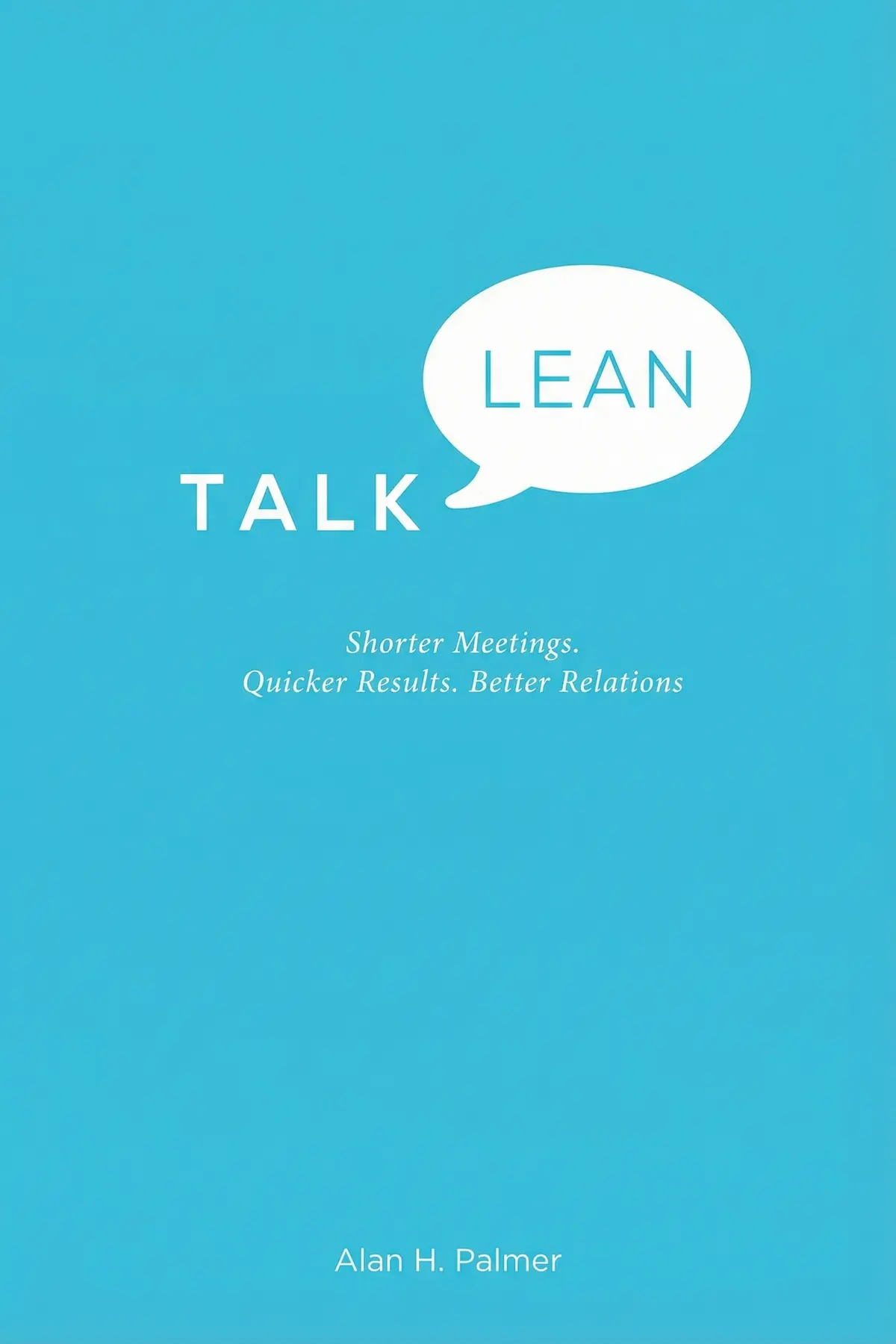
Table of Content
1. Introduction
1 min 19 sec
In the modern workplace, we are often drowning in a sea of meetings. From the Monday morning huddle to the late-afternoon strategy session, it feels as though our days are consumed by talk. Yet, despite all this verbal exchange, a nagging question remains: why do so many of these interactions feel like a total waste of time? We walk away feeling unheard, or perhaps we realize we didn’t actually say what we needed to say. Whether you are leading a massive team, having a quiet one-on-one with a supervisor, or even navigating the delicate social waters of a personal crush, the struggle to communicate effectively is universal.
This is where the concept of ‘leaning out’ your talk becomes revolutionary. To talk lean is to embrace a style of communication that is surgically precise and refreshingly direct, yet remains anchored in a spirit of calm and courtesy. It is not about being blunt or rude; rather, it is about stripping away the fluff and the hidden agendas that clog up our productivity. This approach doesn’t just save time—it saves relationships. In the following segments, we will explore the specific mechanics of this method. We’ll look at how a simple shift in pronouns can change the energy of a room, why the questions we think are clever might actually be killing the conversation, and how to ensure your message is received exactly the way you intended. By the end, you’ll have a toolkit for making every word count.
2. Establishing Clear Intentions from the Start
2 min 04 sec
Discover why hiding your agenda creates suspicion and how being direct about your goals in the first minute sets a tone for honesty and efficiency.
3. Fostering Openness through Listening and Language
2 min 22 sec
Learn how to use personal pronouns to own your perspective and the simple note-taking trick that ensures you never misinterpret a colleague again.
4. Using Grammar and Tense to Drive Progress
2 min 07 sec
Uncover the strategic use of past, present, and future tenses to unlock stalled negotiations and turn individual needs into collective action.
5. Authenticity and Final Quality Checks
2 min 10 sec
Master the art of non-verbal alignment and learn why the final two minutes of a meeting are the most important for ensuring long-term success.
6. Conclusion
1 min 02 sec
The art of talking lean is ultimately about respect—respect for your own goals, for the other person’s time, and for the integrity of the professional relationship. By having the courage to state your objectives clearly and immediately, you remove the barriers that cause meetings to drag on indefinitely. You’ve learned that the words we choose, right down to the pronouns and the tenses, have a profound impact on whether a conversation opens up or shuts down. You’ve also seen that while body language is a powerful communicator, it is no substitute for the clarity of a direct question.
As you move back into your daily routine, consider this actionable step: before your next scheduled interaction, take just two minutes to define your single most important goal. Once you are in the room, find a way to express that goal constructively within the first sixty seconds. Don’t wait for the ‘right’ moment; create it. By practicing this habit of being both direct and courteous, you will find that your meetings become shorter, your results become more consistent, and your professional relationships grow stronger. The path to better communication isn’t through more words, but through better ones.
About this book
What is this book about?
Modern professional life is frequently bogged down by endless, unproductive meetings where little is accomplished and time is wasted. Talk Lean addresses this common frustration by introducing a refined method of communication that prioritizes brevity and precision without sacrificing courtesy. The book explores why our typical conversational habits—like being overly aggressive or frustratingly vague—fail us and how we can replace them with a leaner approach. The promise of the book is straightforward: by learning to articulate your intentions clearly from the start, you can significantly reduce the length of your meetings while simultaneously increasing their effectiveness. It provides a roadmap for navigating difficult workplace dynamics, from managing employees who are consistently late to reaching a consensus with a stubborn team. Beyond just being shorter, these conversations become more authentic and less stressful for everyone involved. The book teaches listeners how to balance their own needs with the needs of others, ensuring that every interaction leads to a tangible outcome. Ultimately, it’s about mastering the art of the direct conversation so you can spend less time talking and more time achieving.
Book Information
About the Author
Alan H. Palmer
Alan H. Palmer is a graduate of Oxford University who built his career in the international advertising industry. Drawing on his extensive professional experience, he now focuses on training and development. Palmer leads seminars and designs educational programs globally, specializing in helping individuals and organizations improve their communication skills to achieve more productive and meaningful conversations.
Ratings & Reviews
Ratings at a glance
What people think
Listeners find Talk Lean to be a handy, concise manual for sharpening communication skills in their careers and daily lives. While there is a range of opinions on the simplicity of its concepts—with some feeling the tips are mostly common sense—the majority praise the outstanding sample dialogues that offer a way to be candid without being confrontational. Furthermore, they appreciate how the book teaches them to establish clear contexts for meetings to increase openness and speed. They also point out that the "gentler" approach to bluntness is powerful, with one listener reporting that the book enabled them to communicate with greater impact and less friction after recovering from a head injury.
Top reviews
Alejandra
The sample dialogues in Alan Palmer’s work are absolute gold for anyone struggling with 'bulldozing' their way through conversations. I've always been a bit too blunt, which often alienates my team, but this book taught me how to be transparent without being abrasive. Gotta say, the transformation in my daily interactions has been noticeable. By applying the techniques to set an honest context for meetings, I've seen a massive drop in the usual wariness people have. The book is succinct and skips the unnecessary fluff, which I appreciate. Even the small details, like how to properly end a discussion so everyone is on the same page, have made a big difference. It’s a game-changer for those of us who need a softer way to stay direct and achieve win/win outcomes.
Show moreSiriporn
Finally got around to reading 'Talk Lean' and it has completely shifted my perspective on active listening. Most people just wait for their turn to speak, but Palmer emphasizes the importance of actually seeking to understand the other person's point of view before jumping in. Truly, the section on non-verbal communication and body language was an eye-opener for me. The sample dialogues provide a fantastic framework for being direct without coming across as aggressive or overbearing. It’s rare to find a business book that is this practical and easy to implement immediately. I’ve already recommended it to several coworkers who struggle with meeting efficiency. If you want a more polite, respectful, and effective way to communicate your ideas, buy this book.
Show moreEye
As a professional who often finds meetings a waste of time, I found Palmer’s emphasis on setting a clear context extremely refreshing. Truth is, many of us wander into discussions without a real purpose, leading to suspicion and wasted hours. The 'Talk Lean' approach provides a roadmap to fix that. I particularly liked the sample dialogues; they felt grounded in reality, even if a few examples seemed slightly arrogant or stuffy. It's a quick read that focuses on being direct without the typical aggression found in corporate culture. While some of the concepts regarding active listening aren't exactly new, the way they are packaged here makes them much easier to apply in high-stakes environments. This book won't solve every conflict you have, but it's a solid tool for anyone looking to cut through the noise and get to the point effectively.
Show moreSupaporn
After hearing about how this could help with interpersonal conflicts following a friend's recommendation, I gave it a shot and was pleasantly surprised. Not gonna lie, I used to be one of those people who would talk around the point for ten minutes before getting to the ask. Palmer’s framework for being direct but gentle has helped me change that habit. The book is very succinct, which is fitting given the title. I’ve started using his 'three response approaches' in my weekly syncs, and the clarity it brings to the team is undeniable. It’s not just for work either; I’ve found myself being more transparent with friends and family without causing unnecessary tension. A very solid 4-star read for practical application.
Show moreWoramet
Picked this up on a recommendation from a colleague who swears by the 'lean' communication methodology. In my experience, the book is a bit of a mixed bag. On one hand, the sections on 'reformulation' strategies and why they sometimes fail are quite thought-provoking. On the other hand, the author’s sense of humor didn’t always land for me, and some of the advice felt a bit redundant. It's definitely a practical guide, and the focus on being respectfully direct is a good lesson for any workplace. However, I think it lacks the nuance needed for complex personal relationships. It’s a decent primer for professional communication, but don't expect it to be a life-altering manifesto. Good for a quick flight read, but maybe not a permanent spot on the shelf.
Show morePrapaiwan
The chapter on non-verbal cues and body language offered some decent reminders, though the tone of the book can be a bit hit-or-miss depending on your personal style. Frankly, I found the author's focus on 'context setting' to be the most valuable part of the text. It's a simple truth that we often overlook, leading to meetings that feel suspicious or directionless. While the book is an easy read and quite succinct, some of the dialogue examples felt a bit stiff and unrealistic for a casual office environment. It's a helpful guide for those who are naturally 'bulldozers' or too blunt, but for those who are already polite, it might feel a bit redundant. A middle-of-the-road resource that has its moments.
Show moreAdam
Is it just me, or does this book state the obvious far too often? I was hoping for deep insights into the 'Discipline Interactifs' method, but what I got felt more like common sense wrapped in fancy packaging. Frankly, suggesting that people should listen actively or use 'I' statements is communication 101. The writing style is fine, and it’s a fast read, but there isn't much here that you haven't heard before if you've read any other management guide. Some of the sample conversations felt forced and didn't really translate to how people actually speak in a modern office. If you are brand new to professional life, maybe there is some value here. For anyone with a few years of experience, it feels a bit thin and repetitive.
Show moreSakura
Ever wonder why business books take 200 pages to say what could fit in a single infographic? 'Talk Lean' suffers from this immensely. While the core idea of being succinct and transparent is great, the execution here is repetitive. Truth is, once you’ve read the first few chapters, you’ve basically got the gist of the whole system. The author spends a lot of time on 'active seeking to understand,' which is just a fancy way of saying 'listen better.' The sample dialogues, while intended to be helpful, often come across as stuffy or even a bit cocky. I didn't find the 'Discipline Interactifs' framework to be the revolutionary tool it was promised to be. It’s okay as a reminder of basic manners, but it’s not a deep dive into communication theory.
Show moreLincoln
Not what I expected after seeing all the positive buzz online. This book essentially argues that you should be clear and concise, but it fails to provide any real depth on how to handle truly difficult personalities. Look, the 'three response approaches' are so basic they almost feel insulting to the reader's intelligence. I finished the whole thing in under an hour and felt like I had just read a series of blog posts stitched together. The tone can be quite patronizing at times, especially in the sample scripts that sound more like robots talking than humans. There are much better books out there for conflict resolution or meeting facilitation. This one just didn't hit the mark for me at all.
Show moreNing
This book basically tells you to listen and be clear, which isn't exactly groundbreaking advice. Personally, I found the writing style to be dry and the examples to be completely disconnected from the reality of modern, fast-paced work environments. The author suggests that a few 'little tricks' can change your life, but it feels more like a collection of communication platitudes. I was looking for a more analytical approach to the 'Discipline Interactifs' method, but instead, I got a lot of superficial anecdotes. If you've ever had a single training session on communication, you likely already know everything in here. It's a waste of time for anyone looking for advanced strategies or psychological depth.
Show moreReaders also enjoyed

AUDIO SUMMARY AVAILABLE
Listen to Talk Lean in 15 minutes
Get the key ideas from Talk Lean by Alan H. Palmer, plus 5,000+ more titles in English and Thai.
- 5,000+ titles
- Listen as much as you want
- 7-day free trial
- Cancel anytime







