
21 Lessons for the 21st Century
Yuval Noah Harari
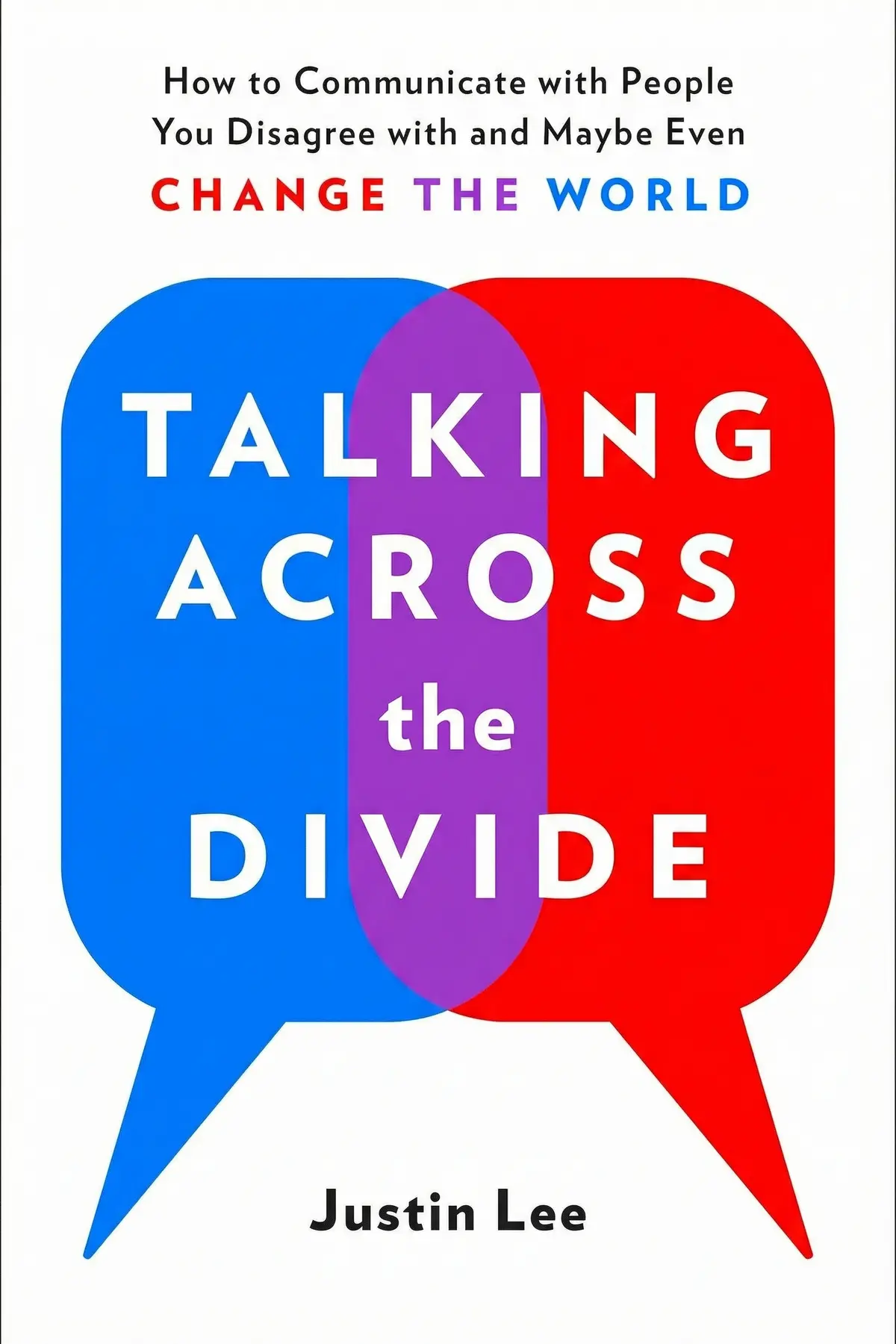
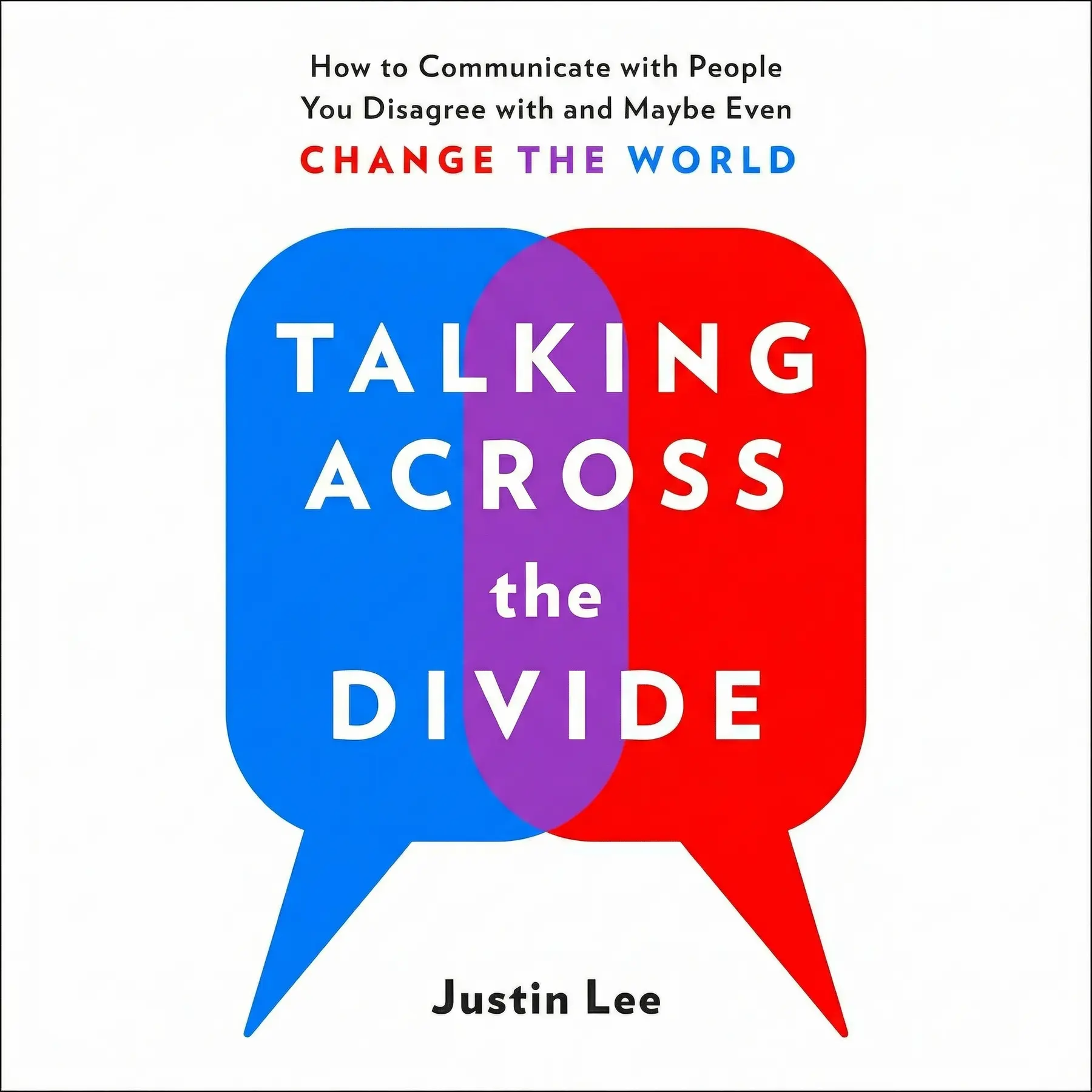
Talking Across the Divide offers a practical framework for engaging in productive conversations with those who hold opposing views, emphasizing empathy, listening, and strategic dialogue to bridge deep social and political gaps.
1 min 41 sec
Have you ever sat across from a friend or family member at a dinner table and felt like you were living on two different planets? One mention of a headline or a social issue, and suddenly the air in the room thickens with tension. It feels as though the world is splitting in two, with each side growing more entrenched, louder, and less willing to listen to a word the other side says. It’s not just your imagination; our modern environment has become a breeding ground for extremism and division. But what if there was a way to break through that wall of hostility? What if you could talk to someone you fundamentally disagree with—not to scream at them, but to actually be heard?
This is the challenge Justin Lee takes on. With decades of experience navigating the intense friction between the LGBT community and conservative Christian groups, Lee has developed a method for finding common ground when it seems none exists. He calls this approach strategic dialogue. It isn’t about compromising your values or winning a debate through clever wordplay. Instead, it is a purposeful, empathetic way of communicating designed to lower defenses and open doors that have been slammed shut by years of conflict.
In the following sections, we are going to explore why we’ve become so polarized and how we can start the journey back toward one another. We will examine the digital silos that shape our thinking and the psychological barriers that make us defensive. Most importantly, we will walk through the specific steps you can take to prepare for a difficult conversation, handle misinformation without being condescending, and suggest small, manageable shifts that can eventually lead to a total change of heart. If you’ve ever felt helpless in the face of a divided world, these insights offer a practical way to start building bridges, one conversation at a time.
2 min 11 sec
Explore how internet algorithms and the human tendency toward like-minded company have created insulated silos that push our personal and political views to the extremes.
2 min 07 sec
Learn why traditional arguments often backfire and how a more deliberate, listening-focused approach can break the cycle of peer pressure and defensiveness.
2 min 03 sec
Success in difficult conversations starts long before you speak; discover the importance of gathering information and practicing reciprocal listening.
2 min 00 sec
Understand how the human need for self-respect can block persuasion and how to use narrative to keep your listener’s dignity intact.
2 min 06 sec
Dismantle the influence of group pressure and the natural desire for comfort by focusing on individual identity and introducing productive discomfort.
1 min 48 sec
Discover how to correct factual errors by sharing your own path to the truth, ensuring the other person feels like a partner in discovery rather than a student being corrected.
1 min 55 sec
Learn to distinguish between a single belief and an entire worldview, and discover the ‘small ask’ technique for making incremental progress.
1 min 54 sec
The journey of talking across a divide is rarely easy, and it is never fast. It requires a level of patience, humility, and emotional discipline that few of us are naturally born with. However, as we have seen, the alternative is a world that continues to fracture until we can no longer function as a society. By moving away from the heat of arguments and toward the light of strategic dialogue, we reclaim our ability to influence the world around us.
We’ve explored how to navigate the digital echo chambers that distort our perception of reality and how to dismantle the barriers of ego, loyalty, and comfort that keep us apart. We’ve learned that the most powerful tool in our arsenal isn’t a clever retort, but a sincere ear. Listening isn’t a sign of weakness; it is the ultimate strategic advantage. When we take the time to prepare, to repeat back what we’ve heard, and to cast our opponents as the heroes of their own journeys, we create the only conditions under which a human heart can truly change.
As you move forward and prepare for your next difficult conversation, remember the importance of staying calm and centered. A practical tip is to keep a notebook handy. Use it to jot down points the other person makes to show you are listening, but also use it to capture your own frustrated thoughts. When you feel your anger rising, write it down instead of shouting it out. This gives you a moment to breathe and choose words that build bridges rather than burn them. You don’t have to change the whole world in a single afternoon. If you can move someone just one inch toward a more empathetic or factual perspective, you have succeeded. Strategic dialogue is about those small, persistent steps. It’s about the belief that even in our most divided moments, the human connection is still possible, and it is always worth the effort.
In an era defined by extreme polarization and digital echo chambers, having a calm conversation with someone on the other side of a political or social issue can feel nearly impossible. Talking Across the Divide addresses this modern crisis by providing a roadmap for meaningful engagement. The book explores why our society has become so fractured and explains the psychological mechanisms that keep us trapped in our own perspectives. Author Justin Lee presents a method called strategic dialogue, which moves beyond traditional arguing and debating. Instead of trying to score points or win a verbal battle, this approach focuses on creating a receptive environment where real change can occur. By understanding the five primary barriers to communication—ego, team loyalty, comfort, misinformation, and worldview protection—readers learn how to dismantle hostility and foster genuine connection. The promise of this book is not just better conversations, but the potential to influence hearts and minds through patience, storytelling, and mutual respect.
Justin Lee is the executive director of Nuance Ministries and a seasoned expert in conflict resolution. He has over 20 years of experience in LGBT Christian advocacy, a field that has given him unique insights into bridging the gaps between intense political and theological divides. He is also the author of the 2012 book Torn: Rescuing the Gospel from the Gays-vs.-Christians Debate.
Listeners find the work excellently composed and value the communication techniques presented, with one listener noting that it offers useful advice for navigating challenging conversations.
Justin Lee's approach to bridge-building is exactly what we need in this hyper-polarized climate. Having appreciated his previous work in 'Torn,' I was eager to see how he would apply those lessons to broader social conflicts beyond just religious circles. The way he breaks down 'strategic dialogue' into manageable phases makes the prospect of talking to an ideological opponent feel less like a battlefield and more like a classroom. His insights into 'ego protection' and 'team loyalty' helped me realize why my previous attempts at persuasion failed so miserably. This isn't just a book about being nice; it’s a tactical manual for anyone who cares about moving the needle of progress through empathy. While the methods require immense patience, the practical suggestions for listening and 'defining your ask' are gold. I have already started using these techniques with my extended family, and the shift in atmosphere is palpable.
Show moreWow, I didn't expect a book about communication to be such an emotional rollercoaster for my own ego. Lee forces you to look in the mirror and realize that you might be the one blocking the dialogue by being too attached to your 'team.' The chapter on 'Worldview Protection' was a lightbulb moment for me. It explained why my brother-in-law gets so defensive even when I’m being perfectly logical. The book provides a clear roadmap for breaking down these walls without compromising your own values. It’s rare to find a guide that is both this practical and this deeply human. I loved the emphasis on self-care, acknowledging that this work is draining and thankless. This should be mandatory reading for anyone in leadership or activism. Truly a masterpiece of grace and clear communication.
Show moreEver wonder why your Facebook arguments never actually result in someone changing their mind? This book explains exactly why that happens and how to actually get through to people. Lee’s focus on 'lowering the barriers' instead of 'winning the argument' is a total game-changer. I found the section on 'Comfort' particularly enlightening, as it explains why people cling to wrong ideas simply because the alternative is too scary to contemplate. The book is well-written, compassionate, and provides practical suggestions that you can start using immediately. It’s not a magic cure-all, and Lee is honest about the fact that some people just aren't ready to talk. But for those who are, this is the best guide I’ve found for making those conversations count. Highly recommend for any bridge-builders out there.
Show moreFinally got around to finishing this after seeing Lee's work with LGBTQ and evangelical groups mentioned online. The book is incredibly well-written and offers a refreshing take on communication skills that goes beyond the standard 'agree to disagree' fluff. I particularly liked the section on overcoming misinformation, as it doesn't just tell you to fact-check people but explains why facts often fail to change minds in the first place. My only real gripe is that some of the strategies feel like they require a very specific, controlled environment to work effectively. It’s a bit harder to apply 'strategic listening' when you're being blindsided by a comment at a loud party. Still, the core message about pursuing truth through connection rather than combat is powerful and timely. It’s a solid resource for anyone tired of the constant shouting matches on social media.
Show moreThe chapter on 'making an ask' changed how I view conflict resolution entirely. Most of the time, we enter arguments wanting the other person to admit they are 100% wrong, which Lee correctly identifies as a recipe for failure. By narrowing the goal to something small and achievable, you actually make progress. I found the five barriers—ego, team loyalty, comfort, misinformation, and worldview—to be a very helpful framework for diagnosing why a conversation went off the rails. To be fair, Lee does lean heavily on his personal niche, which makes some sections feel a bit repetitive if you aren't interested in that specific conflict. However, the overarching communication skills are top-notch and easy to digest. It’s a very readable guide that offers a glimmer of hope in a very dark political era.
Show moreAs someone who tends to shut down during political debates, Lee’s 'strategic dialogue' framework felt like a total lifeline. I’ve always been an 'avoider,' but this book gave me the tools to engage without feeling like I’m going to have a panic attack. The writing style is conversational and warm, making complex psychological concepts like 'ego protection' easy to understand. I especially appreciated the 'debrief' section where you evaluate what went well and what didn't after a tough talk. It turns communication into a skill you can actually practice and improve over time. My only minor complaint is that it can feel a little simplistic when dealing with truly bad-faith actors. But for the 90% of people who are just misinformed or defensive, this is an excellent handbook for building bridges.
Show moreAfter hearing Justin Lee speak on a podcast, I knew I had to pick up this manual for civil discourse. It builds beautifully on the themes of empathy he explored in his previous books, but with a much more tactical edge. The focus on 'strategic listening' is something I’ve already started trying to implement in my workplace. It’s a lot harder than it sounds to let someone speak without mentally preparing your rebuttal! The book is a bit repetitive in the middle, and I wish there were more examples outside of the religious/LGBTQ sphere to show the techniques in different contexts. Nevertheless, the core message is vital. We need more people willing to do the hard work of understanding those they disagree with, and this book provides a very clear map for that journey.
Show moreDoes the world really need another self-help book about talking to our political enemies? While Lee is clearly a compassionate writer, his heavy reliance on storytelling as a primary tool for persuasion feels a bit shaky to those of us who value hard data. The 'five barriers' like ego protection and team loyalty are solid observations, yet I felt the advice was often too generic to solve deep-seated systemic issues. It is well-meaning pabulum in some chapters, though the section on strategic listening is genuinely shrewd. I appreciate the effort, but I’m not sure these anecdotal successes scale to the national level where interests are fundamentally at odds. If you are looking for a gentle introduction to civil discourse, this works, but don't expect a magic wand for our cultural crises. It’s a valiant mission, just perhaps a bit too idealistic for my cynical tastes.
Show moreLook, the truth is that this book is a bit of a mixed bag for me. On one hand, Justin Lee is an incredibly gifted communicator who writes with a level of nuance that is rare these days. On the other hand, the heavy focus on storytelling over data is a hard pill for me to swallow. He argues that stories are more persuasive, and while he’s probably right, I hate that we live in a world where that's the case. The steps for dialogue are clearly outlined, but they feel very 'one-on-one,' making them hard to apply to broader social media interactions. It’s a good book for repairing a relationship with a specific friend or family member. However, I’m skeptical about how much it can really do to heal the larger divide in our country.
Show moreNot what I expected based on the title, which promised a universal toolkit for bridging the modern American divide. Instead, I found a book that draws almost exclusively from the author's specific background in LGBTQ and evangelical Christian mediation. While that work is noble, it doesn't always translate to other high-stakes conflicts where belief systems are diametrically opposed. The advice feels like a collection of nice anecdotes that rely on everyone involved being a 'good actor' in the conversation. Frankly, the techniques for 'strategic dialogue' seem way too time-consuming for the average person to use in daily life. I was hoping for more statistics and less storytelling. If you aren't already part of a religious community, a lot of the examples might feel irrelevant or unrelatable. It just didn't offer the scalable solutions I was looking for in today's political climate.
Show moreYuval Noah Harari
Jacinda Ardern
Pankaj Mishra
James Comey
Anthony Pratkanis

Barack Obama

Masaji Ishikawa
AUDIO SUMMARY AVAILABLE
Get the key ideas from Talking Across the Divide by Justin Lee, plus 5,000+ more titles in English and Thai.







