
14 min 07 sec
Team Topologies: Organizing Business and Technology Teams for Fast Flow
Explore a modern framework for organizational design that prioritizes team health and software delivery speed by aligning technical architectures with human communication patterns and manageable cognitive loads.
Table of Content
1. Introduction
1 min 41 sec
Have you ever wondered why, despite having the best engineers and the latest technology, your software projects still seem to crawl along at a snail’s pace? You might find that the code itself is solid, but the process of getting it from a developer’s brain to a customer’s screen is fraught with delays, handovers, and confusion. We often look for technical solutions to these problems, but the reality is that the root cause usually isn’t in the code. It’s in the people. Specifically, it’s in how those people are grouped together and how they talk to each other.
In the world of modern business, software isn’t just a tool; it’s the very fabric of the organization. Yet, we frequently try to build this high-tech fabric using organizational structures designed for the industrial age—rigid hierarchies and departments that look good on a slide deck but fail miserably in the face of rapid digital change. This is where the concept of team-first thinking comes into play. It suggests that if we want to build better systems, we have to start by building better teams. Not just groups of individuals, but high-performing, long-lived units that are designed around the flow of work rather than the convenience of management.
This exploration will take us through a new way of looking at the workplace. We will move beyond the static boxes of an org chart and into a dynamic world of interactions, cognitive limits, and architectural alignment. We’re going to uncover how to create an environment where software doesn’t just work, but flows. By the end of this journey, you’ll understand why the structure of your team is the most important architectural decision you’ll ever make. Let’s dive into the blueprint for a faster, more effective digital organization.
2. The Mirror Effect of Conway’s Law
2 min 26 sec
Discover why the way your teams communicate internally is the secret architect behind the actual structure and quality of your software systems.
3. Respecting the Limits of Cognitive Load
2 min 33 sec
Learn how to protect your team’s mental energy by narrowing their focus and preventing the burnout that comes from technical overextension.
4. The Four Pillars of Team Structure
2 min 46 sec
Explore the four specific team types designed to simplify responsibilities and ensure that value flows to the customer without getting stuck in red tape.
5. Defining How Teams Connect
3 min 08 sec
Discover the three essential ways teams should interact to maintain speed and clarity while avoiding the trap of endless, unproductive meetings.
6. Conclusion
1 min 33 sec
In the fast-paced world of technology, the companies that win aren’t just the ones with the best code, but the ones with the best flow. We’ve seen that this flow is deeply dependent on understanding the human side of the equation. By respecting Conway’s Law, we align our teams with our desired architecture. By honoring the limits of cognitive load, we protect our most valuable asset—the mental energy of our people. Through the four fundamental team topologies, we provide clear roles and responsibilities, and through defined interaction modes, we ensure that teams can work together without getting in each other’s way.
What this really means for you is that organizational design is a continuous process, not a one-time event. You must be prepared to sense the friction in your systems and react with purpose. Start by identifying your stream-aligned teams and then look for ways to reduce their burden through platforms and enabling teams. Clear the paths, define the boundaries, and treat your team structures with the same rigor you apply to your software.
As you move forward, remember that the goal isn’t just to be ‘faster’ in a chaotic sense, but to be ‘faster’ in a sustainable, predictable way. When you build an organization around these principles, you create a place where innovation can actually happen—not by accident, but by design. Your teams will be more engaged, your software will be more resilient, and your business will be better equipped to handle whatever the digital future holds. Now, go look at your own organization: where is the flow being blocked, and what’s the first boundary you need to redraw?
About this book
What is this book about?
Modern software development often feels like a constant struggle against complexity and slow delivery cycles. This guide introduces a transformative approach to organizing technical teams, focusing on the concept of 'fast flow.' It argues that the way we structure our organizations directly dictates the quality and architecture of the software we produce. By moving away from traditional hierarchical charts and embracing specialized team types and interaction modes, businesses can eliminate bottlenecks and reduce the mental burden on their engineers. The promise is a more resilient, agile, and productive environment where teams have clear ownership and the autonomy to deliver value without constant friction.
Book Information
About the Author
Matthew Skelton
Matthew Skelton is a recognized thought leader in team dynamics, software architecture, and continuous delivery. He has extensively written and consulted on patterns of effective team organization. Manuel Pais is a consultant and thought leader in the DevOps and organizational design space. With a keen focus on team interactions, software delivery, and IT operating models, he has worked with multiple enterprises to optimize their software delivery pipelines.
Ratings & Reviews
Ratings at a glance
What people think
Listeners find the framework for organizational design practical and useful, noting that the categorization of team types and interaction models works well for establishing a shared mental model. Additionally, they appreciate the emphasis on limiting cognitive load and the inclusion of real-life examples; one listener highlighted that it provides a fantastic framework for considering "how we work together and how we might want to evolve." While some feel the content is occasionally repetitive across chapters and could be tighter, they nonetheless agree that the updated second edition is a significant and "must-have" guide for technical leadership.
Top reviews
Rung
Finally got around to reading the second edition of this seminal work on organizational design, and it did not disappoint. The authors have done a marvelous job of codifying how technical teams should interact to minimize friction. To be fair, the real magic lies in the focus on team cognitive load, which is often ignored in standard management textbooks. By defining the four specific team types—especially the concept of stream-aligned teams—it provides a vocabulary that was previously missing in our industry. While some sections feel a bit repetitive if you’re reading cover-to-cover, the depth of the case studies makes up for it. It is essentially a blueprint for modern software delivery in complex environments. I’ve already recommended this to three of my colleagues.
Show moreChanikarn
As someone who has struggled with Conway's Law for years without knowing how to fight back, this book felt like a revelation. It offers a practical framework that transcends vague "agile" advice and gives you actual patterns to implement. Frankly, seeing the distinction between platform and enabling teams helped me realize exactly why our current structure was failing our developers. We have already started using this vocabulary in our leadership meetings to discuss team boundaries. The layout is clean, and the diagrams are incredibly helpful for visualizing complex interaction patterns. I wish I had this five years ago when we started our transformation. It is a rare technical book that actually changes how you view your daily work.
Show morePawinee
Can we talk about how revolutionary the concept of "interaction patterns" is? Most org charts just show who reports to whom, but this book dives into how people actually talk to each other. I've been using the "facilitating" and "X-as-a-Service" models to redefine how my platform team serves the rest of the company. It’s not just theory; it’s a toolkit for survival in a high-scale environment. Look, if you’re tired of constant reorgs that don’t actually solve anything, you need to read this immediately. The second edition adds just enough fresh context and real-world success stories to make it a must-buy for any technical lead. It completely reshaped my perspective on team autonomy.
Show moreAlice
This book is essentially the missing manual for DevOps at scale. It moves past the "everyone does everything" myth and provides a realistic taxonomy for modern engineering organizations. The chapter on complicated subsystem teams was particularly eye-opening for our specialized math-heavy department. In my experience, the second edition is a solid upgrade, though the changes aren't drastic enough to warrant a re-read if you already live and breathe the first one. My only minor gripe is that it can feel a bit dry at times, and the authors tend to hammer home their points more than necessary. Still, it’s a foundational text that every CTO should keep on their shelf for constant reference during growth phases.
Show moreNaomi
Wow, what a difference a shared mental model makes. After distributing copies of this to my management team, our conversations about "who owns what" have become significantly more productive. We finally have a common language to describe the bottlenecks in our delivery pipeline. Truth is, most companies are organized by accident, but Team Topologies shows you how to organize by design. The real-world success stories included in the latest edition provide much-needed proof that these patterns actually work in the wild. It’s dense, yes, but the clarity it brings to organizational chaos is priceless. This is an absolute must-have for anyone scaling a tech company or dealing with legacy silos.
Show moreMason
Not what I expected from a book on org charts, and that’s a good thing. Most books on this topic are incredibly boring, but Skelton and Pais keep it grounded in the realities of software engineering and system architecture. The focus on interaction modes like "collaboration" versus "X-as-a-Service" is a total game changer for how we manage cross-team dependencies. Personally, I found the second edition to be a significant improvement with its updated case studies and refined definitions. It’s a book that invites you to rethink everything you know about management hierarchies. Even if you only implement half of these ideas, your team will be significantly better off for the effort. Highly recommended.
Show moreNit
The chapter on stream-aligned teams alone is worth the price of admission. It provides such a clear path for moving away from functional silos and toward true end-to-end delivery. I gotta say, I was skeptical about another "management framework," but this one feels different because it’s built on technical realities rather than corporate buzzwords. The authors understand that software architecture and team architecture are two sides of the same coin. This isn't just theory; it’s a practical guide that we’ve already used to restructure two of our product lines with great success. If you're leading more than fifty people, this book should be your bible for the next year. It simplifies the complex beautifully.
Show moreLuckana
Picked this up after hearing several colleagues rave about it in our Slack community. The taxonomy of the four team types is definitely the strongest part of the book and provides a great way to analyze current friction points. In my experience, the book could have been about fifty pages shorter without losing any of the core message, but the redundancy does help the concepts stick in your mind. It’s a solid resource that offers a lot of "aha!" moments for anyone dealing with the messiness of modern microservices and team dependencies. I found the updated sections in the second edition to be very helpful for contextualizing the theory with real success stories. A worthwhile investment.
Show moreAstrid
Ever wonder why your teams are constantly burnt out despite hiring more people? This book argues that the problem isn't the talent, but the cognitive load we force onto our engineers through poor structure. By separating teams into clear functions like "enabling" or "platform," we can allow developers to focus on what actually matters. To be fair, the book is a bit wordy and the authors do mention Conway’s Law about a hundred times. However, the underlying logic is so sound that you can easily forgive the repetition. It’s a great way to think about how we work together and how we might want to evolve our structures as we grow. Definitely worth the time for any serious leader.
Show moreSun
The core concepts here are brilliant, but the delivery is exhausting. Skelton and Pais have identified a massive problem in tech—how cognitive load destroys productivity—yet they buried the solution in a text that repeats itself constantly. Not gonna lie, I felt like I was reading the same explanation of "stream-aligned teams" every twenty pages. You could probably get 90% of the value from a long-form blog post or a summary of the four team types. It is an important book for the industry, but it desperately needs a more ruthless editor to trim the fat. If you have the patience for the redundancy, the insights are worth it, but be prepared to skim heavily through the middle chapters.
Show moreReaders also enjoyed
A Year with Peter Drucker: 52 Weeks of Coaching for Leadership Effectiveness
Joseph A. Maciariello



Acting with Power: Why We Are More Powerful Than We Believe
Deborah Gruenfeld
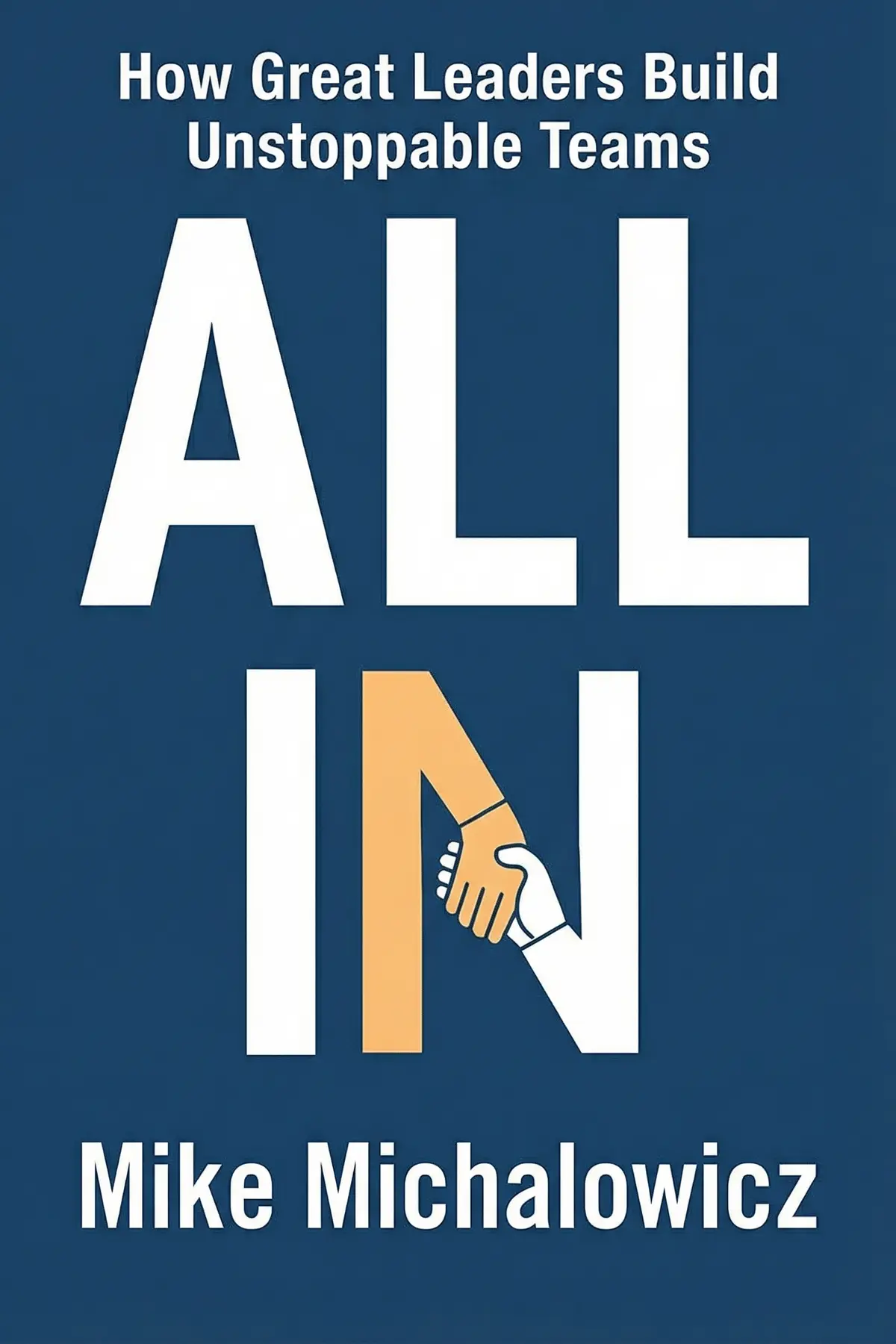
All In: How Great Leaders Build Unstoppable Teams
Mike Michalowicz

7 Powers: The Foundations of Business Strategy
Hamilton Helmer
AUDIO SUMMARY AVAILABLE
Listen to Team Topologies in 15 minutes
Get the key ideas from Team Topologies by Matthew Skelton, plus 5,000+ more titles in English and Thai.
- 5,000+ titles
- Listen as much as you want
- 7-day free trial
- Cancel anytime







