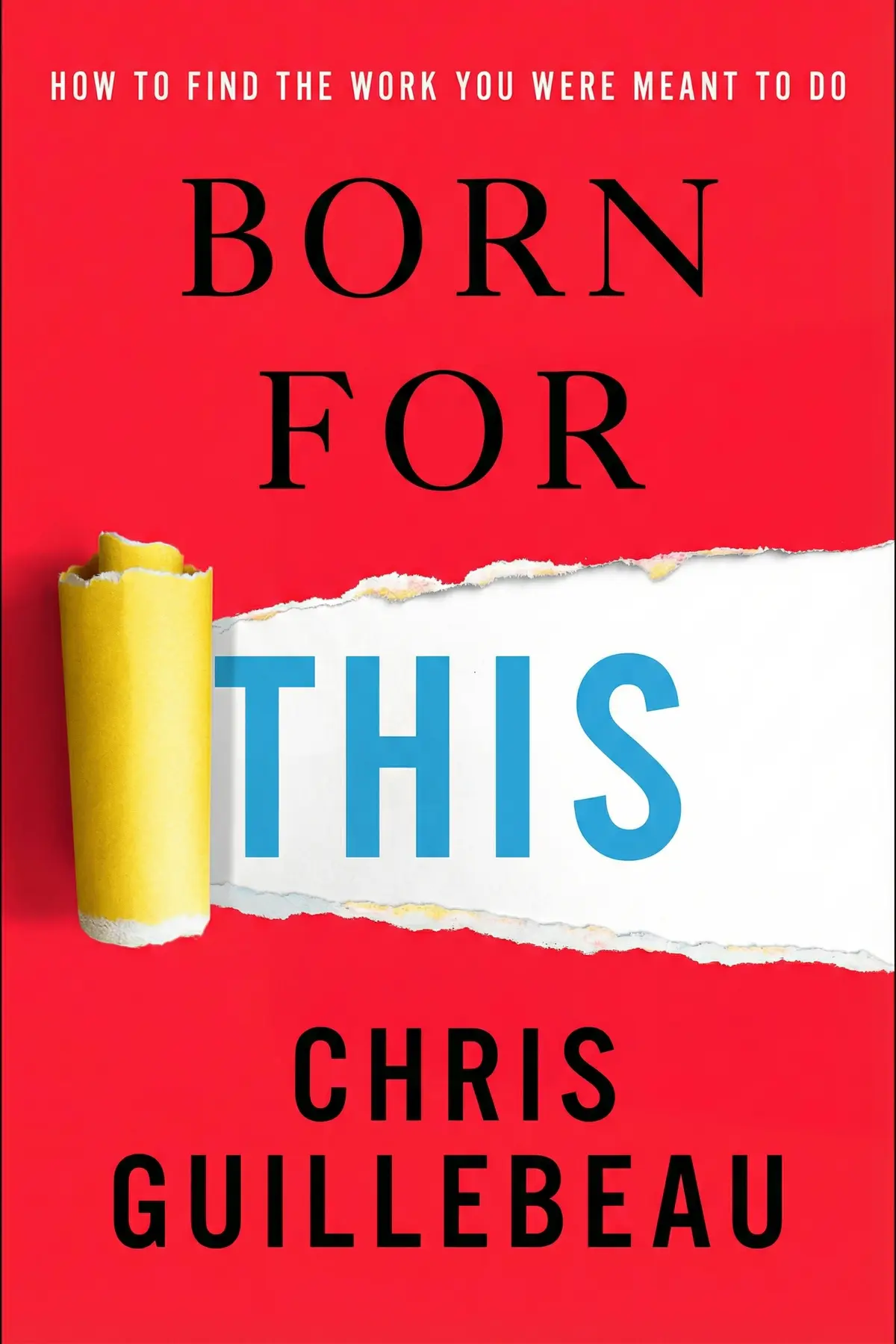
Born For This: How to Find the Work You Were Meant to Do
Chris Guillebeau
Discover how to transform your personal passions and skills into a profitable microbusiness with minimal investment. This guide reveals the secrets to achieving professional freedom through creativity and simple, action-oriented strategies.
2 min 16 sec
Have you ever found yourself sitting at your desk, staring at the clock, and wondering if there is more to life than the standard nine-to-five grind? For many, the dream of walking away from corporate hierarchies and becoming their own boss feels like a distant fantasy, one that requires a lottery win or a massive inheritance to achieve. We are often told that starting a business requires an expensive degree, a mountain of venture capital, and a hundred-page business plan. But what if that simply wasn’t true?
What if the path to a life of freedom and purpose was much shorter and less expensive than you ever imagined? All over the globe, a quiet revolution is taking place. People from all walks of life are breaking free from traditional employment to create what we call microbusinesses. These are typically one-person operations that prioritize independence over scale. This isn’t actually a new concept; if you look back at history, the independent merchants of ancient cities were doing the exact same thing—finding a way to provide for themselves by offering something useful to their community.
Today, technology and global connectivity have made this path more accessible than ever before. You don’t need a massive team or a downtown office. In fact, many of the most successful microbusinesses were started with almost no formal training and very little money. Think about the story of a piano teacher who realized he needed a better way to manage his student schedule. He developed a simple software tool for himself, but then realized others might need it too. Eventually, that tool became a full-time business generating tens of thousands of dollars every month. Or consider two design students who started selling custom maps online on a whim and were able to quit their jobs in less than a year.
These stories aren’t outliers; they are evidence of a shift in how we work. To join this movement, you only need three basic ingredients: a product or service, people willing to pay for it, and a way to accept those payments. The biggest obstacle isn’t the market or the economy; it’s the internal hesitation that keeps us from acting. In this summary, we will explore the roadmap for making that leap, showing you how to turn what you already know into a vehicle for the life you actually want to live. The throughline here is simple: simplicity, value, and action are the keys to firing your boss and finding your own way.
2 min 27 sec
Discover why passion alone isn’t enough to build a business and how to find the intersection of your skills and the world’s needs.
2 min 23 sec
Learn to look past what customers say they want to find the unspoken needs that drive real purchasing decisions.
2 min 24 sec
Shift your focus from product features to human emotions to create marketing that truly connects and converts.
2 min 25 sec
Don’t just release your product; orchestrate a grand opening that builds anticipation and drives immediate action.
2 min 32 sec
Explore why high costs and debt are unnecessary obstacles and how to keep your business profitable from day one.
2 min 30 sec
Discover how to move beyond trading time for money by implementing recurring revenue and value-based pricing.
2 min 50 sec
Decide whether you want to remain a solo operator or build a scalable empire, and learn the simple planning steps to get there.
1 min 58 sec
As we reach the end of this journey, the most important takeaway is that the traditional barriers to entrepreneurship have largely crumbled. We live in a time where individual creativity, resourcefulness, and a genuine desire to help others can be more valuable than a million-dollar bank account or an elite education. The ‘microbusiness revolution’ is about more than just making money; it is about reclaiming your time and your autonomy. It is about building a life where you are the one making the decisions, where your work is an extension of your passions, and where your success is directly tied to the value you provide to the world.
We have explored how to find that ‘sweet spot’ where your skills and interests align with market needs. We have looked at the importance of understanding the deep, often unspoken desires of your customers, and how to communicate your offering in terms of human benefits rather than technical features. We have discussed the mechanics of a successful launch, the importance of staying financially lean, and the various ways you can optimize and scale your income once you have found your footing.
But ultimately, all the strategies and case studies in the world won’t matter if you don’t take action. The most successful entrepreneurs aren’t necessarily the ones with the best ideas; they are the ones who were willing to try, fail, and try again. They kept their plans simple so they wouldn’t get paralyzed by complexity. They ignored the unsolicited advice of those who have never taken a risk themselves. And they focused relentlessly on the goal of creating freedom for themselves while providing value for others.
The path is there, and the costs are lower than ever. You already have the skills and the passion needed to begin. The only thing left to do is to decide that you are ready to fire your boss and start living on your own terms. Whether you want to build a small side hustle that gives you a little extra breathing room or a full-scale business that allows you to travel the world, the principles remain the same. Start small, focus on helping people, and just get going. Your $100 startup is waiting for you to bring it to life.
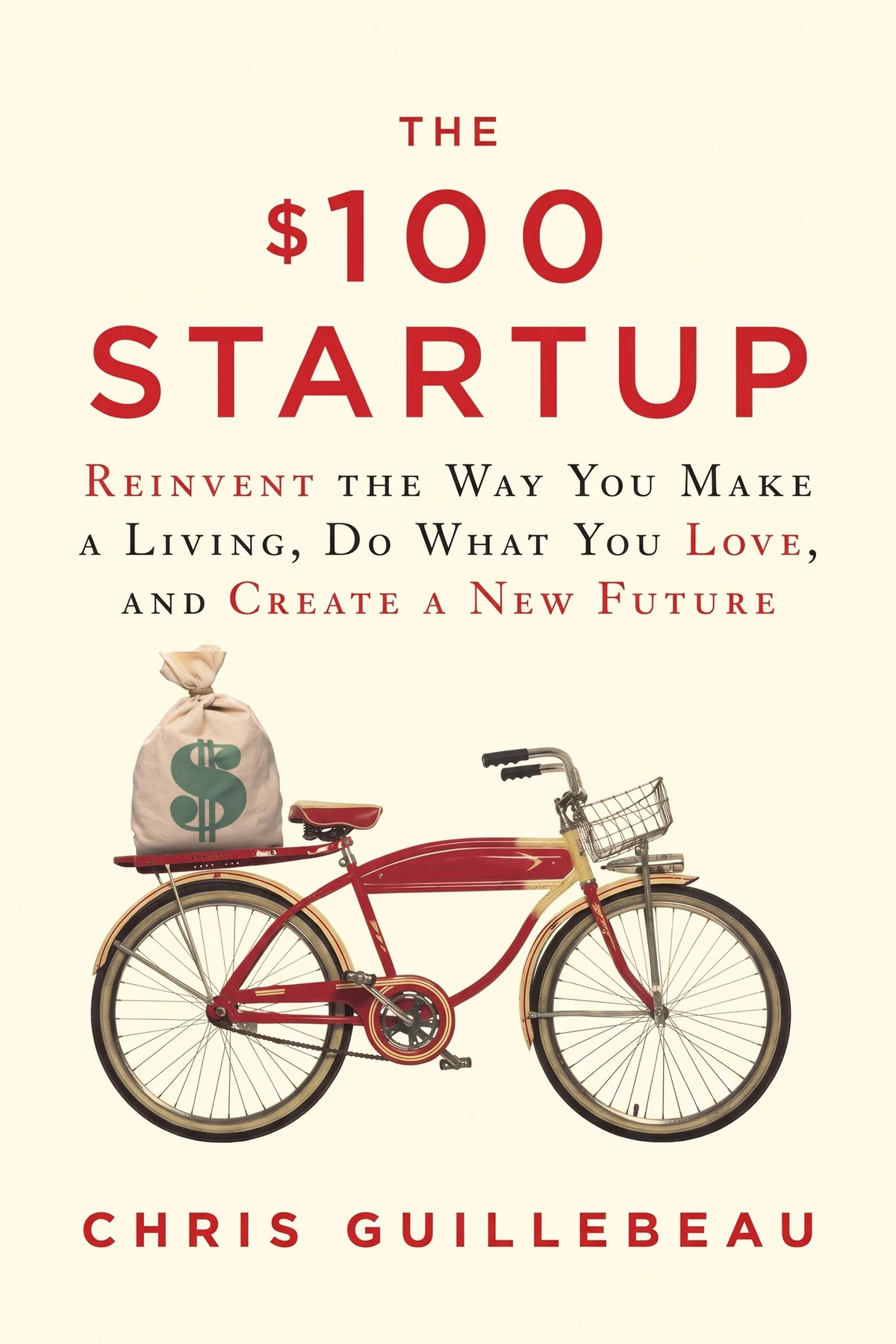
The $100 Startup explores the modern phenomenon of the microbusiness, where individuals use their existing talents to create independent lives. The book argues that you do not need an MBA, a massive bank loan, or a complex business plan to become your own boss. Instead, success comes from finding the intersection between what you enjoy doing and what other people are willing to pay for. Through various real-world case studies, the book demonstrates that most successful small ventures start with very little capital—often less than a hundred dollars. It provides a blueprint for identifying market needs, marketing with a focus on customer benefits, and launching products with a sense of urgency. The ultimate promise of the book is that by focusing on providing value and keeping things simple, anyone can build a business that offers both financial stability and personal fulfillment.
Chris Guillebeau is an entrepreneur and a writer with a passion for travel. He has visited every country in the world, and is dedicated to self-employment and encouraging people to live fulfilling lives. His blog The Art of Non-Conformity has over 300,000 visitors a month.
Chris Guillebeau
Chris Guillebeau
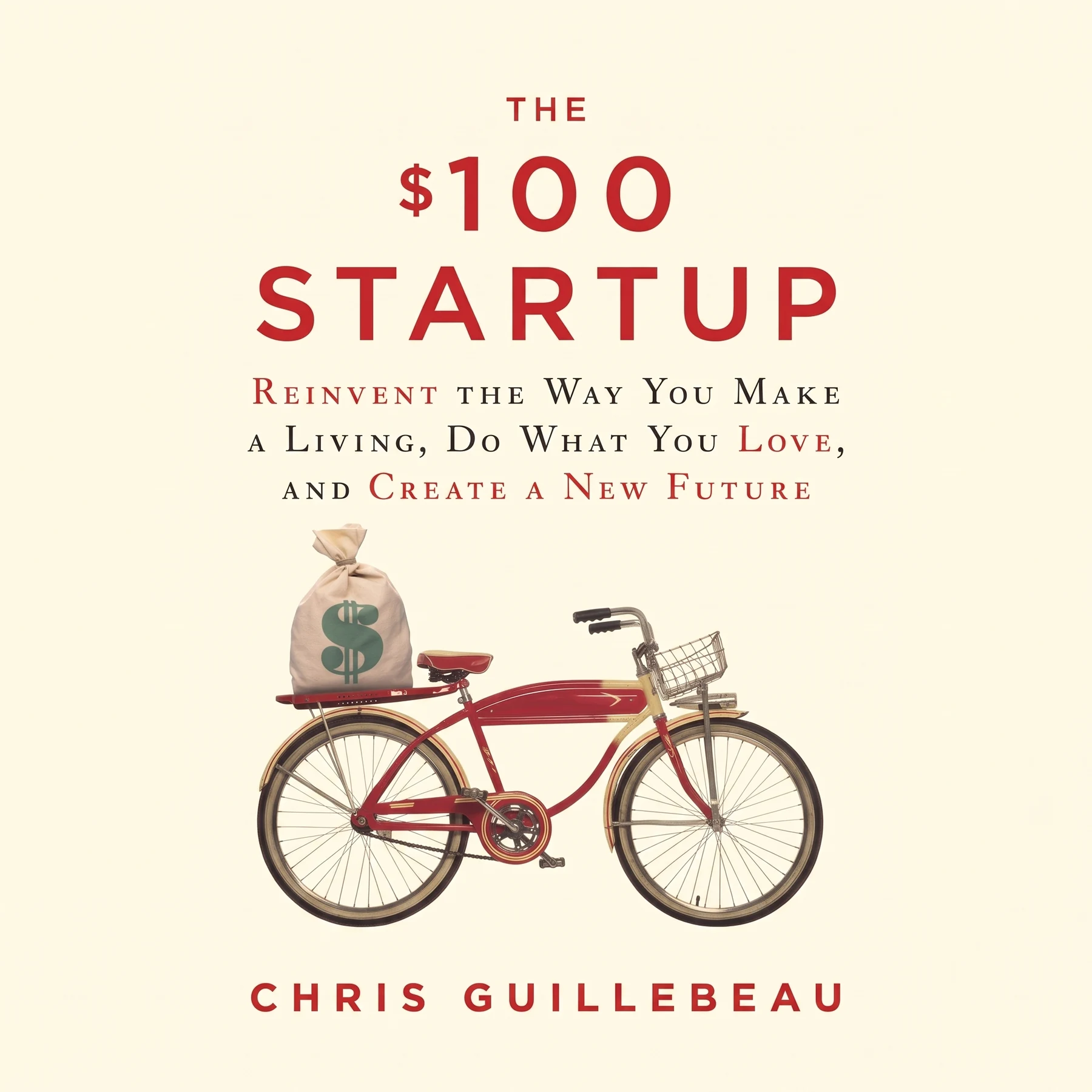
Listeners find this book both accessible and captivating, praising its abundance of actionable tips and thoroughly investigated material. It serves as an all-encompassing guide to entrepreneurship, helping individuals build businesses that fund their ideal lifestyles. Listeners also appreciate the authentic stories included throughout the work, with one listener noting that it encourages them to think outside the box. Furthermore, they find the focus on minimal initial investment highly beneficial and believe the purchase is a great value.
Finally got around to reading Chris Guillebeau’s guide, and frankly, it’s a refreshing change of pace from those dense, academic business manuals. Instead of pushing for complex venture capital models, Chris reminds us that you just need a product, a group of willing customers, and a way to get paid. I loved the emphasis on microbusinesses that earn at least $50k a year without a massive team or overhead. While some might find the 'three elements of a business' a bit too simplistic, the focus on taking action over endless planning is vital for beginners. Truth is, the anecdotes about people turning hobbies into revenue streams are incredibly motivating, even if they sometimes feel a bit like curated highlight reels. It’s a great primer for anyone looking to build a lifestyle-centric career without taking on massive debt or risk. The low-cost approach makes the dream of entrepreneurship feel accessible to everyone.
Show moreWow, what an eye-opener for those of us who overthink every single step of a project. The central thesis is that you don't need a massive, sixty-thousand-dollar education to start making money on your own terms. Personally, I think the 'Give people fish' chapter was brilliant because it challenges that old cliché about teaching a man to fish being the only way to help. Sometimes, people just want the fish, and providing that solution is exactly where a viable business lives! The author’s bias for action is contagious, making you want to go out and test an idea immediately rather than drafting a fifty-page plan. It’s well-researched and full of practical checklists like the thirty-nine-step product launch that actually give you a roadmap. If you're looking for an inspirational kick-start that won't break the bank, this is the one for you. It really helps you realize that your knowledge is valuable.
Show morePicked this up during a career slump and it was exactly the kick in the pants I needed to stop making excuses. I love the distinction between being a 'hustler' versus being a 'charlatan' or a 'martyr.' It really made me rethink how I present my own skills to the world and whether I’m actually providing value or just talking about it. The book is packed with practical advice on how to overdeliver to your customers so that they feel an immediate sense of satisfaction. Not gonna lie, seeing 1,500 examples of people making $50,000 or more a year on their own terms makes the dream feel very attainable. It’s an engaging, well-researched read that doesn't get bogged down in technical jargon or boring financial spreadsheets. If you want to build a business that supports your lifestyle rather than consuming it, start here. It's the best $15 I've spent all year.
Show moreThis book serves as a solid primer for anyone feeling trapped in a traditional 9-to-5 role. In my experience, most business literature focuses way too much on the 'big scale' and not enough on the 'right scale' for the individual. Guillebeau does a fantastic job identifying individuals who built successful ventures from almost nothing, often starting with less than a hundred dollars. However, to be fair, the writing can feel a bit repetitive at times, almost like several blog posts were stitched together without a tight edit. The 'Key Points' summaries at the end of chapters are helpful, but occasionally they feel like they are over-explaining the obvious to a degree that might irk more seasoned professionals. Despite that, the focus on value and helping others is a message that more people need to hear before they launch. It’s well-researched and certainly worth the money for the inspiration alone.
Show moreEver wonder if you're stuck in the corporate grind forever because you lack an MBA or a huge bank account? This book argues—quite convincingly—that you don't need any of that to start something meaningful. I particularly enjoyed the concept of 'Convergence,' which is that sweet spot between what you love doing and what people are actually willing to pay for. It’s a very low-cost approach to entrepreneurship that feels accessible even if you aren't particularly artsy or crafty. I do wish there was more 'how-to' depth regarding the technical side of things, as the case studies are often very brief. Still, as a motivational tool to get your gears turning about a side hustle, it’s worth the price of admission. It encourages you to think outside the box and stop waiting for permission to pursue your own version of freedom. The focus on emotional benefits over product features is a game-changer for marketing.
Show moreThe chapter on the one-page business plan was the highlight for me because it strips away all the unnecessary fluff. Picked this up when I was feeling overwhelmed by the idea of 'starting up,' and it really helped simplify the path forward. The core idea is that you need to focus on what you can add or take away to improve someone’s life, which is a great way to frame marketing. It’s less about persuasion and more about invitation, making the whole process feel much less 'salesy' and more authentic. I did notice that many of the examples are from people in creative or artistic fields, which might not resonate with everyone. However, the general principles of value exchange are universal enough that most readers will find at least a few nuggets of wisdom. It’s a very easy read that you can finish in a weekend while taking notes on your next big move.
Show moreAfter hearing so much buzz about the 'microbusiness' movement, I finally dove into these case studies to see what the fuss was about. The book does a great job of showing that freedom is very closely linked to the value you provide to others. Frankly, the most honest part of the book was seeing the checklists at the end, which actually give you something to do once you finish reading. I appreciated the advice on 'strategic giving' and how to build a loyal following by genuinely trying to improve people’s lives. It’s not a perfect book—some of the 'how-to' sections are a bit thin on actual implementation details—but the mindset shift it provides is worth it. It helps you think outside the box and realize that you don’t need anyone’s permission to start your own journey. Definitely a worthwhile read for aspiring entrepreneurs who want to start small but think big.
Show moreAs someone who has been following the author’s work for a while, my expectations were high, and I found this to be a bit of a mixed bag. Not gonna lie, the stories are wonderful and inspiring, but they often feel a bit surface-level and leave out the behind-the-scenes struggles. You get the 'John Doe quit his job and now he's happy' snippet, but you don't always see the blood, sweat, and tears required to actually scale. I appreciated the one real moment where Chris mentioned spending $10,000 on advertising for a guide, as it felt like a rare glimpse of actual data in a sea of anecdotes. The book is definitely aimed at the absolute beginner who has zero experience with online business. For everyone else, you might find yourself rolling your eyes at how simple some of the advice is, but it's still a quick, pleasant read for a rainy afternoon.
Show moreLook, the advice here is fundamentally sound, but you have to realize it is extremely basic at its core. You get a product, you find people to buy it, and you get paid—that’s essentially the whole book expanded into two hundred pages. Truth is, I found the repetition a bit grating, as the author tends to circle back to the same points over and over again. That said, the case studies are engaging enough, and it’s interesting to see how people have built five-figure businesses from their living rooms. It serves as a comprehensive primer on entrepreneurship for the risk-averse, emphasizing low-cost entries rather than high-stakes gambling. I just wish there were fewer anecdotes about the author’s friends and more in-depth data on the failures that happened along the way. Success stories are great, but we learn just as much from the behind-the-scenes struggles that were mostly left out here.
Show moreI'll be blunt: I expected way more substance than what was actually delivered in these pages. Most of the book feels like 15% substance and 85% anecdotes that are too short to be truly educational. To be fair, I think the author succeeded in creating his own startup by selling this book, which feels a bit too meta for me. I was also pretty irritated by the misattributed quotes—it’s clear some of these were just pulled from unsourced sites without a second thought, like the one attributed to Karl Marx about catching fish. If you can’t get basic research right, it makes me wonder how much of the other content is just surface-level fluff. It’s fine as a very basic introduction if you have literally never thought about business before, but for everyone else, it’s just vapor. Save your money and just read a couple of blog posts on the topic instead.
Show more

Hamilton Helmer
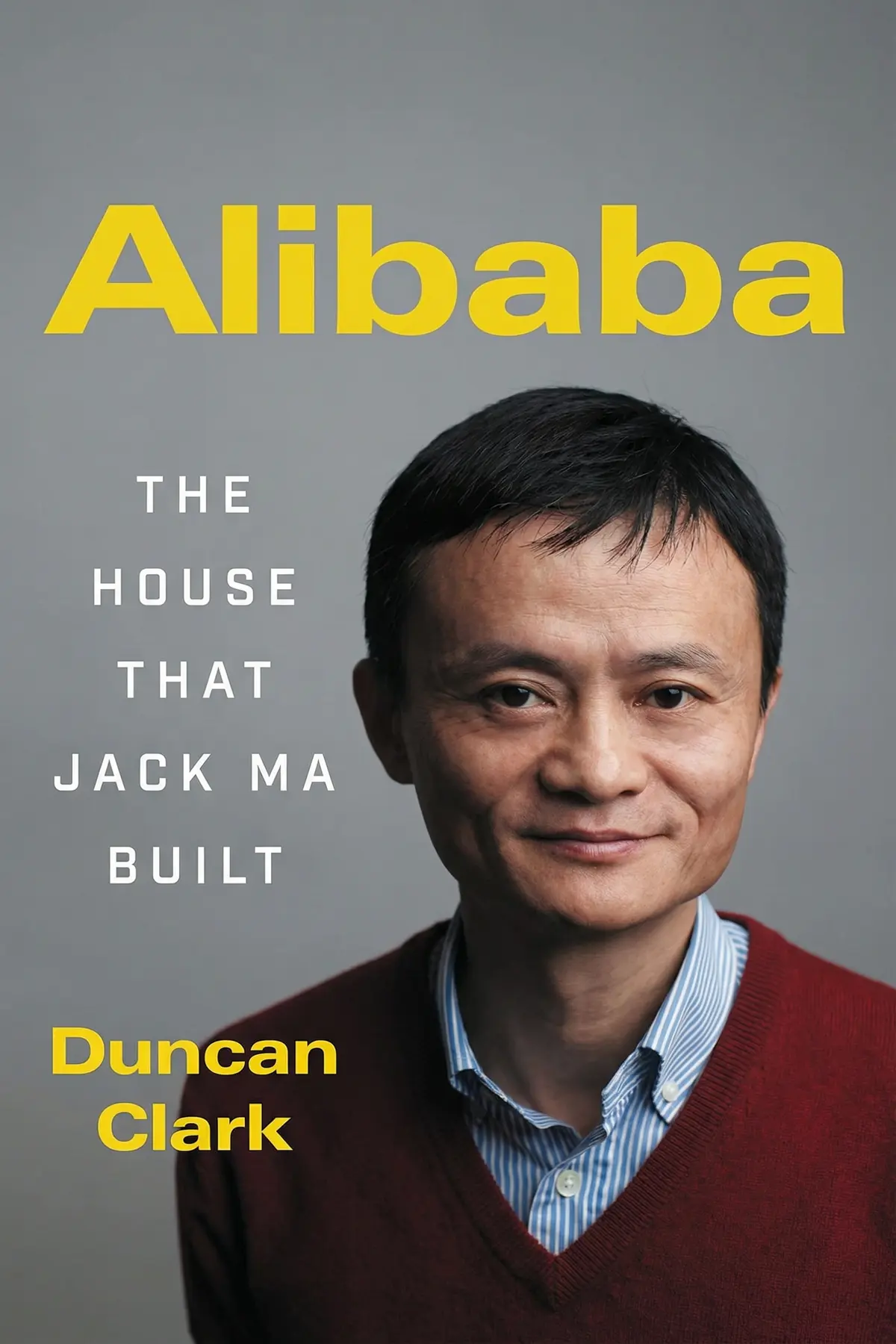
Duncan Clark
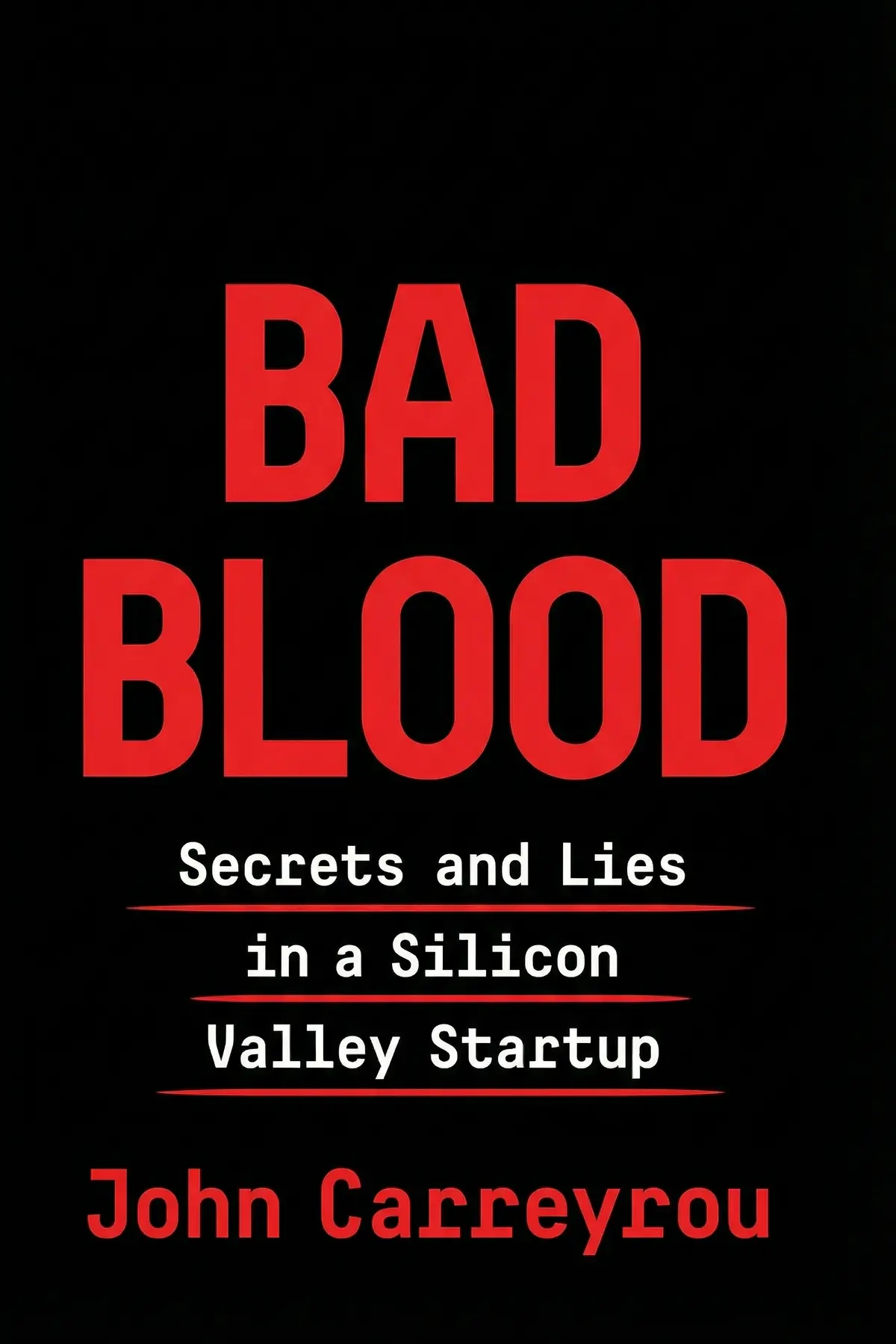
John Carreyrou
AUDIO SUMMARY AVAILABLE
Get the key ideas from The $100 Startup by Chris Guillebeau, plus 5,000+ more titles in English and Thai.