
19 min 20 sec
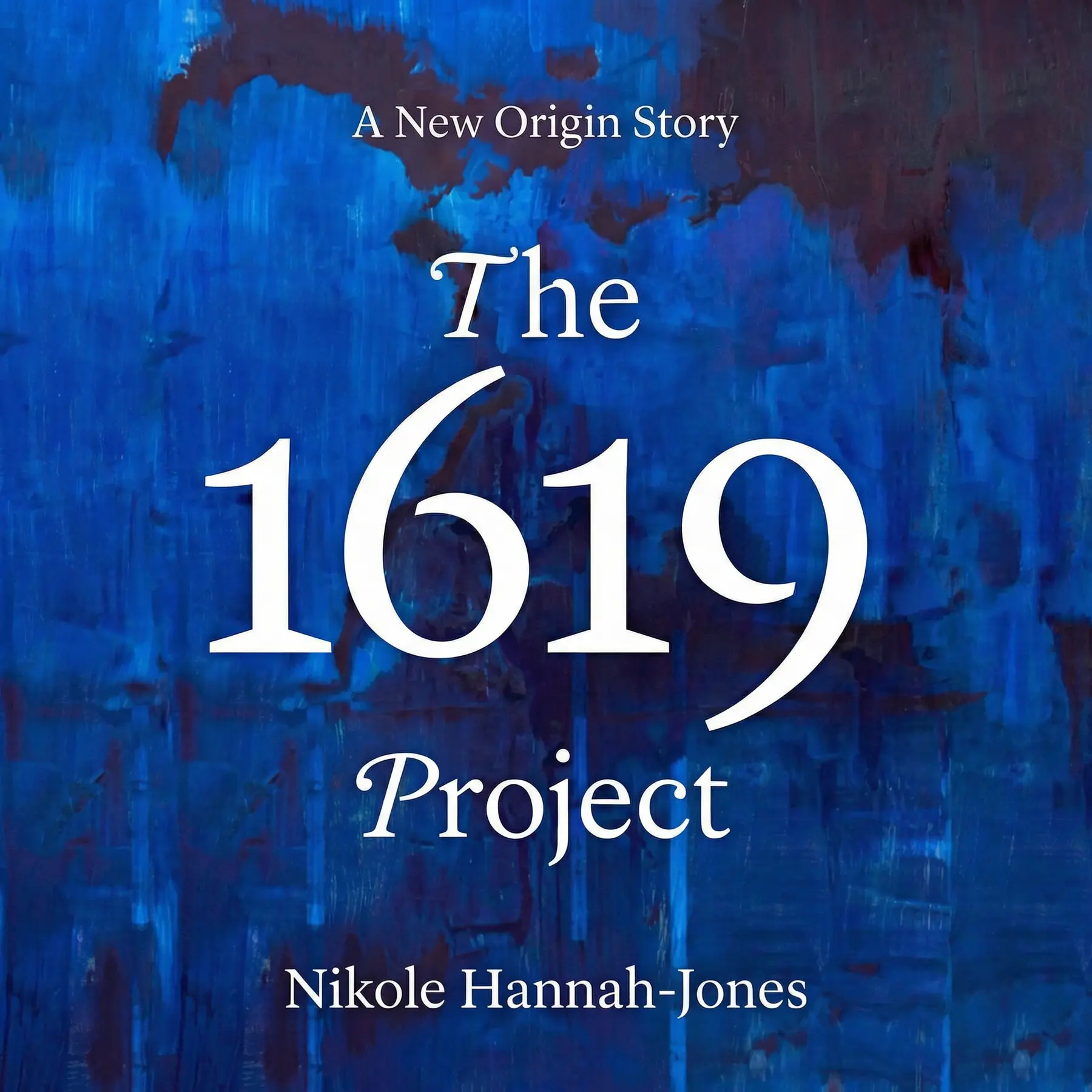
The 1619 Project: A New Origin Story
A profound re-examination of American history that centers the arrival of enslaved Africans in 1619 as the nation's true origin, detailing how slavery shaped every facet of modern society and democracy.
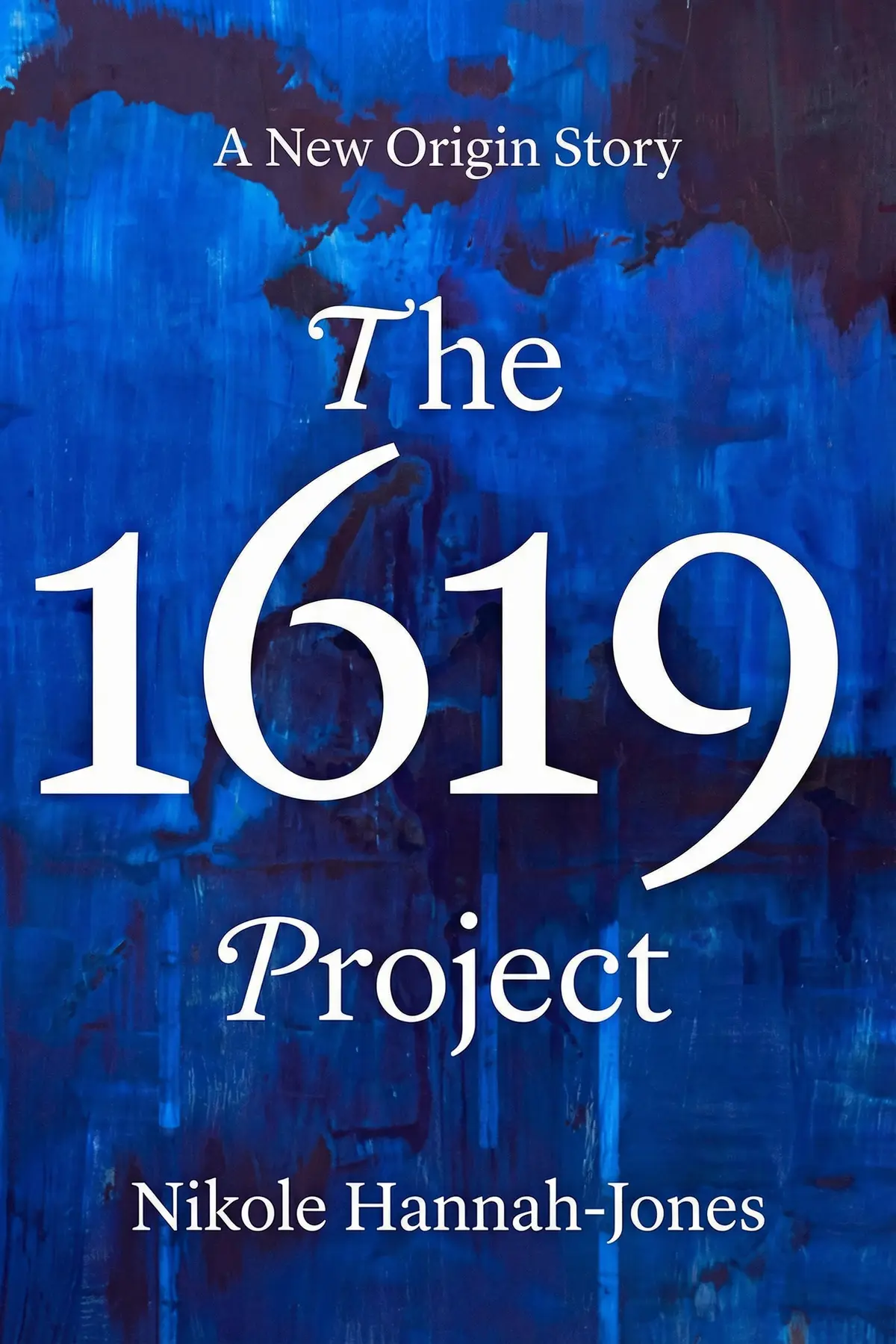
Table of Content
1. Introduction
2 min 01 sec
Imagine the year 1619. In our collective memory of the American story, this year often occupies a shadowy, overlooked corner compared to the bright, revolutionary fires of 1776. But to truly understand the United States—its wealth, its laws, and its ongoing social tensions—we must look toward a British pirate ship named the White Lion as it docks at Point Comfort in the Virginia colony. Onboard were twenty to thirty enslaved people from present-day Angola, survivors of a harrowing journey who were traded to English colonists for supplies. This wasn’t just a minor transaction in a burgeoning colony; it was the catalyst for an institution that would define the American trajectory for centuries.
The throughline of our exploration today is that the United States was built on a foundation of forced labor, and the consequences of that beginning are still vibrating through every institution we interact with today. Yet, the reality of this history is frequently obscured. Consider the startling fact that only a tiny fraction of high school seniors can identify slavery as the central cause of the Civil War, or that many adults are unaware that slavery existed in all thirteen original colonies. This lack of awareness isn’t an accident; it is the result of a national narrative that prefers the story of brave pilgrims seeking religious freedom over the more difficult truth of a country founded on the exploitation of human beings.
In this summary, we are going to look at how this origin story changes everything we thought we knew. We will examine how the prosperity of the United States was essentially subsidized by the people it held in chains, and how even the most celebrated documents of freedom, like the Declaration of Independence, were entangled with the preservation of slavery. More importantly, we’ll see how the very people denied citizenship became the greatest champions of the democratic ideals the nation claimed to hold. By revisiting 1619, we aren’t just looking at the past—we are uncovering the blueprint of the present and identifying the necessary steps to build a more just future.
2. The Weight of Silences and the Power of Personal History
2 min 13 sec
Discover how early experiences with patriotism and school assignments can reveal the deep gaps in how we are taught to perceive our place in the American story.
3. Slavery as the Economic Engine of National Prosperity
1 min 59 sec
Learn how the forced labor of millions created the vast wealth and infrastructure that transformed the United States into a global economic power.
4. The Paradox of Liberty and the False Claims of 1776
2 min 01 sec
Examine the striking hypocrisy of the Founding Fathers who spoke of universal equality while maintaining a brutal system of human bondage.
5. Independence as a Defense of the Slave Trade
1 min 57 sec
Uncover the uncomfortable truth that the American Revolution was motivated in large part by a desire to protect the institution of slavery from British abolition.
6. The Brief Reconstruction and the Sabotage of Equality
1 min 59 sec
Explore the radical potential of the Reconstruction era and how the progress toward an integrated society was deliberately dismantled.
7. Black Americans as the Guardians of True Democracy
1 min 47 sec
See how those most excluded from the American promise became its most fervent defenders, paving the way for the rights of all marginalized groups.
8. The Economic Sabotage of Black Success
1 min 57 sec
Follow the history of how Black prosperity has been met with violence and systemic barriers, preventing the accumulation of intergenerational wealth.
9. The Moral and Practical Case for Reparations
1 min 49 sec
Discover why true equality requires a federal commitment to repairing the economic damage caused by centuries of state-sanctioned discrimination.
10. Conclusion
1 min 37 sec
In the end, the story of The 1619 Project is an invitation to see the United States with fresh, albeit more critical, eyes. We have traced the throughline from that first ship in Virginia to the modern-day wealth gap, seeing how the forced labor of enslaved people was the primary engine of American growth. We’ve looked at the deep ironies of the founding era, where the quest for liberty was often a quest to preserve the right to enslave others. And we’ve celebrated the incredible persistence of Black Americans, who, despite being systematically excluded and impoverished, have remained the most dedicated champions of the nation’s democratic ideals.
What this really means for us today is that we cannot afford to remain ignorant of our true origins. The year 1619 isn’t just a date in a history book; it is a living legacy that explains why our cities look the way they do, why our schools are funded the way they are, and why our economy remains so deeply unequal. But this knowledge isn’t meant to cause despair. Instead, it offers a roadmap. By acknowledging the specific ways the system was designed to exclude, we gain the tools to redesign it for inclusion.
As you reflect on these ideas, consider the image of that flag on the author’s lawn. It represents a country that is still a work in progress—a nation that has the potential to be truly great, but only if it is brave enough to be honest about its past. The call to action here is to support a narrative that includes everyone and to recognize that achieving racial justice is synonymous with achieving economic justice. By accounting for the past and committing to repair, we can finally move out of the shadow of 1619 and into the light of a democracy that truly belongs to us all.
About this book
What is this book about?
The 1619 Project challenges the traditional narrative of the American founding by arguing that the year enslaved Africans first arrived on Virginia's shores is just as significant as 1776. This exploration reveals how the institution of slavery wasn't just a marginal part of the past but was the primary engine of American economic growth and the hidden motivation behind the push for independence. Through various lenses, the book promises to show how the legacy of forced labor is baked into current social systems, from healthcare to housing. It also highlights the central role Black Americans have played as the most consistent defenders of democratic ideals, fighting for rights that eventually expanded to benefit all citizens. Ultimately, it offers a path toward justice by explaining the historical and economic necessity of reparations.
Book Information
About the Author
Nikole Hannah-Jones
Nikole Hannah-Jones is a Pulitzer Prize-winning journalist covering racial injustice for The New York Times Magazine, and creator of the 1619 Project. She has received a MacArthur Foundation Grant as well as a Peabody Award, two George Polk Awards and the 2018 John Chancellor Award for Excellence in Journalism from Columbia University. In 2016, Hannah-Jones founded the Ida B. Wells Society for Investigative Reporting with the aim of supporting the work of investigative reporters of color.
Ratings & Reviews
Ratings at a glance
What people think
Listeners find this book vital for grasping American history and value the depth of its diligent research. The writing style is highly regarded for its exceptional prose, and listeners portray it as a striking eye-opener that disputes standard narratives. They view the content as stimulating and life-altering, with one listener mentioning that it bridges various historical gaps.
Top reviews
Savannah
Finally got around to reading this expansive collection, and I’m genuinely moved by the depth of research displayed in every essay. Hannah-Jones doesn’t just recount dates; she reconstructs our entire understanding of the American identity by centering the arrival of the first enslaved Africans in 1619. Some might call it a radical shift, but to me, it felt like filling in massive holes in the history I was taught in public school. The prose is sharp and uncompromising, yet remarkably accessible for such a heavy subject matter. I particularly appreciated the sections connecting historical policy to modern-day healthcare disparities and the wealth gap. It is a necessary, albeit uncomfortable, mirror for this country to look into. Even if you disagree with every conclusion, the meticulous citations demand that you at least engage with the facts presented. This is a transformative piece of literature that will likely stay with me for years.
Show moreGin
This book should be mandatory reading for every citizen who wants to understand how our systems actually function. I was struck by how the contributors weave together the legacy of slavery with contemporary issues like American music and democratic striving. It’s not just a list of grievances; it’s an exploration of how Black Americans have often been the ones making American democracy real. The writing is elegant, moving, and deeply researched, moving far beyond the simplified narratives of the Founding Fathers we usually get. Truth is, we often prefer the myth, but this book offers something much more substantial and honest. By placing 1619 at the heart of our origin story, the project reveals a more complex, tragic, and ultimately more heroic American journey. I found myself highlighting passages on almost every single page.
Show moreWoravit
Wow, just finished the final chapter and I feel like I finally have a clearer picture of the country I live in. The 1619 Project isn't about hating America; it's about loving it enough to tell the truth about its foundations. I was captivated by the way the authors trace the line from the middle passage to modern-day capitalism and urban planning. The chapter on the "Black is Beautiful" movement and cultural contributions was particularly enlightening for me. Personally, I think the criticism about it being "propaganda" misses the point entirely—this is an academic and journalistic effort to broaden our horizons. It fills in the gaps that my 2000s-era education left wide open. The prose is stunning, often reading like a high-stakes drama rather than a dry history text. Essential reading for anyone who values truth over comfort.
Show moreBun
Ever wonder why certain patterns in American life—like the wealth gap or our healthcare system—seem so intractable? This book provides the historical context that has been missing from our national conversation for far too long. By reframing our origin story around the arrival of enslaved people, Hannah-Jones offers a lens that makes the present much clearer. The research is exhaustive and the writing is some of the best non-fiction prose I’ve encountered in years. It’s a heavy read, both physically and emotionally, but it’s vital for anyone who cares about justice. I was particularly moved by the sections on Black striving and the unyielding spirit of those who fought for freedom. Not gonna lie, it made me rethink a lot of what I thought I knew about the Founding Fathers. This is a brave and necessary contribution to our national library.
Show moreAraya
A stunning eye-opener that provides a much-needed correction to the sanitized history many of us grew up with. The 1619 Project isn't just a book; it's an invitation to atone for our past by acknowledging the full truth of it. I was impressed by the breadth of topics covered, from the construction of the U.S. Constitution to the origins of American popular music. Each essay is meticulously researched and written with a sense of urgency that is hard to ignore. The book effectively dismantles the idea that Black history is separate from American history—they are one and the same. Frankly, I found the arguments about how Black Americans have fought to make the Constitution's promises real to be deeply patriotic. It’s a transformative reading experience that fills in the silences of our traditional national narrative.
Show moreMia
Picked this up after hearing all the controversy, and I honestly don't see why people are so afraid of it. The 1619 Project is a brilliant, multifaceted look at how the institution of slavery shaped every aspect of our current society. The writing is top-notch, with an emotional resonance that stays with you long after you close the book. I learned so much about the early economy of the South and how it influenced modern management styles. It’s a dense read, but the authors do a great job of making complex historical concepts feel personal and relevant. The focus on the contributions of Black Americans is particularly inspiring, showing a level of resilience that is truly foundational to the country. If you want a history that is as honest as it is well-researched, this is it. Five stars for courage and clarity.
Show moreAna
The way Nikole Hannah-Jones and her collaborators have reframed the American story is nothing short of masterful. This collection is essential for understanding the structural roots of contemporary inequality, providing a roadmap through the centuries of our history. The prose is elegant and the research is so deep that it feels like you're discovering the country for the first time. I appreciated how the book addresses its critics while remaining steadfast in its central premise: that 1619 is as vital to our identity as 1776. It’s a thought-provoking journey that demands the reader engage with the darker aspects of our heritage without losing sight of the hope for a better future. The final essay on reparations is a particularly powerful call to action that rounds out the project perfectly. This is a landmark work that will be cited for decades to come.
Show moreWipada
The audiobook experience for this project is absolutely stellar, featuring a full cast of authors that brings a unique weight to each essay. Hearing Nikole Hannah-Jones and other contributors read their own words adds an emotional layer that the print version might miss. I found the 18-hour runtime to be quite a commitment, but the content is so thought-provoking that the time flew by. While some arguments felt slightly repetitive across different essays, the central theme remained powerful and convicting. The book does a great job of showing how the struggle for Black freedom actually strengthened the democratic ideals for everyone. My only minor gripe is that certain chapters felt more like opinion pieces than strictly historical analysis, but the overall impact is undeniable. It’s a beautifully produced work that challenges you to rethink the American "myth" from the ground up.
Show moreNikolai
While the prose is undeniably beautiful and the research is extensive, this book is best approached as a series of arguments rather than a chronological history. It succeeds brilliantly at showing how slavery wasn't just a "stain" on the nation, but the very fabric it was woven from. I particularly enjoyed the essays on music and the physical layout of our cities, which were eye-opening. However, at times, the tone feels a bit more polemical than objective, which might alienate some readers who are on the fence. Look, the goal here is to shift the frame of reference, and in that regard, it is a total success. It challenges the "Daughters of the Confederacy" style of history that dominated textbooks for decades. It's a dense, challenging work that requires focus, but the payoff is a much deeper understanding of the American experiment.
Show moreTanawan
As someone who appreciates the importance of acknowledging the brutality of slavery, I found parts of this collection incredibly insightful but others a bit overreaching. The research into the economic foundations of the colonies is undeniably strong and meticulously documented. However, I struggled with the narrative that the Revolutionary War was primarily fought to protect the institution of slavery. It felt like a simplification of a very messy, multi-faceted conflict involving deeply divided states. To be fair, the writing style is excellent, and the diverse voices included bring a lot of richness to the table. I just wish there was a bit more room for the nuances regarding the anti-slavery sentiments of early patriots like John Adams. It’s an eye-opener for sure, but I would suggest reading it alongside other historical texts to get a more rounded perspective.
Show moreReaders also enjoyed
A Splendid Exchange: How Trade Shaped the World
William J. Bernstein
A Spy Among Friends: Philby and the Great Betrayal
Ben Macintyre
1491: New Revelations of the Americas Before Columbus
Charles C. Mann
A Year in the Life of William Shakespeare: 1599
James Shapiro
AUDIO SUMMARY AVAILABLE
Listen to The 1619 Project in 15 minutes
Get the key ideas from The 1619 Project by Nikole Hannah-Jones, plus 5,000+ more titles in English and Thai.
- 5,000+ titles
- Listen as much as you want
- 7-day free trial
- Cancel anytime







