

15 min 12 sec
The ADHD Advantage: What you Thought Was a Diagnosis May Be Your Greatest Strength
By Dale Archer
The ADHD Advantage challenges the traditional view of ADHD as a disorder, revealing how traits like restlessness and impulsivity can be transformed into powerful assets for success in business, sports, and life.
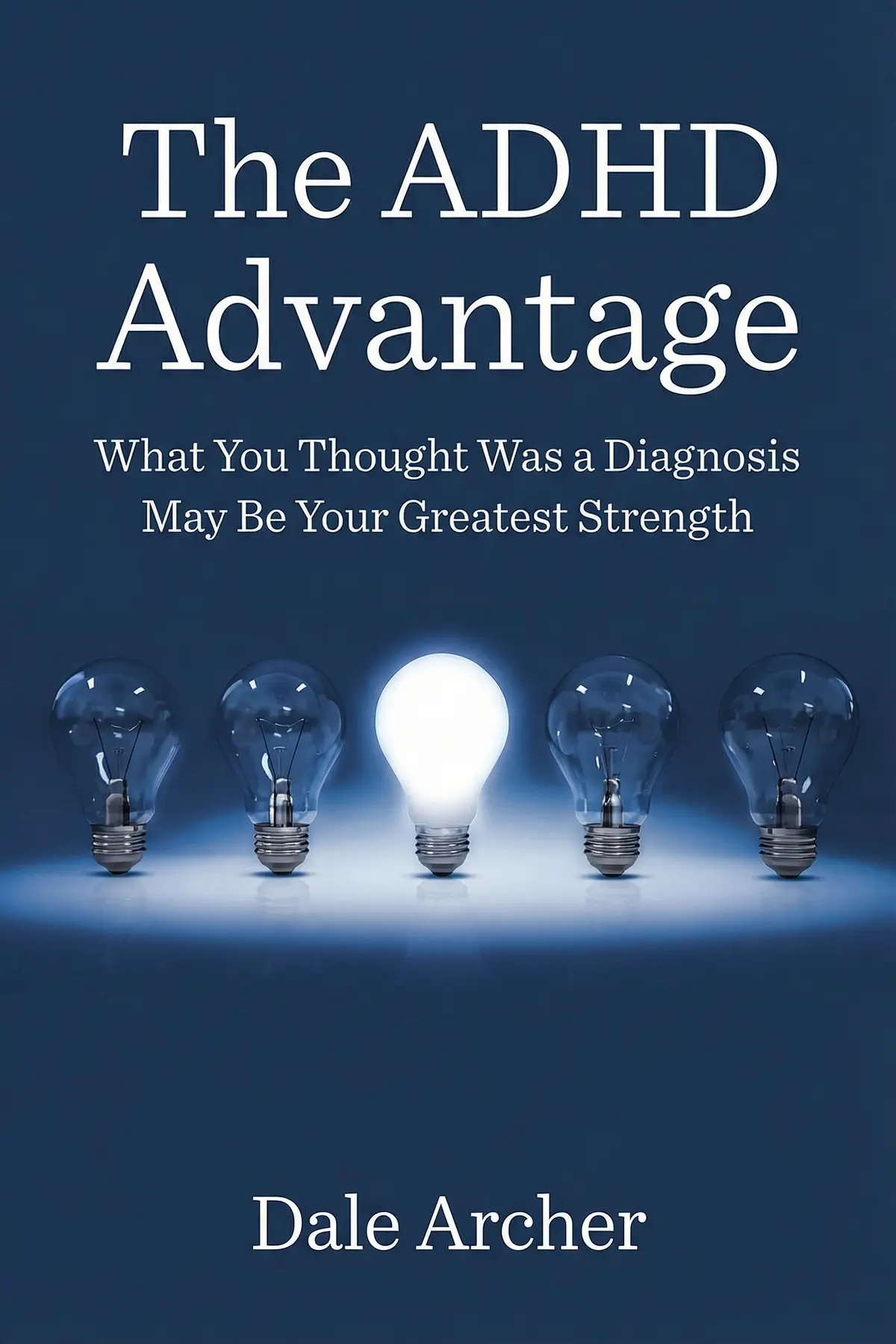
Table of Content
1. Introduction
1 min 40 sec
For a long time, receiving a diagnosis of Attention Deficit Hyperactivity Disorder, or ADHD, has been treated like a life sentence of struggle. Since the mid-nineties, the number of people labeled with this condition has exploded, especially in the United States. We have been conditioned to see the traits associated with ADHD—distractibility, restlessness, and a lack of focus—as obstacles to a ‘normal’ life. But what if we’ve been looking at it all wrong? What if the very things we try to fix with medication are actually the keys to a more creative, resilient, and successful existence?
In the following pages, we are going to deconstruct the common myths surrounding ADHD. We’ll explore why the current diagnostic system is failing so many people and why we are seeing a massive wave of overdiagnosis. More importantly, we’re going to look at the ‘advantage’ hidden within the symptoms. From the high-stakes world of professional sports to the cutthroat environment of global entrepreneurship, the ADHD brain is often the secret engine behind the world’s highest achievers.
By the end of this journey, you’ll understand how ADHD helped our ancestors survive in the wild, why a busy mind is a natural gift for multitasking, and how changing the environment—rather than changing the person—can unlock a level of potential that most people never reach. It’s time to move past the stigma and see ADHD for what it truly is: a different, and often superior, way of interacting with the world. Let’s dive in and see how a supposed deficit can actually be your greatest asset.
2. The Crisis of Overdiagnosis
2 min 33 sec
Explore why the current medical system frequently mislabels children and the systemic flaws that lead to a staggering number of incorrect ADHD diagnoses across America.
3. The Hidden Risks of the Medication-First Approach
2 min 08 sec
Investigate the dangerous side effects of ADHD drugs and the powerful economic forces that favor pills over lifestyle and environmental changes.
4. A New Blueprint for Learning and Focus
2 min 28 sec
Discover practical, non-medical strategies to help ADHD brains thrive, from the power of physical movement to unconventional classroom roles.
5. Reframing Symptoms as Competitive Superpowers
2 min 35 sec
Learn how common ADHD traits like distractibility and forgetfulness can be reinterpreted as high-level skills like multitasking and emotional resilience.
6. Success Stories from the Front Lines
2 min 15 sec
Examine the lives of icons like Richard Branson and elite athletes to see how ADHD traits drive world-class performance in business and sports.
7. Conclusion
1 min 33 sec
As we wrap up our exploration of The ADHD Advantage, the central takeaway is a call for a profound shift in perspective. ADHD should no longer be viewed as a medical epidemic or a reason to immediately reach for a prescription bottle. Instead, we must recognize it as a unique neurological profile that comes with its own set of remarkable strengths. We’ve seen how the current system often fails people by relying on subjective, black-and-white diagnoses, and we’ve looked at the very real dangers of over-medicating children without exploring environmental alternatives.
By reframing symptoms like distractibility as multitasking, and impulsivity as fearless innovation, we can help individuals with ADHD find their place in the world. Whether it’s through exercise, changing the way we structure our work, or simply acknowledging the resilience that comes from a fast-moving mind, there are countless ways to turn these traits into assets.
If you or your child are navigating life with ADHD, remember that the goal isn’t to conform to a standard definition of ‘normal.’ The goal is to create a life that honors your brain’s natural rhythm. Try breaking tasks into smaller chunks, embrace movement as a tool for focus, and don’t be afraid to seek out high-energy environments where your quick thinking is a benefit. When you stop seeing ADHD as a diagnosis and start seeing it as a strength, you open the door to a level of success and fulfillment you may have never thought possible. Get out there and make the most of your advantage.
About this book
What is this book about?
The ADHD Advantage explores the provocative idea that what we currently label as a mental health crisis is actually a misunderstanding of a unique neurological toolkit. For decades, the rise in ADHD diagnoses has led to a culture of stigma and heavy medication. However, psychiatrist Dale Archer argues that the very symptoms society tries to suppress—such as high energy, lateral thinking, and an ability to thrive in chaos—are the same qualities that drive world-class entrepreneurs and elite athletes. This book provides a roadmap for reframing the ADHD experience. It examines the flaws in the current diagnostic system, the dangers of over-medication, and the life-changing potential of adjusting our environments to fit the brain, rather than forcing the brain to fit a rigid social mold. Readers will learn how to harness their natural intensity, improve their resilience, and leverage their distinct way of processing the world to achieve their full potential.
Book Information
About the Author
Dale Archer
Dale Archer is a medical doctor, a board-certified psychiatrist, and a Distinguished Fellow of the American Psychiatric Association. Over his twenty-five-year career in private practice, he has become a leading voice in the field, eventually being appointed by the Governor of Louisiana to the Medical Advisory Board. He is also the author of the New York Times bestseller Better Than Normal: How What Makes You Different Can Make You Exceptional.
Ratings & Reviews
Ratings at a glance
What people think
Listeners find the book both illuminating and motivating, as one listener points out that it provided techniques for succeeding throughout college. They value the guidance on how to utilize ADHD as an asset, and one listener highlights that the work delivers a thorough intergenerational history.
Top reviews
Marco
Wow. This book offered an eye-opening intergenerational history of the ADHD trait that really helped me understand my family’s quirks. Archer argues that these genes survived for a reason, positioning us as the explorers and innovators of history. It’s incredibly enlightening to see how my hyperactivity could be harnessed as a drive for passion rather than a disruption. Personally, I’ve always felt like an octagon trying to fit into a square system, and this book validated that feeling completely. The writing is accessible and fast-paced, which is perfect for someone with my attention span. I’m walking away with a new outlook on my career path and a sense of pride in my brain’s unique wiring.
Show moreMia
Picked this up during a low point in my career, and it was exactly the boost I needed. The way Archer describes 'bingo-brain' and the capacity for hyperfocus resonated with me on a deeply personal level. For the first time, I didn't feel like a failure for wanting to change directions every few months. Instead, I saw myself as someone with an adventurous spirit who just needs the right environment to flourish. This book is a complete guide to understanding how our brains have evolved to handle high-stakes situations. It’s empowering to see our 'disadvantages' reframed as the very things that make us capable of changing the world.
Show moreSamroeng
Finally got around to reading this during my sophomore year, and I wish I’d found it sooner. Dr. Archer provides a refreshing perspective that reframes my constant restlessness as a potential asset rather than a disability. Instead of just focusing on what’s wrong, the author highlights strategies for leveraging ADHD traits to succeed in high-pressure environments like college. Truth is, seeing my 'bingo-brain' described as a catalyst for multitasking and creativity gave me a much-needed confidence boost. While some of the advice felt geared toward high-earning entrepreneurs, the general tips for non-medicated management are solid. It’s not a magic cure, but it’s definitely empowering for anyone tired of being told they’re broken.
Show moreMilk
Ever wonder why you thrive in chaos but fall apart during a 9-to-5 desk job? Archer explains this perfectly by illustrating how the ADHD brain is built for high-energy, non-linear thinking. I found the sections on entrepreneurship particularly fascinating, as they explain why so many of us end up starting our own businesses. The book provides a great toolkit for identifying your strengths, even if the 'success stories' get a bit repetitive after a while. I did feel that he glossed over the emotional toll that executive dysfunction can take on a person’s self-esteem. Still, it’s a great read if you need strategies to help you navigate a world designed for neurotypicals.
Show moreAir
As someone who has spent years in the classroom, I found Archer’s insights into the education system to be spot on. We are over-medicating children simply because they don’t fit into a rigid, outdated learning model. The non-pharmacological strategies suggested here—like short learning increments and physical activity breaks—are things every teacher should consider. I appreciate that he views ADHD as a continuum rather than a binary diagnosis. My only real gripe is that the book leans heavily on male-centric examples of success. I would have loved to see more diverse stories of women who have leveraged their ADHD in different ways.
Show moreMaksim
Look, I get the skepticism surrounding the 'ADHD Advantage' idea, but this book really helped me stop hating my brain. It’s more of a mindset shift than a clinical manual, and for some, that’s exactly what is missing. The truth is that medication is only one piece of the puzzle; understanding your own temperament is just as vital. I enjoyed the focus on resilience and the idea that our 'failures' are actually just steps toward finding our niche. While I agree that the author relies too much on celebrity anecdotes, the core message of self-acceptance is incredibly powerful. It’s a quick, engaging read that offers a lot of hope.
Show moreMalee
The chapter on relationships really gave me pause, especially the advice about pairing up with more 'grounded' partners. While I don't agree with every generalization Archer makes about ADHD/OCD pairings, the discussion on communication was very helpful. He emphasizes that being 'the fun one' isn't enough; you have to find ways to balance your energy with your partner's needs. I also appreciated the intergenerational look at how these traits passed down through my own family tree. My father was the classic 'undiagnosed entrepreneur,' and reading this helped me forgive some of the chaos of my childhood. It’s an insightful look at the human side of the diagnosis.
Show moreJai
After hearing a lot of buzz about this 'superpower' narrative, I decided to see if the hype was real. To be honest, it’s a bit of a mixed bag for me. On one hand, the emphasis on exercise and multimodal learning is fantastic and something I’ve already started implementing. On the other hand, the claim that ADHD isn't a disorder but just a 'trait' feels like it minimizes the very real pain of those with severe symptoms. Archer’s 1-10 scale is an interesting concept, but it lacks the scientific depth I was hoping for from a psychiatrist. It’s a decent starting point for parents, but please take the anti-medication stance with a grain of salt.
Show moreStella
Not what I expected from a medical professional, frankly. While I appreciate the attempt to destigmatize the condition, the book relies far too heavily on anecdotal stories about millionaires and celebrities. It’s easy to say ADHD is a 'superpower' when you have the resources to hire personal assistants to handle the boring details of life. For the average person struggling to pay bills on time, being told they’re 'resilient' because they fail often feels more insulting than inspiring. I also found the 'ADHD scale' of 1-10 to be overly simplistic and potentially dangerous for those who actually need medication. It’s a nice pep talk for the wealthy, but lacks practical substance for the rest of us.
Show moreDylan
This book is a mess of outdated stereotypes and questionable medical advice. To be fair, I wanted to like the positive spin, but the author’s blatant bias against medication is irresponsible. Archer suggests that anyone scoring low on his arbitrary scale shouldn't be medicated, which ignores the lived reality of many struggling adults. Furthermore, the gendered language is impossible to ignore; he describes men as 'adventurous' while labeling women with similar traits as 'nosy' or 'perfectionistic.' It’s a very narrow view of ADHD that focuses almost exclusively on the hyperactive male entrepreneur. If you don't fit that specific mold, you won't find much here except frustration and a sense of being overlooked.
Show moreReaders also enjoyed

Alcoholics Anonymous
Alcoholics Anonymous World Services
A Liberated Mind: How to Pivot Toward What Matters
Steven C. Hayes


ADHD an A-Z: Figuring It Out Step by Step
Leanne Maskell
AUDIO SUMMARY AVAILABLE
Listen to The ADHD Advantage in 15 minutes
Get the key ideas from The ADHD Advantage by Dale Archer, plus 5,000+ more titles in English and Thai.
- 5,000+ titles
- Listen as much as you want
- 7-day free trial
- Cancel anytime







