
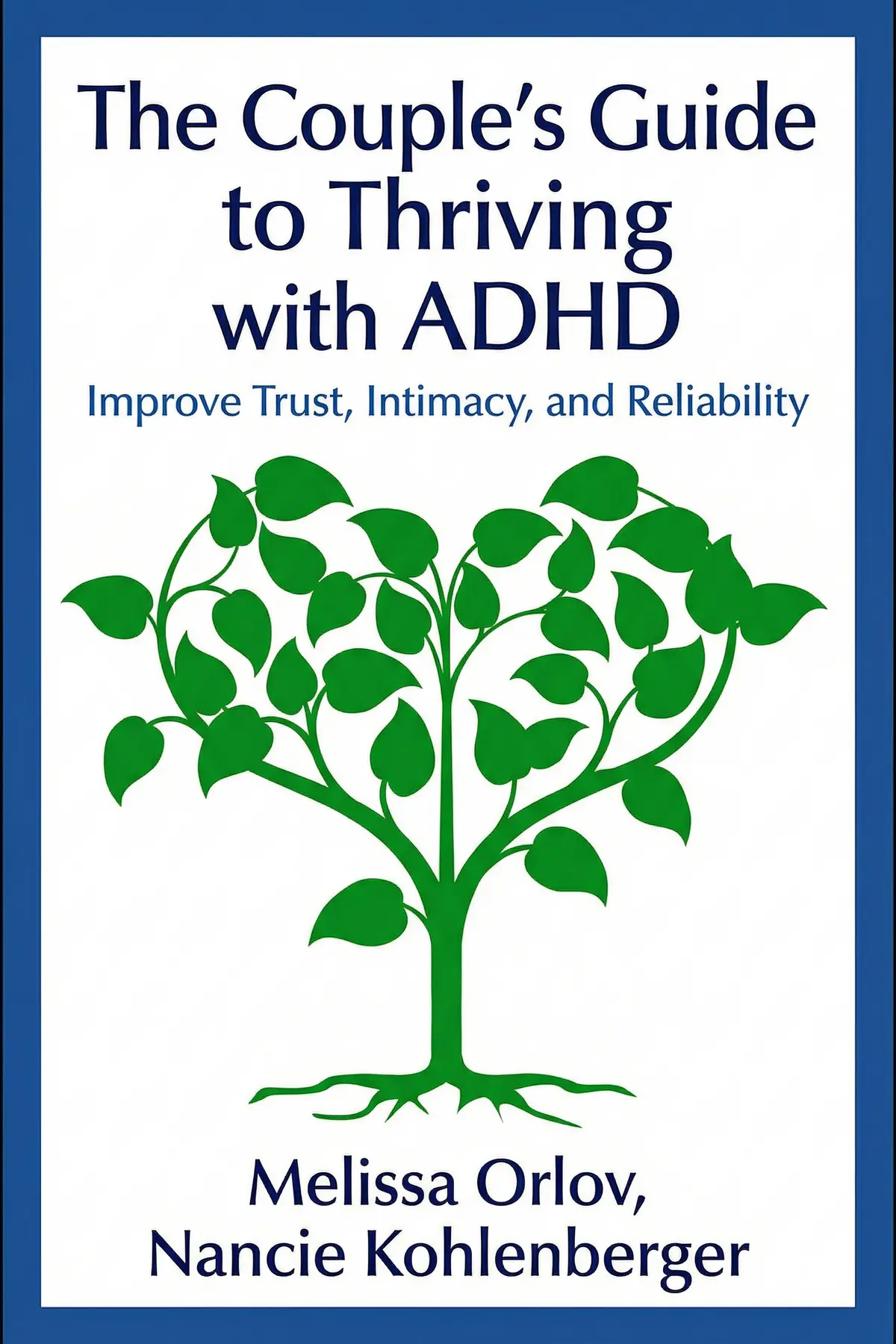
The Couple’s Guide to Thriving with ADHD
Melissa Orlov
Discover how to revitalize your relationship by understanding the unique dynamics of ADHD. This summary provides a compassionate six-step framework to move past resentment and rebuild a lasting, loving partnership.
1 min 27 sec
It starts almost imperceptibly. A forgotten grocery item here, a neglected chore there, or perhaps a conversation where one person seems a million miles away. But over time, these small moments of disconnect can grow into a chasm of misunderstanding. When ADHD enters a marriage—whether it has been formally diagnosed or remains a quiet, disruptive force—the foundation of the relationship can begin to crack. One partner may feel constantly overwhelmed and misunderstood, while the other feels neglected, lonely, and forced into a role they never wanted. The home, once a sanctuary of love, can slowly transform into a place of tension and silence.
However, there is a path back to the joy you once shared. The throughline of this journey is the shift from viewing ADHD as a personal failing to seeing it as a physiological reality that requires a specific set of tools and a great deal of compassion. Rebuilding your bond isn’t about one person ‘fixing’ themselves; it is about both people changing the way they interact with the condition and with each other. By moving through a deliberate six-step framework, you can move away from the destructive patterns of the past and toward a future where both of you feel seen, valued, and deeply connected. If you are ready to stop the cycle of anger and start the process of healing, let’s explore how to transform your relationship from the inside out.
2 min 18 sec
The first step toward healing is learning to see the world through your partner’s unique neurological lens, fostering a deep sense of mutual understanding.
2 min 08 sec
Identify the predictable traps that ADHD creates in a relationship and learn why ‘trying harder’ is rarely the solution for lasting change.
2 min 06 sec
Effective management of ADHD is a journey that involves both partners and often requires a combination of professional support and lifestyle changes.
2 min 05 sec
Learn the art of the ‘learning conversation’ to ensure both partners feel heard and valued without the pressure of immediate problem-solving.
2 min 06 sec
Protect your individual well-being and the health of the marriage by defining what you need to live authentically and thrive.
2 min 07 sec
Move beyond the daily grind by introducing novelty, spontaneity, and shared creativity to remind yourselves why you fell in love.
1 min 25 sec
Rebuilding a marriage impacted by ADHD is not an overnight process, but it is one of the most rewarding journeys a couple can take. By moving through these six steps—from empathy and pattern-breaking to treatment, connection, boundaries, and romance—you are doing more than just stopping the fighting. You are creating a entirely new foundation for your lives together. The throughline of this entire experience is the move from isolation to partnership. You stop seeing your partner as the problem and start seeing the ADHD-influenced behaviors as a challenge that you are both uniquely equipped to handle together.
As you move forward, remember that mistakes and setbacks are a natural part of the process. There will be days when memory fails or when old patterns of nagging resurface. The key is to return to the tools of empathy and learning conversations as soon as you notice the drift. By respecting your neurological differences and celebrating your combined strengths, you can build a marriage that is not just functional, but deeply resilient and vibrantly alive. You have the power to transform the ‘ADHD effect’ from a source of division into a catalyst for a more compassionate, intentional, and enduring love. Take the first step today by choosing curiosity over criticism, and watch how your relationship begins to flourish.
The ADHD Effect on Marriage explores the often-unseen ways that Attention Deficit Hyperactivity Disorder can strain a romantic partnership. When one or both partners live with ADHD, typical relationship hurdles can escalate into a cycle of nagging, resentment, and emotional distance. This book offers a lifeline to couples who feel like they are drifting apart, providing a clear roadmap to navigate these specific challenges. By following a structured six-step process, couples learn to move away from blame and toward a deeper sense of empathy and collaboration. The promise of the book is not just a reduction in conflict, but a complete transformation of the relationship dynamic. It covers everything from understanding the ADHD brain and establishing effective treatment plans to rekindling the spark of romance. Through practical communication exercises and self-reflection, partners can stop acting as parent and child and return to being equal, loving teammates in their shared life.
Melissa Orlov is a respected marriage consultant who focuses her expertise on helping couples navigate the specific challenges brought about by ADHD. She is the founder of ADHDmarriage.com and has authored several award-winning titles, including The Couple’s Guide to Thriving with ADHD. Her insights and professional work have gained national attention, appearing in prominent media outlets such as The New York Times and on CNN.
Melissa Orlov
Listeners consider this guide to be exceptionally written and full of practical tips, offering deep perspectives on ADHD's influence on romantic partnerships. They value the way it assists partners in grasping one another’s emotions and actions, while one listener points out its specific utility for both individuals and pairs navigating ADHD. Listeners characterize the work as a marriage savior brimming with empathy, and one listener highlights how it helped them feel less alone.
The chapter on the 'vicious cycle' was a complete eye-opener for our household. I’ve read several books on executive function, but none of them addressed the emotional toll of the symptoms on the partner as effectively as Orlov does. Look, the reality of living with ADHD is messy, and this book doesn't sugarcoat the resentment that can build up when chores are left undone or bills are forgotten. It gave us a shared vocabulary to talk about the disorder without it sounding like a personal attack on character. By separating the ADHD from my spouse’s personality, I found a level of compassion I thought I’d lost forever. It’s practical, filled with empathy, and provides a clear roadmap for couples who are actually willing to do the work. This isn’t just about medication; it’s about a total shift in how you relate to one another every day.
Show moreWow, I didn't realize how much I needed to hear that I wasn't alone in this struggle. Reading this was the first time I felt like someone actually understood the sheer exhaustion of being the 'responsible' one in the marriage. I found myself crying through the first few chapters because the stories felt so familiar—the forgotten promises, the sudden outbursts, the feeling of invisibility. Melissa clears up so many gray areas and provides a way to stop being the 'coach' and start being the partner again. It really helped me reclaim my own identity and prioritize self-care instead of obsessively managing my husband’s life. If you feel like your marriage is slipping through your fingers because of neurodivergence, please pick this up. It really is a relationship saver for those of us who have reached our wits' end.
Show moreThis book saved my sanity during a very dark year when I thought my marriage was over. I had no idea that my husband’s 'laziness' and 'lack of caring' were actually classic symptoms of untreated ADHD. Orlov’s insights gave me the permission to stop being a nag and start being a wife again. It’s full of compassion for both sides of the coin, which I really appreciated. The advice is highly practical—we’ve already implemented the 'weekly check-in' meetings she suggests, and it’s made a world of difference. To anyone who feels like they are on a roller coaster they can't get off: read this. It’s the first step to understanding that you aren't crazy, you aren't alone, and your marriage isn't necessarily a lost cause. Knowing that our struggle is a shared experience among thousands of others is the best feeling in the world.
Show moreFinally got around to reading this after my husband’s diagnosis, and frankly, it felt like someone had been eavesdropping on our kitchen arguments for years. The way Orlov breaks down the 'parent-child' dynamic is incredibly accurate, helping us see why I’m always nagging and why he’s always withdrawing. To be fair, I can see where some readers find it a bit dated in its gender assumptions—it definitely leans into the 'clueless husband and angry wife' trope. However, the actionable strategies for rebuilding trust were exactly what we needed to stop the bleeding. It’s not a magic wand, but it is a functional compass. We’ve started using her communication tips, and for the first time in a long time, I don’t feel like I’m his mother. It’s a relief to know our struggle isn’t unique and that there's a path forward that doesn't involve me just 'fixing' him.
Show moreNot what I expected, but it has its moments of genuine insight. I’ve been researching adult ADHD for a while now, and this feels like a decent entry point for couples who are just beginning their journey. To be fair, much of the content feels like it was adapted from blog posts, which makes the structure a little repetitive at times. It’s definitely not as comprehensive as Gina Pera’s work, which I found much more useful for the nitty-gritty of daily life. Orlov focuses heavily on the emotional dynamics, which is great, but I would have liked more concrete examples of creative living arrangements or specific systems for those with extreme ADHD. It’s a solid supplement if you’ve already read the Hallowell books, but it might feel a bit thin if you’re looking for a deep dive into biology. It’s a helpful perspective, just maybe not the only one you'll need.
Show moreIf you're tired of the constant parent-child dynamic in your home, this is a must-read. It’s packed with actionable advice that focuses on changing the patterns of interaction rather than just fixing the symptoms. I particularly liked the sections on 'chronic distraction' and how it creates a sense of loneliness for the non-ADHD spouse. Gotta say, it’s a bit of a tough read at times because it forces you to look at your own contributions to the dysfunctional cycle. It isn't just about the person with ADHD changing; it’s about both partners finding a new way to communicate. My only real gripe is that it assumes the ADHD partner is willing to get treatment, which isn't always the reality. But for those committed to the process, it offers a lot of compassion and a clear path toward healing.
Show moreMelissa Orlov really nails the emotional exhaustion that comes with unrecognized ADHD in a long-term relationship. Her writing is accessible and grounded in real-world examples, even if some of those examples feel a bit dated now. I appreciated that she doesn't just suggest 'trying harder,' because we all know that doesn't work for neurodivergent brains. Instead, she looks at systems and medical treatment as essential pillars. It’s a very well-written guide that helps couples understand why they are fighting the same battles over and over again. Personally, I would have liked more focus on when both partners have ADHD, as that’s our situation, but there were still enough gems here to make it worth the price. It’s a compassionate look at a very difficult topic that most marriage counselors just don't understand.
Show moreComparing this to Gina Pera's work, it feels a bit more accessible but perhaps slightly less scientific. There are some helpful nuggets, especially regarding the 'chore war,' but I occasionally felt like I was reading a collection of blog comments rather than a cohesive psychological study. To be honest, it’s a decent 'ADHD-lite' book for those who just need a quick overview of why their marriage feels off. If you’re dealing with severe untreated symptoms or co-morbidities like anxiety or depression, you might need something more robust. It skirts around some of the more difficult aspects of the disorder in favor of more digestible, actionable tips. It’s not a bad book by any means, but it works best as a companion to more clinical texts. It helped us feel less isolated, which is a win in itself.
Show moreAs someone who is part of a queer relationship, I found this book somewhat limited in scope and occasionally frustrating. It is very heteronormative, assuming from the jump that the ADHD partner is the man and the non-ADHD partner is the woman. Where are the stories about non-binary folks or relationships where both partners are neurodivergent? Truth is, I wanted a book that looked at the intersection of ADHD and feminism, or how to handle rejection sensitivity without it turning into an abusive cycle. Instead, this felt like a marketing pamphlet for a specific type of middle-class, traditional family. It might be helpful for some 'ADHD-lite' situations, but if you’re looking for a progressive, inclusive take on neurodiversity, you should probably look elsewhere. There are a few good nuggets on boundaries, but you have to dig for them.
Show moreThis book was a major downer for our household and actually made me feel more hopeless than before I started it. If you are the partner with ADHD, be prepared to feel like the villain of every story. Honestly, it frames the ADHD spouse as a source of chaos that the 'normie' partner has to survive, which feels incredibly stigmatizing. I was looking for a guide on how to build a partnership with heroic assertiveness and love, but this felt more like a list of grievances. There is a strange, traditional vibe to the advice on gender roles that didn't sit right with me at all. It made me paranoid that my marriage was doomed unless I magically stopped having a brain that works differently. It lacks the 'superpower' perspective and feels more like a guide for picking up the pieces of a relationship that's already dead.
Show more
Leanne Maskell
bell hooks
Alcoholics Anonymous World Services
AUDIO SUMMARY AVAILABLE
Get the key ideas from The ADHD Effect on Marriage by Melissa Orlov, plus 5,000+ more titles in English and Thai.







