
21 min 45 sec
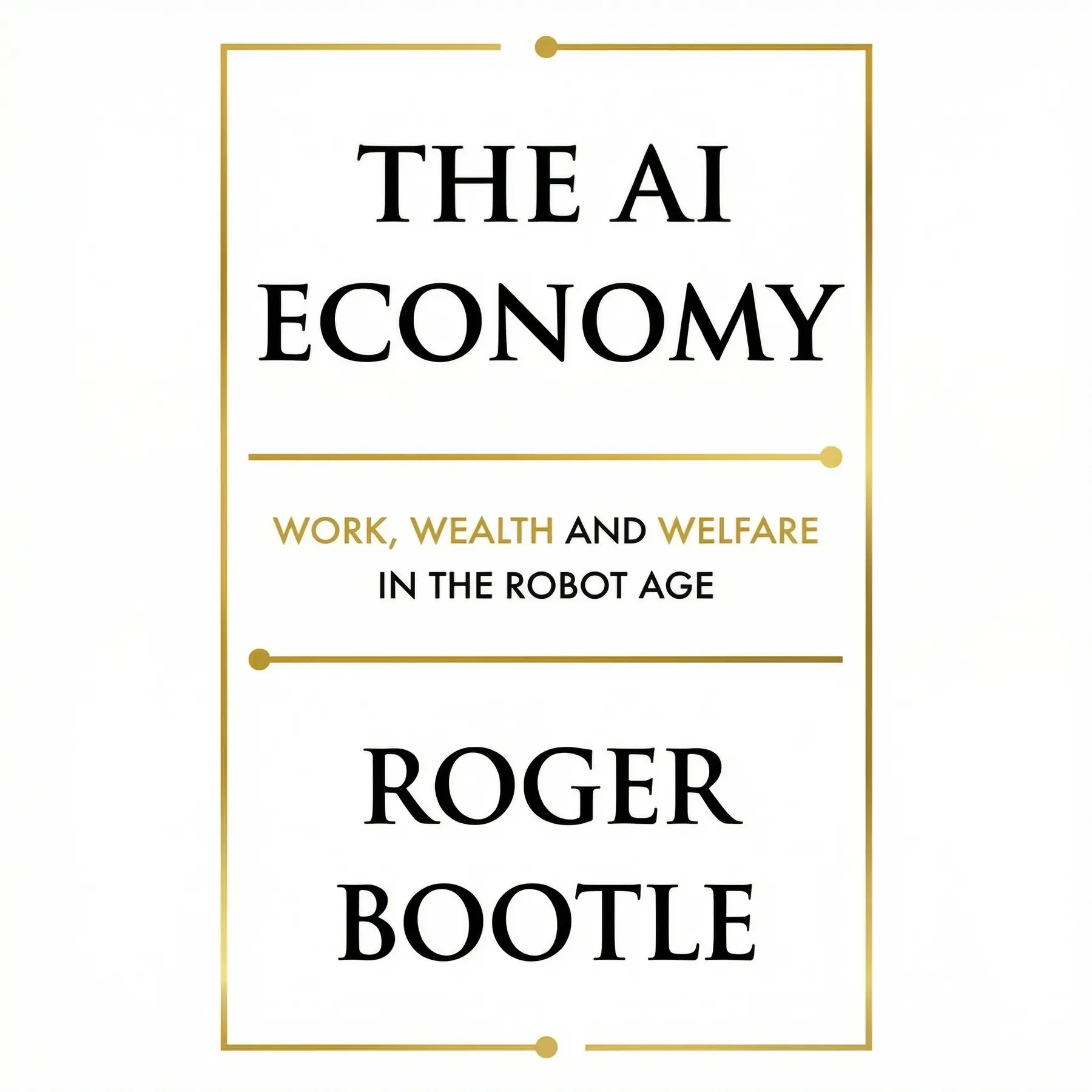
The AI Economy: Work, Wealth and Welfare in the Robot Age
By Roger Bootle
An insightful exploration of how artificial intelligence will redefine the global economy, arguing that automation will enhance productivity and quality of life rather than triggering a permanent job crisis.
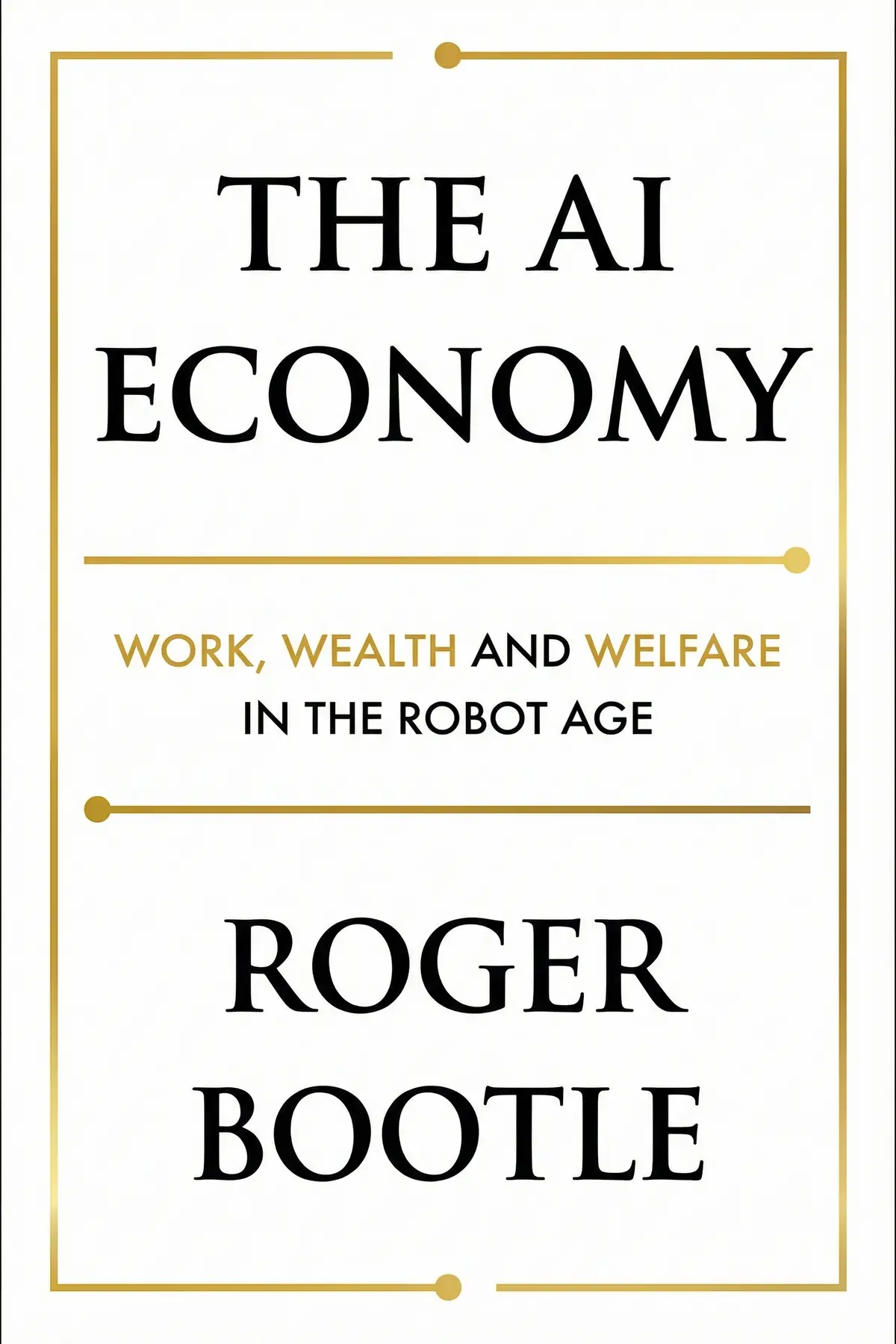
Table of Content
1. Introduction
2 min 10 sec
In an era where technology seems to be accelerating at a dizzying pace, it is easy to feel overwhelmed by the shadow of the machine. We often hear predictions about the Singularity—that moment when artificial intelligence surpasses human cognitive capacity and begins a rapid, self-directed evolution that leaves us behind. Some futurists suggest this could happen within our lifetimes, leading to a world where human labor is obsolete and our very relevance is called into question. These narratives have fueled a deep-seated anxiety. In fact, some surveys have indicated that many people fear the rise of robots even more than they fear their own mortality. This collective dread is not just about losing jobs; it is about losing our place in the world.
However, it is important to take a step back and look at these developments through the lens of economic history and pragmatic analysis. That is exactly what we find in The AI Economy. Instead of focusing on the science fiction scenarios of robot overlords, this exploration looks at the hard data and the historical patterns of technological change. It asks what artificial intelligence really means for productivity, wages, and the structure of our societies. By examining the previous three industrial revolutions, we can begin to see a pattern that is far more nuanced and, ultimately, far more hopeful than the headlines suggest.
Over the course of this summary, we will move past the hype and the doomsday scenarios to understand the actual mechanics of the AI revolution. We will explore why the transition might be more of a slow evolution than a sudden explosion, which human traits will become more valuable as machines take over routine tasks, and how governments can intervene to make sure the benefits of this new age are shared by everyone. The goal is to provide a clear-eyed view of the robot age—one that acknowledges the risks but focuses on the immense potential for human flourishing. Let’s begin by looking at where we’ve been, so we can better understand where we are going.
2. Historical Context of the Fourth Industrial Revolution
2 min 25 sec
What if the AI revolution is not a terrifying anomaly but the logical next step in human progress? Discover how history’s previous shifts can help us navigate the future.
3. The Evolution of Labor and Job Creation
2 min 31 sec
Are robots really coming for your paycheck? Learn why the fear of mass unemployment might be missing the bigger picture of economic transformation.
4. The Limits of Machine Intelligence and the Value of Humanity
2 min 12 sec
There are certain things a computer simply cannot do. Discover why your unique human traits are becoming your most valuable assets in the robot age.
5. The Prospect of a Leisure-Focused Society
1 min 58 sec
Could the rise of AI finally deliver on the promise of a shorter workweek? Explore how increased productivity could lead to a revolution in how we spend our time.
6. Navigating Economic Inequality in the Age of Automation
2 min 04 sec
What happens when the gap between the tech-rich and the rest widens? Understand the risks of inequality and the potential paths toward a fairer distribution of wealth.
7. The Role of Governance and Smart Regulation
2 min 13 sec
Can the government keep up with the pace of AI? Learn why the right legal and ethical frameworks are essential for a stable and prosperous future.
8. Rethinking Education for a Machine-Integrated World
2 min 09 sec
Is our current school system preparing students for a world that no longer exists? Discover how education must change to prioritize the uniquely human skills that AI can’t match.
9. A Vision of Economic Growth and Optimism
1 min 54 sec
Despite the fears, could we be entering a new age of prosperity? Explore the macroeconomic reasons why the AI revolution might be a net positive for the world.
10. Conclusion
2 min 09 sec
As we look back on our journey through the landscape of the AI economy, the central message is clear: the future is not something that happens to us, but something we help create. The rise of artificial intelligence and robotics represents a monumental shift, comparable to the great industrial revolutions of the past. It will undoubtedly disrupt old ways of working and living, and it will challenge our existing social and economic structures. However, it also brings with it the promise of unprecedented productivity, the potential for a more balanced life, and the opportunity to focus on the qualities that make us uniquely human.
We have seen that while some jobs will disappear, the human capacity for innovation and our need for connection will always drive the creation of new roles. We have learned that our greatest assets in the robot age are not our ability to process data, but our empathy, our creativity, and our ability to solve complex, real-world problems. We have also seen that the risks of inequality and social disruption can be managed through proactive governance, ethical regulation, and a fundamental rethinking of our education systems.
The throughline of this summary is one of pragmatic optimism. By understanding the historical context and the economic realities of technological change, we can move past the paralyzing fear of the unknown. The AI revolution is a tool—a incredibly powerful one—that can be used to boost global wealth and improve the quality of life for everyone. The challenge before us is to ensure that we use this tool wisely. As you move forward into this new age, remember that your human skills are your most valuable currency. By embracing lifelong learning and advocating for policies that prioritize human welfare, we can ensure that the AI economy is an economy that works for everyone. The robot age is here, and if we navigate it with clarity and purpose, the best is yet to come.
About this book
What is this book about?
The AI Economy provides a grounded, macroeconomic perspective on the rise of artificial intelligence and robotics. Rather than succumbing to dystopian fears or extreme techno-optimism, it examines how these technologies fit into the long arc of industrial history. It addresses the most pressing concerns of the modern era: Will machines take our jobs? Will inequality tear society apart? And how should we educate the next generation? The book promises a pragmatic roadmap for the future, illustrating how AI will likely function as a tool for human enhancement. It explores the potential for a new era of leisure, the shifting value of human skills like empathy and creativity, and the necessary policy changes required to ensure wealth is distributed fairly. Ultimately, it offers a vision of a flourishing economy where technology drives growth and improves human welfare.
Book Information
About the Author
Roger Bootle
Roger Bootle is a prominent British economist and a regular columnist for The Daily Telegraph. He is the founder of Capital Economics, a leading macroeconomic research consultancy. Known for his insightful analysis of market trends, Bootle has authored several influential books, including The Death of Inflation and The Trouble with Europe. His work often bridges the gap between complex economic theory and practical, real-world implications.
Ratings & Reviews
Ratings at a glance
What people think
Listeners hold differing views on the book's strong preference for classical economic theory instead of technical AI intricacies, with some listeners feeling the prose is sometimes repetitive or sidetracked by social critique. Nevertheless, many value the author’s realistic and hopeful stance, which steers clear of "sci-fi hysteria" to provide a sensible historical lens on the era of automation. They also appreciate the compelling links established between AI and past industrial revolutions. Furthermore, listeners highlight the well-supported exploration of policy topics like Universal Basic Income, with one listener remarking that the text offers a "clear-eyed economic map" of the coming years.
Top reviews
Suthee
Finally got around to reading the latest from Bootle, and he remains one of the few economists who actually gets the big picture right. Having followed his work since 'Death of Inflation,' I’ve learned that his 'fantasy' predictions usually end up being the absolute truth a few years down the line. In this book, he outdoes himself by tackling the robot age with the same prescient logic he applied to markets in 2004. He argues convincingly that while jobs will vanish, new ones will appear that we can’t even imagine yet. It’s a brilliant defense of human potential in the face of automation. For everyone’s sake, I hope his optimism is as accurate this time as his inflation warnings were in the nineties. Absolutely brilliant and highly recommended for any serious student of the global economy.
Show moreRyan
As someone who works in finance, I found this to be a vital corrective to the hysteria currently surrounding artificial intelligence. Roger Bootle has produced a thoughtful, well-documented, and genuinely interesting analysis of how the robot age will reshape our markets. He correctly identifies that the real challenges aren't just technical, but social and political—focusing on how we fill our time and maintain a sense of purpose. The parallels he draws between our current era and past industrial revolutions are deeply insightful and help ground the discussion in reality. It’s a balanced view that challenges dystopian fears while remaining realistic about the need for effective policy implementation. This is essential reading for anyone trying to navigate the complex intersection of technology and labor.
Show moreSukit
After hearing so much doom and gloom about robots stealing every job in sight, this was a much-needed breath of fresh air. Bootle provides a very pragmatic and balanced view of the economic impact of AI, steering clear of the typical sci-fi hysteria. He argues that human traits like empathy, creativity, and manual dexterity will remain our competitive edge for a long time. The way he frames AI as a tool for boosting productivity rather than a harbinger of the apocalypse is quite convincing. I particularly enjoyed the historical context he brings to the table, showing that we’ve survived massive technological shifts before. It isn't a perfect book—some sections get bogged down in dense economic theory—but it’s a vital map for understanding our current trajectory.
Show moreTee
Bootle isn't trying to sell you a silicon valley fantasy where we all live in utopia, nor is he predicting a Terminator-style collapse. Instead, he’s selling a realistic map of the terrain we are about to enter. The book is witty, grounded in history, and focuses on the fact that humans crave purpose, not just money. I liked the focus on how leisure time might become a crisis of identity if we don't prepare for it. My only real gripe is that the machine learning research he references feels a bit behind the curve. Still, if you want a clear-eyed look at how governments and businesses should actually prepare for a robot-heavy workforce, this is a very solid choice. He’s less of a prophet and more of a pragmatist, which is exactly what we need right now.
Show moreMilk
The discussion surrounding Universal Basic Income and the role of the state was the clear highlight of this work for me. Bootle manages to strip away the jargon and explain how the AI revolution will affect the average person’s wallet in a way that feels rational. He avoids the alarmism that dominates the headlines and instead focuses on how policy can make or break this transition. I found the section on the decline of relative poverty worldwide to be particularly insightful. While the text is occasionally repetitive, the core arguments about wealth redistribution and the limits of exponential growth are well-documented and thoughtful. It’s a must-read for anyone who wants to understand the policy challenges of the next decade without getting lost in technical 'tech-speak'.
Show moreLevi
To be fair, the editing could have been tighter, as the author frequently repeats himself across different chapters, but the core economic argument is incredibly solid. Bootle provides a clear-eyed economic map that avoids the usual Silicon Valley hype cycles. He reminds us that robots won't conquer everything because many tasks stay stubbornly human. I appreciated his skepticism toward the idea of runaway 'super-intelligence' and his focus on historical S-curves. It’s a thoughtful and well-documented look at why the future might not be as scary as the movies suggest. If you can get past the occasional dry stretch of interest rate talk, there is a lot of wisdom to be found here regarding how we will actually live and work.
Show moreClaire
Picked this up because I wanted a grounded take on the future of work, and while there is some good content here, you have to dig for it. The author is clearly an academic at heart, which means the prose can be a bit dry and structured like a lecture series. I appreciated the chapter on UBI, specifically the nuanced look at how it might actually discourage work if the funding mechanisms aren't handled perfectly by the state. However, the constant referencing of his own previous books and the 'foreshadowing' of future chapters became quite annoying after a while. Look, it’s a decent primer for policy wonks who enjoy historical parallels, but entrepreneurs and tech-focused readers will likely find it too slow and focused on the wrong metrics.
Show moreJavier
Frankly, Bootle’s optimism feels a bit detached from the reality of how corporate power and government interests actually function in the real world. He assumes that the benefits of the coming technological revolution will be distributed fairly because that’s what 'rational' actors would do. It’s a very optimistic forecast that ignores the darker models of power found in books like The Dictator’s Handbook. To be fair, he makes a strong case that we won't all be replaced by robots tomorrow, drawing interesting parallels to the first Industrial Revolution. But his reliance on historical labor market adaptations feels a bit naive given how much faster AI evolves compared to steam engines. It’s an interesting read, just take his rosy predictions with a massive grain of salt.
Show moreSurasit
Ever wonder why a book titled 'The AI Economy' spends eighty percent of its pages discussing traditional GDP, interest rates, and inflation targets? This felt more like a standard macroeconomics textbook where the author occasionally remembered to mention robots just to stay on theme. The 'reader friction' is incredibly high because Bootle is obsessed with signposting; he tells you what he is going to say, then says it, then summarizes what he just said. It makes for a very repetitive experience that feels like it was padded out to meet a word count. While some of the discussion on Universal Basic Income was interesting, the link to AI felt tenuous at best. For a book published recently, the examples already feel ancient in a world where technology moves this fast.
Show moreFatima
This book was a massive disappointment for anyone actually interested in the technical realities of machine learning or modern automation. While the title promises a deep dive into the digital frontier, Bootle spends far too much time airing personal grievances about unrelated social issues that have nothing to do with market shifts. It felt like the author was using the platform to lecture the reader on his own worldview rather than providing a cohesive economic analysis. I sat through the entire thing hoping for a breakthrough that never arrived, but the constant derailments made it nearly impossible to follow any legitimate claims. Frankly, the lack of focus is exhausting. If you want a book that actually tackles how AI is changing the world, look elsewhere, because this is just a collection of dated economic rants disguised as futurism.
Show moreReaders also enjoyed
1929: Inside the Greatest Crash in Wall Street History--and How It
Andrew Ross Sorkin
23 Things They Don’t Tell You About Capitalism
Ha-Joon Chang
A Little History of Economics
Niall Kishtainy
A Splendid Exchange: How Trade Shaped the World
William J. Bernstein
AUDIO SUMMARY AVAILABLE
Listen to The AI Economy in 15 minutes
Get the key ideas from The AI Economy by Roger Bootle, plus 5,000+ more titles in English and Thai.
- 5,000+ titles
- Listen as much as you want
- 7-day free trial
- Cancel anytime







