
14 min 34 sec
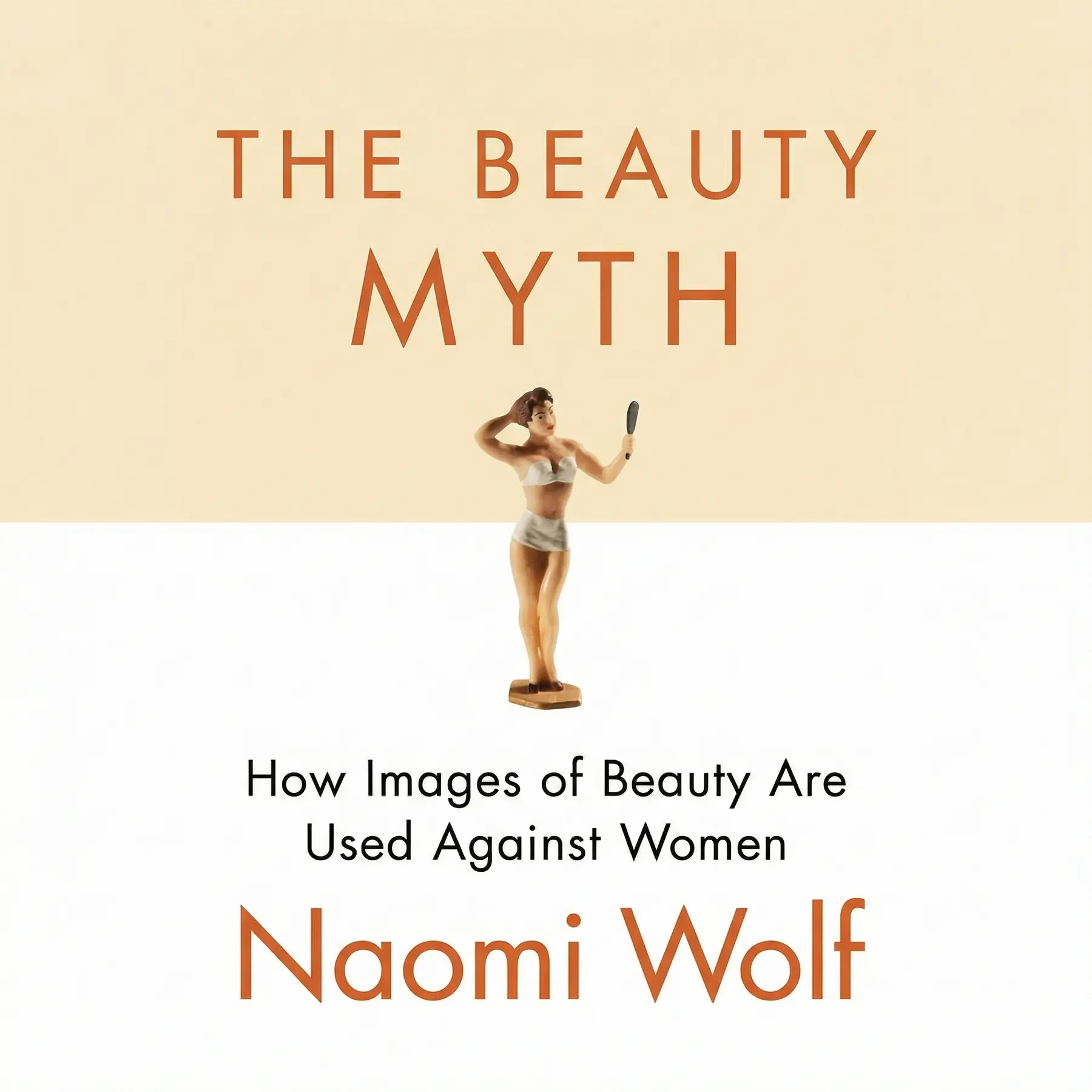
The Beauty Myth: How Images of Beauty Are Used Against Women
By Naomi Wolf
Naomi Wolf reveals how the modern obsession with physical perfection serves as a political tool to undermine women's progress, replacing domestic confinement with a psychological prison of unattainable standards.
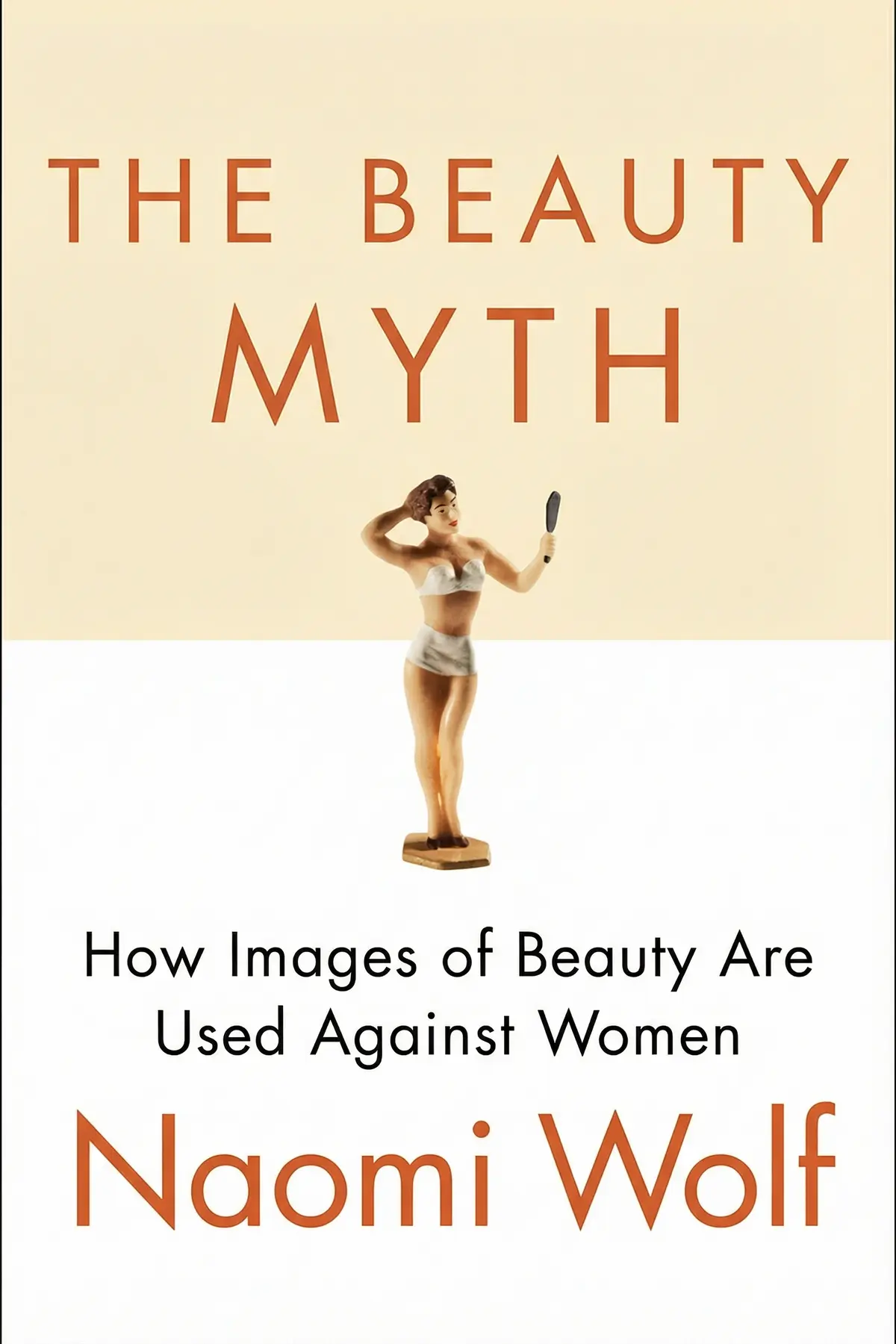
Table of Content
1. Introduction
1 min 44 sec
We often hear the comforting old saying that beauty is in the eye of the beholder. It is a sentiment designed to suggest that attraction is personal, subjective, and perhaps even democratic. However, if you take a closer look at history, you quickly realize that the standards of what is considered beautiful are anything but stable. They shift from one century to the next and vary wildly across different cultures. This suggests that beauty isn’t a biological imperative or a poetic mystery. Instead, it is a social construct, a set of norms and ideals that are curated and enforced by the society we live in.
You might wonder why this matters. If a society prefers one look over another, isn’t that just a harmless quirk of fashion? Naomi Wolf argues that the truth is far more calculated and far more damaging. The pursuit of an elusive, perfect appearance is not a natural feminine instinct. Rather, it is a powerful myth—a tool of control used to maintain a specific social hierarchy. As women have broken through glass ceilings and secured legal rights, the ‘beauty myth’ has stepped in to fill the void left by older forms of domestic subjugation.
In this exploration, we are going to look at the machinery behind this myth. We will see how it creates a psychological and economic drain on women, forcing them to obsess over makeup, surgery, and restrictive dieting. By understanding the origins and the mechanics of these standards, we can begin to see the throughline of this summary: that the beauty myth is not about women’s aesthetics, but about men’s institutions and the preservation of patriarchal power. Let’s dive into how this system operates and why it remains so effective even in an age of supposed liberation.
2. Beauty as a Political Tool
2 min 34 sec
Discover why the rise of impossible beauty standards coincided exactly with women’s legal and professional gains, acting as a subtle form of social backlash.
3. The Professional Beauty Qualification
2 min 12 sec
The workplace often uses appearance as a hidden metric for success, creating a double standard that women can almost never satisfy.
4. The Economics of Insecurity
2 min 18 sec
See how the advertising world pivoted from selling vacuum cleaners to selling self-doubt, fueling a multibillion-dollar industry.
5. The Physical and Social Cost
2 min 14 sec
Impossible standards don’t just hurt the wallet; they lead to health crises and destroy the solidarity needed for social change.
6. Breaking the Spell
2 min 23 sec
Learn how to identify the ‘cult-like’ tactics of the beauty industry and reclaim the power to define yourself on your own terms.
7. Conclusion
1 min 09 sec
As we wrap up our look at The Beauty Myth, the central theme remains clear: the obsession with physical perfection is a distraction, a calculated byproduct of a society that is uncomfortable with women’s rising power. We have seen how this myth operates in our offices, our magazines, and our very mirrors. It functions as an economic drain and a psychological anchor, keeping women preoccupied with ‘fixing’ themselves while the world continues to benefit from their insecurity.
The path forward requires a radical shift in perception. It demands that we recognize the ‘original sin’ of imperfection for what it is—a marketing ploy. It asks us to look past the competitive labels of ‘beautiful’ or ‘ugly’ and see the human potential that is being stifled by these categories. By fostering solidarity among women and refusing to let our value be dictated by a multibillion-dollar industry, we can begin to reclaim our time, our energy, and our sense of self. The beauty myth only has as much power as we give it. Once we see the strings of the puppet master, the performance loses its magic, and we can finally step off the stage and into our own lives.
About this book
What is this book about?
The Beauty Myth explores the invisible forces that dictate how women should look, act, and feel about their bodies. Naomi Wolf argues that as women gained legal and economic freedom, the social pressure to be 'beautiful' intensified as a form of backlash. This isn't just about vanity; it is a systemic effort to keep women distracted, financially drained, and in constant competition with one another. Through a deep dive into the workplace, the advertising industry, and the rise of eating disorders, the book promises to peel back the layers of this cultural indoctrination. It provides a framework for understanding how the multibillion-dollar beauty industry profits from insecurity and how women can begin to reclaim their autonomy by recognizing these external pressures for what they truly are: a means of social control.
Book Information
About the Author
Naomi Wolf
Naomi Wolf is a celebrated author and social critic. She earned her undergraduate degree from Yale University and expanded her academic horizons as a Rhodes scholar at Oxford University. Throughout her career, she has written several international bestsellers, including Promiscuities, Fire with Fire, and Misconceptions, establishing herself as a prominent voice in modern social commentary.
Ratings & Reviews
Ratings at a glance
What people think
Listeners find the book thoroughly researched and value its feminist stance, with one listener noting its coverage of the misogynistic elements of beauty standards. The work is also described as life-altering, including one listener who explains how it changed their personal view of beauty. Finally, the prose earns varied reviews, as some listeners find it readable while others have difficulty following it.
Top reviews
Taw
Wow, this was a complete paradigm shift for me. I’ve always felt the pressure to look a certain way, but Wolf articulates why that pressure exists with such fiery precision. It is a foundational piece of modern feminism that exposes how beauty is used as a political currency to keep women in a state of perpetual insecurity. Personally, I found the section on 'Hunger' to be the most moving because it mirrors the struggles of so many women I know. The truth is, it’s a life-changing read that makes you question the intent behind every skincare ad or fashion trend. While some of the 1990s references are a bit dated, the core message about the 'professional beauty qualification' remains incredibly relevant today. This book gave me the permission I didn’t know I needed to stop apologizing for my physical existence. The writing can be quite dense and academic, but the emotional payoff is worth every single page.
Show moreTanawan
This book changed the way I look at every advertisement and magazine cover I see on a daily basis. Naomi Wolf’s writing is fierce, unapologetic, and life-changing for anyone who has ever felt "less than" because of their looks. She exposes the misogynistic underpinnings of the beauty industry with such clarity that you can’t unsee it. Every woman should read this to understand her self-worth. It’s an empowering, revolutionary text that encourages us to reclaim our time. Personally, it’s one of the few books that actually altered my internal monologue for the better.
Show moreSiraporn
Not what I expected from a 30-year-old text, but its relevance is terrifyingly high in our current age of filters. Naomi Wolf’s "The Beauty Myth" is a brilliant, scorching indictment of the standards we are forced to live by. She connects the dots between the rise of women’s rights and the simultaneous rise in eating disorders and cosmetic procedures. The research presented is incredibly thorough and dense. It manages to be both academic and deeply personal at the same time. While some of the prose is thick, the message is clear: our beauty is not a tax we owe to society. I found the final chapters particularly inspiring as she calls for a "sensual politics" where we choose our own joy. This book is a landmark for a reason and deserves a spot on every bookshelf.
Show moreAkosua
Picked this up because I wanted to understand the roots of modern body standards, and I wasn't disappointed in the depth. Wolf’s basic premise is that beauty isn't about appearance, but about institutional power and social control. The book is incredibly well-researched with hundreds of citations, though I’ll admit some of the statistics felt a bit overstated upon closer inspection. She masterfully connects the dots between the workplace, culture, and even religion to show how the "myth" evolves to meet the needs of the patriarchy. However, the writing style can be quite heavy and academic, making it a bit of a slog in the middle chapters. There were times when I had to re-read paragraphs just to follow the logic. I appreciated the deep dive into how advertising preys on female insecurity to drive profit. Despite the dense prose, it’s a vital read for anyone trying to navigate the toxic images we’re fed daily. It definitely changed my perspective on why we value what we value in society.
Show morePla
Ever wonder why the ‘ideal’ woman always seems just out of reach regardless of how much we spend? Naomi Wolf argues that this is by design, functioning as a "check" on the progress women made in the 20th century. The book provides an eye-opening look at the misogynistic aspects of the beauty industry and how it keeps us distracted. In my experience, reading the section on 'Work' was particularly galling because it highlights the double standards men never have to face. My only gripe is that Wolf occasionally ignores the role of capitalism in favor of a more conspiratorial "male" agenda. To be fair, the two are often inextricably linked, but the distinction matters for the argument. It’s a powerful, provocative text that forces you to re-examine your relationship with the mirror. I’d recommend it to any woman feeling burnt out by societal expectations.
Show moreChiw
After hearing so much about this classic, I finally dove into Wolf’s argument and found it surprisingly contemporary. Even without the context of social media, her critique of how media manipulates female identity feels written yesterday. The way she breaks down the "beauty myth" into sectors like sex and violence is brilliant and unsettling. I did find the writing a bit repetitive towards the end of the book. Still, the text serves as a necessary wake-up call for anyone who thinks their beauty routine is purely "choice." It’s an essential pillar of feminist literature that remains required reading for a reason.
Show moreSuthee
As someone who has struggled with body image for years, reading this felt like finally being told I wasn’t crazy. Wolf’s analysis of the "beauty myth" as a tool for subjugation is both mortifying and enlightening. It’s a well-researched deep dive into the ways our culture demands that women remain small, quiet, and hungry. The writing is passionate and readable, even when the subject matter gets incredibly dark. I feel more equipped to fight back against the images that tell me I need to be "fixed" to be valuable. My only issue is that the text is definitely a product of its time and lacks a more inclusive, intersectional lens. This is still more than just a feminist tract; it’s a manual for psychological liberation. If you’ve ever felt like your beauty was a performance for others, you need this book.
Show moreAlejandra
The chapter on 'Hunger' was absolutely devastating to read. I struggled with the delivery elsewhere in the volume. Wolf makes a compelling case for beauty as a political tool, but she often paints with a very broad brush. Truth is, her refusal to acknowledge any biological or evolutionary aspects of attraction made the argument feel a bit one-sided. I also noticed that the experiences of women of color were largely sidelined throughout the text. It feels very much like a product of the early 90s. While I agree with the overarching feminist perspective, the sloppy presentation of some data made me skeptical of her more extreme conclusions. It is an important book that requires a very critical eye.
Show moreCharles
Look, the basic premise that beauty is a political weapon against women is undeniably powerful and largely correct. Naomi Wolf identifies a real sickness in our culture that demands women sacrifice their health and wealth for a fleeting aesthetic. However, I found the book's academic tone to be incredibly dry and, at times, difficult to follow. There are instances where the citations feel clumsily pasted together without a strong connective thread. I also felt like she attributed too much to a "grand conspiracy" of men rather than the simple, cold mechanics of capitalism. Advertising preys on everyone’s insecurities, and while women bear the brunt of it, the "why" might be simpler than Wolf suggests. It’s a thought-provoking read, but it lacks the nuance I was hoping for in such a famous work.
Show moreGin
Frankly, I found Wolf’s constant reliance on what feels like a 'grand male conspiracy' hard to swallow. While I agree that beauty standards are oppressive, her argument that there is a coordinated effort to keep women down feels paranoid. The statistics she uses throughout the book are often questionable. They have been criticized for being significantly overstated in later years, which undermines her credibility. I also think she ignores the role of capitalism; the "beauty myth" is really just about selling products to a target audience. It isn't a shadowy cabal. To be fair, the book does highlight some shocking examples of violence and psychological brutality against women that are worth knowing. But the overall analysis is so sloppy and superficial that it’s hard to take the scholarly pretense seriously. I wanted to like this more than I did, but the logic just didn't hold up for me at all.
Show moreReaders also enjoyed

A Biography of Loneliness: The History of an Emotion
Fay Bound Alberti
A Force for Good: The Dalai Lama's Vision for Our World
Daniel Goleman

A Room of One’s Own
Virginia Woolf

Abolish Rent: How Tenants Can End the Housing Crisis
Tracy Rosenthal
Abortion: Our Bodies, Their Lies, and the Truths We Use to
Jessica Valenti

Afropean: Notes From Black Europe
Johny Pitts
AUDIO SUMMARY AVAILABLE
Listen to The Beauty Myth in 15 minutes
Get the key ideas from The Beauty Myth by Naomi Wolf, plus 5,000+ more titles in English and Thai.
- 5,000+ titles
- Listen as much as you want
- 7-day free trial
- Cancel anytime







