
20 min 21 sec
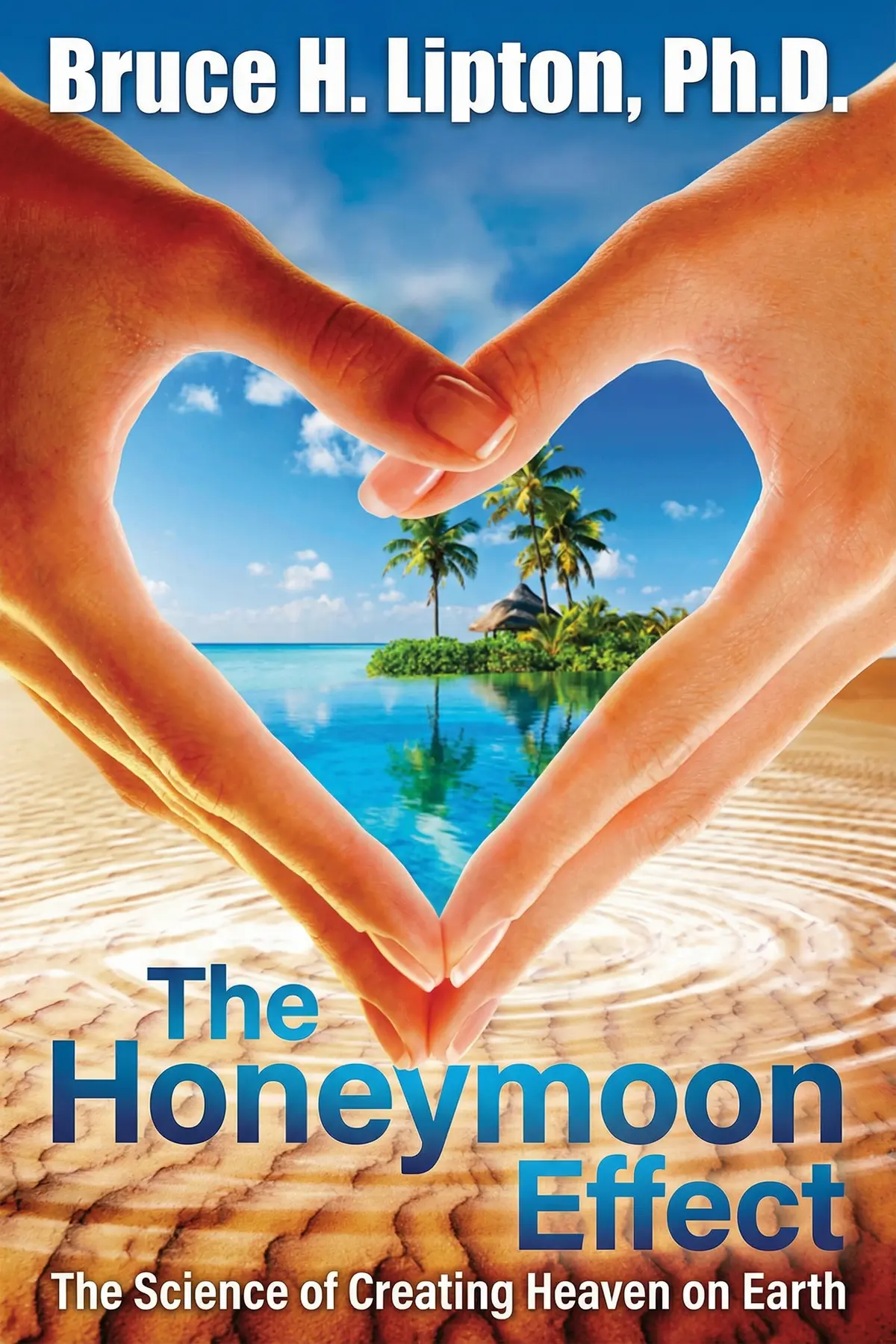
The Biology of Belief: Unleashing the Power of Consciousness, Matter and Miracles
Explore how your thoughts and environment influence your DNA. This summary reveals the bridge between cell biology and consciousness, empowering you to reclaim control over your health and destiny.
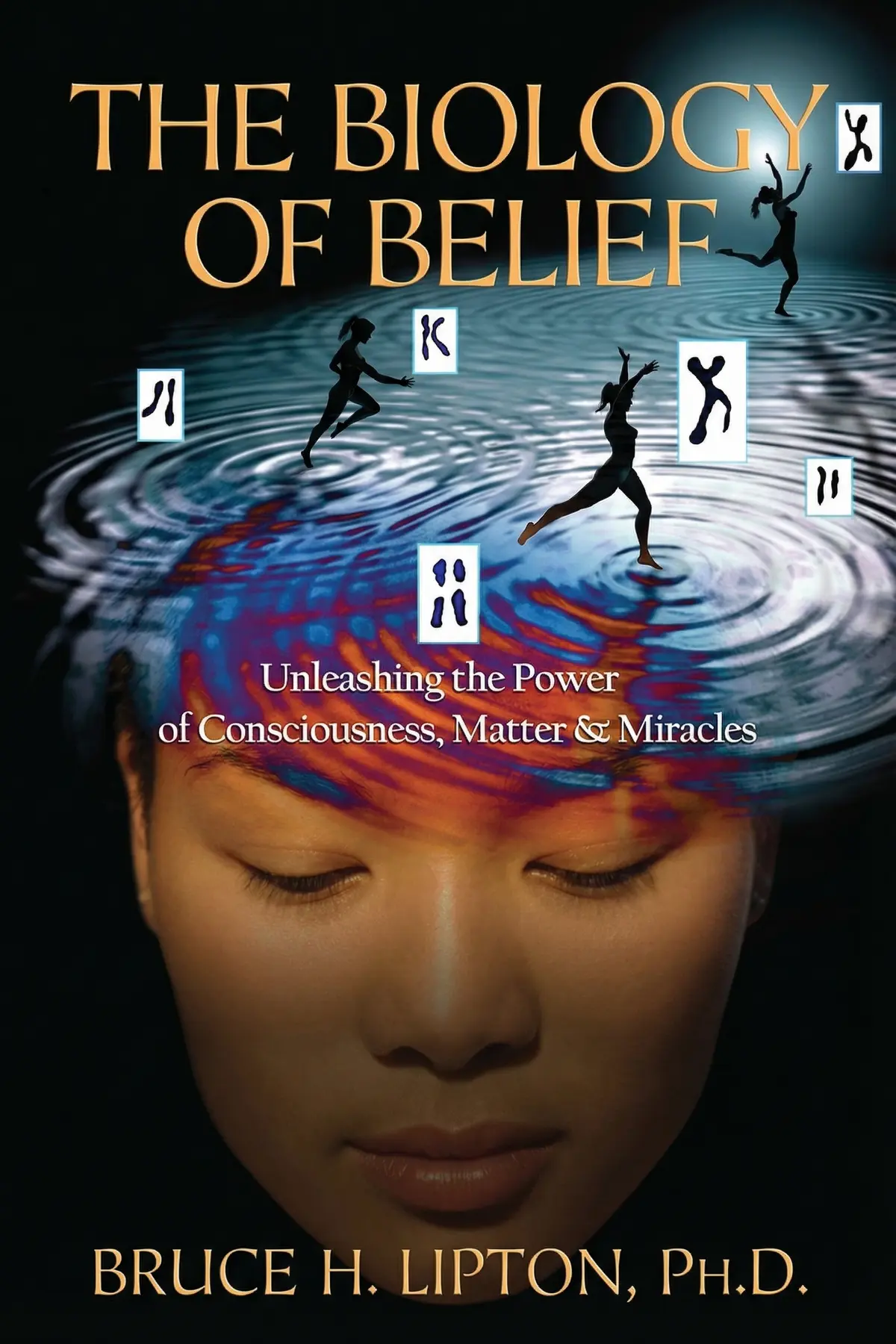
Table of Content
1. Introduction
1 min 46 sec
For decades, we have been told a specific story about who we are. It is a story of biological predestination, where our health, our temperament, and even our life expectancy are written into our DNA before we are even born. In this view, we are essentially passengers in a vehicle driven by our genetic heritage. But what if that story is incomplete? What if the most powerful force in your life isn’t your genetic code, but your belief system?
In The Biology of Belief, Bruce H. Lipton invites us to reconsider the very foundations of modern biology. He introduces us to the ‘New Biology,’ a field that suggests we aren’t victims of our heredity but masters of our own physical reality. By looking closely at the life of a single cell, Lipton reveals that the environment and our perception of it are the true architects of our existence. This shift in perspective doesn’t just change how we look at a microscope; it changes how we live our lives, how we parent our children, and how we view our place in the universe.
Throughout this journey, we will explore why the traditional Darwinian model of ‘survival of the fittest’ might be giving way to a more cooperative understanding of evolution. We will look at the surprising truth about where the ‘brain’ of the cell actually resides and how our subconscious programming often acts as an invisible barrier to our well-being. By the end of this summary, the goal is to provide you with a throughline that connects the smallest protein in your body to the vastness of human consciousness, showing you how to harness your own biology for a life of health and purpose.
2. A Shift from Competition to Cooperation
2 min 08 sec
Revisit the roots of evolutionary theory and discover why working together, rather than fighting for dominance, is the true engine of biological progress.
3. The True Brain of the Cell
1 min 58 sec
Challenge the common belief that DNA is the master controller and find out where the cell’s intelligence really lives.
4. Moving Beyond Genetic Determinism
1 min 50 sec
Uncover the limitations of the ‘genes as destiny’ myth and learn how environmental signals dictate which parts of your DNA actually get used.
5. The Quantum Gap in Modern Medicine
1 min 48 sec
Explore why modern medicine’s reliance on old physics leads to side effects and why a quantum perspective could revolutionize healing.
6. The Mind-Body Bridge and the Placebo Effect
1 min 56 sec
Discover how your conscious and subconscious minds act as the ultimate pharmacists for your body’s health.
7. The Binary State: Growth or Protection
1 min 45 sec
Learn about the two fundamental modes of biological survival and why you can’t be in both at the same time.
8. The Lasting Impact of Early Programming
1 min 46 sec
Explore how the environment of the womb and early childhood interactions shape our biological future long before we are aware of it.
9. A New Vision of Evolution as Unity
1 min 46 sec
Discover why the human race is like a single multicellular organism and how our survival depends on global cooperation.
10. The Intersection of Biology and Spirit
1 min 52 sec
Examine the scientific evidence for a life that transcends the physical body and our connection to the wider universe.
11. Conclusion
1 min 46 sec
The journey through The Biology of Belief brings us to a powerful and liberating conclusion: we are the architects of our own experience. By moving away from the outdated notion of genetic determinism, we can finally stop seeing ourselves as victims of our biology. We have learned that the cell membrane, the true brain of our biology, is constantly listening to our environment and—most importantly—to our interpretation of that environment. Our thoughts, our stresses, and our deepest convictions are the chemical signals that tell our cells whether to grow or to protect, whether to thrive or to wither.
This shift in understanding demands a change in how we approach our health and our lives. It encourages us to look beyond the quick fix of a pill and instead examine the landscape of our minds. Are we living in a state of chronic fear that is shutting down our immune systems? Are we carrying old, negative programs from our childhood that no longer serve us? By practicing mindfulness, reducing stress, and consciously choosing empowering beliefs, we can literally change the chemical environment of our bodies and, by extension, our genetic expression.
Ultimately, the throughline of Lipton’s work is one of unity and potential. It connects the microscopic world of the cell to the macroscopic world of human society and the infinite field of the universe. It reminds us that cooperation is the primary law of life and that our individual well-being is tied to the well-being of the whole. As you move forward, remember that you are not just a collection of genes; you are a conscious participant in a quantum world. Your beliefs are your most powerful tool for healing, and by changing them, you have the power to create a life of miracles.
About this book
What is this book about?
The Biology of Belief challenges the long-held dogma of genetic determinism. Bruce H. Lipton explains that we are not merely biological machines driven by our genes; instead, our cells are guided by environmental signals and, more importantly, our perceptions of those signals. By blending cutting-edge research in epigenetics and quantum physics with spiritual insights, the book offers a new paradigm for understanding the mind-body connection. It promises a roadmap for personal transformation, showing how changing our beliefs can literally change our biology. From the mechanics of cell membranes to the impact of conscious parenting, Lipton provides a scientific foundation for the power of the mind to heal and thrive.
Book Information
About the Author
Bruce H. Lipton
Bruce H. Lipton, Ph.D., is a renowned stem cell biologist and a pioneer in the field of new biology. He has held faculty positions at the University of Wisconsin’s School of Medicine and performed groundbreaking research at Stanford University’s School of Medicine. His work is celebrated for bridging the gap between rigorous science and spiritual wisdom, earning him the prestigious Goi Peace Award in 2009.
Ratings & Reviews
Ratings at a glance
What people think
Listeners find this book to be a fantastic listen that clarifies intricate subjects, with one listener pointing out its explanation of cellular mechanisms. Additionally, the content delivers an inspiring take on wellness and vitality, and listeners describe it as evocative, with one listener focusing on the ties between thoughts, beliefs, and physical health. The delivery is also commended for being skillfully composed and elegantly brief, while listeners value its accessibility for non-specialists.
Top reviews
Duang
Finally got around to reading this, and it’s a total game-changer for how I view my own body. Lipton’s central thesis—that our cell membranes are the true 'brains' of the cell rather than the nucleus—is presented with such clarity that even someone without a science degree can follow along. It’s an empowering perspective on health that moves away from the idea that we are just victims of our genetic code. Frankly, the way he connects subconscious programming to biological function makes so much sense when you look at how stress impacts the immune system. I loved the succinct writing style, though I can see why some hard-core scientists might find his conclusions a bit of a stretch. For me, the message of taking control of your well-being through mindset is exactly what I needed to hear right now.
Show moreNook
Wow, this completely shifted my perspective on what it means to be healthy. I’ve always been interested in the Law of Attraction, but seeing the biological basis for how our thoughts affect our cells was the missing piece of the puzzle for me. Lipton explains how our beliefs act as the primary filter for our environment, literally changing the way our proteins function. It’s a beautiful, succinct look at the power of the mind that doesn't feel like typical "woo-woo" self-help. Not gonna lie, I was skeptical at first, but the evidence he provides regarding the cell's awareness of its environment is hard to ignore. This is a must-read for anyone who feels stuck in their physical health or mental patterns.
Show moreNong
Look, if you want a book that will make you feel in control of your life again, this is it. It’s not just about "thinking happy thoughts"—it's an in-depth exploration of how our environment and perception dictate our biological reality. I loved how he compared the cell to a tiny computer chip, with the membrane acting as the interface. It’s a thought-provoking perspective that makes you realize how much of our health is within our own hands. The writing is beautifully succinct and keeps you engaged throughout, avoiding the dense, tedious jargon you find in most science books. I’ve already recommended this to three of my friends who are struggling with chronic stress.
Show moreSupranee
Ever wonder why some people recover from illness while others don't, despite having the same treatment? Lipton’s work on subconscious programming and the placebo effect provides some of the most compelling answers I’ve ever encountered. He explains how our early childhood environment shapes the beliefs that run our biology for the rest of our lives. Gotta say, the chapter on "Conscious Parenting" was particularly eye-opening for me. It’s a well-written guide to understanding how we can reprogram ourselves for better health and more peace. The science is accessible, the tone is optimistic, and the takeaways are practical.
Show moreCarlos
Picked this up on a whim and was blown away by the clarity of the writing. Dr. Lipton has a way of making you see the world—and your own body—in a completely different light. The transition from the old-school Darwinian view of competition to a more Einsteinian view of energy and cooperation is brilliant. It makes you realize that our bodies are essentially communities of trillions of cells working together, governed by our perception of the world. Frankly, this should be required reading for anyone in the medical profession. It’s an empowering, thought-provoking journey that leaves you feeling like the master of your own fate.
Show moreJack
The way Dr. Lipton breaks down complex cellular processes into digestible metaphors is truly impressive. I found the sections on epigenetics particularly fascinating, especially the idea that environmental signals are what actually dictate gene expression. It’s a thought-provoking read that bridges the gap between spirituality and molecular biology in a way that feels mostly grounded. Truth is, I did feel like the chapter on quantum mechanics was a little bit of a reach and didn't quite have the same scientific rigor as the earlier parts about the cell membrane. However, the overall message of being a master of your own fate rather than a servant to your DNA is incredibly inspiring. It’s well-written and serves as a great introduction for lay readers looking to understand the mind-body connection better.
Show moreKaen
After hearing about Bruce Lipton for years, I finally dove into this book, and I’m glad I did. It provides a much-needed bridge between the rigid world of Newtonian physics and the more fluid reality of quantum biology. The core idea—that we aren't victims of our genes—is incredibly empowering for anyone dealing with a family history of illness. My only gripe is that the book gets a bit repetitive in the middle sections, and some of the analogies are a bit oversimplified. Still, the underlying message about cooperative living and the shift away from 'survival of the fittest' is a breath of fresh air. It’s a solid 4-star read for anyone interested in the intersection of science and spirituality.
Show moreBunyarit
This book provides a fascinating look at the 'new biology' that many of us weren't taught in school. Instead of seeing DNA as the master blueprint, Lipton shows how proteins and the cell membrane respond to energetic signals from our thoughts. It’s an analytical yet accessible approach to a very complex topic. In my experience, most books on the mind-body connection are too light on science, but this one gives you enough to chew on without being overwhelming. To be fair, some of the conclusions about cancer and toxins feel a bit simplistic, but the overall framework for understanding health as a product of belief is very strong.
Show moreNora
As a biology student, I had some mixed feelings about the arguments presented here. Lipton is a gifted communicator, and I appreciate his attempt to challenge the 'central dogma' of DNA-controlled life, but some of the leaps he makes are quite large. He starts with solid observations about how perception alters cell response, which is standard biology, but then he pivots into metaphysical territory that lacks robust experimental backing. To be fair, his critique of the pharmaceutical industry is valid and his focus on the placebo effect is interesting. But involving quantum theory to explain subconscious thought feels more like a buzzword-heavy shortcut than a proven mechanism. It’s an okay read for the 'positive thinking' crowd, but if you’re looking for peer-reviewed hard science, you might find yourself rolling your eyes at several chapters.
Show moreLevi
I really wanted to like this book given Lipton's background, but I found it to be a disappointing mix of genuine science and wild speculation. While the initial chapters on the cell membrane and protein function are interesting, the author eventually veers into what can only be described as junk science. Claiming that positive thought can fundamentally rewrite your genetic destiny without clear, reproducible evidence is dangerous. Personally, I found his dismissal of modern medicine and his attempt to wrap everything in quantum mechanics to be incredibly reductive. He misrepresents how most biologists actually view gene expression to make his own theories seem more revolutionary than they are. It’s a shame, because the connection between stress and biology is worth exploring, but this book just isn't the way to do it.
Show moreReaders also enjoyed

Alien Earths: The New Science of Planet Hunting in the Cosmos
Lisa Kaltenegger
A Guide to the Good Life: The Ancient Art of Stoic Joy
William B. Irvine
A High-Performing Mind: Strengthen Your Mind and Live Your Best Life
Andrew D. Thompson
AUDIO SUMMARY AVAILABLE
Listen to The Biology of Belief in 15 minutes
Get the key ideas from The Biology of Belief by Bruce H. Lipton, plus 5,000+ more titles in English and Thai.
- 5,000+ titles
- Listen as much as you want
- 7-day free trial
- Cancel anytime







