
13 min 34 sec
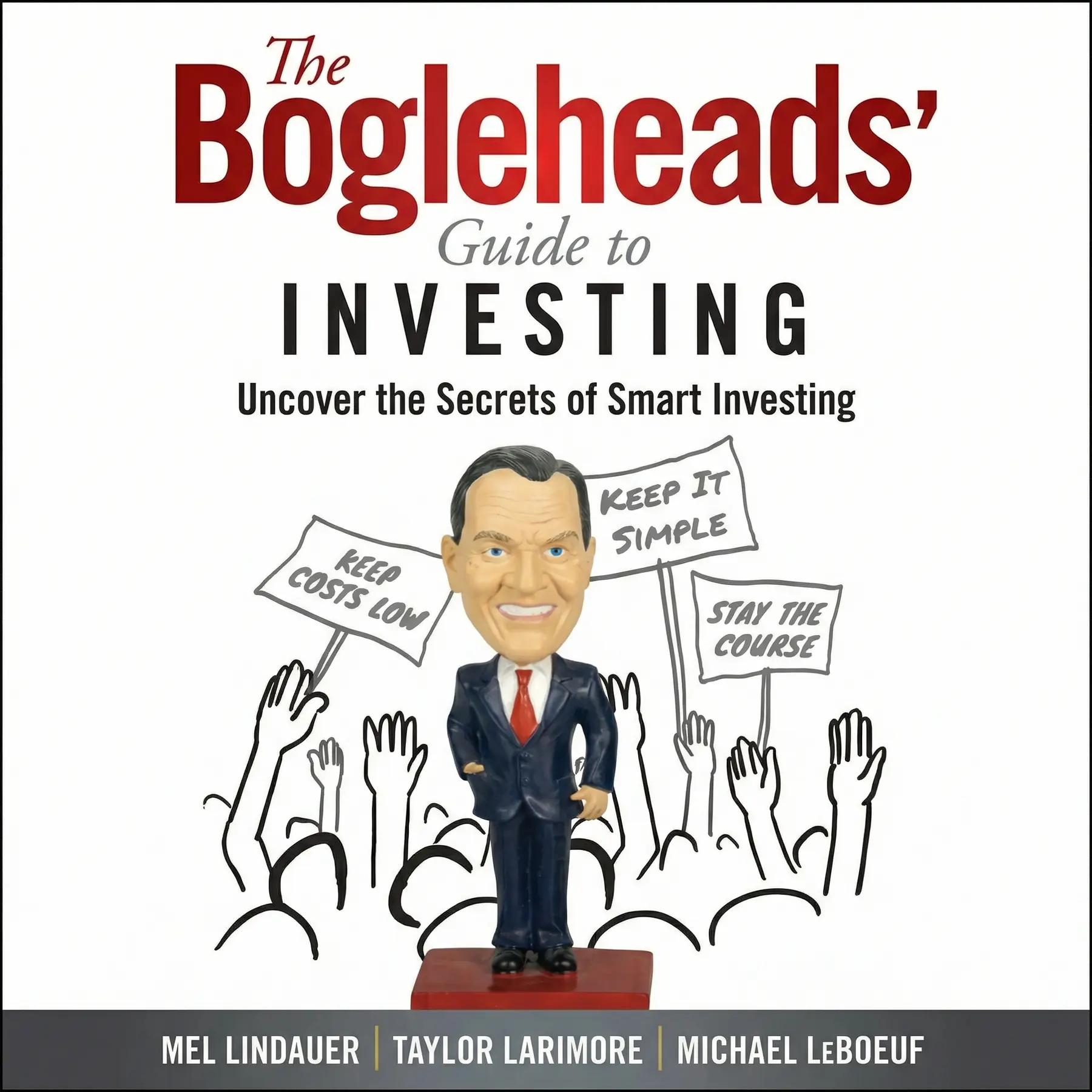
The Bogleheads’ Guide to Investing
A comprehensive manual for building long-term wealth using the simple, low-cost investment principles of John Bogle. It provides a roadmap for personal finance, focusing on asset allocation and disciplined, patient growth.
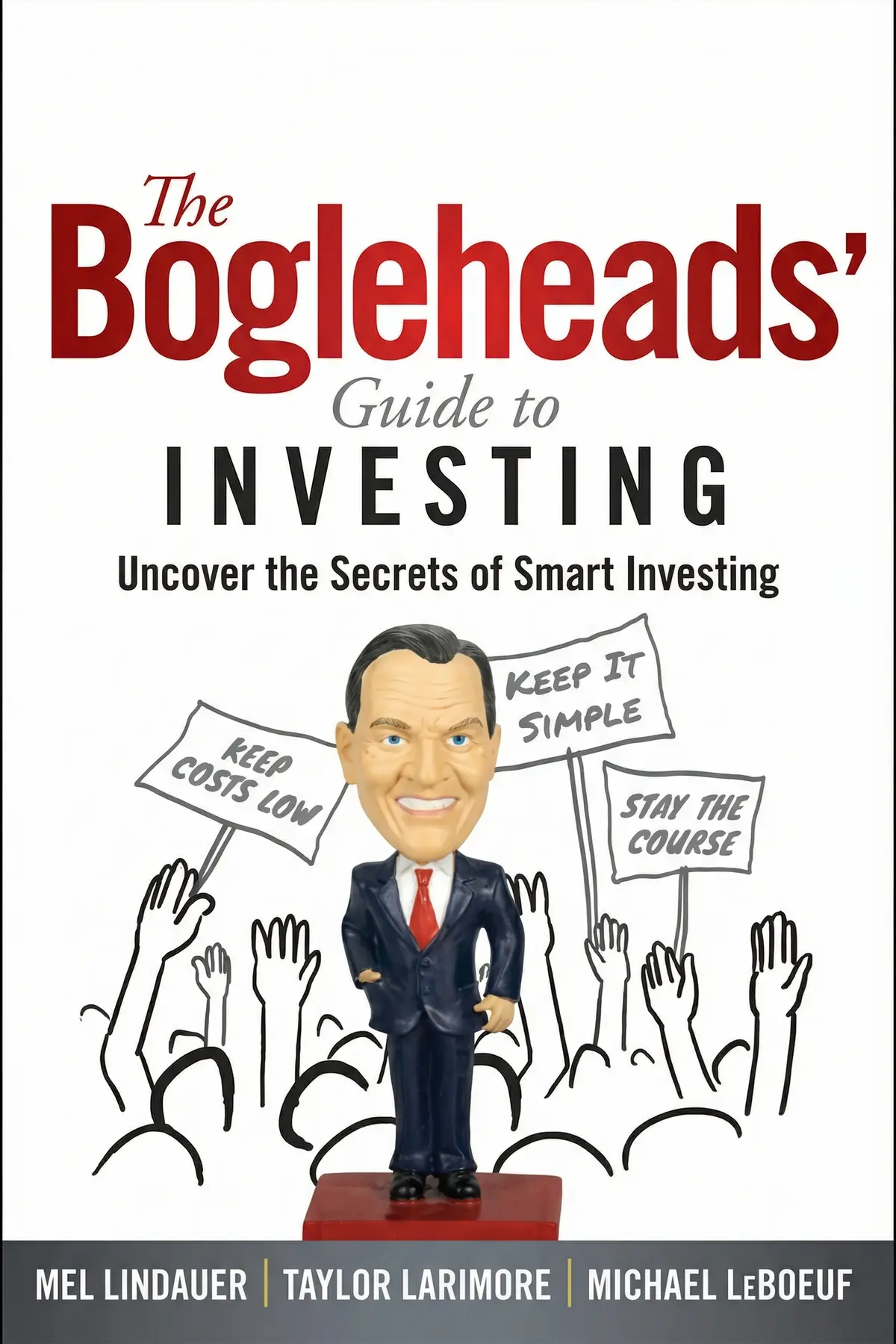
Table of Content
1. Introduction
1 min 45 sec
The world of finance often feels like a dense fog, filled with complex jargon, flashing stock tickers, and a never-ending parade of experts claiming they have the secret to beating the market. But what if the most effective way to build wealth was also the simplest? This is the central premise of the philosophy known as the Boglehead way. Named after John Bogle, the visionary founder of Vanguard, this approach is built on the radical idea that the individual investor’s greatest advantage isn’t a secret algorithm or a hot tip, but rather the power of simplicity, low costs, and time.
In this comprehensive exploration of sound financial management, we are introduced to a set of timeless principles that cut through the noise of Wall Street. The throughline here is one of empowerment and discipline. It suggests that by accepting market returns rather than trying to outsmart them, you can actually end up ahead of the majority of professional fund managers. This isn’t a get-rich-quick scheme; it is a stay-rich-slowly strategy that prioritizes the long-term health of your portfolio over the short-term excitement of the trade.
As we move through these ideas, you will see how various components—from the way you allocate your assets to the way you manage your own psychological impulses—work together to create a robust financial foundation. Whether you are just starting your first job and looking at a retirement account for the first time, or you are an experienced investor looking to streamline your strategy, these principles offer a clear and reliable path forward. The goal is not just to accumulate wealth, but to do so in a way that provides security and peace of mind, allowing you to focus on the things in life that truly matter. Let’s look at how this philosophy transforms the daunting task of investing into a manageable and even rewarding journey.
2. The Foundation of Financial Simplicity
1 min 42 sec
Discover why the most successful investment strategies are often the ones with the fewest moving parts and how simplicity outperforms complex systems.
3. Understanding the Impact of Costs and Fees
1 min 40 sec
Explore the mathematical reality of how small investment expenses can silently erode your wealth over time and why minimizing fees is essential.
4. The Strategic Importance of Asset Allocation
1 min 50 sec
Learn how balancing different types of investments can protect your portfolio from volatility and align your money with your personal goals.
5. Broad Market Indexing as the Optimal Strategy
1 min 33 sec
Understand why owning the entire market through index funds is a more reliable path to success than trying to pick individual winning stocks.
6. The Psychological Challenge of Staying the Course
1 min 50 sec
Explore why emotional discipline is the secret weapon of the successful investor and how to resist the urge to react to market volatility.
7. Planning for a Secure Retirement
1 min 40 sec
Discover how to integrate your investment strategy into a comprehensive retirement plan that ensures your money lasts as long as you do.
8. Conclusion
1 min 34 sec
The journey through the principles of the Boglehead philosophy brings us back to a single, powerful idea: you don’t need to be a financial wizard to secure your future. Success in investing isn’t about complexity, frantic activity, or predicting the next market trend. Instead, it is found in the quiet discipline of doing a few simple things correctly and then having the patience to wait. By focusing on low costs, broad diversification, and a sensible asset allocation, you are setting yourself up to capture the long-term growth of the global economy while avoiding the most common traps that snag other investors.
We have seen how important it is to control the variables you can—like your expenses and your own emotional reactions—while accepting that the market will do what it will do. This shift in perspective transforms investing from a stressful gamble into a reliable process of wealth building. It empowers you to take charge of your own financial destiny, relying on proven data and common sense rather than the empty promises of the high-finance industry.
As you move forward, remember that the most critical ingredient in your financial success is time. The sooner you start and the longer you stay the course, the more powerful the effects of compounding will be. Use the clarity of this approach to build a plan that fits your life and your goals. By embracing the simplicity and discipline advocated by John Bogle and his followers, you can build a solid foundation that will provide for you and your loved ones for years to come. The path to financial independence is open to anyone willing to follow it with a steady hand and a patient heart.
About this book
What is this book about?
This guide serves as a practical blueprint for navigating the complexities of the financial world by returning to the basics of common-sense investing. Inspired by the legacy of Vanguard founder John Bogle, the book challenges the high-fee, high-turnover culture of Wall Street, proposing instead a philosophy built on simplicity, transparency, and low costs. It is designed to empower individuals to take control of their financial destiny without needing a degree in finance or a high-priced advisor. The core promise of the text is that an average person can achieve extraordinary long-term results by embracing broad market index funds and maintaining a consistent asset allocation. It walks listeners through the essential steps of setting up an investment plan, understanding risk, and planning for a secure retirement. By focusing on what an investor can actually control—such as expenses and emotional reactions—rather than trying to predict the unpredictable market, the book offers a path to financial peace of mind that is both accessible for beginners and insightful for seasoned veterans.
Book Information
About the Author
Mel Lindauer
Mel Lindauer, CFS, WMS, is a prominent Forbes.com columnist and a respected leader within the Bogleheads community, bringing years of experience across diverse market environments. Taylor Larimore, CCL, has a deep background in the financial and investment sectors, having spent decades sharing strategic advice with the Bogleheads community. Michael LeBoeuf, PhD, is an author and former professor of management at the University of New Orleans, known for his works including How to Win Customers and Keep Them for Life and The Millionaire in You. Together, they combine academic rigor with practical investment wisdom.
Ratings & Reviews
Ratings at a glance
What people think
Listeners find this investment resource excellent for grasping the fundamentals of financial strategy and asset management, covering nearly all necessary subjects. Furthermore, the writing is straightforward and well-researched, making it essential for novices. They value how it builds their confidence in personal wealth management, and one listener mentions how it totally transformed their strategy for investing. Additionally, listeners view the book as a valuable use of both their time and financial resources.
Top reviews
Jai
Finally got around to reading the Bogleheads’ bible and I’m kicking myself for waiting this long to get my hands on it. The book is remarkably simple to read, stripping away the complex jargon that usually makes Wall Street feel like an exclusive club. I love how it emphasizes the net worth mentality over just looking at your paycheck. It completely changed my investment approach from chasing hot stocks to trusting a well-researched, passive strategy. To be fair, some of the sections on insurance and estate planning felt a bit like an information dump toward the end. However, the core advice on index funds and keeping costs low is worth every penny of the purchase price. I now feel significantly more confident managing my own money without a middleman.
Show moreTen
The chapter on asset allocation alone makes this worth the purchase price for any serious long-term investor looking for stability. It’s a well-researched deep dive into why passive beats active management over any significant time horizon. I specifically appreciated the hard data on rebalancing strategies and how it forces you to buy low and sell high automatically. Personally, I found the breakdown of tax-efficient fund placement to be one of the most useful sections I've ever read. It takes the mystery out of 401ks and Roth accounts by providing a clear hierarchy for your contributions. My only minor gripe is that I wish they cited their external sources more directly in the text. Overall, this is a must-read for beginners and seasoned pros alike.
Show moreJack
Wow, I finally feel like I have a handle on my financial future instead of just crossing my fingers and hoping for the best. This book is a life-changer for anyone who has been paralyzed by the fear of making a mistake with their savings. It takes the complex world of Modern Portfolio Theory and turns it into a simple, three-fund strategy that anyone can implement. To be honest, I wouldn't recommend the audiobook version because listening to lists of mutual fund names is incredibly boring. Stick to the physical copy so you can highlight the charts and the great quotes from Warren Buffett. It’s a masterclass in simplicity. This book empowered me to fire my expensive broker and take control of my own destiny.
Show moreA
Ever wonder why your mutual funds are underperforming despite all the hype from your bank? This book explains exactly why active management fails and how you can win by simply accepting market returns through index funds. It's a comprehensive look at John Bogle's philosophy, backed by names like Burton Malkiel and William Bernstein. The authors make a compelling case for keeping your emotions out of the door and focusing on what you can control. I found the 'Tenants of the Bogleheads' to be a perfect checklist for my yearly financial review. While it is a bit Vanguard-centric, the principles apply to any low-cost brokerage you choose. It's simple, honest, and wise advice that everyone should hear before they start investing.
Show morePrim
As someone who always found finance books intimidating, this guide felt like a breath of fresh air for my morning commute. It covers the essential basics of financial planning, including the 'Captain Obvious' stuff like paying off high-interest debt and building emergency funds. While some of the advice is basic, it serves as a necessary foundation for any beginner investor. The authors do a great job of explaining the rule of 72 and why saving is actually the most powerful tool for wealth building. Look, it’s definitely biased toward Vanguard, but the math behind low-cost indexing is hard to argue with in the long run. I did find the repetitive nature of the main message a bit much at times. Still, it’s a solid manual for anyone starting from zero.
Show moreRohan
Picked this up after finishing 'The Millionaire Next Door' and it really helped bridge the gap between frugal living and actual wealth building. The Boglehead philosophy is simple: start early, diversify, and stay the course no matter what the market headlines say. It provides a very clear roadmap for achieving financial independence through boring but effective index fund investing. Frankly, the middle section on insurance and saving for college can drag on quite a bit if you don't have kids. I also felt that the specific allocation percentages for REITs and international stocks felt a little arbitrary compared to the rest of the data. Despite these small flaws, the book is an excellent resource for anyone wanting to build a responsible financial lifestyle. It’s practical, honest, and very actionable.
Show moreMarco
This guide is essentially a survival manual for your money in an era of predatory financial advisors and hidden fees. It hammers home the importance of keeping costs low and the danger of trying to time the market. I appreciated the section on windfalls, which gave me a lot of perspective on how to handle unexpected money without making emotional errors. Gotta say, the insurance chapter felt a little out of place in a guide primarily focused on investing. It felt like they were trying to be a complete 'all-in-one' financial guide, which occasionally watered down the main investment message. Nevertheless, the logic is sound and the writing style is very accessible for the layman. It’s a great addition to any personal finance library.
Show moreMats
Truth is, most people don't need a complicated strategy to build wealth, and this book proves it through decades of market data. It shifts the focus from picking winners to managing risk through proper asset allocation and diversification. I really liked the advice on only insuring against catastrophes you can't afford, rather than buying every policy offered. It’s a very grounded book that values a sound financial lifestyle over the flashiness of day trading. My only criticism is that the writing can feel a bit repetitive, as they hammer the same points over and over. However, maybe that repetition is exactly what we need to avoid making irrational choices during a market crash. It’s certainly worth the time and money invested.
Show morePetch
Not what I expected from a finance book, mostly because it was actually readable and didn't try to sell me a 'get rich quick' system. Instead, it offers a sober look at how to reach your goals through patience and discipline. The explanation of the rule of 72 and the importance of low turnover in funds was eye-opening for me. In my experience, most books in this genre are too technical, but this one keeps things at a level that is perfect for beginners. I do think the authors could have trimmed some of the more obscure tax topics to keep the book tighter. Regardless, it’s a must-read for anyone who wants a simple path to wealth. It's a solid, reliable guide for the long haul.
Show morePranee
Warning: if you live outside the United States, skip this one and find a local alternative because it is heavily US-centric. I was frustrated to find that more than half the chapters cover things like 401ks, Roth IRAs, and I-Bonds which have no relevance in Europe. The authors mention their international community at the end, yet they wrote a book that feels almost like false advertising for non-Americans. In my experience, the investment principles are sound, but the practical tax and legal advice is completely useless for a global audience. Why focus so much on the US tax system if the philosophy is supposed to be universal? I’d recommend ‘A Random Walk Down Wall Street’ instead for a more evidence-based, globally applicable perspective. It’s okay, but definitely not for everyone.
Show moreReaders also enjoyed
AUDIO SUMMARY AVAILABLE
Listen to The Bogleheads’ Guide to Investing in 15 minutes
Get the key ideas from The Bogleheads’ Guide to Investing by Mel Lindauer, plus 5,000+ more titles in English and Thai.
- 5,000+ titles
- Listen as much as you want
- 7-day free trial
- Cancel anytime







