

A Year in the Life of William Shakespeare: 1599
James Shapiro
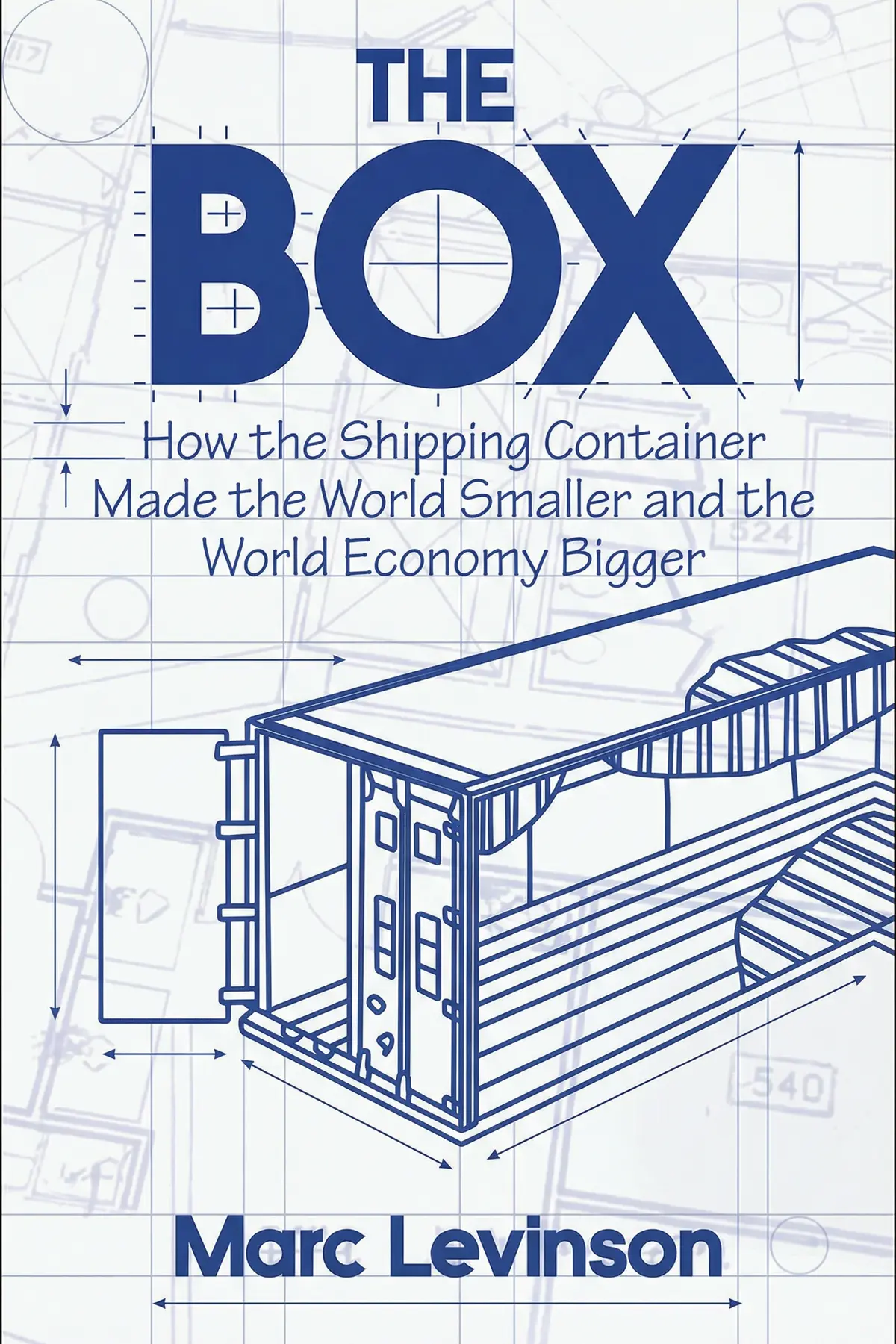
Explore the fascinating history of the shipping container, a simple metal box that drastically reduced transportation costs, revolutionized global trade, and paved the way for the interconnected world economy we live in today.
1 min 57 sec
Imagine standing on a high pier overlooking a modern harbor. Below you, a choreographed dance of steel is taking place. Massive cranes, reaching like mechanical giants into the sky, lift brightly colored metal boxes with surgical precision. They move them from the decks of ships that are longer than three football fields and place them onto waiting truck beds or rail cars. There is very little noise, almost no shouting, and surprisingly few people. This is the world of modern shipping, a marvel of automation and efficiency that we largely take for granted.
But if you had stood on that same pier just sixty or seventy years ago, the scene would have been unrecognizable. You would have seen thousands of men—longshoremen—heaving sacks of flour, rolling barrels of oil, and carrying crates of machinery on their backs. It was a slow, dangerous, and incredibly expensive process that kept the world large and trade restricted. The shift from that chaotic manual labor to the silent efficiency of today was driven by one thing: the shipping container.
In this exploration of Marc Levinson’s work, we are going to look at the history of that simple metal box. We will see how it wasn’t just the box itself, but the vast, interconnected system built around it that changed the face of the global economy. We will follow the journey of an outsider who dared to challenge the shipping establishment, witness the life-and-death struggles of the world’s great ports, and discover how a logistical nightmare in the jungles of Vietnam finally proved that the container was the future. By the end, you’ll see how this single innovation made the world smaller and transformed how everything from your morning coffee to your latest smartphone reaches your door.
2 min 32 sec
Discover why the shipping container’s true power lies not in its physical design, but in the highly efficient, global system of movement it created.
2 min 22 sec
Explore the profound social and physical transformation of the world’s ports as machines replaced the brawn of the longshoremen.
2 min 22 sec
Meet the self-made trucking mogul who realized that the secret to better shipping wasn’t in the ships, but in the logistics.
2 min 23 sec
Learn how the rigid infrastructure of established cities like New York paved the way for the rise of modern container hubs like Newark.
2 min 11 sec
Understand the high-stakes battle over sizes and locks that threatened to derail the container revolution before it truly began.
2 min 21 sec
Discover how a logistical crisis during the Vietnam War provided the ultimate testing ground for the container’s military and commercial potential.
2 min 29 sec
See why the container business became a high-risk game where only the largest and most efficient players could survive.
2 min 31 sec
Examine how the dramatic drop in shipping costs fundamentally reorganized global manufacturing and made the word ‘logistics’ a household name.
2 min 27 sec
As we look back at the journey of the shipping container, it is clear that its impact far exceeded its humble appearance. What began as a trucker’s frustration with highway traffic evolved into a global system that redefined how we live and work. We have seen how it dismantled the old world of the waterfront, leaving behind the romantic but inefficient era of manual labor in favor of a silent, automated future. We witnessed the fierce battles for standardization and the high-stakes financial gambles that built the massive infrastructure of modern trade. And we saw how a logistical victory in Vietnam set the stage for the global supply chains that define our current economy.
The throughline of this story is efficiency. By slashing the cost of transport, the container didn’t just change shipping; it changed the very nature of value. It made the world smaller and the global economy much, much bigger. However, as Marc Levinson reminds us, this progress came at a cost. Traditional port cities were hollowed out, and the power of labor unions was significantly diminished. The world became more interconnected, but also more dependent on a fragile, just-in-time system that relies on the constant, uninterrupted flow of those metal boxes.
So, what can we take away from this story in our own lives? Perhaps the most important lesson is that the biggest changes often come from the most unexpected places. It wasn’t a new engine or a faster ship that changed the world, but a better way of organizing the movement of things. When you are looking at your own business or career, don’t just focus on the ‘product.’ Look at the system that delivers it. Are there bottlenecks that are being ignored simply because ‘that’s how it’s always been done’?
Additionally, consider the geography of your operations. In a containerized world, distance is cheap, but infrastructure is vital. Being near a high-efficiency hub is often more valuable than being near your customers. As you move forward, remember that the invisible systems around us—like the one built for the container—are the true engines of the modern world. By understanding how they work, we can better navigate the complex, interconnected landscape they have created.
The Box tells the unlikely story of how a standard metal container transformed the world. Far from being just a piece of industrial equipment, the shipping container was the centerpiece of a new, highly efficient system that changed everything from the layout of our cities to the prices of the goods in our stores. This book explains how the vision of a trucking mogul named Malcolm McLean overcame regulatory hurdles, labor unrest, and technical challenges to create a global shipping standard. You will learn about the decline of traditional ports like New York and the rise of massive automated terminals. The narrative explores how the Vietnam War served as a crucial proving ground for containerization and how standardization eventually allowed goods to flow seamlessly across borders. Ultimately, the book promises to reveal the hidden mechanics of globalization, showing how the drastic reduction in shipping costs made it possible for components to be manufactured across different continents and assembled into the products we use every day.
Marc Levinson is a distinguished journalist and author known for his ability to weave together economic theory, business strategy, and historical narrative. Over his career, he has written five best-selling books and numerous articles that focus on making complex economic concepts accessible to a broad audience. His work often highlights the intersection of technology, infrastructure, and global markets.
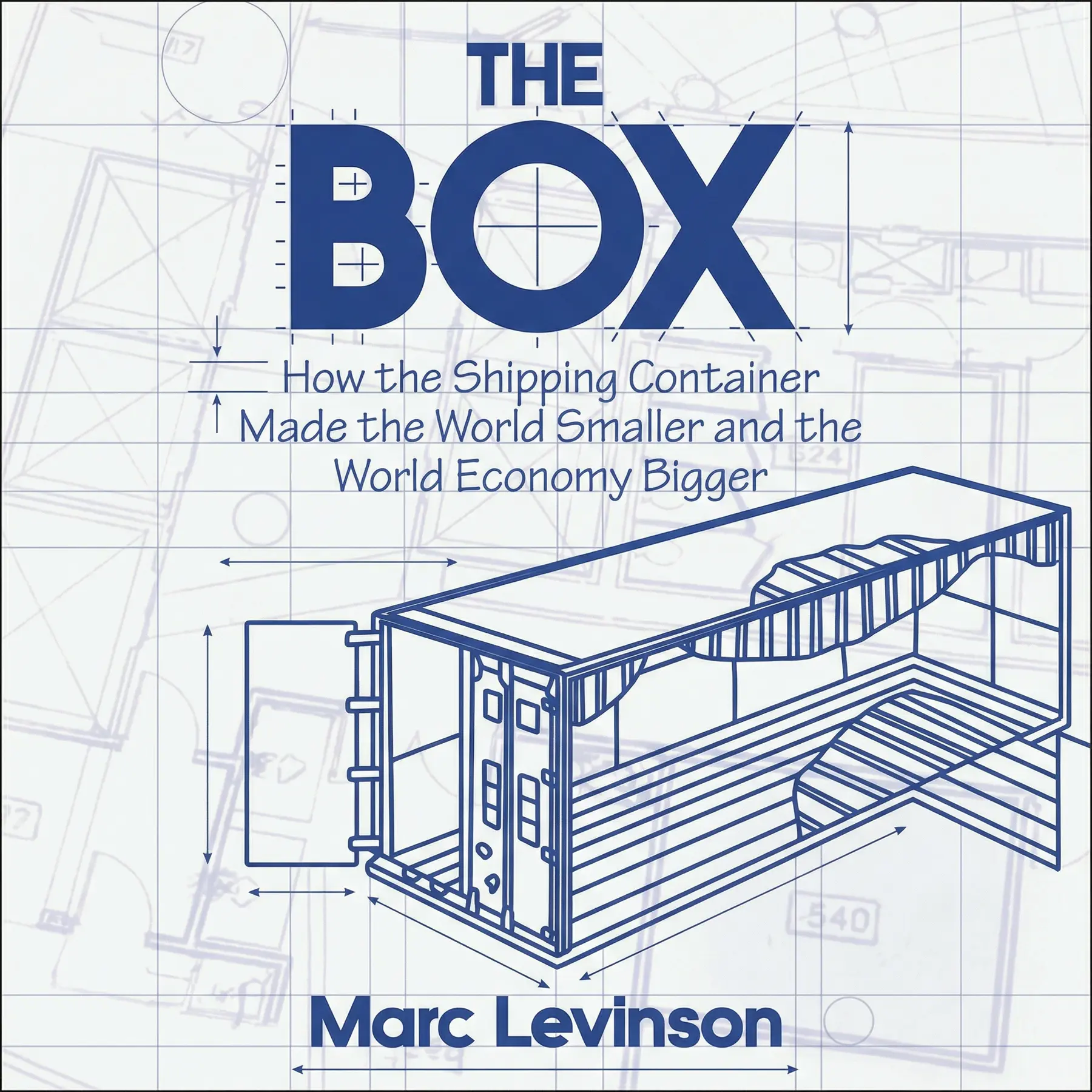
Listeners find this book to be essential reading for anyone in the global commerce field, noting the thoroughly documented account of the shipping container's evolution. The prose is captivating, and one listener characterizes the narrative as an intriguing trek through the history of globalization. Listeners value the deep dive into cross-border trade and how it shaped the global financial landscape, while highlighting the book’s inventive and intellectually challenging approach.
Ever wonder why your clothes are made in Vietnam but designed in the US? This book provides the definitive answer by looking at the humble shipping container. Levinson is an economist, but he writes with the clarity of a veteran journalist who knows how to keep a narrative moving. The section on the Vietnam War’s role in proving the container’s efficiency was a total revelation for me. It’s a fascinating journey through the history of globalization that manages to be both brain-stimulating and deeply informative. While the technical details on crane engineering might be dense for some, they illustrate the massive scale of this revolution. Highly recommended for anyone who wants to understand the invisible infrastructure of international trade.
Show moreWow. I never thought I would be so captivated by a 400-page book about freight transportation. Levinson’s thesis is simple: the container was more important to the global economy than the internet itself. He backs this up with incredible research, from the rise of Port Elizabeth to the decline of the London docks. The way he handles the "Three Cs"—Container, Commodity, Customer—is a masterclass in economic storytelling. Every page offers a new insight into why our world looks the way it does today. It’s a brain-stimulating read that stays with you long after you’ve finished the final chapter. If you have even a passing interest in history, you need to read this book immediately.
Show moreLook, if you want to understand globalization, you have to start with the box. Marc Levinson provides a fascinating historical journey that explains why ships became massive floating warehouses. The book is incredibly well-researched, detailing everything from the engineering of cranes to the political maneuvering of port authorities. I was particularly struck by how the automation of the loading process essentially erased the character of old port cities. It’s a bittersweet story of progress that highlights both the winners and the losers of the shipping revolution. Even without many pictures, the author’s descriptions are vivid enough to make the scale of the operation clear. This is essential reading for anyone curious about the mechanics of the world economy.
Show morePicked this up because I see these metal boxes every day but never thought about their origin. Levinson turns what sounds like a boring logistics manual into a sweeping epic about how the world got smaller. The story of Malcom McLean is genuinely inspiring, showing how one person’s stubbornness can break centuries of maritime tradition. To be fair, some chapters on regulatory hurdles and labor union negotiations felt a bit like wading through thick mud. However, once you grasp how these boxes paved the way for the cheap goods we take for granted, you can't look at a cargo ship the same way. It's a deep dive into the "Three Cs" that define our modern existence. I just wish there were more maps to trace the geographic shifts from old urban piers to massive new terminals.
Show moreAfter hearing so much about supply chain issues lately, I felt compelled to understand how the system actually works. Levinson does a masterful job of explaining how the container slashed shipping costs and effectively killed off the traditional longshoreman profession. The way he describes the "death" of the old New York piers is hauntingly beautiful and quite sad. It’s a classic story of technology disrupting lives—some people got rich while entire neighborhoods lost their livelihoods. The book can be a bit US-centric, which is a bit of a shame given how global the industry is now. Still, it’s a must-read for anyone involved in international trade or logistics. You’ll definitely walk away with a newfound respect for those big metal boxes.
Show moreAs someone who works in manufacturing, I found "The Box" to be an eye-opening account of our industry's backbone. Levinson brilliantly connects the dots between a trucker's wild idea and the birth of just-in-time manufacturing. The chapters on the battle between different shipping lines over container sizes were particularly gripping. It’s rare to find a book that makes the standardization of metal latches feel like a high-stakes thriller. My only real complaint is that the latter half of the book ignores much of the Asian and European expansion. Nevertheless, it’s a brilliant look at how a simple box made the global village a reality. It really forces you to think about the true cost of "low-cost" shipping.
Show moreFinally got around to reading this classic, and it’s easy to see why it’s so highly regarded in business circles. It’s a thorough, even-handed look at a technology that changed everything about how we consume goods. The struggle for Malcom McLean to even get his first ship, the Ideal X, into the water is a great underdog story. You really get a sense of the immense pressure from unions and regulators who were terrified of change. Look, the prose isn't exactly poetic, but it gets the job done without being overly flashy. My biggest gripe is the lack of maps, which made following the geography of the New York harbor changes a bit difficult. It’s still a foundational text for understanding the modern world.
Show moreThe truth is, I found this book to be a bit of a mixed bag. On one hand, the history of how standardization was reached through endless committee meetings is surprisingly tense. On the other hand, the writing is occasionally dryer than a desert, making it hard to stay engaged during the middle sections. I was disappointed by the total lack of photographs or diagrams, especially when the author is describing complex mechanical systems or ship designs. For a book about such a visual and physical object, the absence of illustrations feels like a major oversight. It’s an important work for understanding macroeconomics, but be prepared for a slow burn. It isn't exactly the Malcolm Gladwell style of storytelling I was hoping for.
Show moreThis book is an intermediate work that definitely requires some background knowledge of 20th-century history to fully appreciate. While the initial chapters on the chaos of the old piers are great, the middle section on international standards dragged on way too long. I think the author is clearly more of an economist than a storyteller, which shows in the way he prioritizes data over narrative. It’s a solid history, but it lacks the human element that could have made it a truly great book. For instance, we hear a lot about the unions, but rarely from the perspective of the workers themselves. It’s a valuable resource, but maybe not something you’d want to take on a beach vacation.
Show moreNot what I expected at all, unfortunately. I was looking for a narrative history, but this felt more like a dense textbook on maritime law and economic theory. There are long stretches of data tables and statistics that really killed the momentum of the story for me. Without any maps or photos of Malcom McLean, it was difficult to visualize the scale of the changes being discussed. Frankly, the author assumes you already have a degree in macroeconomics, often throwing around terms without much explanation. I appreciated the research that went into this, but the delivery was just too clinical for my taste. If you love reading about port tariffs and labor contracts, this is for you, but otherwise, it’s a slog.
Show moreJames Shapiro

Pankaj Mishra

Charles C. Mann

Ben Macintyre

Fay Bound Alberti

Ron Chernow

Philip Freeman
Andrew Ross Sorkin
AUDIO SUMMARY AVAILABLE
Get the key ideas from The Box by Marc Levinson, plus 5,000+ more titles in English and Thai.







