
22 min 19 sec
The Broken Ladder: How Inequality Affects the Way We Think, Live, and Die
By Keith Payne
The Broken Ladder explores the psychological impact of income inequality, revealing how our relative standing—not just our absolute wealth—profoundly shapes our health, decision-making, and the social stability of our communities.
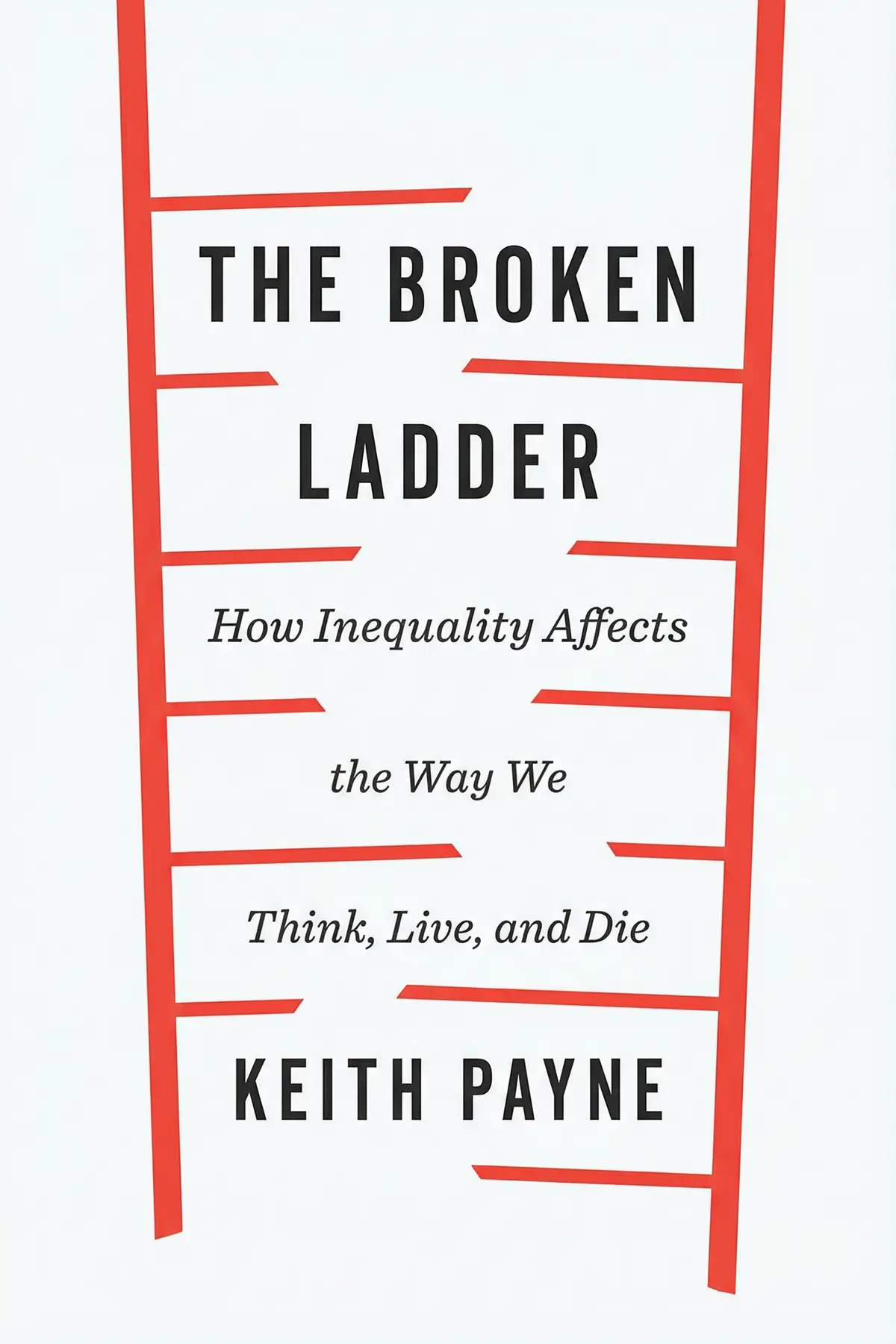
Table of Content
1. Introduction
1 min 54 sec
Imagine for a moment that you are standing on a ladder. This ladder represents the entire social and economic structure of your society. On the top rungs, you have the people who have everything: the best education, the highest-quality healthcare, and more money than they could ever spend. At the bottom are those struggling for the basics, facing constant instability. Now, look at where you are standing. How does that position make you feel?
Most of us spend a great deal of time looking up at those above us rather than down at those below. This simple act of comparison—a fundamental part of being human—is the driving force behind a phenomenon that Keith Payne explores in his work. We often think of inequality as a simple matter of dollars and cents, a dry economic statistic found in a government report. But as we will see, inequality is actually a deeply personal, psychological experience. It changes how we perceive the world, how we treat our neighbors, and even how our bodies function on a cellular level.
In the following minutes, we are going to explore why a person’s subjective feeling of being poor can be just as damaging as actual, objective poverty. We’ll look at why the human brain is so sensitive to status and how the widening gap between the rich and the rest of us is creating a culture of chronic stress, risky behavior, and political hostility.
We will uncover the answers to some startling questions. For instance, why would someone pay a fortune for a sandwich that looks like a religious icon? Why do professional athletes sometimes play worse when they are surrounded by teammates who earn significantly more or less than they do? And perhaps most importantly, we will examine what we can do to fix this “broken ladder” before it falls apart entirely. This is not just a story about money; it is a story about the very fabric of our lives and how we can start to repair the connections that inequality has frayed.
2. The Power of Relative Comparison
2 min 36 sec
Discover why modern wealth doesn’t always lead to satisfaction and how our internal sense of ‘enough’ is shaped by the people living right next door.
3. The Biological Toll of Low Status
2 min 29 sec
Status isn’t just about pride; it’s a biological signal that can trigger chronic stress and long-term health issues, affecting everything from heart health to anxiety.
4. Inequality and the Urge for Immediate Reward
2 min 13 sec
Explore the psychological link between feeling behind and taking big risks, and why inequality often leads to short-term thinking over long-term stability.
5. The Polarization of the Social Mind
2 min 11 sec
How status affects our politics: see why those at the top often want to exclude others from power and why inequality fuels such deep social division.
6. Inequality as a Public Health Crisis
2 min 23 sec
Learn why the most equal societies are often the healthiest, and why your social standing might be a better predictor of your lifespan than your bank balance.
7. How Powerlessness Warps Our Perception
2 min 17 sec
Discover the strange psychological link between social status and ‘seeing things,’ from religious apparitions to the rise of conspiracy theories.
8. The Resentment in the Modern Workplace
2 min 16 sec
Why the dream of ‘the ladder’ might be backfiring: see how huge pay gaps in the office can actually lower performance and burn out your best employees.
9. Climbing Down the Comparison Trap
2 min 14 sec
Actionable ways to protect your mental health from the effects of inequality by changing who you compare yourself to and what you value.
10. Conclusion
1 min 46 sec
The Broken Ladder presents a sobering look at the invisible forces that shape our lives. We have seen that inequality is not just an economic issue but a psychological and biological one. It is a phenomenon that affects the way we think, the way we treat our neighbors, and the very health of our bodies. When the gap between us becomes a chasm, it triggers a cascade of negative effects: from the chronic stress that shortens our lives to the risky behaviors and political divisions that threaten our social stability.
The throughline of Keith Payne’s work is clear: humans are fundamentally social creatures, and we are built to care about fairness and status. When those things are out of balance, everything else begins to tilt. We’ve explored how our tendency to compare ourselves to others can lead us into a trap of constant dissatisfaction, and how the feeling of powerlessness at the bottom of the ladder can even warp our sense of reality.
However, the message is not one of despair. By understanding the psychology of inequality, we gain the tools to combat its effects. We can push for systemic changes that create a more level playing field, and we can also take control of our own mental landscapes.
As you move forward, try this: the next time you feel that familiar pang of envy or that sense that you aren’t doing “well enough” because of something you see on a screen or in a neighbor’s driveway, pause. Ask yourself if those things align with your actual values. Remember that the ladder is often an illusion, and the most important things in life—connection, purpose, and peace of mind—can’t be measured by a bank balance. By focusing on what truly matters, we can begin to mend the ladder, one rung at a time, for ourselves and for the society we share.
About this book
What is this book about?
The Broken Ladder dives deep into the hidden psychology of inequality, arguing that how we perceive our social status is just as important as the actual amount in our bank accounts. It isn't just a book about poverty; it is a study of how the gap between the haves and the have-nots creates a ripple effect that touches every aspect of human life. From the way our brains process risk and reward to the physical stress levels that dictate our longevity, inequality acts as a silent architect of our daily experience. The book promises to reveal why even those in the middle class often feel like they are struggling to keep up, and how these subjective feelings of lack lead to real-world consequences like political polarization and declining workplace productivity. By examining research from psychology and neuroscience, the narrative explains why human beings are biologically wired to care about fairness and status. Ultimately, it offers a path forward, suggesting that while systemic change is necessary, there are also personal strategies we can use to reclaim our sense of well-being in an increasingly unequal world.
Book Information
About the Author
Keith Payne
Keith Payne is a professor of psychology and neuroscience at the University of North Carolina. He is widely recognized as a leading expert in the psychology of inequality. His extensive research into how wealth distribution affects cognitive and emotional health has gained significant national attention, being featured in major outlets such as the Atlantic and the New York Times. Additionally, his insightful articles have been published in Scientific American and Psychology Today, establishing him as a prominent voice in understanding the intersection of economics and human behavior.
Ratings & Reviews
Ratings at a glance
What people think
Listeners find this work highly accessible and essential for anyone concerned about social disparity, appreciating the well-documented content that merges current psychological research. The narrative style is well-regarded, with one listener highlighting the author’s modest approach, and listeners describe the experience as eye-opening, with one mentioning it transformed their outlook on life. The book draws a range of reactions concerning its specific take on inequality.
Top reviews
Por
The chapter on 'Lunch Lady Economics' hit me surprisingly hard because it frames poverty as a relative experience rather than just an absolute lack of funds. Payne manages to weave together hard data from neuroscience with a very human perspective on how we perceive our social standing. It’s one thing to hear that inequality is growing, but another entirely to understand how that gap physically changes our stress levels and life expectancy. I found the section on the ‘Lake Wobegon effect’ particularly enlightening—the idea that we all think we're above average until the ladder gets too steep to ignore. While the book is mostly focused on the US, the psychological principles are universal. It’s accessible, fast-paced, and frankly, it should be required reading for anyone trying to understand why our current political climate is so polarized.
Show moreKanokporn
As someone who grew up in a rural area similar to the author's Kentucky roots, his story about the free lunch program resonated deeply. This isn't just a book about economics; it’s a mirror for our own insecurities and social anxieties. Payne explains how feeling poor can be just as damaging as actual deprivation, leading to risky behaviors and long-term health issues. The connection between income gaps and racial prejudice was particularly eye-opening for me, showing how systemic issues are reinforced by our psychological biases. It’s rare to find a science book that feels this personal and empathetic. I finished it in two sittings and have been thinking about 'relative status' every time I scroll through social media now. It really changes your perception of what a 'successful' life looks like.
Show moreZoey
What makes this book stand out is how it integrates multiple disciplines—psychology, neuroscience, and sociology—to tackle a single, massive problem. Keith Payne is a masterful storyteller, taking complex concepts like the 'veil of ignorance' and making them feel relevant to our daily lives. The evidence that inequality leads to shorter lifespans and increased stress hormones like cortisol is damning. I was particularly struck by the chapter on 'Poor Logic,' which explains why people in precarious situations make choices that look irrational from the outside but are actually logical survival strategies. It’s a powerful challenge to the 'pull yourself up by your bootstraps' mentality. This book doesn't just present problems; it shifts the lens through which we view poverty and success entirely.
Show moreElla
This book should be required reading for anyone in management or public policy. Payne expertly explains how the widening gap between the haves and have-nots creates a toxic environment that affects everything from our heart rates to our voting patterns. The chapter on racial inequality was particularly gut-wrenching, showing how stereotypes are used as a psychological tool to justify these massive gaps. In my experience, it’s one of the most important books I’ve read in years. It doesn't just explain why we are divided; it explains why we feel divided on a biological level. The use of charts to back up the narrative was a great touch, making the data easy to digest without being overwhelming. It’s a call to action disguised as a psychology book.
Show moreSun
After hearing about the 'Broken Ladder' for months, I finally dove in and I’m glad I did. The way Payne describes the stress response—how our bodies redirect energy from long-term repair to immediate survival—perfectly explains why inequality is a literal killer. It’s not just about the money; it’s about the constant, low-level hum of anxiety that comes from being on the lower rungs. I appreciated the author’s focus on 'relative' vs 'absolute' poverty. Even if we have more 'stuff' than people did fifty years ago, the social distance between us has grown, and that’s what’s hurting us. It’s a sobering read but an essential one. It really makes you look at your neighbors, your coworkers, and your own ambitions through a much more compassionate lens.
Show moreRoydao
Finally got around to reading this after seeing it cited everywhere, and it’s a solid look at how our brains handle status. Payne uses this great metaphor of a ladder to show that it's not just about the bottom rung, but the distance between the rungs. I loved the study about the capuchin monkeys getting upset over unequal treats—it shows that our sense of fairness is literally baked into our biology. My only gripe is that it feels a bit short. At around 250 pages, I felt like he could have dug deeper into the solutions rather than just identifying the symptoms. Still, the writing is very humble and never feels like a dry academic lecture. If you've ever felt 'less than' despite having enough to get by, this explains exactly why your brain is doing that.
Show moreDimitri
Picked this up because I was curious about why society feels so fractured lately, and Payne’s explanation of 'vertical living' makes a lot of sense. The truth is, we are constantly comparing ourselves to those above us, and when the top of the ladder is out of sight, it messes with our decision-making. I was fascinated by the data on CEO pay—350 to 1 is a staggering ratio that clearly impacts worker morale and productivity. The writing is incredibly clear and the author doesn't hide behind jargon. I do wish there was a more formal bibliography for further research, but as an entry point into behavioral science, it’s top-tier. It definitely makes you rethink your own place on the ladder and how you view those on different rungs.
Show moreTariq
Ever wonder why winning the lottery often ruins people’s lives, or why we feel 'broke' even with a decent salary? This book dives into the 'why' behind those feelings. I found the section on sports inequality—how teams with massive pay gaps actually perform worse—to be a brilliant way to illustrate his point. It turns out that fairness isn't just a moral preference; it’s a requirement for high-functioning groups. Payne’s writing is approachable and he comes across as very humble, often using his own life experiences to ground the science. My only complaint is that the 'solutions' chapter felt a bit rushed compared to the deep dive into the problems. Regardless, it's a fast, enlightening read that will definitely spark some heated dinner-table conversations.
Show moreTakeshi
I wanted to love this book more than I actually did. To be fair, Payne’s core argument that inequality is a public health crisis is incredibly compelling and well-supported by the psychological studies he cites. However, the book feels a bit disjointed in the middle sections, wandering into political commentary that felt a bit like a surface-level op-ed. I was hoping for more rigorous data on the 'how' behind the neuroscience, but instead, it felt a bit like a collection of Psychology Today articles. The charts were helpful, but some of the correlations—like the ones between religion and inequality—felt a bit stretched. It’s a good introduction to the topic for a general audience, but if you’re already familiar with this niche, there might not be enough new material here to justify the read.
Show moreRung
Look, there are some interesting psychological experiments mentioned here, but the author's political bias is so thick it's hard to get through. He spends a lot of time painting conservatives and liberals into these very narrow boxes to fit his narrative about inequality. While I appreciate the look at how stress affects the body, the jump from 'monkeys like grapes' to 'we need massive wealth redistribution' felt a bit unearned. The data on conspiracy theories also seemed anecdotal at best; believing in a conspiracy isn't always a byproduct of feeling powerless. It’s a very U.S.-centric book that ignores how these dynamics play out in other cultures. If you’re looking for a neutral scientific study, this isn't it. It felt more like a long persuasive essay than a balanced psychological text.
Show moreReaders also enjoyed

A Biography of Loneliness: The History of an Emotion
Fay Bound Alberti
59 Seconds: Change Your Life in Under a Minute
Richard Wiseman
A Force for Good: The Dalai Lama's Vision for Our World
Daniel Goleman
A Room of One’s Own
Virginia Woolf
AUDIO SUMMARY AVAILABLE
Listen to The Broken Ladder in 15 minutes
Get the key ideas from The Broken Ladder by Keith Payne, plus 5,000+ more titles in English and Thai.
- 5,000+ titles
- Listen as much as you want
- 7-day free trial
- Cancel anytime







