
23 min 45 sec
The Capitalist Manifesto: Why the Global Free Market Will Save the World
Johan Norberg challenges modern critiques of the free market, demonstrating how capitalism has historically reduced global poverty, fueled innovation, and provided the wealth necessary to solve contemporary environmental and social challenges.
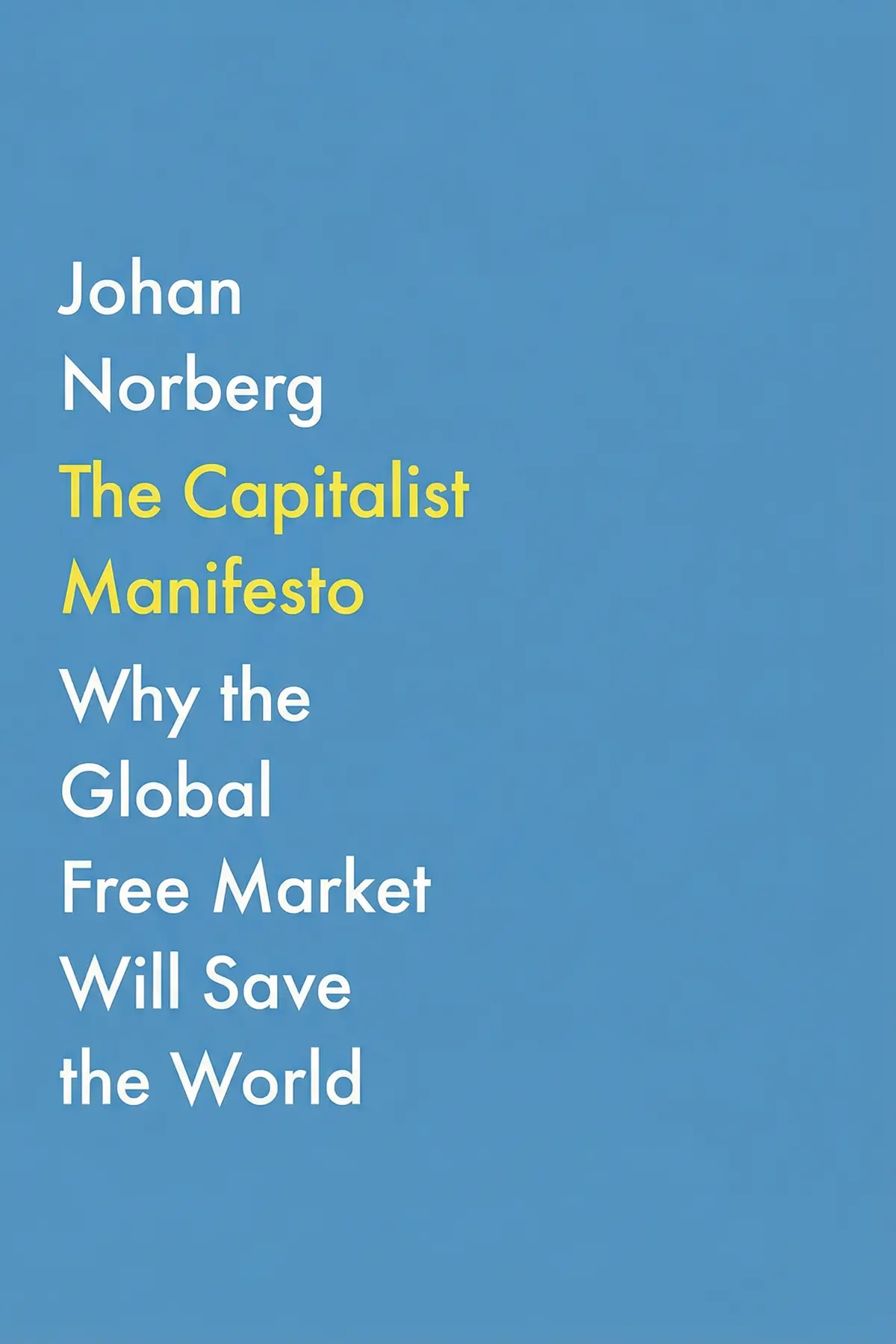
Table of Content
1. Introduction
1 min 50 sec
In recent years, it has become increasingly common to hear that the world is in a state of managed decline. Whether it is the anxiety over rising inequality, the fear of automation stealing our livelihoods, or the looming threat of environmental collapse, the prevailing narrative often points a finger at capitalism as the culprit. But what if this perspective is not just pessimistic, but factually incomplete? What if the very system being blamed for our problems is actually the most effective tool we have for solving them?
In this exploration of Johan Norberg’s insights, we are going to look at the remarkable resilience and success of the global free market. We often take for granted the staggering levels of prosperity we see today, forgetting just how quickly these gains were achieved. From the dramatic reduction of extreme poverty in the developing world to the unexpected ways that big tech companies actually drive consumer benefits, the story of capitalism is one of constant evolution and surprising outcomes.
We will move beyond the headlines to understand the underlying mechanics of economic freedom. You will see how the drive for innovation does not just line the pockets of the wealthy, but creates a rising tide that lifts all boats—often in ways that are invisible to the casual observer. We’ll examine the throughline that connects individual entrepreneurship to global stability and personal happiness. By the end of this summary, the goal is to provide a comprehensive look at why embracing economic liberalization is not just a choice for financial growth, but a path toward a more humane, sustainable, and connected world. Let’s dive into the data and the stories that reveal the true impact of the capitalist manifesto.
2. The Great Poverty Reduction
3 min 21 sec
Witness the staggering transformation of global living standards since the 1990s and discover how economic liberalization has lifted billions of people out of dire circumstances.
3. The Reality of Modern Work
3 min 15 sec
Explore why the rise of automation and the decline of traditional manufacturing are not signs of economic decay, but indicators of a more productive and satisfied workforce.
4. The Morality of Wealth Creation
3 min 07 sec
Understand why the success of the ‘one percent’ is often a byproduct of massive societal value creation rather than a zero-sum game of exploitation.
5. The Dynamic Nature of Monopolies
3 min 24 sec
Challenge the idea that big tech giants are untouchable monopolies and learn how market forces constantly threaten even the most dominant players.
6. Growth as the Green Solution
3 min 31 sec
Discover why the path to a cleaner planet isn’t through doing less, but through doing more with the help of market-driven innovation.
7. Capitalism and the Human Spirit
3 min 29 sec
Examine the psychological and social impacts of a free market society and learn why capitalism actually promotes connection and happiness.
8. Conclusion
1 min 48 sec
As we wrap up our journey through the arguments for a global free market, it’s clear that the story of capitalism is far more nuanced and positive than the modern headlines suggest. We have seen how economic liberalization has acted as the single most effective tool for dismantling extreme poverty, transforming the lives of billions across the globe. We have explored how the ‘threats’ of automation and big business are often just the growing pains of a society becoming more efficient and more focused on providing value to the average person.
Perhaps most importantly, we’ve seen that growth is not the enemy of the environment, nor is it the enemy of the human soul. Prosperity gives us the resources to heal our planet and the freedom to define our own happiness. The throughline here is simple but profound: when individuals are given the freedom to innovate, trade, and pursue their own interests, the collective result is a world that is wealthier, healthier, and more connected.
The challenge for the future is to resist the urge to turn back toward protectionism and heavy-handed control. While the system is not perfect, the evidence of the last few decades shows that the path to solving our greatest problems—from climate change to social isolation—lies in more freedom, not less. By trusting in the creative power of the individual and the efficiency of the market, we can continue the incredible progress that has defined the modern era. Thank you for listening, and may this perspective serve as a reminder of the power of human ingenuity in a free world.
About this book
What is this book about?
This exploration of modern economics serves as a robust defense of global capitalism in an era of increasing skepticism. It argues that the free market is not the cause of our modern crises but the primary solution to them. By examining data from the last few decades, the narrative shows how economic liberalization has lifted billions out of poverty, transformed the nature of work for the better, and created a more connected, generous society. The summary also addresses the common anxieties surrounding the rise of big tech monopolies and the growing 'degrowth' environmental movement. It proposes that only through continued growth and innovation can we achieve a sustainable and prosperous future. The promise of this analysis is a refreshed perspective on how individual freedom and market dynamics contribute to the collective flourishing of the human race.
Book Information
About the Author
Johan Norberg
Johan Norberg is a Swedish historian, lecturer, and senior fellow at the Cato Institute in Washington, DC. He gained international recognition with his best-selling books Progress and Open, which explore global development and economic policies.
Progress: Ten Reasons to Look Forward to the Future
Johan Norberg
Ratings & Reviews
Ratings at a glance
What people think
Listeners find the work outstanding for simplifying intricate economic principles and offering a wealth of data. They value its straightforwardness, with one listener highlighting how it aids in demystifying capitalism. The title earns praise for its accessibility, with one listener describing it as essential reading for those interested in economics.
Top reviews
Pairot
This book is a refreshing breath of air in an era where 'capitalism' has become a dirty word used by people who don't understand it. Norberg manages to take incredibly dense economic theories and break them down into something digestible for the average reader without losing the nuance. I especially appreciated the data-driven approach to how global trade has actually reduced extreme poverty over the last few decades. While some might find his optimism a bit much, it’s hard to argue with the sheer volume of facts he presents. It really clarifies how the free market acts as a catalyst for human progress rather than just a tool for the elite. This is essential reading for anyone who feels like they’re losing the plot in current political debates.
Show moreAom
Finally got around to finishing this, and I have to say the title isn't just clickbait. Norberg provides a robust, modern defense of the market that feels like a necessary update to classical liberal thought. He addresses the '1%' head-on in Chapter 4, arguing that inequality isn't the primary evil if the floor is rising for everyone. Frankly, it’s a bold take that will definitely ruffle feathers, but he backs it up with impressive global statistics. The writing is punchy and moves at a fast pace, making complex topics like carbon taxes and property rights easy to grasp. My only gripe is that he occasionally treats 'socialism' as a monolith, ignoring some of the more successful mixed-economy models. Still, it’s an essential piece of the puzzle for understanding why our world looks the way it does.
Show morePenelope
Wow, this really puts the 'manifesto' back in capitalism. Norberg writes with a passion that is contagious, making a data-heavy subject feel like a thrilling defense of human freedom. He successfully demystifies how markets actually function on the ground versus how they are portrayed in textbooks or on the news. Personally, I think this should be required reading in every introductory economics course to balance out the more pessimistic theories out there. It’s concise, well-argued, and provides a much-needed positive vision for the future of global trade. If you are tired of the constant doom-and-gloom about the economy, read this book immediately. It provides exactly the kind of wide-eyed analysis we need to counter modern stagnation.
Show moreThongchai
One thing Norberg gets absolutely right is the distinction between true free markets and the cronyism we see today. He doesn't shy away from the problems of the current system, but he argues persuasively that the solution is more competition, not more government control. The book is incredibly effective at breaking down why state-controlled economies in places like China are eventually doomed to stagnation. I found the sections on upward mobility and how innovation requires a level of 'freedom to fail' to be particularly inspiring. Frankly, it’s a refreshing change of pace from the usual anti-market rhetoric that dominates the media. The book is packed with facts that help demystify how wealth is actually created and distributed across the globe. Highly recommended for anyone who wants a fact-based look at the benefits of openness.
Show morePruet
Ever wonder why the 1970s look so different from a policy perspective than we were taught? Norberg highlights the surprising reality that it was often center-left leaders like Jimmy Carter who kickstarted the deregulation that saved failing industries. I found the section on the deregulation of aviation and even craft beer to be particularly eye-opening and fun to read. To be fair, he does gloss over some of the harsher social consequences of these shifts, which might rub some readers the wrong way. However, the core argument that openness beats isolationism is incredibly well-supported throughout the text. It’s a compelling polemic that challenges the current drift toward protectionism in both the US and China. Even if you don't agree with everything, the historical context is worth the price of admission.
Show moreDiego
The chapter regarding environmentalism within a free-market framework was the highlight of the whole experience for me. Most people assume capitalism and the planet are natural enemies, but Norberg argues that market-based solutions like carbon taxes are actually more effective than top-down bans. He shows a lot of clarity in explaining how innovation is driven by the freedom to fail and the incentive to improve efficiency. Truth is, some of the arguments about the '1%' saving lives felt a bit hyperbolic and might lose more skeptical readers. Regardless, his defense of globalism over protectionism is timely given the current geopolitical climate we are seeing today. It's a highly readable survey that manages to demystify why trade is a win-win rather than a zero-sum game. Definitely worth picking up if you want to sharpen your understanding of global economics.
Show moreTaw
After hearing so much buzz about Norberg's latest work, I was surprised by how accessible the prose actually was. He centers his argument on the idea that capitalism is truly about the freedom for individuals to make their own economic choices. This perspective is a great way to reframe the discussion away from just 'money and greed' toward human agency and innovation. Not gonna lie, I think he ignores how student debt and low wages can limit that 'freedom' for a lot of people in the middle class. However, his points about how the market has lifted billions out of poverty globally are impossible to ignore. It’s a sophisticated defense of neoliberalism that avoids the typical dry jargon of the genre. It’s a solid four-star read for the clarity and the sheer volume of facts provided.
Show moreNit
Not what I expected from a book with such a provocative title. I thought it would be a dry, ideological rant, but it’s actually a very calm and data-driven exploration of world economics. Norberg’s ability to explain why things like property rights are essential to a functioning society was a nice surprise. Gotta say, his defense of the top earners in the fourth chapter was a bit hard to swallow at times, even if his logic was internally consistent. The book really excels when it shows the human side of capitalism—how it empowers the poor to improve their own lives through trade. It’s a clear, engaging read that avoids the typical traps by acknowledging where current systems are failing. A great addition to any library for those who want to understand the modern economic conjuncture without the fluff.
Show moreFelix
As someone who leans more toward a social democratic model, I found myself arguing with this book on every other page. Norberg is an incredibly talented writer, and his ability to synthesize data is top-notch, yet his perspective feels one-sided. He makes a fascinating case about how Jim Crow laws were actually undermined by 'greedy' capitalists seeking black customers, but it feels like he’s cherry-picking rare exceptions to prove a rule. Look, the book is great at showing how capitalism creates wealth, but it fails to adequately address how that wealth is often used to lobby and distort the very 'free' market he loves. I gave it three stars because it’s a brilliant articulation of the neoliberal worldview, even if I think his dismissal of state intervention is far too hasty. It’s a useful read to understand the 'other side' of the economic argument.
Show moreDao
Picked this up to broaden my horizons, but I left feeling a bit unconvinced by the lack of deep causal analysis. Norberg is great at showing charts where 'Capitalist Country A' is doing better than 'Planned Economy B,' but he doesn't spend enough time on the underlying why. Is it just the market, or is it also a history of stable institutions, geography, or education? To be fair, his writing style is excellent and he makes a very strong case against the recent trend of protectionism. He also provides some really interesting historical tidbits about how various socialist parties were actually the ones to de-socialize places like India and New Zealand. It’s a good book for a specific viewpoint, but it feels more like a polished lawyer's brief than a neutral economic study. Still, it’s a valuable read for anyone interested in the debate.
Show moreReaders also enjoyed
A Little History of Economics
Niall Kishtainy
A Promised Land
Barack Obama

A River in Darkness: One Man’s Escape from North Korea
Masaji Ishikawa
A Splendid Exchange: How Trade Shaped the World
William J. Bernstein
A Theory of Justice
John Rawls

AUDIO SUMMARY AVAILABLE
Listen to The Capitalist Manifesto in 15 minutes
Get the key ideas from The Capitalist Manifesto by Johan Norberg, plus 5,000+ more titles in English and Thai.
- 5,000+ titles
- Listen as much as you want
- 7-day free trial
- Cancel anytime







