

20 min 30 sec
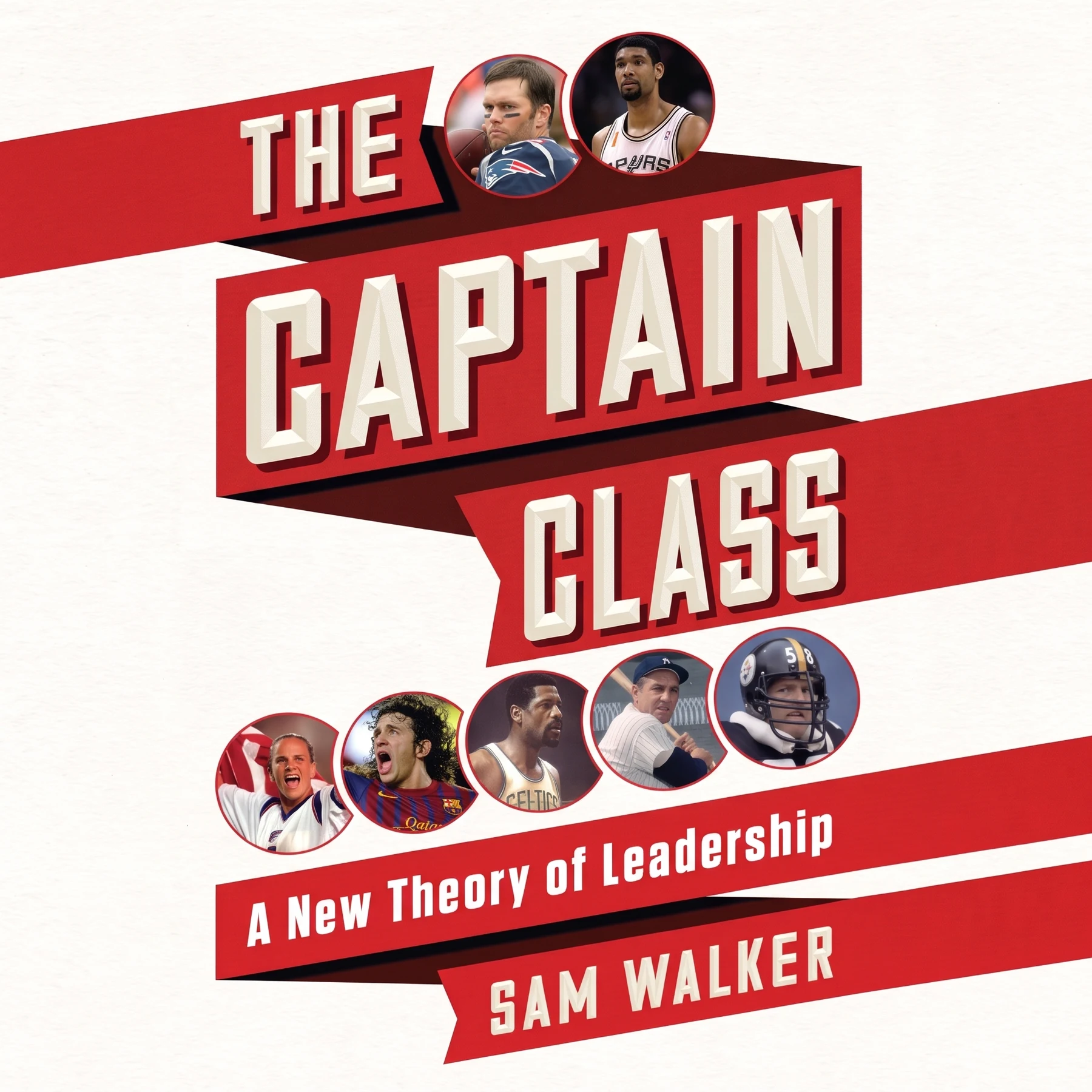
The Captain Class: A New Theory of Leadership
By Sam Walker
Explore the unconventional leadership secrets behind history’s most dominant sports teams. This summary reveals why gritty, selfless captains—rather than superstars or huge budgets—are the true engines of sustained championship success.

Table of Content
1. Introduction
1 min 38 sec
When we look at the most dominant sports dynasties in history—those rare teams that seem to win championship after championship without breaking their stride—our natural instinct is to search for a grand explanation. We look at the coach’s revolutionary strategy, the owner’s massive bank account, or the highlight-reel talents of a once-in-a-generation superstar. We want to believe that greatness is the result of something flashy and obvious. However, if you strip away the hype and look at the actual mechanics of these legendary squads, a different story emerges.
The true driver of elite performance isn’t found in the front office or the marketing materials. It resides right there on the field, often in a player who isn’t even the most talented person on the roster. This is the story of the “Captain Class,” a unique breed of leaders who serve as the hidden glue for the world’s greatest teams. These individuals don’t lead through ego or charismatic speeches; they lead through a relentless, gritty, and often selfless commitment to the collective goal.
In the pages that follow, we are going to dive deep into the specific traits that define these elite captains. We will explore why the most talented “superstar” clusters often fail where less-expensive teams succeed, and why a captain’s ability to handle the unglamorous work is more important than their ability to score the winning goal. We’ll see how these leaders manage the psychology of their teammates, fighting against the natural human tendency to slack off when working in a group. We will also look at the darker side of leadership—the moments where a captain must be willing to be the villain for the sake of the win. By the end of this journey, you’ll see that leadership isn’t about being the person everyone likes; it’s about being the person the team cannot win without.
2. The Myth of the Talent Cluster
2 min 31 sec
Discover why assembling a roster of the world’s most expensive superstars often leads to failure, and why bank accounts cannot buy a championship legacy.
3. The Profile of an Elite Captain
2 min 31 sec
Forget the charismatic superstar—the world’s greatest team captains are often invisible, unglamorous workers who lead through relentless effort, not ego. Discover why the players nobody notices are the ones holding dynasties together.
4. The Vital Bridge Between Coach and Team
2 min 23 sec
Your coach’s brilliance means nothing once the whistle blows. Discover why the captain—not the strategist—is the true architect of championship culture.
5. Defeating the Silent Threat of Social Loafing
2 min 27 sec
Your best players are secretly underperforming. Discover how elite captains weaponize personal sacrifice to eliminate the hidden force sabotaging championship teams.
6. The Strategic Value of the Non-Role Model
2 min 22 sec
Your favorite captain might be costing their team championships. Discover why the most successful leaders are willing to be the villain—and why their teams respect them for it.
7. The Power of Direct Communication
2 min 32 sec
Forget the locker room speech. Discover how history’s greatest captains inspired their teams through intimate, one-on-one conversations tailored to each player’s needs.
8. Harnessing the Biology of Connection
2 min 23 sec
Your brain is literally wired to sync with your teammates. Discover how elite captains weaponize mirror neurons to transform a group of individuals into a unified organism operating on pure instinct.
9. Conclusion
1 min 43 sec
As we look back at the patterns that define the world’s greatest sports dynasties, the evidence is overwhelming. Greatness is not something you can buy with a massive payroll, nor is it something that can be achieved through the efforts of a few isolated superstars. The common denominator of every Tier 1 team is a captain who embodies a very specific, very rare type of leadership.
These leaders are the ones who are willing to remain in the shadows while others take the credit. They are the ones who do the grueling work, who play through the pain, and who refuse to let their teammates fall into the trap of social loafing. They are the bridge between the coach’s vision and the reality of the game, translating abstract ideas into tangible results through their own tireless effort. They are not always the most popular people in the stadium, and they may not be the ones featured on the posters, but they are the indispensable force that makes winning possible.
The lesson for any aspiring leader—whether in sports, business, or any other field—is clear. If you want to lead a team to the pinnacle of success, you must be prepared to give more of yourself than you ask from anyone else. You must be willing to put the mission above your own ego and the needs of your teammates above your own public image.
So, as you move forward, ask yourself: are you willing to do the unglamorous work? Are you willing to be the one who connects with your teammates on a personal level, even when it’s difficult? Are you willing to be the gritty, relentless engine that keeps the team moving when the initial excitement fades? If you can answer yes to these questions, you aren’t just a player or a manager; you are part of the Captain Class. And that is where true, lasting greatness begins.
About this book
What is this book about?
What distinguishes a merely good team from one that dominates its sport for a decade or more? In this exploration of the world’s most successful athletic dynasties, the focus shifts away from the usual suspects like celebrity coaches or massive payrolls. Instead, the throughline of every legendary team is a specific, often overlooked type of leader: the captain. These captains are rarely the flashy superstars who command the most media attention. More often, they are gritty, unassuming individuals who operate in the shadows, prioritizing the team’s needs over their own glory. You will learn about the "Captain Class"—a group of leaders who share a distinct set of traits, from a willingness to do unglamorous work to an ability to connect with teammates on a deep, personal level. By examining the biological and psychological factors that drive group performance, this narrative promises to redefine your understanding of leadership, showing that the true power of a team lies in the self-sacrifice and relentless drive of its most dedicated member.
Book Information
About the Author
Sam Walker
Sam Walker is a highly respected journalist who serves as an investigative reporter and deputy editor for the Wall Street Journal. Beyond his editorial leadership, he is known for founding the newspaper’s daily sports coverage, bringing a rigorous, data-driven approach to athletic analysis. His previous literary work includes Fantasyland, a book that delved into the competitive and complex world of fantasy baseball.
Ratings & Reviews
Ratings at a glance
What people think
Listeners find that this work offers superb perspectives on team dynamics and leadership, featuring fascinating anecdotes and well-researched analysis. This title is both engaging and accessible, with one listener specifically noting its extensive use of scientific methodology. They value the sports-focused material, as one review highlights its great comparison of major global team sports.
Top reviews
Pranee
This book completely shifted my perspective on what makes a team actually win. Walker moves away from the flashy superstars and focuses on the 'water carriers'—the gritty, selfless captains who do the dirty work behind the scenes. It's a refreshing take that challenges the typical charismatic leader trope we see in every Hollywood movie. The research into these 16 global dynasties is thorough, even if some of the teams like the All Blacks or the Soviet hockey squad were new to me. I appreciated how he linked psychological studies to actual field play, making the 'Captain Class' feel like a tangible thing rather than just a vague vibe. Even if you aren't a massive sports nerd, the leadership takeaways are huge for anyone trying to build a high-performing culture.
Show moreRatree
Wow, what an absolute powerhouse of a book. It’s rare to find a sports narrative that actually offers a new way of looking at the world, but this one does it through the lens of character. Walker’s profile of the 'Captain Class' isn't about the people on the posters; it's about the people who hold the team together when things get ugly. The breakdown of how these leaders regulate their emotions and push their teammates during practice was incredibly insightful. It made me look at my own work habits and how I interact with my peers. If you want to understand the engine under the hood of greatness, this is the book you need to pick up immediately.
Show moreMats
The chapter on Michael Jordan and the 90s Bulls was worth the price of admission alone. Walker’s critique of Jordan as a flawed leader who needed a 'secondary' leader like Bill Cartwright to succeed was a bold and fascinating take. It’s these kinds of contrarian viewpoints that make this book stand out in a crowded market. Personally, I loved the emphasis on how these captains are often the ones willing to bend the rules or get their hands dirty to secure a win. It paints a much more realistic picture of competitive sports than the polished versions we usually get from PR departments. This is a must-read for any coach or athlete looking to understand the real mechanics of a winning culture.
Show moreDao
After hearing about this on a podcast, I decided to dive in, and it didn't disappoint. The book is an fascinating look at how a specific personality type can catalyze a group of talented individuals into a legendary dynasty. Walker’s style is easy to digest, with short, punchy chapters that focus on different traits like emotional regulation and grit. I was surprised by how much I enjoyed the sections on sports I don't even follow, like women's volleyball and field hockey. It shows that excellence follows a pattern, regardless of the game being played. It’s a great reminder that the most important work often happens when the cameras aren't even watching.
Show moreRungtip
Finally got around to reading this after seeing it on several 'best of' lists for leadership. It's essentially a sports book that doubles as a masterclass in management without being a dry, bulleted textbook. The way Walker dissects communication—especially the non-verbal cues and practical talk—really hit home for me. It’s not about the big speeches; it’s about the person who isn’t afraid to carry the equipment or challenge the status quo for the group's benefit. I did find some of the chapters a bit repetitive, and he occasionally glosses over the role of elite coaching or raw talent. Still, the comparison of global sports like handball and rugby alongside the NBA makes for a truly fascinating read.
Show morePrasarn
As someone who works in management, I found the breakdown of the seven traits incredibly useful for real-world application. Most leadership books tell you to be the loudest voice in the room, but Walker argues for the 'quiet' leader who leads from the back. The idea of the 'water carrier'—borrowed from French football—is such a powerful metaphor for servant leadership. My only gripe is that the book can get a bit bogged down in the methodology of how he chose the teams in the first place. I would have preferred more time on the captains themselves and less time defending why certain teams were 'Tier Two.' Regardless, it's a solid 4-star read for anyone interested in group dynamics.
Show moreWoramet
Ever wonder why certain dynasties just seem to have an edge that defies logic? Walker attempts to answer this by looking at the glue that holds these teams together: the captain. This isn't your standard biography of sports stars; it's a deep dive into the psychology of winning. I particularly enjoyed the global perspective, as the book moves seamlessly from the New York Yankees to the Soviet Red Machine. The writing is concise and avoids the usual fluff found in the business section of the bookstore. While I think he overstates the importance of the captain compared to the coach, the arguments are well-researched enough to give you pause. It definitely changed how I watch games now.
Show moreGun
While the narrative is undeniably engaging, I couldn't shake the feeling that Walker was working backward from a conclusion. He presents his findings with a scientific air, but the selection criteria for these 'Tier One' teams feels highly subjective at times. Why include the Spurs but exclude the 90s Bulls or the Tom Brady Patriots? It feels like he cherry-picked the dynasties that fit his specific seven-trait framework while ignoring outliers that didn't play by his rules. That said, the stories about Bill Russell and Yogi Berra are fantastic and well-told. To be fair, even if the data analysis is a bit shaky, the core message about serving the team before oneself is a lesson worth learning.
Show moreGung
The stories themselves are top-tier, especially the bit about Buck Shelford, but the central thesis felt a little forced. I appreciate the effort to bring a scientific methodology to sports history, but correlation doesn't always mean causation. Just because these 16 teams had a specific type of captain doesn't prove that the captain was the primary driver of their success over four years. There are too many variables like coaching and sheer luck to boil it down to one person's personality. Truth is, I enjoyed the book more as a collection of sports essays than as a definitive guide to leadership. It’s a fun read for a plane ride, but don’t expect it to provide a foolproof formula for your next business venture.
Show moreDiego
Not what I expected based on the hype. The central concept of the book—that one specific type of captain is the secret sauce for every great dynasty—just feels too simplistic for the complex world of professional sports. I’m skeptical of any theory that claims to have found the 'one thing' that guarantees success while dismissing luck, finances, and superstar talent. Specifically, the way he handles the Brazil 1958-70 soccer teams by ignoring their multiple captains felt like a huge hole in his logic. The writing is punchy and the anecdotes are fun for a Saturday afternoon, but as a serious piece of analysis, it didn't hold up for me. I wanted to love this, but I left feeling like it was more storytelling than actual science.
Show moreReaders also enjoyed


7 Powers: The Foundations of Business Strategy
Hamilton Helmer


A Bigger Prize: How We Can Do Better Than the Competition
Margaret Heffernan



A Year with Peter Drucker: 52 Weeks of Coaching for Leadership Effectiveness
Joseph A. Maciariello
AUDIO SUMMARY AVAILABLE
Listen to The Captain Class in 15 minutes
Get the key ideas from The Captain Class by Sam Walker, plus 5,000+ more titles in English and Thai.
- 5,000+ titles
- Listen as much as you want
- 7-day free trial
- Cancel anytime







