
15 min 04 sec
The Collective Edge: Unlocking the Secret Power of Groups
Discover why the most successful innovations aren't the work of lone geniuses, but the result of carefully designed group dynamics. This summary reveals the structural secrets behind high-performing teams and collaborative creativity.
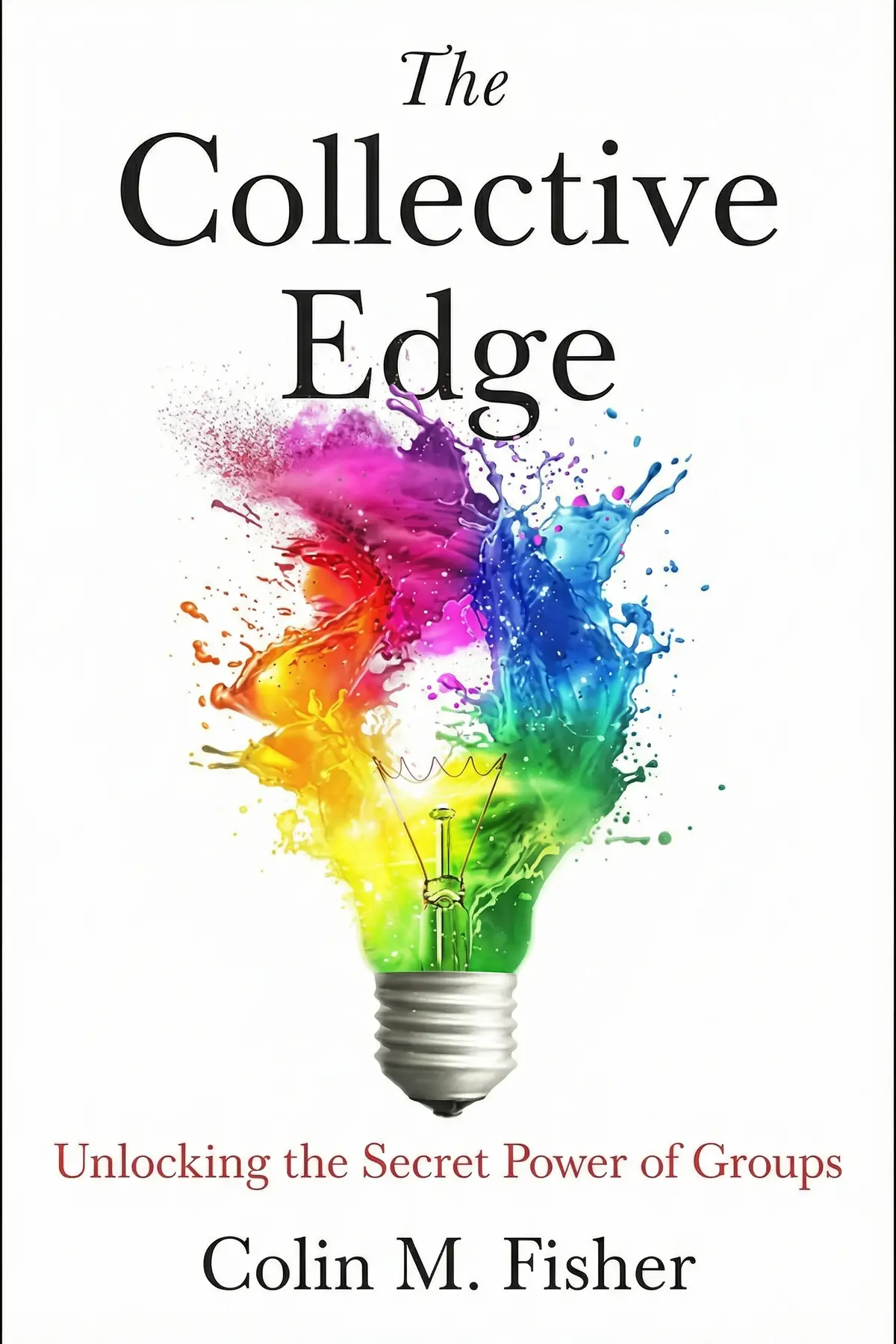
Table of Content
1. Introduction
1 min 56 sec
Think about the last time you were part of a truly exceptional group. Perhaps it was a project at work that felt effortless, or a volunteer team that moved mountains in a single weekend. In those moments, the collective energy feels almost magical, as if the group has become a single, high-functioning organism. Now, contrast that with the more common experience: the endless meeting where ideas go to die, or the committee that manages to be less than the sum of its parts. For most of us, we’ve learned to accept these two extremes as a matter of luck. We tell ourselves it’s about having the right chemistry or finding that one elusive superstar to lead the way.
But what if that “magic” isn’t magic at all? What if the difference between a failing group and a world-changing one is actually a matter of design? In his work, Colin M. Fisher explores the idea that we’ve been looking at success through the wrong lens. We are obsessed with the individual—the lone genius, the charismatic CEO, the visionary artist—but the reality of human achievement is far more collaborative. The breakthroughs that shape our world aren’t usually the product of a single mind working in isolation. They are the result of groups that have mastered a very specific, often invisible, set of rules.
In this exploration of the collective edge, we’re going to pull back the curtain on the hidden architecture of collaboration. We’ll look at why our brains are hardwired to give credit to individuals even when a group did the work, and how that bias prevents us from building better teams. We’ll dive into the specific ways tasks can be designed to spark natural motivation, and why the desire for harmony can actually be a group’s greatest weakness. Finally, we’ll redefine what leadership actually means—shifting it from an act of personality to an act of structural design. This isn’t just about making meetings more tolerable; it’s about unlocking a level of potential that simply doesn’t exist at the individual level.
2. The Myth of the Solitary Genius
2 min 28 sec
We love stories of lone heroes, but most major breakthroughs are team efforts. Discover why our bias toward individuals hides the true engine of human progress.
3. Engineering High-Performance Motivation
2 min 26 sec
Don’t rely on pep talks to inspire your team. Learn the five structural traits that can turn any task into a self-sustaining engine of engagement.
4. The High Cost of Consensus
2 min 17 sec
Harmony feels good, but it can be a death sentence for innovation. Find out why the best groups embrace friction and avoid the trap of groupthink.
5. Cultivating a Climate of Safety
2 min 11 sec
Psychological safety isn’t about being nice—it’s about being honest. Explore how the world’s best teams learn to fail out loud.
6. The Leader as a Structural Architect
2 min 18 sec
Forget the image of the heroic coach. Real leadership is about setting the stage before the play even begins. Discover the 60-30-10 rule.
7. Conclusion
1 min 28 sec
As we’ve seen, the collective edge is not something that happens by chance; it is a result of intentional design and a deep understanding of human psychology. We started by dismantling the myth of the lone genius, recognizing that our brains are naturally biased toward individual stories while overlooking the group dynamics that actually drive progress. We explored how motivation can be engineered into the very fabric of our tasks, and why the comfort of consensus can be a dangerous trap that leads to collective failure. We also saw that psychological safety is the bedrock of any high-performing group, providing the space for the honest dissent and risk-taking that innovation requires.
Ultimately, the lesson of the collective edge is that we must stop trying to be the smartest person in the room and start trying to build the smartest room. Leadership, whether it comes from the person with the title or from a member of the team, is the act of creating a structure where success is the most likely outcome. This means prioritizing clarity over charisma, and structure over coaching. As you move forward in your own work and life, ask yourself: Am I trying to be a hero, or am I trying to be an architect? When you shift your focus to the invisible forces that shape your groups, you unlock a power that no individual can ever match. The most complex challenges of our time won’t be solved by a single visionary, but by the groups that have the courage to design their own success.
About this book
What is this book about?
The Collective Edge challenges the persistent myth of the solitary visionary, arguing instead that the world's most significant breakthroughs emerge from the power of groups. Drawing on diverse fields—from scientific discoveries and design firms to hospital wards and political cabinets—Colin M. Fisher explores why some teams reach heights individuals never could, while others succumb to stagnation. The book provides a blueprint for harnessing collective intelligence by focusing on the invisible architecture of teamwork. It moves beyond superficial team-building exercises, focusing instead on task design, psychological safety, and the structural foundations that allow diverse minds to thrive. Readers will learn how to identify the hidden forces that drive group success and how to avoid the common pitfalls of conformity and poor leadership. By the end, the promise is a clear understanding of how to transform any collection of individuals into a high-functioning unit capable of solving the world's most complex problems.
Book Information
About the Author
Colin M. Fisher
Colin M. Fisher is an associate professor of organizations and innovation at University College London’s School of Management. He specializes in teaching students how to lead and work creatively in groups. His academic focus on group dynamics and creativity is uniquely informed by his previous career as a professional jazz trumpet player and his long tenure as a member of the Grammy-nominated Either/Orchestra.
Ratings & Reviews
Ratings at a glance
What people think
Listeners find the book thoroughly pleasurable. They value the high-quality information provided, with one listener highlighting how it assists in learning to navigate the difference between healthy and unhealthy conflict.
Top reviews
Pim
After hearing Fisher's interview on the EconTalk podcast, I went in with high expectations, but the depth here still managed to surprise me. Between the title and the slightly cheesy creativity cover, you might expect another light business read, but that isn't the case at all. Fisher explains how team structure is the single most important aspect of success, using what he calls the collective perspective. He brilliantly covers the pros and cons of conformity and competition in relation to group effectiveness without sounding like a dry textbook. Truth is, I am taking these lessons about group structure straight to my office and testing them immediately. It provides a comprehensive framework for anyone who needs to understand the underlying workings of the world.
Show moreKavya
This book moves past the tired cliches of empty motivational slogans to actually analyze why certain group structures fail while others thrive. Fisher is a world-renowned expert who knows exactly how to translate complex research into practical takeaways for the modern leader. I loved the way most sections start with the same letter, adding a bit of creative flair to a very intellectual project. The work is comprehensive and enjoyable, even when it dives deep into the sociological weeds of team dynamics. It evokes memories of groups at their best and worst, making the lessons feel personal rather than abstract. This is one of the more outstanding books on performance I have read in years.
Show moreSupachai
Wow, Fisher really nailed the balance between rigorous academic research and imminently practical office takeaways in this new volume. The book explains groups in their many concepts and teaches you how to enjoy the process of collaboration rather than fearing it. I was particularly interested in the discussion on how to navigate the difference between healthy and unhealthy conflict. It is backed by hard research but stays conversational and witty throughout every single chapter. The main idea is that a group's strength comes from each person being themselves while still playing in sync. I will be thinking about these insights for a long time to come.
Show moreThanit
Ever wonder why your team feels out of sync despite having talented individuals working on the same project? Fisher's guide explains how to pick up the thread at the right time by behaving more like a jazz band than a rigid hierarchy. The book describes the different components of team structure in a way that is easy to understand and apply. I found the examples from recent and not so recent events to be perfectly relevant to the challenges we face today. It is less about control and more about building trust and flexibility among your peers. This book stands heads above other recently published works on the topic of team performance.
Show moreYulia
The jazz band analogy alone makes this worth the price of admission for anyone struggling to manage a creative team. Fisher argues that effective groups require a specific kind of improvisation rather than rigid, top-down control. It is less about maintaining authority and more about fostering a sense of trust and flexibility among colleagues. By grounding his research in real examples from research labs and creative studios, the author makes the academic background feel approachable. Some sections go into a bit too much detail for the casual reader, but the central idea remains incredibly refreshing. In my experience, focusing on sensitivity to others is far more effective than following a strict hierarchy.
Show moreLuckana
Finally got around to reading this ARC and found the breakdown of how families and sports teams share the same DNA as corporate groups to be genuinely eye-opening. I learned plenty of facts and context that I would not have considered relevant to my professional life before. The book is organized into multi-chapter sections on cooperation, competition, and leading groups, which helps keep the information manageable. I appreciate how Fisher helps readers navigate the thin line between healthy dissent and unhealthy conflict within a team. Although the standard business book feel creeps in occasionally, the practical takeaways for institutional development are undeniable. I have already recommended it to several colleagues in administration.
Show moreNit
As someone who manages a diverse set of research labs, the emphasis on sensitivity to others rather than strict leadership roles resonated deeply. The author uses various examples drawn from both music and sports to show how different components of team structure influence success. It is fascinating what this book reveals about human group dynamics when you apply the collective perspective to everyday interactions. While some chapters might be too detailed for the ordinary reader, the insights are imminently practical for anyone in a leadership position. Gotta say, I found myself noting all sorts of useful tips for our next big project. This is a wonderful guide for understanding how to utilize and improve your team.
Show moreChiw
Picked this up on a whim and was immediately drawn into the discussion on how team structure serves as the most critical element of success. The writing style is conversational and surprisingly witty throughout the entire text. It helps when the author references complex experiments like the Robbers Cave study to prove his points. Personally, I found the lessons about navigating the line between beneficial dissent and destructive chaos to be the most useful for my daily management tasks. This is a comprehensive work that helps you understand the world through the lens of human groups. While the standard business book feel is present, the focus on improvisation over rigid control is refreshing.
Show moreSupranee
Frankly, the section on conformity felt a bit like a psych 101 refresher course with the standard references to the Milgram and Robbers Cave experiments. While the research is certainly solid and rigorous, I found the blind end notes and the dense chapters a bit challenging to navigate. The writing style is conversational and witty enough, though some parts move at a much slower pace than others. To be fair, Fisher does a great job of explaining how a family or a sports team can be viewed through the same lens as a corporate group. It is an interesting read, but I had to revisit several passages for reflection before the concepts really clicked.
Show moreCarter
Look, the content is stellar and the insights on group dynamics are backed by hard science, but the formatting of the end notes is incredibly frustrating. Not gonna lie, the cheesy creativity image on the front cover almost kept me from picking this up in the first place. Some parts go into far too much detail, making the reading experience feel more like a chore than a discovery. However, the author does provide a fascinating look at how the structure of a team is its most important aspect. If you can get past the standard business book tropes, there are valuable lessons here about the pros and cons of competition. It is a solid resource, but it requires patience.
Show moreReaders also enjoyed
A Year with Peter Drucker: 52 Weeks of Coaching for Leadership Effectiveness
Joseph A. Maciariello



Acting with Power: Why We Are More Powerful Than We Believe
Deborah Gruenfeld

All In: How Great Leaders Build Unstoppable Teams
Mike Michalowicz

59 Seconds: Change Your Life in Under a Minute
Richard Wiseman

AUDIO SUMMARY AVAILABLE
Listen to The Collective Edge in 15 minutes
Get the key ideas from The Collective Edge by Colin M. Fisher, plus 5,000+ more titles in English and Thai.
- 5,000+ titles
- Listen as much as you want
- 7-day free trial
- Cancel anytime







