
14 min 43 sec
The Conscious Mind: In Search of a Fundamental Theory
Explore the profound mystery of why we have subjective experiences. This summary breaks down the hard problem of consciousness and David J. Chalmers’s radical theory that mind is a fundamental feature of reality.
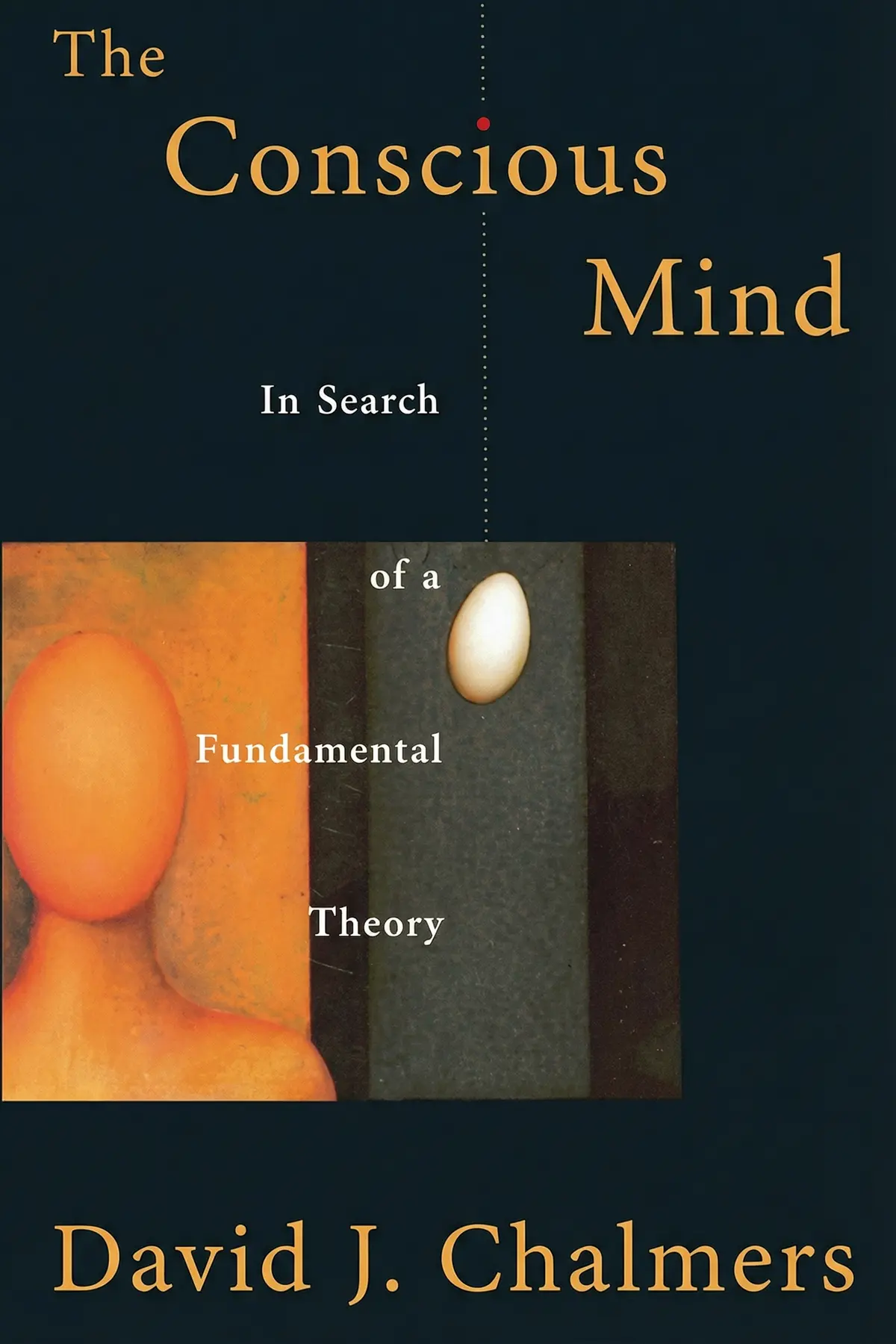
Table of Content
1. Introduction
2 min 04 sec
Stop for a moment and consider the sheer miracle of your current awareness. As you listen to these words, your brain is a hive of activity. Sound vibrations are hitting your ears, converted into electrical pulses, and traveling through your nervous system to be processed by your auditory cortex. From a biological standpoint, this is a masterpiece of evolution and physics. But there is a second, more mysterious layer to this event. Beyond the electrical signals and the neural firing, there is the actual experience of listening. You aren’t just a biological machine processing data; there is a felt quality to the moment. There is ‘something it is like’ to be you right now.
This subjective inner life—the vivid colors we see, the sharp pains we feel, and the rich textures of our emotions—is what we call consciousness. For centuries, the natural sciences have made incredible leaps in explaining the external world, from the movement of planets to the structure of DNA. Yet, the internal world remains a profound enigma. Even with the most advanced brain-imaging tools at our disposal, we find ourselves unable to bridge the gap between matter and mind.
In the mid-1990s, the philosopher David J. Chalmers shook the foundations of cognitive science by naming this mystery ‘the hard problem.’ He argued that while we might one day understand every circuit and chemical in the brain, that knowledge alone would still fail to explain why those physical processes give rise to an inner life. In this summary, we will walk through the core arguments of his landmark work. We will examine why traditional science struggles with the subjective, explore the limits of current theories, and consider a radical new way of looking at the universe—one where consciousness isn’t just a byproduct of biology, but a fundamental building block of reality itself. By the end, you’ll see why this search for a fundamental theory isn’t just an academic exercise, but a quest to understand the very essence of existence.
2. The Distinction Between the Easy and Hard Problems
2 min 43 sec
Discover why mapping brain functions is relatively straightforward while explaining the simple feeling of ‘being’ remains the greatest challenge in modern science.
3. The Limits of Materialism and the Zombie Argument
3 min 06 sec
Explore a famous thought experiment that reveals why purely physical descriptions of the world might never be enough to capture the reality of the mind.
4. The Double Aspect of Information
2 min 28 sec
What if consciousness isn’t a byproduct of biology, but one side of a coin that makes up the entire universe?
5. A Universe Saturated with Experience
2 min 42 sec
Consider the radical possibility that consciousness goes all the way down to the roots of nature, changing our entire understanding of the cosmos.
6. Conclusion
1 min 40 sec
The journey through the nature of the mind brings us back to where we started: the simple, undeniable fact of our own awareness. We have seen that while science is excellent at explaining the mechanics of the ‘easy problems,’ it hits a formidable wall when faced with the ‘hard problem’ of subjective experience. David J. Chalmers’s work teaches us that the traditional materialist view of the world—one made purely of insentient matter—is likely incomplete. To truly account for the ‘redness of red’ or the ‘sting of pain,’ we must be willing to expand our definition of reality.
Whether through the lens of the double-aspect theory or the radical possibilities of panpsychism, the takeaway is clear: consciousness is not a peripheral mystery to be solved later. It is a central, fundamental feature of our universe. By recognizing that information has both a physical and an experiential side, we can begin to bridge the gap between the objective and the subjective.
This shift in thinking isn’t just for philosophers. It changes how we view technology, ethics, and our own place in the stars. It suggests that the inner light we feel isn’t an evolutionary fluke, but a glimpse into the very essence of nature. As we continue to probe the depths of the brain and the far reaches of the cosmos, we must remember that the most profound mystery of all is the one looking out through our own eyes. We live in a universe that is not just seen, but felt—and that realization is the first step toward a truly fundamental theory of the conscious mind.
About this book
What is this book about?
The mystery of the human mind is perhaps the greatest remaining frontier in science. While we have mapped the brain’s circuits and understood its biological functions, one question remains stubbornly unanswered: why does any of this physical activity feel like something from the inside? This summary explores David J. Chalmers’s groundbreaking work on the nature of consciousness, specifically his distinction between the functional processes of the brain and the subjective experience of being. By diving into these pages, you will encounter the famous Hard Problem of consciousness and see why traditional materialist science often hits a wall when trying to explain the soul-like quality of our inner lives. The summary walks through thought experiments involving philosophical zombies, critiques common scientific theories of the mind, and introduces the startling possibility that consciousness might be a basic property of the universe itself, much like time or mass. It promises a journey into the deep philosophy and cognitive science that challenges our very understanding of what it means to exist in a physical world.
Book Information
About the Author
David J. Chalmers
David Chalmers is a leading philosopher and cognitive scientist at New York University. He is the author of several influential books that challenge conventional scientific views on consciousness and reality. Currently, he serves as the codirector of the Center for Mind, Brain, and Consciousness at NYU. His prestige in the field is marked by his status as a fellow of both the Australian Academy of the Humanities and the American Academy of Arts and Sciences.
Ratings & Reviews
Ratings at a glance
What people think
Listeners find the work clarifies the essence of human consciousness and regard it as essential reading, even if they acknowledge it is a challenging text. Feedback on the accuracy of the arguments is varied, with several listeners finding the explanation of consciousness unsatisfying. The pacing and mystery elements also receive a range of different reactions.
Top reviews
Mats
Rarely does a book fundamentally alter the way you perceive your own existence, but this is one of them. This is a masterful deconstruction of the 'easy problems' versus the truly baffling nature of subjective experience. Chalmers is remarkably brave for reintroducing property dualism into a field dominated by materialists who want to explain away qualia as mere biological noise. I found the sections on supervenience demanding but rewarding; they provide the necessary vocabulary for a debate that usually descends into hand-waving. If you’re looking for a quick summary, look elsewhere. This is for those willing to do the heavy mental lifting required to face the universe's greatest mystery head-on. Truly a must-read.
Show moreWyatt
The 'Hard Problem' is the ultimate mystery of the universe, and Chalmers is our best guide through the fog. Not gonna lie, this book changed my life. We often take our inner lives for granted, but this text forces you to look at the 'redness' of red or the 'pain' of a pinprick as something truly alien to a purely physical world. His prose is clear and surprisingly devoid of the usual heavy-handed jargon where possible. It’s a thick volume, and the pacing can be uneven, but the payoff is a much deeper appreciation for the enigma of the mind. He tackles the 'why' rather than just the 'how,' and that makes all the difference.
Show moreDivya
This remains the gold standard for anyone questioning the limits of modern materialism. Look, science is great at explaining how the brain processes data, but it fails to explain why that processing is accompanied by an internal experience. Chalmers nails this distinction perfectly. The book is dense and the logic is relentless, but it's the only work I've found that takes the 'feeling' of being alive seriously. It’s a must-read for anyone who feels that there’s more to the universe than just atoms bumping in the dark. He doesn't just offer an opinion; he builds a fortress of logic that is very difficult to knock down.
Show morePruet
Finally tackled this cornerstone of modern philosophy of mind, and it certainly lived up to its reputation. It is a dense, slow burn, but absolutely essential for anyone wanting to understand why physicalism often feels fundamentally incomplete. Chalmers’ logic regarding the 'hard problem' is incredibly tight, even if you eventually find his later dive into panpsychism a bit too speculative for your personal taste. Truth is, the first half of the book is much stronger than the second, providing a rigorous framework for what it means for something to be 'conscious.' He methodically dismantles the idea that we can simply explain away experience through neurobiology alone. While it’s not an easy read, the clarity he brings to the distinction between the psychological and the phenomenal is well worth the effort.
Show moreAdam
As someone who came in with a strong physicalist bias, this was a necessary and humbling challenge. You really cannot call yourself a student of consciousness without grappling with this text. It isn't an easy read by any stretch, often reading more like a math textbook than a philosophical inquiry, but the precision is necessary. While I am still not entirely convinced by his 'naturalistic dualism,' I appreciate the honesty with which he addresses the gaps in current neuroscience. The discussion on functional organization is particularly thought-provoking. Even if the panpsychism conclusion feels like a reach, the journey there is paved with fascinating questions about the nature of information and reality.
Show moreEleanor
Don't let the author's legendary long hair and rocker vibe fool you; this is serious academic business. I’ve been following the debates around the Hard Problem for years and finally sat down with the primary source material. Frankly, it’s much more approachable than I expected, though it is still a major time commitment. He is very thorough about addressing every single counter-argument, which makes for a long read but a very complete one. Even if you think property dualism is a dead end, you have to respect the rigor he brings to the table. The mystery of the mind remains, but at least now I have a better map of the territory.
Show moreWitthaya
What does it actually mean to conceive of a world identical to ours but without any internal experience? Chalmers spends so much time on these 'p-zombies' that I found myself losing interest in the actual biology of the brain. He treats consciousness as this separate, extra layer, which feels more like a clever language trick than a scientific breakthrough. To be fair, his writing is exceptionally rigorous, but it is a massive slog to get through the Boolean-style logic he applies to something as messy and organic as human thought. I appreciate the challenge to my materialist views, but the assumption that we can 'conceive' of such a world feels like a leap of faith I wasn't quite ready to take.
Show moreAudrey
Is consciousness a fundamental property of the universe or just a very complex biological function? Chalmers argues for the former with incredible tenacity, though he often gets bogged down in possible-world semantics that feel more like word games than reality. I found the first few chapters on logical supervenience very helpful for clarifying my own thoughts on materialism. However, by the time he got to the suggestion that a thermostat might have a tiny sliver of experience, I felt he had jumped the shark. It’s a foundational text for a reason, but perhaps more for the important questions it asks than for the specific, somewhat arbitrary answers it provides.
Show moreSomsak
He treats the human mind like a series of logic gates and Boolean propositions, which I found a bit frustrating. While I admire the intellectual effort, the biological reality of the brain is far more chaotic than Chalmers allows for in his tidy 'zombie' thought experiments. The book is famous for a reason, but the argument for panpsychism felt like a desperate attempt to fill a hole he dug for himself early on. It’s a slog, frankly, and the pacing really drags in the final third. I’d recommend it for the historical context of the 'Hard Problem,' but don't expect it to provide a satisfying, evidence-based conclusion that settles the matter.
Show moreNongnuch
I really wanted to like this, but I simply couldn't get past the core assumptions. Chalmers is clearly a brilliant thinker, but his entire argument for property dualism hinges on the idea that p-zombies are 'conceivable.' Personally, I don't find them conceivable at all—it's like trying to imagine water that isn't wet and calling it a logical possibility. Once that initial premise fails, the rest of the book feels like a house of cards. The pacing is agonizingly slow in the middle chapters, and he seems to dismiss the potential for future scientific discovery a bit too readily. It felt like he was guiding the reasoning toward a conclusion he had already reached before he even started writing.
Show moreReaders also enjoyed
A Guide to the Good Life: The Ancient Art of Stoic Joy
William B. Irvine
A Little History of Philosophy
Nigel Warburton
A Theory of Justice
John Rawls
Anarchy, State, and Utopia
Robert Nozick
Antifragile: Things That Gain from Disorder
Nassim Nicholas Taleb
Areopagitica: Philosophy)
John Milton
AUDIO SUMMARY AVAILABLE
Listen to The Conscious Mind in 15 minutes
Get the key ideas from The Conscious Mind by David J. Chalmers, plus 5,000+ more titles in English and Thai.
- 5,000+ titles
- Listen as much as you want
- 7-day free trial
- Cancel anytime







