
16 min 14 sec
The Corporation in the Twenty-First Century: Why (Almost) Everything We Are Told about Business Is Wrong
By John Kay
Explore the fundamental shift in modern business as companies move from owning physical assets to managing collective intelligence, revealing why the old rules of industrial capitalism no longer apply to twenty-first-century success.
Table of Content
1. Introduction
1 min 57 sec
In the grittier corners of modern drama and the even grittier reality of the world’s industrial heartlands, there is a recurring lament: the sense that we don’t make things anymore. You can hear it in the rustbelts of Pennsylvania, the former mining towns of northern England, and the quieted car manufacturing hubs of Italy. This collective sigh for a lost era of tangible production is often directed toward globalization or the outsourcing of labor to distant shores. While those factors certainly play a role in the economic shifts we see today, they don’t tell the whole story. There is a deeper, more fundamental transformation occurring in the very DNA of the modern business world.
We are currently witnessing what economist John Kay describes as the dematerialization of our economic life. The titans of industry in the twenty-first century look nothing like the factory owners of the past. If you look at the most valuable companies on the planet today, you will notice a strange pattern: many of them avoid owning the very things that define their business. A retail giant might not own its warehouses; a tech leader might not own the servers that hold its data; and a luxury electronics brand might not even own the factories where its products are assembled. These companies have moved toward a “hollow” business model, where the physical stuff—the capital—is treated as a secondary concern, or even just a service to be rented.
This shift is more than just a change in accounting; it is a total reimagining of what a corporation is and what it is for. In the pages that follow, we are going to explore this evolution. We will move from the early days of specialized labor in pin factories to the incredibly complex, globalized coordination required to build a modern airliner. We will see how the relationship between wealth and power has flipped, and why the most successful businesses today are those that master the art of collective intelligence. This is the story of how the corporation evolved from a physical body of machines and workers into a fluid network of ideas and coordination.
2. The Power of Collective Intelligence
2 min 09 sec
Discover why the secret to human progress isn’t found in individual brilliance, but in our unique ability to pool knowledge and act as a single, coordinated body.
3. The Magic of Specialized Labor
2 min 00 sec
Explore how breaking complex jobs into tiny, specialized tasks revolutionized the world’s ability to produce wealth and changed the nature of work forever.
4. The Corporation as a Coordinator of Assemblages
2 min 10 sec
Learn why the most successful entrepreneurs aren’t always inventors, but are instead master coordinators who know how to piece together complex global systems.
5. When Control Parted Ways with Ownership
2 min 08 sec
Trace the shift from the age of industrial giants who owned everything they touched to the modern era where ideas hold more power than physical assets.
6. The Rise of the Hollow Corporation
2 min 04 sec
Discover why today’s corporate leaders are shedding their physical assets and transforming into lean, coordination-focused entities that lease their success.
7. Dematerialization and the Future of Value
2 min 01 sec
Understand how the transition from ‘more stuff’ to ‘better stuff’ is redefining economic growth and the true value of modern products.
8. Conclusion
1 min 45 sec
As we have seen, the landscape of business has undergone a transformation as radical as the one that moved us from the farm to the factory two centuries ago. The old image of the corporation as a monolithic owner of machines and land is fading. In its place, we find a more fluid and intellectual entity—one that values coordination over ownership and ideas over inventory. The “hollow corporation” isn’t empty; it is filled with something far more potent than physical capital: the collective intelligence of its people.
The throughline of this journey is the enduring power of human cooperation. From the simple division of labor in a pin factory to the continent-spanning coordination of aerospace manufacturing, our progress has always been driven by our ability to break complex problems into specialized tasks and then weave them back together into a coherent whole. This realization carries a vital lesson for the future. In a world where physical assets can be easily rented or outsourced, the only truly sustainable competitive advantage is the quality of your organization’s collective brain.
What this means for all of us is that we must rethink our relationship with work and business. Whether you are leading a major company or contributing your own specialized skills to a team, the goal is the same: to foster the networks of communication and coordination that allow collective intelligence to flourish. Success in the twenty-first century isn’t about hoarding resources; it’s about mastering the art of the assemblage. By focusing on “better” rather than just “more,” and by recognizing the value in the intangible, we can navigate this dematerialized economy with clarity and purpose. The machines of the past built the world we live in, but it is the ideas of the present that will shape the world to come.
About this book
What is this book about?
The Corporation in the Twenty-First Century challenges long-held beliefs about how businesses operate and succeed in the modern era. Economist John Kay argues that the era of the industrial giant—owning every piece of the supply chain and every brick of the factory—is over. Instead, we have entered the age of the “hollow corporation,” where value is derived not from physical machines or land, but from the ability to coordinate complex networks of specialized knowledge. This summary explores the evolution of business from the dark mills of the nineteenth century to the digital powerhouses of today. It explains how collective intelligence has replaced individual genius as the primary driver of innovation and why the most successful companies now treat physical capital as a service rather than a core asset. By understanding this “dematerialization” of the economy, readers will gain a new perspective on why growth today is about creating better products through specialized cooperation rather than simply producing more goods. It is a guide to navigating an economy where ideas and coordination are the new currency of power.
Book Information
About the Author
John Kay
John Kay is a distinguished economist whose career spans academia, business, finance, and public policy. He has served in prestigious roles at the London Business School, the University of Oxford, and the London School of Economics. An academic at heart, he began his career at St John’s College, Oxford, where he continues to serve as a Fellow. In addition to his academic work, Kay is well-known as the author of the best-selling book Other People's Money.
Ratings & Reviews
Ratings at a glance
What people think
Listeners view John Kay’s investigation into today’s corporate environment as an enlightening, multi-faceted study that stays approachable without being overly simple. While some listeners believe the writing can be excessively intricate or lacks specific recommendations, they generally value the engaging discussion on "hollow corporations" and the movement from tangible assets toward shared intellect. Furthermore, they appreciate the thorough historical background, with one listener remarking that the material is "infinitely better than the vast majority of pop management books." The scrutiny of shareholder value and outsourcing is also noted as particularly eye-opening, with one listener describing the title as "brilliant, illuminating, and funny."
Top reviews
Chaiwat
Brilliant, illuminating, and surprisingly funny at times! Kay masterfully explains how we’ve moved from an era of 'owning things' to an era of 'controlling knowledge.' The way he contrasts the price of common pins in the 1700s with the astronomical value of a few grams of a Pfizer vaccine today perfectly illustrates the dematerialization of our economy. It’s not about the raw materials anymore; it’s about the collective intelligence required to organize 10,000 people to build an Airbus A350. I loved the Latin root exploration of 'corpus'—reminding us that a corporation is, at its heart, a body of people acting in common. This book completely changed how I look at companies like Amazon, which doesn't even own the server farms its most profitable wing relies on. It’s a high-level, thought-provoking journey that manages to be both academic and accessible. Easily one of the best books on capitalism I’ve picked up this decade.
Show moreSomsak
Finally got around to reading this, and Kay’s take on the transition from 'dark satanic mills' to today’s practitioners of the hollow business model is masterfully done. He uses the analogy of marathon running—how human progress isn't just about faster individuals, but about a commercial market and shared infrastructure—to explain why modern corporations are so much more efficient than their predecessors. The writing is sharp and frequently witty, especially when he’s poking holes in the egos of celebrity CEOs. He reminds us that the corporation is a collective 'body,' not just a 'nexus of contracts.' It’s rare to find an economist who can blend history, law, and organizational theory so seamlessly. I came away with a much clearer understanding of why 'offshoring' isn't the only reason for the rustbelts in the West; it’s this fundamental dematerialization of the entire economy. A must-read for anyone interested in the future of work.
Show moreMint
Personally, I think this is the most important business book of the year because it finally moves the conversation beyond the tired 'shareholder vs. stakeholder' debate. Kay looks at the corporation as a form of collective intelligence, an assemblage that is more valuable than the sum of its parts. His writing on how the iPhone is an 'assemblage' of existing technologies that creates something entirely new is a great way to frame modern entrepreneurship. I loved the way he tied the Latin origin of the word 'corporation' back to the idea of a living body. It’s a refreshing change from the cold, mechanical way we usually talk about economics. Even the parts about the 'dematerialization' of vaccines and high-tech manufacturing were eye-opening. It requires some patience, as it’s a dense 400-page journey, but the payoff is a much more sophisticated understanding of the world we live in.
Show moreLuckana
John Kay has a way of making complex economic shifts feel remarkably intuitive without sacrificing intellectual depth. This isn't your typical airport business book filled with empty buzzwords; it’s a serious, multidisciplinary look at how the very nature of 'value' has changed. I was particularly struck by the discussion on 'hollow corporations' like Nike or Apple, where the company doesn't actually own the means of production in the traditional Marxian sense. Instead, they manage a sophisticated assemblage of contracts and collective intelligence. To be fair, the middle chapters can feel a bit like a dry history lecture on the Industrial Revolution, and the pacing slows down significantly when he dives into the weeds of corporate law. However, his critique of the 'shareholder value' obsession is one of the most coherent arguments I’ve read in years. It’s a dense read, but if you want to understand why a modern firm is more like a sports team than a Victorian factory, this is essential.
Show moreKiattisak
Ever wonder why the most powerful companies today own almost no physical assets? Kay’s deep dive into the 'asset-light' model is probably the most illuminating part of this work. He explains how power has shifted from the people who own the factories to the people who coordinate the skills of engineers, marketers, and consultants. I particularly enjoyed the section on how collective intelligence keeps an Airbus airborne—it’s not about individual genius but about the coordination of 10,000 specialists across different countries. My only gripe is that the book leans heavily on British and European examples, sometimes feeling a bit disconnected from the American corporate landscape. Still, his argument that capital has become a service rather than a means of production is a vital update to our economic understanding. It's a sophisticated read that avoids the simplistic 'pop management' traps of most bestsellers.
Show moreGun
The concept of the 'hollow company' is explored here with more nuance than I've seen in any other business text. Look, we all know that companies outsource now, but Kay goes deeper to explain *why* this shift happened and how it has fundamentally decoupled power from the ownership of the 'means of production.' He uses great examples, like how Amazon doesn't even own the data centers for its most profitable product, to show that capital is now something you just buy as a service, like mineral water for the office. It’s a bit dry in parts, and the author definitely has a tendency to monologue about Adam Smith, but the overall narrative is incredibly coherent. It helps you make sense of why a company’s brand and its collective know-how are now worth infinitely more than its factories. A very solid, intellectual look at our modern reality.
Show morePita
To be fair, the first half of this book feels like a bit of a slog through territory most business school grads already know by heart. The descriptions of Adam Smith’s pin factory and the evolution of the entrepreneur are fascinating in a 'BBC documentary' kind of way, but I kept waiting for the author to get to the point. When he finally reaches the analysis of the 'hollow company' and how McDonald’s sells manuals instead of burgers, the book really finds its stride. Kay is excellent at dismantling the fiction that companies have a sole fiduciary duty to shareholders, but he’s less clear on what the alternative structure should actually look like in practice. It’s a lot of interesting food for thought, yet it feels somewhat unfinished or perhaps a bit too descriptive when it should be prescriptive. Good for a weekend read if you like economic history, but don't expect a roadmap for the future.
Show morePacharapol
As someone who has followed Kay’s work for years, I found this book to be a bit of a mixed bag. The core thesis—that the nature of capital has changed and that control now matters more than ownership—is spot on and very well-defended. However, the execution is occasionally frustrating. There are long stretches of prose that feel unnecessarily complex, almost as if the author is writing for a small circle of fellow academics rather than a general audience. The chapters on the 'hollow corporation' are the clear highlights, particularly the insights into how aviation leasing works, but they are buried between long-winded historical digressions. I also felt the ending was a bit abrupt; it builds up a great argument for reform but stops just short of offering concrete policy solutions. It’s an informative and analytical book, but it lacks the 'punch' needed to make it a true classic.
Show moreSakura
Not what I expected given the ambitious title. While Kay is clearly a brilliant economist, this book spends way too much time looking in the rearview mirror rather than actually analyzing the twenty-first century. I felt like I was sitting through a long-winded undergraduate lecture on Adam Smith and the division of labor in pin factories—stuff that has been covered to death elsewhere. Where are the granular case studies? Where is the data on how AI is actually reshaping these corporate structures today? Instead, we get pages of moralizing about corporate ethics and recycled arguments about offshoring that don't feel particularly fresh. Truth is, it’s unnecessarily complex in its prose while being surprisingly light on new insights. If you’ve read any of Kay’s previous columns, you’ve basically already read this book. It’s a bit of a slog to get through the repetitive monologues.
Show moreBua
This book simply didn't need to exist. It’s a prime example of an author taking a few hundred pages to wander through recycled ethics and vague observations without delivering anything substantive about how modern businesses actually function on the ground. For a 2024 release, the lack of real data or meaningful dissection of current tech giants is hard to defend. It’s heavy on preachiness and light on facts, running on old arguments dressed up as new insights. I found it almost impossible to maintain focus while he rambled on about the Industrial Revolution for the thousandth time. If you want to understand corporate evolution or governance, there are a dozen better sources that write with more clarity and relevance. This only proves that adding extra verbosity to decades-old themes doesn't make them more important; it just makes them forgettable and tedious to finish.
Show moreReaders also enjoyed
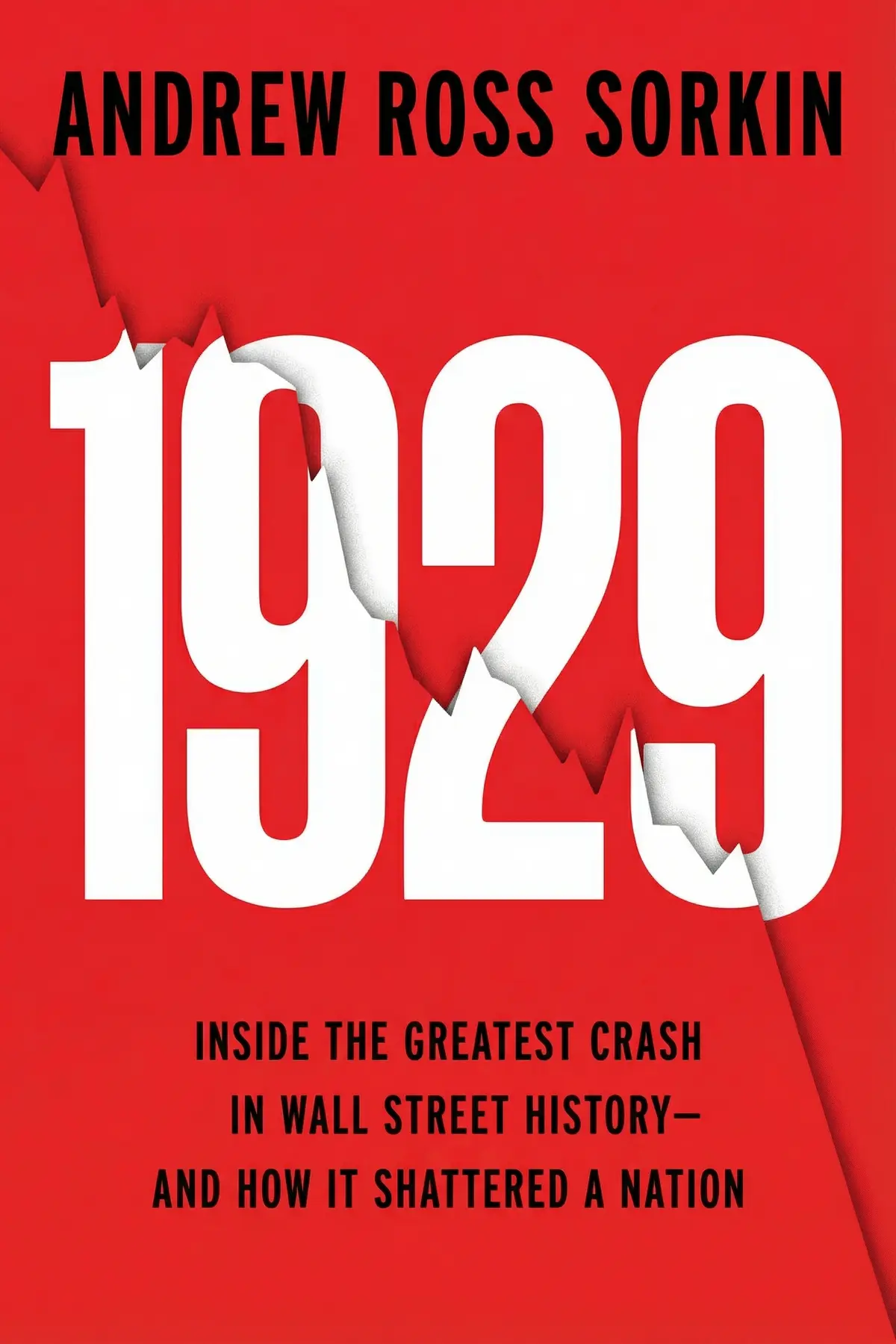
1929: Inside the Greatest Crash in Wall Street History--and How It
Andrew Ross Sorkin
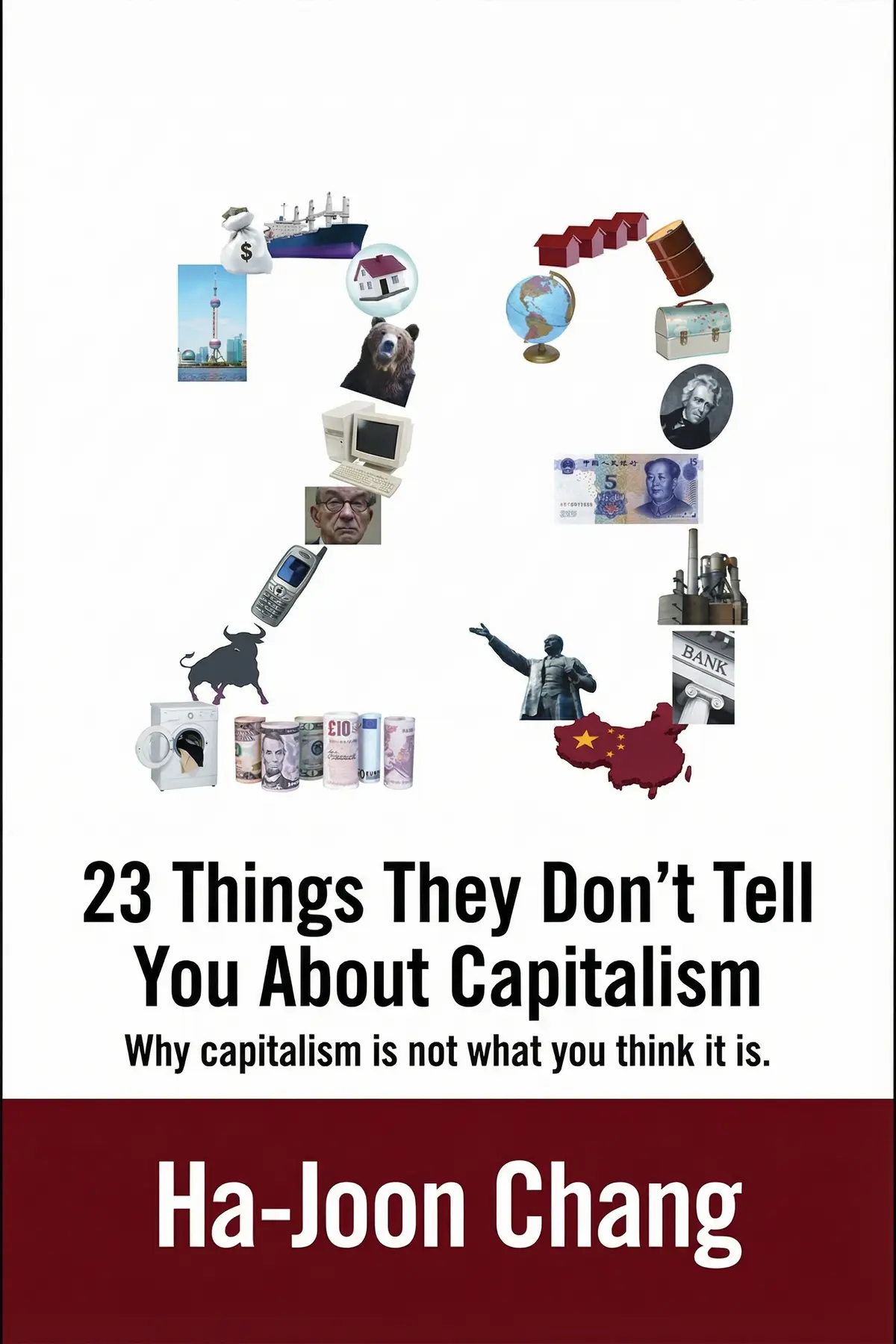
23 Things They Don’t Tell You About Capitalism
Ha-Joon Chang
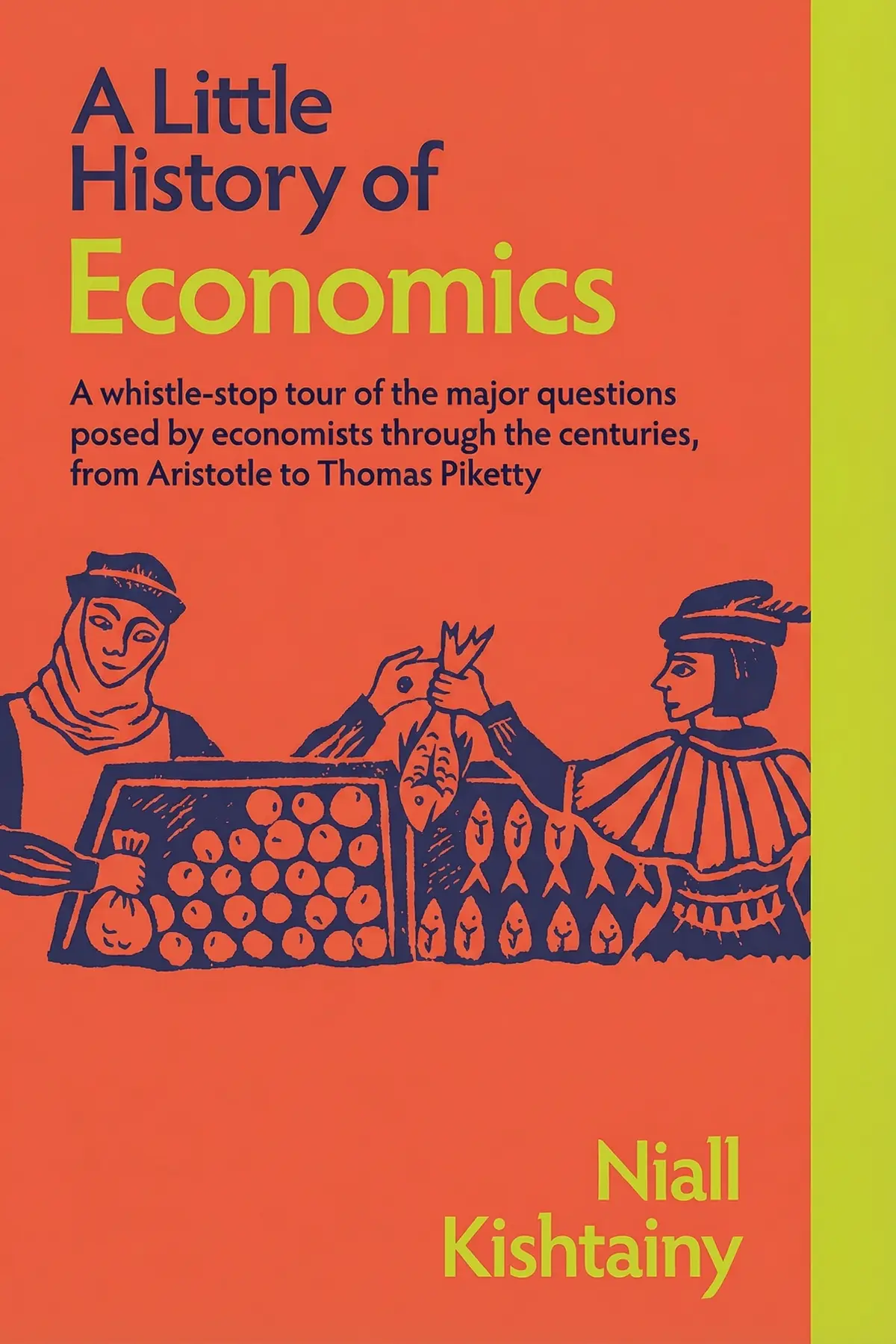
A Little History of Economics
Niall Kishtainy
A Splendid Exchange: How Trade Shaped the World
William J. Bernstein
AUDIO SUMMARY AVAILABLE
Listen to The Corporation in the Twenty-First Century in 15 minutes
Get the key ideas from The Corporation in the Twenty-First Century by John Kay, plus 5,000+ more titles in English and Thai.
- 5,000+ titles
- Listen as much as you want
- 7-day free trial
- Cancel anytime







