
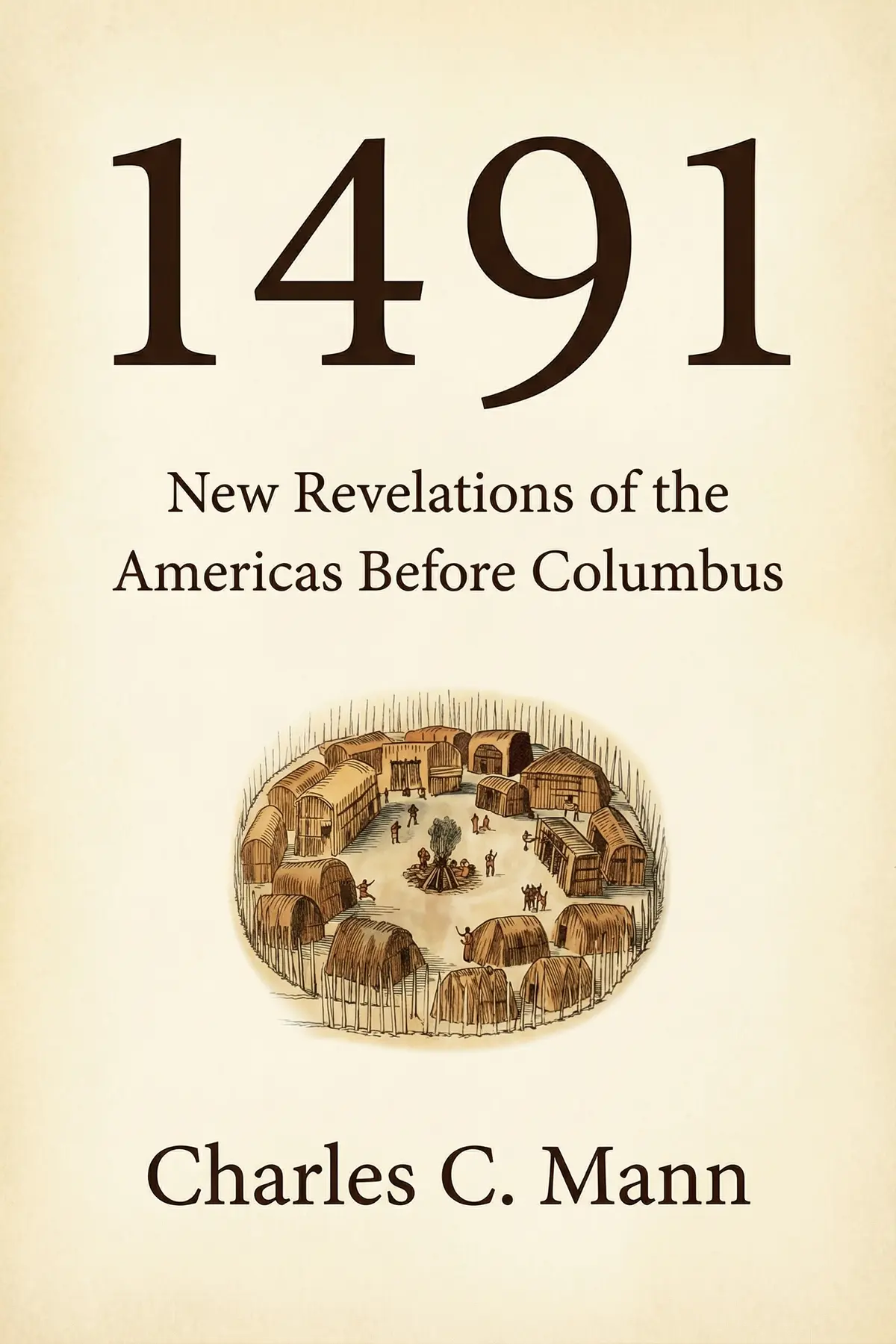
1491: New Revelations of the Americas Before Columbus
Charles C. Mann
This exploration of human history challenges the belief that social inequality was an inevitable consequence of civilization, revealing a past filled with diverse, flexible, and consciously chosen political systems.
2 min 21 sec
When we look back at the deep history of our species, we often imagine a very simple, two-dimensional picture. We picture ‘primitive’ humans as either noble savages living in perfect harmony or as brutish, unintelligent cave-dwellers. In both versions of this story, these early people are seen as incapable of complex thought or political agency. We assume they were simply reacting to their environment, drifting through history until the ‘real’ work of civilization began with farms, kings, and bureaucracies. But what if this entire foundation is wrong? What if the people who lived thousands of years ago were just as intellectually sophisticated, imaginative, and politically savvy as we are today?
This is the starting point for a radical reimagining of the human story. For too long, our understanding of history has been constrained by a sense of inevitability. We are told that as soon as we settled down to farm, we traded our freedom for security, and that inequality is the necessary price we pay for living in large, complex societies. This narrative acts as a kind of intellectual prison, making it seem as though our current systems of domination and top-down control are the only possible outcomes of human progress.
However, by looking at new archaeological discoveries and overlooked anthropological accounts, we can see a much more vibrant and chaotic reality. We find that for most of our history, humans were not marching in a straight line toward the modern state. Instead, they were wandering, experimenting, and consciously resisting the very structures we now consider unavoidable. They formed cities without rulers, practiced agriculture without private property, and created social systems that could be dismantled and rebuilt depending on the season.
In this journey through the origins of our social world, we will move past the old myths of ‘the state of nature.’ We will explore how our ancestors debated the meaning of freedom, how they consciously defined themselves against their neighbors, and why the ‘rise of the state’ was actually a very recent and fragile development. By the end, the goal is to realize that history isn’t a one-way street. If our ancestors were free to choose their social arrangements, then we are not as stuck as we might think. Let’s begin by looking at the two dominant stories we tell ourselves about how we got here, and why both of them are deeply flawed.
2 min 27 sec
Discover why the classic debates between Jean-Jacques Rousseau and Thomas Hobbes regarding human nature and the origins of inequality are fundamentally misleading and based on false assumptions.
2 min 16 sec
Explore how intellectual exchanges between Native American leaders and French colonists sparked the Enlightenment and shaped modern Western concepts of liberty and equality.
2 min 15 sec
Learn how prehistoric societies avoided getting ‘stuck’ in one political mode by intentionally shifting their social structures throughout the year.
2 min 05 sec
Uncover the three fundamental human liberties that our ancestors took for granted and how the concept of ‘the sacred’ eventually paved the way for private property.
2 min 04 sec
Understand the concept of ‘schismogenesis,’ where neighboring societies intentionally develop opposing cultures and values as a way to maintain their unique identities.
1 min 59 sec
Examine the evidence that suggests the transition to farming was not a sudden ‘revolution’ but a slow, cautious, and often resisted process of ‘play farming.’
2 min 04 sec
Discover how early mega-settlements in Mesopotamia and Mexico functioned for centuries as sophisticated, egalitarian urban centers without any evidence of ruling elites.
2 min 09 sec
Analyze how the modern state emerged from a rare and toxic combination of three different modes of power: control of violence, control of information, and individual charisma.
1 min 57 sec
Examine how the collapse of the Mississippian city of Cahokia led to a conscious, widespread rejection of monarchy and the birth of the democratic values observed by later Europeans.
2 min 06 sec
As we come to the end of this journey through the hidden corners of our past, the most important takeaway is a sense of renewed possibility. We have been raised on a diet of historical pessimism, told that we are living in the only version of the world that could possibly work. We are told that the ‘dawn’ of our history was a simple time of innocence and that the ‘daylight’ of civilization brought with it the unavoidable chains of the state. But as we have seen, the dawn was anything but simple.
Our ancestors were not just reacting to their environments; they were active participants in a global laboratory of social and political ideas. They built cities that flourished without kings. They experimented with agriculture while maintaining their freedom. They consciously rejected slavery and tyranny when they saw it in their neighbors. Most importantly, they understood that social systems are not laws of nature—they are things we build, and things we can take apart.
The three freedoms we discussed—the freedom to move, the freedom to disobey, and the freedom to create new social realities—were not just abstract concepts for our ancestors. They were the very foundations of their lives. While we may feel that we have lost these freedoms in our modern world of borders, surveillance, and permanent hierarchies, the history we’ve explored shows that ‘getting stuck’ is not an inevitable fate.
History is not a one-way street leading toward a single, unavoidable destination. It is a vast field of human experimentation. If the people of Teotihuacan could transform their city from a site of royal monuments into a haven of high-quality communal housing, and if the survivors of Cahokia could rebuild their world as a democracy, then we must accept that our current systems are not permanent. We are not trapped by our technology or our population size. We are only trapped by our lack of imagination. By looking back at the true dawn of everything, we find the tools we need to start imagining a different kind of tomorrow. The story of humanity is still being written, and we have just as much right to pick up the pen as our ancestors did.
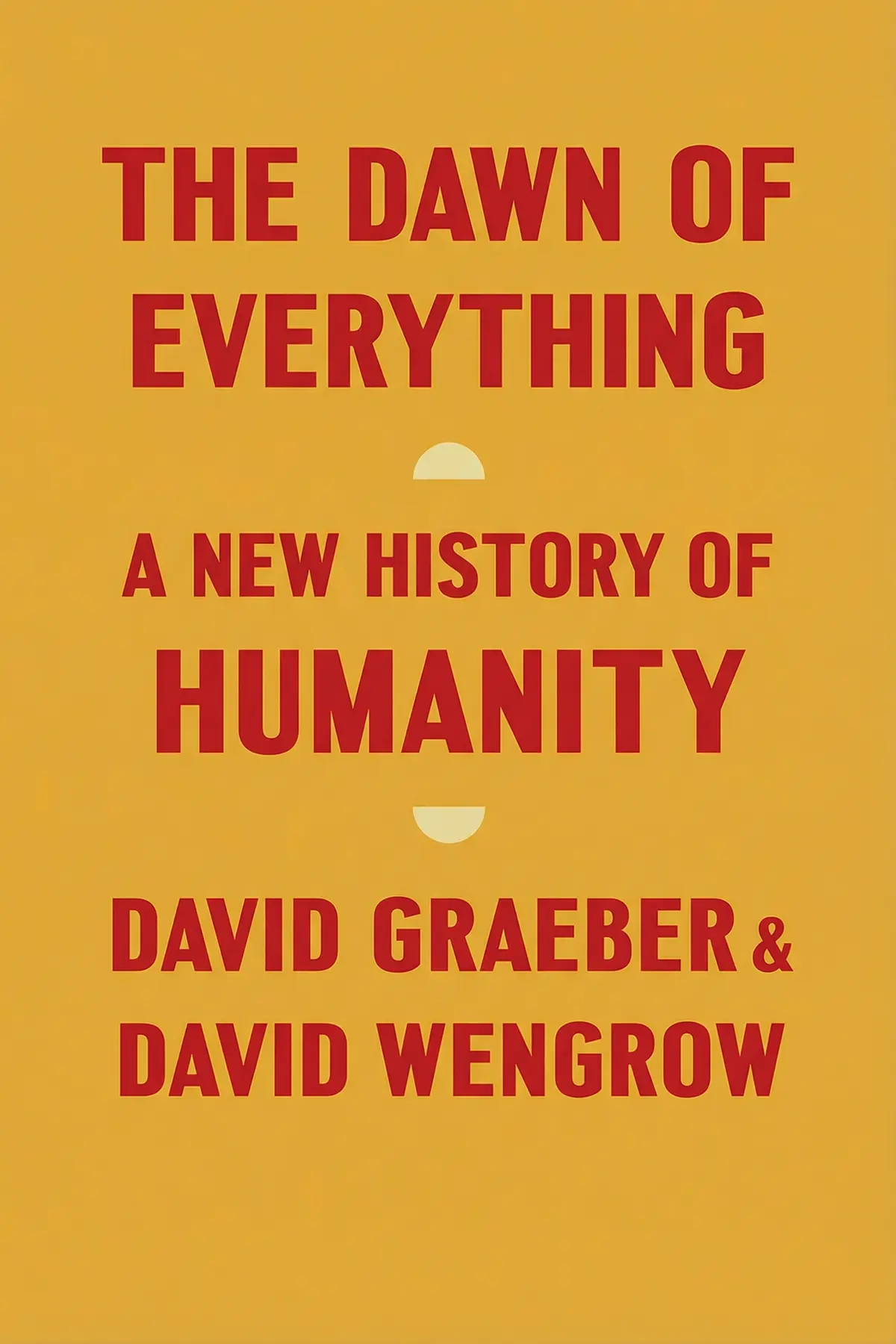
For generations, we have been told a specific story about our species: that we began in small, egalitarian bands and were forced into hierarchical states by the invention of agriculture. This book dismantles that narrative. It argues that our ancestors were not trapped by their environments or technologies but were instead self-conscious political actors who experimented with a vast array of social arrangements. By examining recent archaeological and anthropological evidence, the authors show that early cities often functioned without kings, that many societies shifted between hierarchy and equality seasonally, and that the modern state is not an inevitable endpoint of progress. The promise of this work is a renewed sense of human agency, suggesting that because we once possessed the freedom to reinvent our social worlds, we still do today.
David Graeber was a prominent American anthropologist and anarchist thinker who held professorships at Yale and the London School of Economics. He gained international acclaim for his books Debt: The First 5,000 Years and Bullshit Jobs. David Wengrow is a renowned British archaeologist and professor at University College London, specializing in the comparative study of early civilizations in Africa and Asia, particularly the emergence of the first states.
Listeners find the work highly rewarding due to its fresh perspective on human history and extensive documentation, while also praising its ability to broaden horizons and provoke deep thought. Opinions on the prose and tempo are divided, as some listeners consider it expertly written while others describe the quality as poor. The storytelling and accessibility likewise see varied feedback; some find the narratives interesting while others feel they are uneven in depth, and some describe it as an absorbing read while others find it a frustrating one.
Graeber and Wengrow have effectively dismantled every single assumption I held about the linear progression of human civilization. This book is a monumental achievement that demands we stop viewing our ancestors as simple-minded 'savages' and start seeing them as conscious political actors. The authors brilliantly highlight how the Enlightenment was actually sparked by an Indigenous critique of European hierarchy, particularly through figures like Kondiaronk. It’s a dense read, and the middle sections on Neolithic botanists can feel a bit sluggish, but the payoff is immense. They utterly shred the 'just-so' stories told by public intellectuals like Pinker and Harari. Instead of a inevitable slide from Eden into the 'trap' of agriculture, we see a vibrant history of social experimentation. Frankly, the idea of seasonal fluidity—societies shifting between hierarchy and equality based on the time of year—blew my mind. We aren't naturally stuck; we chose this path, which means we can choose another.
Show moreWow, my brain feels like it’s been through a high-intensity workout after finishing this 700-page beast. Picked this up expecting a standard history book, but what I got was a complete reframing of human possibility. The authors argue that the 'dawn of everything' wasn't a loss of innocence, but a long period of humans playing with different social structures. They provide thoroughly documented evidence of ancient 'mega-sites' in Ukraine that functioned without top-down rulers for centuries. This completely upends the technocratic excuse that large-scale societies require a state. Gotta say, seeing the roots of private property traced back to Roman slave law was eye-opening and deeply unsettling. While the writing style is a bit discursive and the pacing is uneven in the archaeological deep-dives, the central thesis is too powerful to ignore. We have been lied to about our own past to make us feel like there is no alternative to the status quo.
Show moreIt is rare for a history book to feel this liberating, especially regarding how we perceive the origins of patriarchy and property. For years, I believed the common narrative that agriculture and surplus automatically led to inequality and the 'grain state.' The Davids prove this wasn't an accident of geography, but a series of choices. I was particularly struck by the concept of 'play farming'—the idea that humans dabbled in cultivation for millennia without ever letting it dominate their lives. The three basic freedoms they outline—to leave, to disobey, and to shape new social realities—should be the foundation of any modern political debate. Truth is, we've been stuck in a single form of social reality for so long that we’ve forgotten how to imagine anything else. This book is a loud, chaotic, and necessary wake-up call. Even if you don't agree with every archaeological interpretation, the questions it raises are vital for our survival.
Show moreAs someone who has always been skeptical of the 'Hobbes vs. Rousseau' binary, this book felt like a breath of fresh air. It’s a beguiling mixture of strengths that challenges the 'Capitalist Realism' overcast we live under today. The Davids show us that for most of human history, people were moving fluidly between different social systems, treating their political structures like something to be experimented with rather than a natural law. The chapter on the Teotihuacan housing projects was a revelation—how a city could transition from monuments to rulers to high-quality collective housing for its citizens. It makes you realize that our current 'stuck-ness' is a historical anomaly. The scholarship is meticulous, and while the authors have clear anarchic sympathies, they back up their claims with fascinating archaeological data. This is more than a history book; it’s an invitation to rediscover our social imagination before we hit an ecological dead end.
Show moreDavid Graeber’s final gift, co-authored with Wengrow, serves as a powerful reminder that our current way of living isn't the only possible reality. They take the 'Great Man Theory' and the 'Primitive Stages' myth and throw them out the window. In their place, they give us a history filled with vibrant, intelligent people who were just as sophisticated as we are today. The way they document the 'Indigenous critique' is essential reading for anyone interested in the roots of modern democracy. I particularly appreciated the focus on 'charismatic politics' vs 'bureaucracy' as competing principles of domination. It explains so much about our current political mess. While some critics argue they ignore certain hard sciences, the authors’ primary goal is to reopen the cages of our intellectual imagination. They succeed brilliantly. We are beyond fortunate to have this provocative work as a roadmap for questioning our future. Five stars for the sheer audacity of the project.
Show moreEver wonder why we’re told that agriculture was a 'trap' that inevitably led to kings and bureaucracy? This book suggests we’ve been asking all the wrong questions for the last three hundred years. Instead of searching for the 'origin' of inequality, Graeber and Wengrow ask how we got stuck in a world where domination is normalized. I loved the deep dive into the 'Indigenous critique' and how it actually shaped the European Enlightenment. It turns out the 'noble savage' was a myth created to silence real indigenous intellectuals who were schooling Europeans on democracy. My only gripe is that the book is a bit of a sprawl; it could have used a tighter edit to keep the momentum going through the middle chapters. Still, the way they link Roman Law to our current obsession with property rights is brilliant. It’s an engaging read that forces you to confront your own biases about 'progress.'
Show moreFinally got around to this and frankly, it's the most important book I've read in years, even if it is a bit repetitive. The authors do a fantastic job of toppling the idols of Harari and Pinker, exposing their 'histories' as little more than culturally biased fictions. I found the section on the Indus Valley particularly compelling—a civilization that flourished for centuries with no evidence of palaces, temples, or warrior castes. It proves that urbanization doesn't have to mean hierarchy. The writing is generally accessible, though it does dive into some very dense academic weeds that might lose a casual reader. Personally, I found the discussion on 'bio-power' and the domestication of humans through grain production to be the most provocative part. It’s a bit of a marathon to get through, but your understanding of human potential will be permanently altered by the time you reach the final chapter.
Show moreNot gonna lie, I almost gave up on this during the first hundred pages because of the discursive writing style. But I’m so glad I stuck with it. The central question—how did we find ourselves stuck in just one form of social reality?—is haunting. The authors argue that relations based on violence and domination became normalized through a perversion of care and domesticity. Their analysis of how 'culture areas' form through schismogenesis helped me understand modern identity politics in a completely new light. To be fair, they do play a bit fast and loose with some of the materialist factors, but the 'creative destruction' they apply to the status quo is worth the price of admission. It’s a mind-broadening experience that makes the works of Jared Diamond look like kindergarten stories. If you want a book that will actually change how you see the world, this is it.
Show moreAfter hearing so much buzz in my activist circles, I finally tackled this massive tome, but the experience was a bit of a mixed bag. To be fair, Graeber’s 'creative destruction' of mainstream anthropology is invigorating and the prose is often witty. However, as someone who appreciates a materialist foundation, I found their occasional drift into idealism quite disorienting. They spend so much time deconstructing the myths of Rousseau and Hobbes that they sometimes fumble the opportunity to provide a concrete framework for what comes next. The chapters on 'schismogenesis'—how groups define themselves in opposition to their neighbors—were fascinating but felt untethered from the physical environmental conditions that often dictate survival. It’s certainly a thought-provoking piece of scholarship, yet I left the 700th page feeling like I had a lot of new questions but very few practical tools for transformative change. It’s an important pill to swallow, even if it’s a bit bitter.
Show moreThe premise is certainly ambitious, yet the actual execution feels more like a collection of cherry-picked archaeological anomalies than a coherent new history. Look, I wanted to love this, but the authors seem to dismiss the insights of evolutionary biology and primatology almost flippantly. They scorn the 'stages of development' model used by people like Diamond and Fukuyama, but their own alternatives often feel like romanticized fantasies. The book is frustratingly long and the storytelling is hit-or-miss. Many of the 'rebuttals' of mainstream orthodoxy rely on very generous interpretations of thin evidence. For instance, the claim that matriarchal societies were widespread feels poorly substantiated compared to the harder data they ignore. There is no serious thinking here about logistics or transaction costs in a technologically mature global society. It’s a messy, fanciful re-imagining that prioritizes political sympathy over rigorous scientific synthesis. Not what I expected from such highly-regarded scholars.
Show moreCharles C. Mann
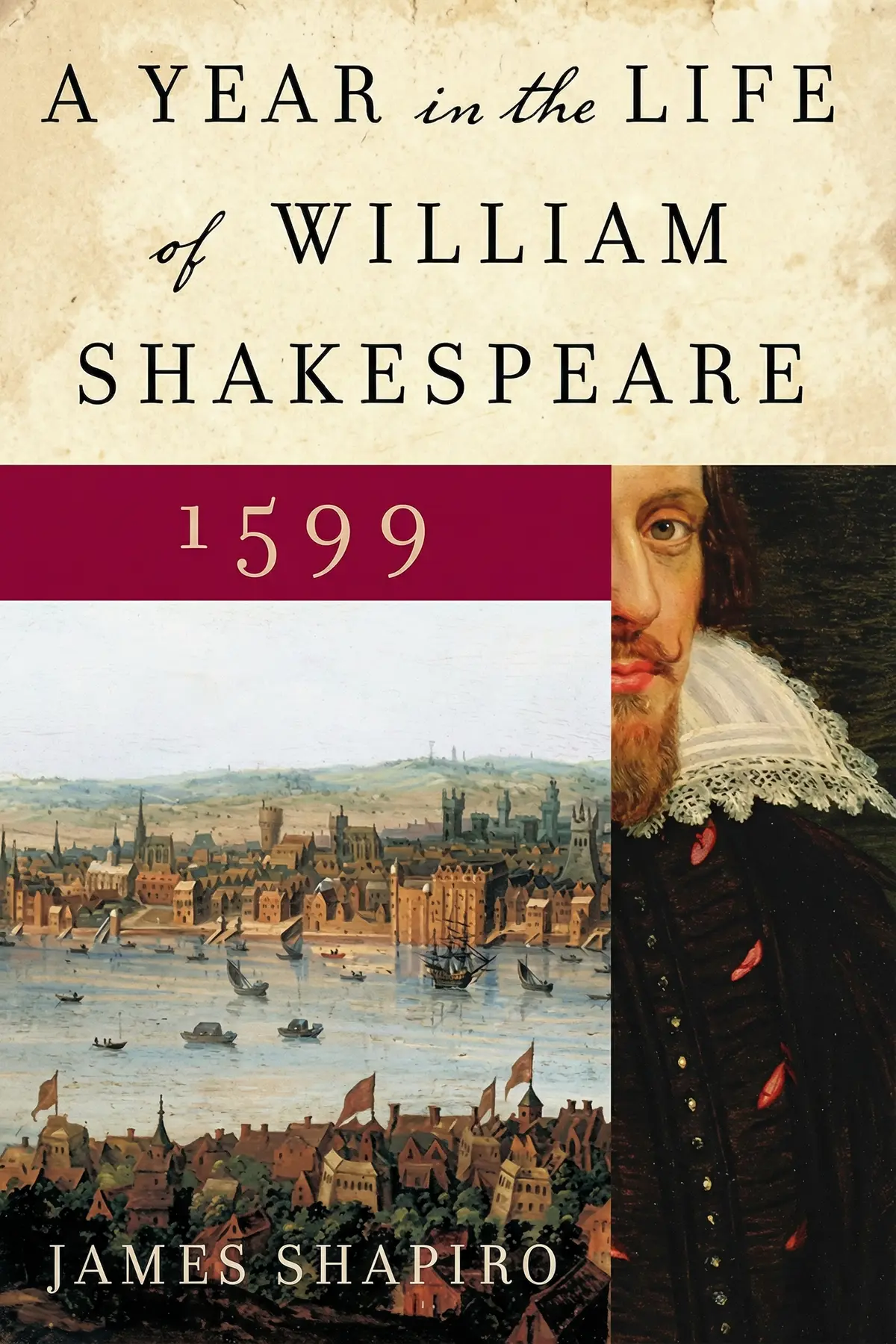
James Shapiro
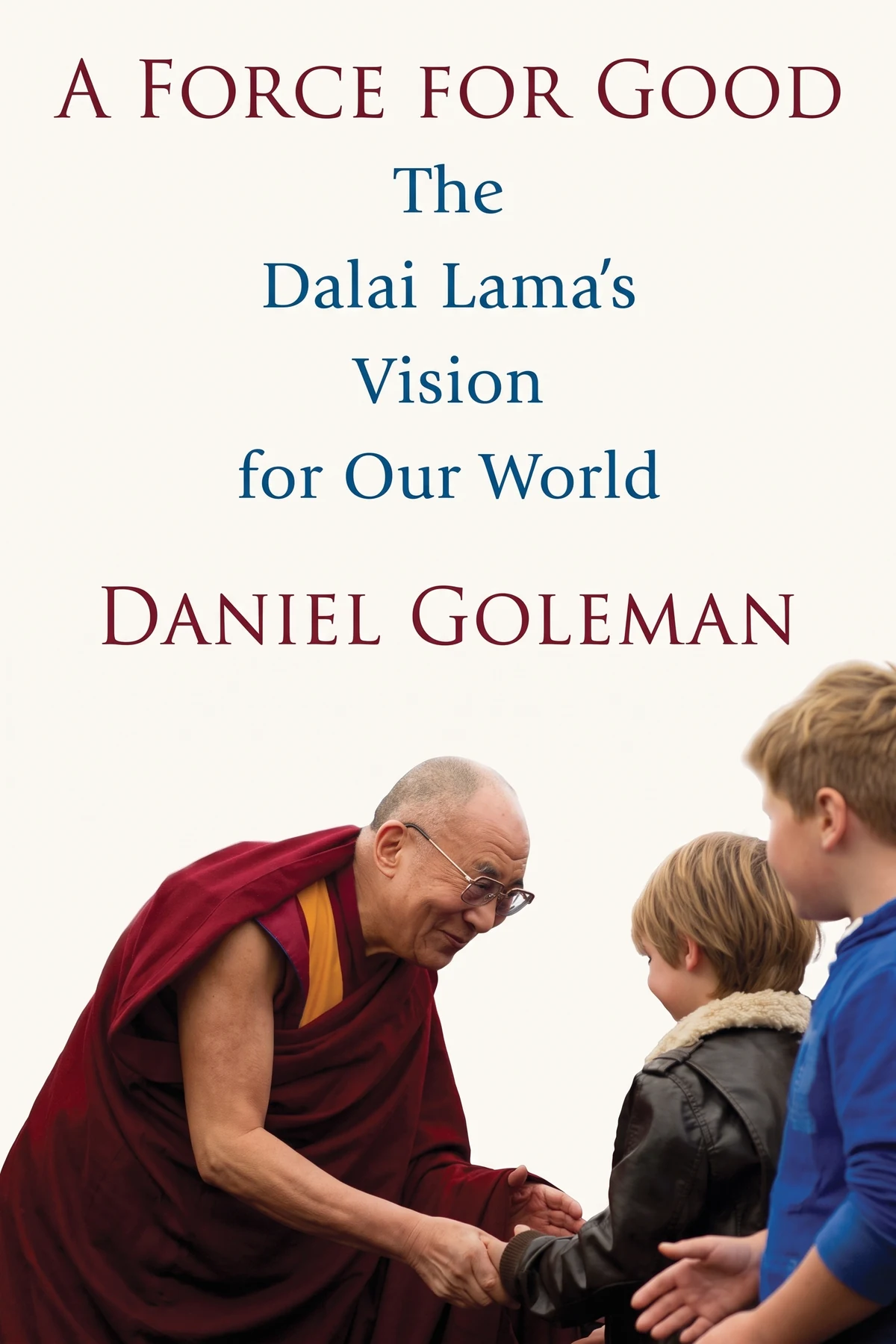
Daniel Goleman
Andrew Ross Sorkin
Pankaj Mishra
Virginia Woolf

Fay Bound Alberti

Ben Macintyre
Tracy Rosenthal
AUDIO SUMMARY AVAILABLE
Get the key ideas from The Dawn of Everything by David Graeber, plus 5,000+ more titles in English and Thai.







