
25 min 02 sec
The Deficit Myth: Modern Monetary Theory and the Birth of the People's Economy
The Deficit Myth overturns traditional economic fears by explaining Modern Monetary Theory. Stephanie Kelton argues that currency-issuing governments aren't limited by tax revenue, but by real-world resources and inflation, enabling a more human-centered economy.
Table of Content
1. Introduction
2 min 08 sec
Every time a bold new policy is proposed—whether it’s a plan to fix our crumbling bridges, a strategy to provide healthcare to every citizen, or an ambitious project to transition to green energy—a familiar question immediately follows: “But how are you going to pay for it?” This single question acts as a conversational stopper, a political wall that prevents many of our most needed societal improvements from ever getting off the ground. We are told that the national coffers are empty, that we are drowning in debt, and that any further spending will surely lead us to financial ruin. We are conditioned to think of our government’s finances through the same lens we use for our own checkbooks: if you spend more than you bring in, you’re headed for trouble.
But what if that entire premise is fundamentally flawed? What if the government doesn’t work like a household at all? In the following pages, we are going to explore a revolutionary economic framework known as Modern Monetary Theory, or MMT. This perspective suggests that for a country like the United States, which issues its own currency, the “deficit” isn’t the bogeyman we’ve been led to believe. In fact, what we call a government deficit is often just a reflection of the wealth being held by the rest of us in the private economy.
This isn’t just a debate about numbers on a spreadsheet; it’s a fundamental rethinking of what money is and what a government can do for its people. We will look at why the obsession with a balanced budget is actually holding us back from solving real-world problems. We’ll see how the fear of debt is often used as a political tool to block social progress, and we’ll discover that the real limits on our economy aren’t dictated by tax revenue, but by the physical resources—the labor, the materials, and the technology—available to us. By the end of this journey, you’ll see that a better world is possible, and the obstacles standing in our way are much more psychological than they are financial. The goal is to move beyond the myth of the deficit and toward an economy that actually serves the people.
2. Government Spending vs. Household Budgeting
2 min 42 sec
Think your family budget is just like the federal budget? Think again. Discover why being a currency issuer changes all the rules of the financial game.
3. The Real Constraint of Inflation
2 min 40 sec
If the government can print money, why can’t we just have everything for free? The answer lies in the delicate balance of the economy’s productive power.
4. The National Debt is Not a Burden
2 min 41 sec
The ticking clock of national debt is often used to scare the public. Learn why this number is actually a record of private wealth, not a looming disaster.
5. The Economy of Two Buckets
2 min 24 sec
Visualize the flow of money as water between two buckets. When the government’s bucket empties, yours fills up. Here is the logic of the surplus-deficit relationship.
6. The Myth of Insolvent Social Programs
2 min 36 sec
Will Social Security really run out of money? We’ll examine why the ‘insolvency’ of entitlement programs is a political choice, not a financial reality.
7. Trade Deficits and National Wealth
2 min 36 sec
Is a trade deficit a sign that a country is ‘losing’? Re-evaluate the meaning of international trade and what we actually gain from imports.
8. Confronting the Real Deficits
2 min 33 sec
While we worry about budget deficits, we’re ignoring the gaps in our infrastructure, education, and health. It’s time to pivot our focus to what truly matters.
9. A Blueprint for the People's Economy
2 min 30 sec
What would a world run on MMT principles look like? Explore the potential of a Federal Job Guarantee and a mission-driven approach to national goals.
10. Conclusion
2 min 12 sec
As we reach the end of our journey through the world of Modern Monetary Theory, it’s clear that the biggest obstacle to a more prosperous and just society is not a lack of money, but a lack of imagination. For too long, we have been held captive by a narrative that tells us our government is a helpless entity, forever on the verge of bankruptcy, unable to provide for its citizens because of a number on a ledger. We have seen that this narrative is a myth—a myth that serves to maintain the status quo and discourage bold action.
By understanding that the government is the issuer of our currency, we gain a powerful new perspective. We realize that the deficit is not a debt to be feared, but a tool to be used. The real limits we face are not financial; they are the physical constraints of our world: our labor, our technology, and our natural resources. When we shift our focus from “how will we pay for it?” to “what can we achieve with what we have?”, the possibilities for our future expand dramatically. We can choose to eliminate unemployment, we can choose to provide healthcare as a right, and we can choose to take the necessary steps to save our planet from climate change.
This doesn’t mean we can ignore economics or that there are no consequences to our choices. Inflation is a real concern, and managing our resources wisely is a grave responsibility. But MMT gives us a better set of tools to handle those challenges. It allows us to have an honest conversation about our priorities and to build a “People’s Economy” that values human life and environmental sustainability over arbitrary fiscal rules.
The takeaway is simple but profound: the economy is what we make it. Our money belongs to us, and our government has the power to spend it into existence to solve our most pressing problems. The next time you hear someone ask how we’re going to pay for a better world, you’ll know the answer. We pay for it with our collective will, our hard work, and the recognition that a deficit in the government’s budget is often the very thing that creates a surplus in our lives. It’s time to leave the deficit myth behind and start building the future we all deserve.
About this book
What is this book about?
The Deficit Myth introduces readers to the transformative world of Modern Monetary Theory, or MMT. It challenges the long-held belief that the federal government must balance its budget like a middle-class family. Instead of viewing deficits as a looming disaster, economist Stephanie Kelton explains that for a country that issues its own currency, a deficit is actually a way to inject wealth into the private sector. The book promises a radical shift in perspective, moving away from the question of "how will we pay for it?" and toward a focus on what our actual resources allow us to achieve. By deconstructing myths about the national debt, trade deficits, and the sustainability of social programs, Kelton provides a blueprint for a "People’s Economy." This vision suggests that we can afford to tackle our most pressing social and environmental problems, provided we have the political will and the material capacity to do so.
Book Information
About the Author
Stephanie Kelton
Stephanie Kelton is an accomplished writer, political consultant, and a professor specializing in economics and public policy at the State University of New York at Stony Brook. Her professional background includes serving as the chief economist for the United States Senate Budget Committee. Beyond her academic and advisory roles, she is a frequent contributor to major publications, having written for the New York Times, the Washington Post, and the Los Angeles Times.
Ratings & Reviews
Ratings at a glance
What people think
Listeners find this work exceptionally approachable and thoroughly documented, simplifying intricate economic topics for general audiences. They value the lucid breakdowns of Modern Monetary Theory, and one listener specifically mentions the explanation of how currency is generated in economic downturns. The prose receives praise for being jargon-free and aimed at laypeople, as noted by one review. Listeners appreciate the powerful case made for sovereign currency and its capacity to address major social challenges, especially within the healthcare sector.
Top reviews
Thitima
Kelton has written a genuinely transformative book that challenges every basic assumption I had about the federal budget. For years, politicians have lectured us about 'living within our means' as if the U.S. government were a suburban family sitting around a kitchen table with a checkbook. This book obliterates that analogy with surgical precision. She explains that because the government is the monopoly issuer of the dollar, it can never actually run out of money; it simply creates it through keyboard entries at the Fed. The writing is incredibly accessible and completely devoid of the dense mathematical formulas that usually make economics books feel like homework. It made me realize that our biggest limitations aren't financial, but rather our lack of political imagination regarding healthcare and infrastructure. After finishing this, I see the news through an entirely different lens. We should be focused on resource scarcity and inflation, not some arbitrary number on a deficit clock.
Show moreDylan
Picked this up during a period of total frustration with our political stalemate and found it to be the most hopeful thing I’ve read in years. Kelton flips the script on the 'deficit' by arguing that a government surplus is actually a deficit for the private sector. It sounds like Alice in Wonderland at first, but once the logic clicks, it’s impossible to un-see. The book is incredibly well-researched yet remains breezy and conversational. I loved the anecdotes about her time on the Senate Budget Committee, especially the story about the congressman who finally 'got it' but admitted he could never say it out loud. It’s a damning look at how we choose to suffer under austerity because of a collective misunderstanding of how money works. If we can create money to fight a pandemic, we can create it to fix our crumbling bridges and provide healthcare. This should be mandatory reading for every voter.
Show moreJob
This is a radical, brain-breaking book that everyone needs to read right now. Kelton systematically dismantles the 'household' metaphor that has been used to justify decades of austerity and neglect. She shows that the real deficits aren't the ones in the federal budget, but the deficits in our education system, our infrastructure, and our climate response. The writing is punchy and direct, making a subject that is usually boring feel urgent and exciting. I particularly appreciated the clarity she brought to the role of the Federal Reserve and how it functioned during the 2008 crisis. It turns out the money is always there; we just choose who gets it. By focusing on full employment rather than balanced budgets, she offers a path toward a much more equitable society. I finished this book feeling like I had finally been told the truth about how the world actually works.
Show morePranee
Looking at the government as a 'scorekeeper' instead of a business was the 'aha' moment for me. Kelton uses this analogy to show that the government can't run out of points any more than a stadium can run out of scores for a football game. This book is a masterclass in communication, stripping away the bamboozling language of Wall Street to reveal the simple mechanics of sovereign spending. It explains why we could find money for the CARES Act and military budgets almost overnight. The vision she lays out for a 'Job Guarantee' is incredibly compelling, promising a floor for workers and a way to tackle the massive infrastructure deficit we’ve ignored for far too long. It’s an empowering read that suggests we already have the tools to build a better future; we just need the courage to use them. Highly recommended for anyone who wants to understand the true potential of our economy.
Show moreMeen
Ever wonder why the government can always find trillions for bank bailouts or wars but suddenly goes broke when we ask for better schools? The Deficit Myth provides a compelling answer using Modern Monetary Theory. I appreciated how Kelton breaks down complex fiscal policies into plain English that any non-specialist can grasp. She argues that taxes don't actually fund spending, but rather create demand for the currency and help manage inflation. While the core message is brilliant, I have to admit the book gets a bit repetitive by the middle chapters. She hammers the same point about currency issuers versus currency users dozens of times. To be fair, maybe that's necessary to rewire a century of bad economic teaching, but it did make the reading experience feel slightly redundant. Still, it’s an essential read for anyone frustrated by the 'how will you pay for it?' trap that stalls every social program.
Show moreCha
As a history buff, I found the context regarding the gold standard and Nixon's decision to end it fascinating. Kelton explains that we are living with the 'ghosts' of a defunct system, making us fear deficits that are actually necessary for growth. The book is remarkably clear and explains the plumbing of the financial system in a way that makes sense to anyone who isn't an economist. My only real critique is that she makes it all sound perhaps a bit too easy. If the only real constraint is inflation, then the politics of deciding when to stop spending becomes the new battlefield. She proposes 'automatic stabilizers,' but I’m skeptical that Congress would ever willingly give up that much control. Regardless of whether you agree with her solutions, the way she explains how money is actually created at the Fed is worth the price of the book alone.
Show moreWan
Finally understood what all the buzz around MMT was about after finishing this. Kelton does a masterful job of explaining that the federal government is the source of the currency, not a user of it like you or me. This means the 'national debt' is really just a historical record of all the dollars the government put into the economy and didn't tax back. It’s a simple shift in perspective, but it changes everything. The book is very readable and moves quickly, though I do agree with other reviewers that it can be repetitive. I wish there was more discussion on the potential for corruption in a system with such expanded spending power. Still, the core argument is so powerful and well-supported by the history of the last few decades of Fed policy that it's hard to dismiss. It’s a vital contribution to the current economic conversation.
Show moreFatima
The section on the Federal Jobs Guarantee was where I started to have some serious reservations about this theory. While I find the central tenet of MMT—that sovereign governments aren't constrained like households—historically and technically accurate, the practical application feels a bit hand-wavy here. Kelton suggests the government can just absorb all unemployed workers into socially useful roles, but she glosses over the massive bureaucratic nightmare of managing such a program. How do you match skills to needs on a local level without creating a mountain of 'make-work' projects? The book is written in a very persuasive, almost evangelical tone that occasionally feels like it's talking down to the reader. It is definitely a page-turner and easy to digest, which is rare for an economics text. However, I wish she had spent more time addressing the risks of inflation and the complexities of international trade instead of repeating the same three talking points.
Show moreJan
Gotta say, the logic is hard to argue with, but I’m still not 100% convinced. Kelton is a fantastic writer and she makes the case for MMT with a lot of passion and clarity. She successfully deconstructs the myth that our grandchildren will be burdened by the national debt, which is a relief to hear. However, I felt the book ignored the psychological impact of massive government spending on market confidence. Even if the math works, do people behave rationally when they see the money supply expanding so rapidly? Also, the comparison between Modern Monetary Theory and the old Keynesian models felt a bit glossed over. It’s a great introductory text for non-specialists because it avoids jargon, but for someone looking for a rigorous debate with mainstream economic thought, it might feel a little thin. It's a provocative read that definitely sparked some long dinner-table debates in my house, even if I have lingering doubts.
Show moreArthit
Not what I expected at all, and frankly, I found the rhetorical style quite annoying. The author treats the reader like someone who needs to be brainwashed rather than someone who wants to engage with a nuanced economic theory. Every chapter starts with the same basic premise, repeats it for twenty pages, and then concludes by saying the same thing again. It felt like a long-form blog post that was stretched into a book through sheer repetition. While the idea that a currency issuer can't go bankrupt is interesting, the book completely ignores the plight of countries that aren't the U.S. or the U.K. How does this help a nation that needs to import energy or food in a foreign currency? She spends almost no time on the international implications of MMT. It’s a very U.S.-centric view that feels more like a political manifesto than a serious work of economic scholarship. I was disappointed by the lack of depth.
Show moreReaders also enjoyed
23 Things They Don’t Tell You About Capitalism
Ha-Joon Chang
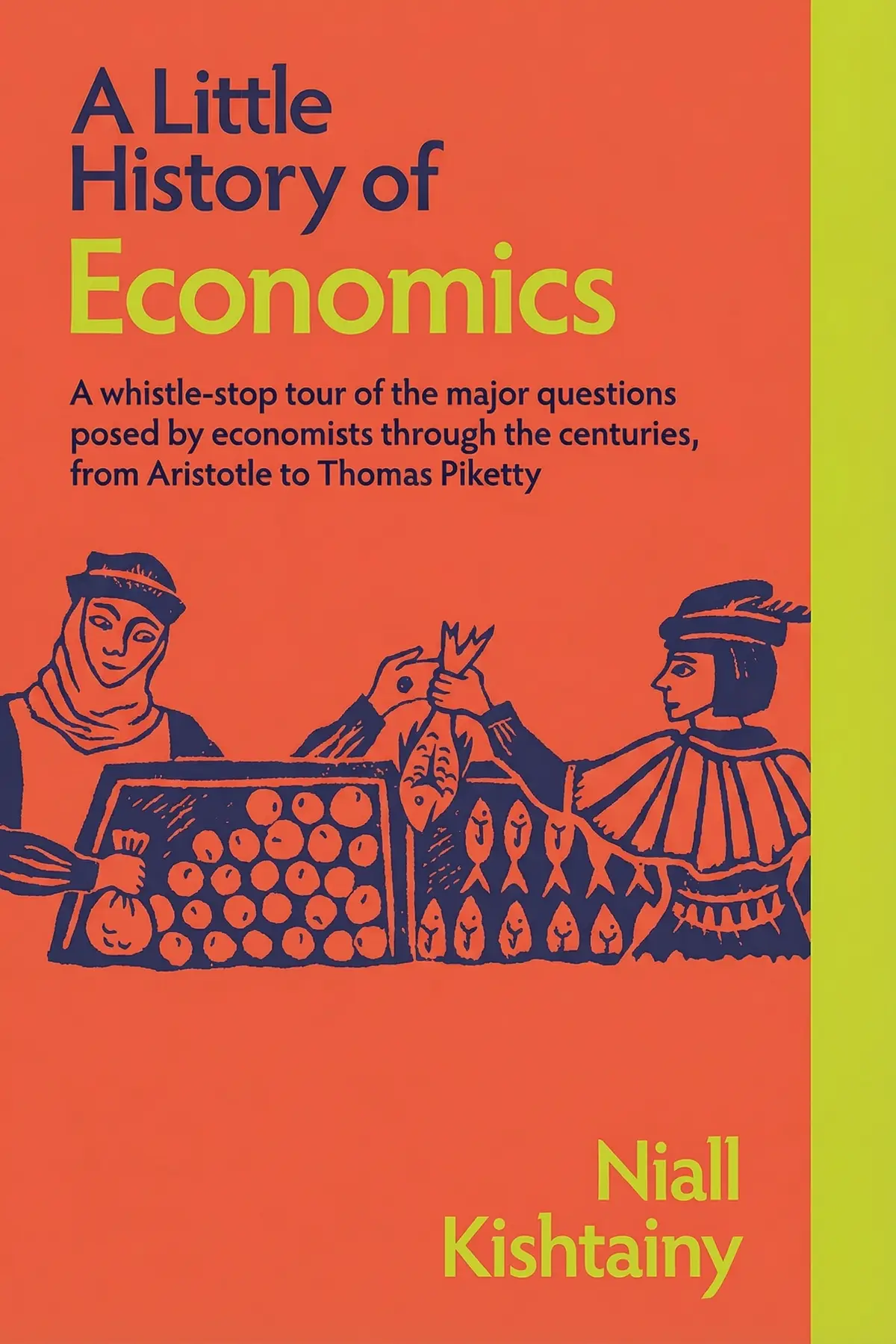
A Little History of Economics
Niall Kishtainy
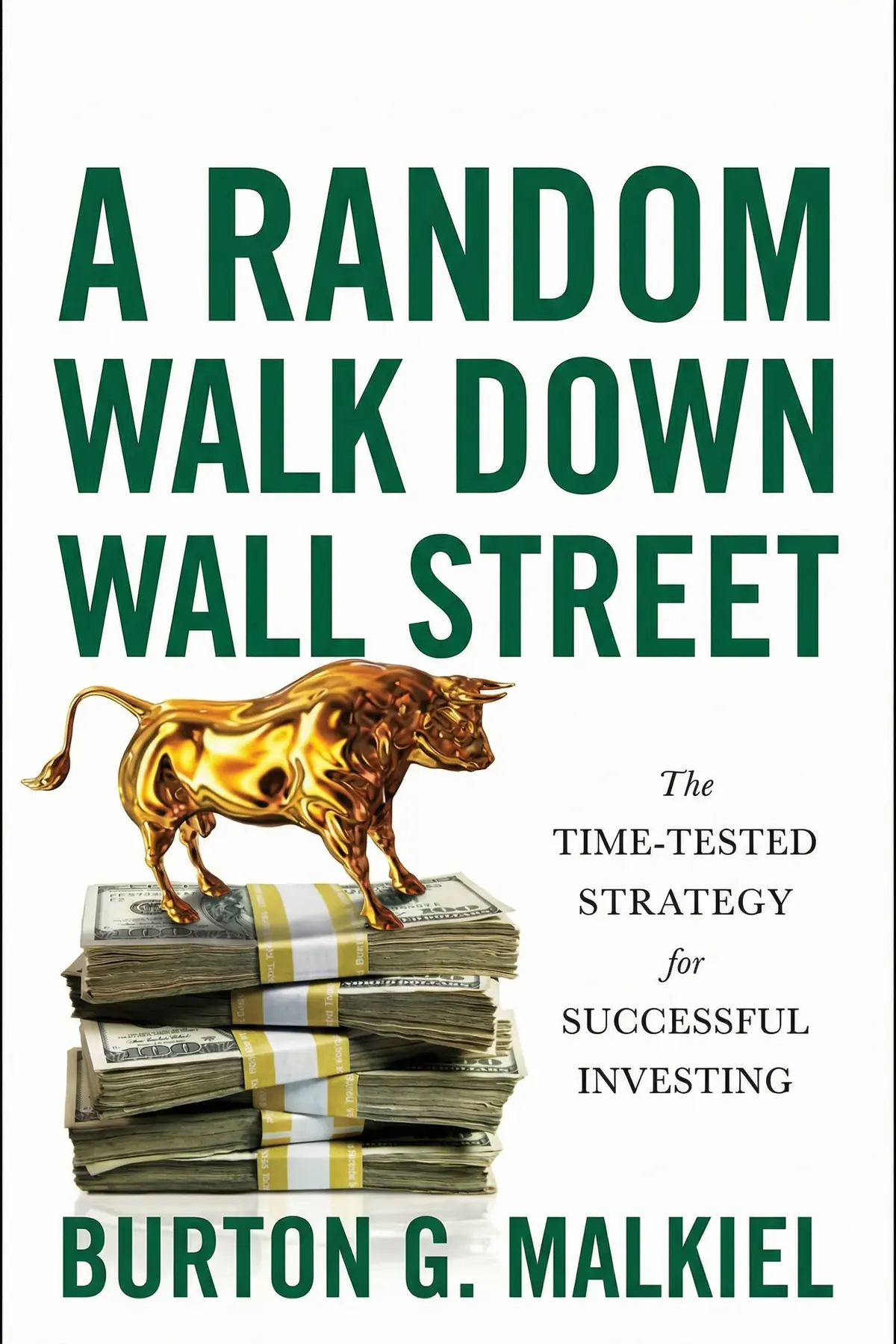
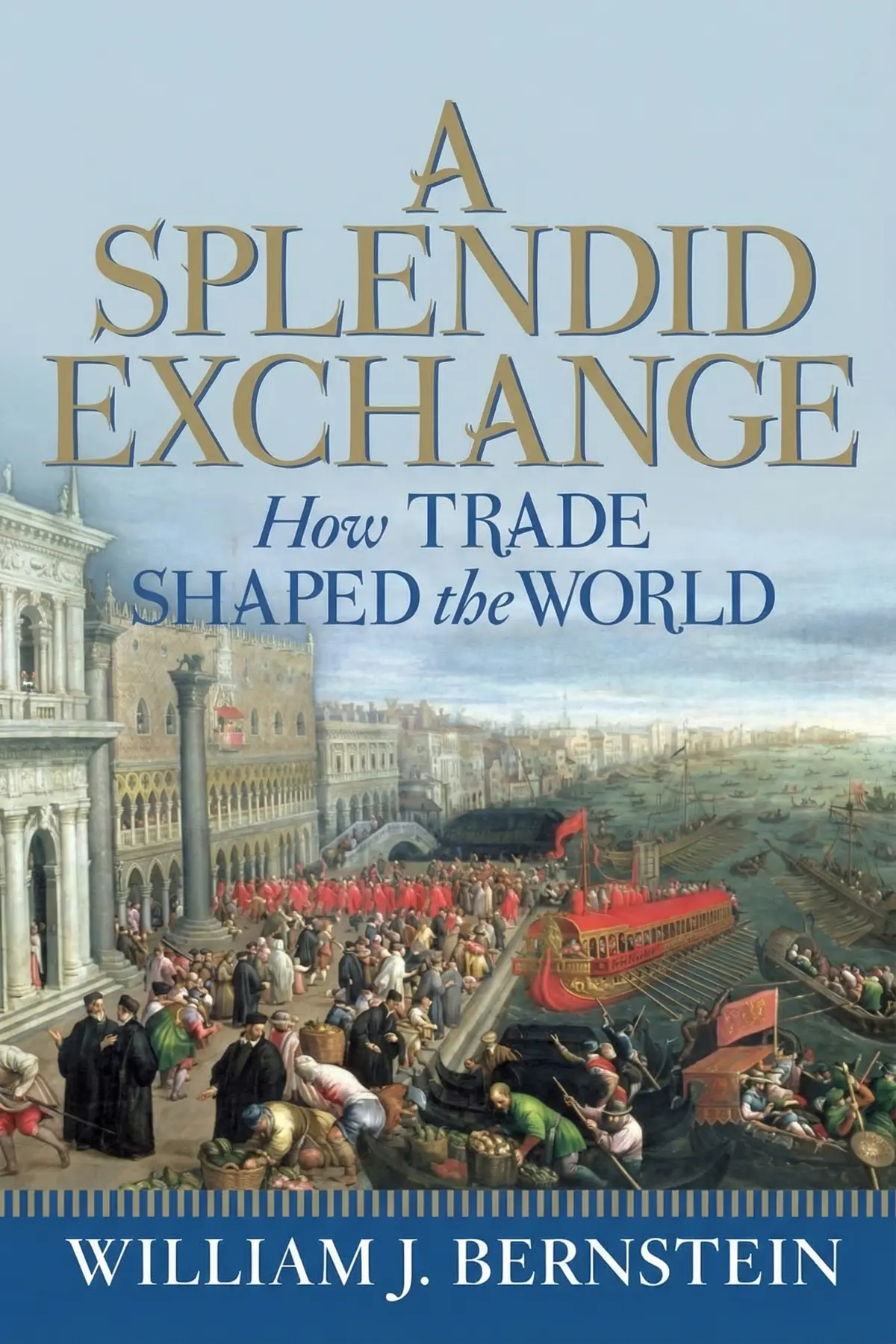
A Splendid Exchange: How Trade Shaped the World
William J. Bernstein

Adults in The Room: My Battle With Europe’s Deep Establishment
Yanis Varoufakis
AUDIO SUMMARY AVAILABLE
Listen to The Deficit Myth in 15 minutes
Get the key ideas from The Deficit Myth by Stephanie Kelton, plus 5,000+ more titles in English and Thai.
- 5,000+ titles
- Listen as much as you want
- 7-day free trial
- Cancel anytime







