
A Bigger Prize: How We Can Do Better Than the Competition
Margaret Heffernan
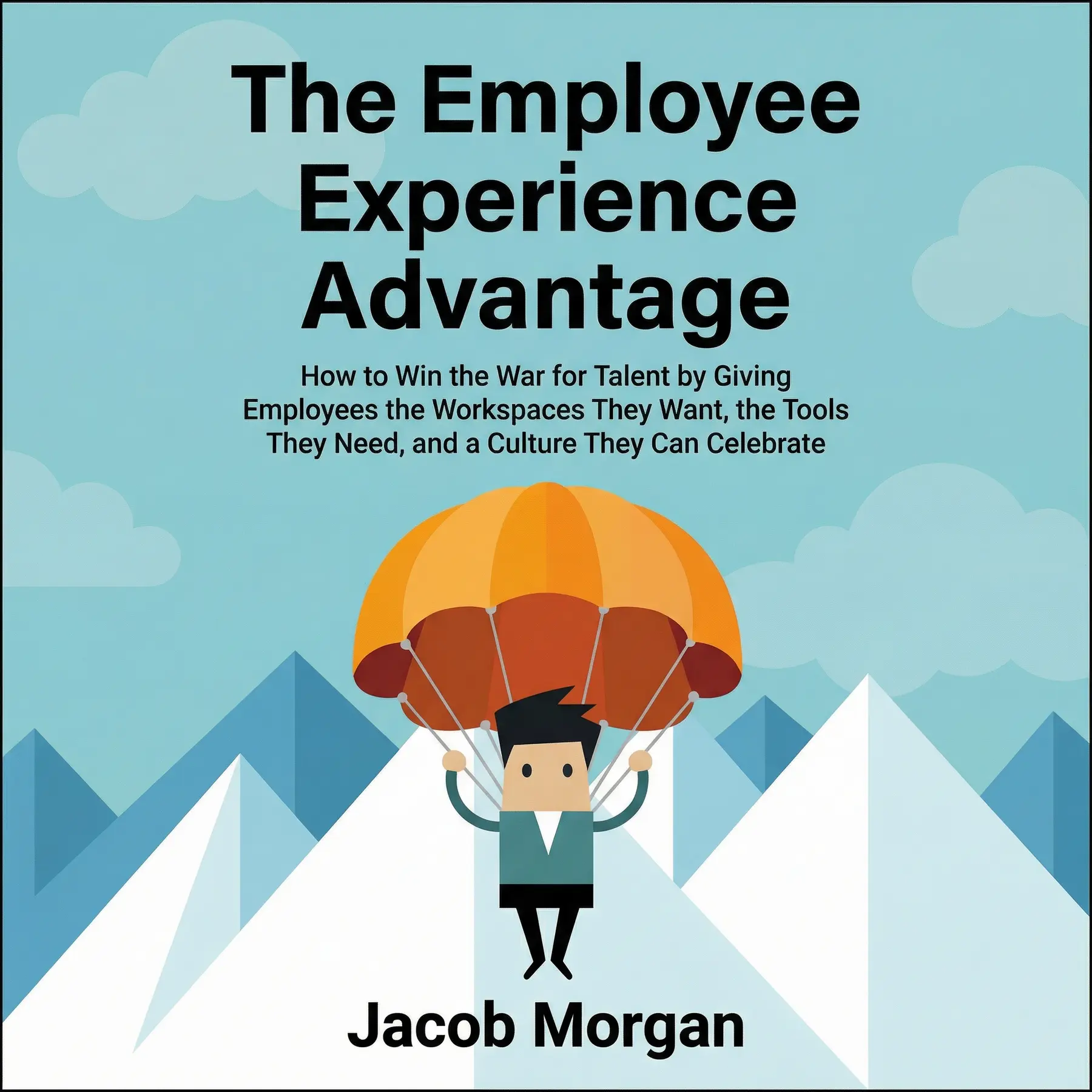
The Employee Experience Advantage explores how organizations can outperform competitors by fundamentally redesigning their physical, technological, and cultural environments to prioritize the needs and aspirations of their workforce.

1 min 51 sec
Have you ever paused to consider why some of the world’s most famous companies—giants like Google, Facebook, or Amazon—always seem to have a line of the most talented people on the planet waiting at their doors? It is easy to assume that it simply comes down to their massive bank accounts or the prestige of their brand names. But the reality is far more intentional than that. These organizations have cracked a code that many other businesses are still struggling to decipher: they have mastered the art of the employee experience.
In our journey through the insights of Jacob Morgan’s work, we are going to explore how to move past the superficial strategies of the past and start building an organization from the foundations up. This isn’t about adding a few perks to a broken system; it’s about a total redesign. We will look at how creating a work environment that truly nurtures talent and supports the way people actually live and work today can lead to unprecedented levels of performance and financial success.
As we navigate these ideas, we will uncover the specific components that make an office more than just a place with desks and chairs. We will examine why the way an organization views its impact on the world is a non-negotiable factor in its long-term survival. We will even see how a simple janitor at NASA could teach every modern CEO a lesson about purpose. By the end of this summary, you will have a clear throughline connecting the daily experience of an employee to the ultimate success of the business. You will understand that the future of work isn’t just about what employees do for the company, but what the company creates for the employees. Let’s dive in and see how shifting your focus from engagement to experience can change everything.
2 min 38 sec
Discover why traditional motivation tactics are failing and how a holistic redesign of the organizational ‘engine’ is the only way to drive true performance.
2 min 43 sec
Learn how the physical office can either betray or bolster your company’s mission and why flexibility is the new gold standard for modern talent.
2 min 46 sec
Explore why the tools your employees use should be as intuitive as their personal smartphones and how the right tech can save resources.
2 min 34 sec
Understand why the intangible ‘feeling’ of a workplace is its most critical asset and how a shared purpose can turn a job into a mission.
2 min 20 sec
Look at the hard data that proves why experiential organizations dominate their markets, from lower turnover to quadruple the profits.
2 min 07 sec
Move beyond the boring mission statement to create an inspiring objective that rallies your workforce around a shared global impact.
2 min 16 sec
Discover how to keep your workplace relevant by treating your company like a living organism that constantly learns and adapts.
2 min 35 sec
Replace the sterile concept of the ’employee life cycle’ with a human-centric approach that honors the significant events in people’s lives.
2 min 30 sec
Learn why employee experience is not just an HR task but a collective effort that must be championed from the CEO down to the front lines.
1 min 51 sec
As we wrap up our look into the strategies of The Employee Experience Advantage, it is clear that the world of work has undergone a permanent shift. The old days of trying to ‘buy’ engagement with superficial perks are over. To win in the modern marketplace, organizations must commit to the hard work of truly designing an experience that respects, inspires, and empowers their people.
We have explored how the three pillars of the workplace—the physical environment, the technological tools, and the cultural foundation—work together to create an environment where employees don’t just show up for a paycheck, but because they are genuinely excited to contribute. We have seen how a strong Reason for Being provides a North Star for the entire company, and how an infinite design loop ensures that the organization stays relevant and responsive to the needs of its workforce.
If you are looking for a place to start in your own organization, take a moment to reflect on your daily reality. Ask yourself a simple but profound question: ‘If the experience of working at this company could be condensed into a pill, would I be willing to swallow it?’ If your answer is no, then you have work to do. But you don’t have to do it alone. Start by talking to your colleagues and your team. Ask them about their ‘moments that matter’ and the frustrations they face.
By turning your organization into a laboratory of experimentation and empathy, you can build a workplace that isn’t just profitable, but also a positive force in the lives of the people who make it run. The financial rewards of lower turnover and higher profits are significant, but the human rewards of creating a meaningful, supportive, and inspiring work environment are even greater. The war for talent is won one experience at a time. Now is the time to start designing yours.
The Employee Experience Advantage challenges the traditional approach to employee engagement, which often relies on short-term perks and superficial fixes. Instead, it introduces a holistic framework for creating a workplace where people actually want to show up, not just because they have to, but because they are inspired to do so. Jacob Morgan argues that the key to winning the talent war lies in three distinct areas: the physical spaces where we work, the technological tools we use to stay productive, and the cultural environment that shapes our sense of belonging. By integrating these three pillars, companies can foster innovation, reduce turnover, and significantly boost their financial performance. This summary provides a roadmap for leaders to transition from a factory-style management model to a laboratory-style environment of experimentation and growth.
Jacob Morgan is a best-selling author, futurist, keynote speaker, and business adviser who has become a leading authority on the future of work and employee experience. His work focuses on how the modern workplace is evolving and how leaders can adapt to these changes. In addition to his research on employee experience, he has authored two other influential bestsellers, The Future of Work and The Collaborative Organization.
Listeners find the material deeply researched and actionable, offering clear directions for evolving into an experiential organization. They value how it aids in building improved employee experiences, helping staff feel respected and retaining those who are passionate about their work. This book is simple to digest and not at all complex, making it an excellent choice for bosses, with one listener observing that it provides an experience for its workforce. They appreciate its straightforward premise and arrangement, with one review emphasizing the well-structured format found in the initial pages.
Finally got around to reading this after seeing it on several 'best of' lists for HR professionals, and it really shifts your perspective on what a workplace should be. Morgan makes a compelling case that the employee experience advantage is the only sustainable competitive differentiator left in the modern economy. I loved the focus on 'Moments that Matter,' from the first impression during onboarding to the lasting impression when an employee moves on. It’s simple, it’s researched, and it provides a clear experience for its workforce through the inclusion of bonus quizzes and diagnostic tools. The idea that culture must be 'CELEBRATED'—meaning everyone feels valued and part of a legitimate team—resonated with me deeply. This isn't just a book for the C-suite; it’s a manual for anyone who wants to build a more human-centric organization. If you want to retain talent who truly love their jobs, start here.
Show moreThis book isn't just about corporate strategy; it’s a heartfelt plea to put the 'human' back into Human Resources. Jacob Morgan does a fantastic job of illustrating the evolution of the workplace from the utility phase to the modern experiential era. I was particularly struck by the 'Reason for Being' concept—businesses need a purpose that isn't just centered on financial gain if they want to rally their troops. The 'CELEBRATED' culture acronym is a perfect checklist for any leader: Does everyone feel valued? Is there a sense of purpose? Is diversity actually believed in? The book is thoroughly researched and provides detailed guidance on how to become an experiential organization. I found the inclusion of the 'full test' link to see how you stack up against other companies to be an incredible bonus resource. It’s an inspiring read that makes you want to go out and change your company culture immediately.
Show moreMorgan has managed to create a comprehensive guide that bridges the gap between physical workspace design and deep-seated cultural values. The 'COOL' and 'ACE' frameworks are incredibly easy to remember and implement, which is exactly what a busy executive needs. What I loved most was the emphasis that this advantage must be initiated by the CEO but championed by everyone in the building. It’s not just a People Team project; it’s an organizational overhaul. The book is well-organized in its early pages, clearly defining the shift from a place where people 'need' to show up to a place where they 'want' to show up. It provides a perfect roadmap for any business owner who realizes that their employees are their most important customers. By focusing on the impact on the world and treating employees fairly, success becomes a byproduct rather than the sole goal. This is a must-read for anyone serious about the future of work.
Show moreAs a middle manager trying to navigate the shifting sands of hybrid work, I found Jacob Morgan’s framework surprisingly actionable and timely. The book moves beyond the tired clichés of office perks to explain how physical, technological, and cultural environments intersect to create a place where people actually want to show up. I particularly appreciated the ACE technology acronym, emphasizing that tools must be consumer-grade and available to everyone to be effective. It’s a well-defined structure throughout the first few chapters that gives you a clear sense of direction. However, to be fair, the later sections feel a bit less organized, almost like a separate collection of essays that don't quite mesh with the initial 17 attributes. Still, the core message about moving from simple utility to a holistic experience is a vital one for any leader today. It’s a practical read that focuses on the human element, which is often lost in corporate strategy.
Show moreEver wonder why some offices feel alive while others feel like a soul-crushing cubicle farm despite having high salaries? Morgan’s exploration of the 'COOL' physical environment—focusing on flexibility and a space that reflects organizational values—hit the nail on the head. He correctly identifies that employees aren't just looking for a paycheck; they want to know they are making a real difference to something that matters. My only gripe is that the book seemed to overly trash the concept of 'employee engagement' just to make the 'employee experience' theory look superior. It was a bit off-putting. That said, the nine types of organizations, from 'Inexperienced' to 'Experiential,' offer a great way to benchmark your own company’s progress. The writing is easy to understand and not overly complicated, making it a perfect read for busy employers who need to fix their culture fast. I've already recommended a few chapters to my executive team.
Show morePicked this up because I was tired of hearing the same old 'employee engagement' buzzwords that never seem to result in actual change. Morgan’s focus on the three environments—physical, technological, and cultural—is a much more holistic way to look at the problem. I’m self-employed, but this actually changed my way of looking at the relationship between companies and their partners too. The idea of 'consumer-grade technology' is so overlooked; why should the tech I use at home be better than the tech I use to do my job? While I agree with other reviewers that the data on the 250 companies feels a bit thin on details, the overarching 'Experiential' model is solid. It’s more about a mindset than a checklist. The book is easy to digest and serves as a great starting point for redesigning how an organization operates. Definitely worth the time if you're in a leadership position.
Show moreThe breakdown of the 17 attributes—specifically the acronyms like CELEBRATED culture—provides a decent roadmap, but I struggled with the underlying data presented in the text. As someone with a background in data analysis, the ranking of the 250 companies felt a bit arbitrary at times, with little justification provided for why certain brands were lauded while others were panned. Why is Cisco considered a prime example while Tesla and Berkshire Hathaway are consistently used as negative outliers? It felt a bit biased, especially considering the book was sponsored by an HR software firm. Look, the evolution from engagement to experience is a smart conceptual leap, but the lack of scientific rigor in the analysis makes it hard to fully buy into the rankings. It’s an interesting enough read for the 'COOL' physical space ideas, but you have to take the statistical claims with a massive grain of salt.
Show moreLook, the core message here is great—you have to be good to your employees by default—but the execution is a bit of a mixed bag. The author is right that people see right through half-hearted 'employee of the month' campaigns and cheap gift cards. True appreciation requires a mindset shift, not just a new perk. In my experience, the 'ACE' technology framework is the most useful part of the book because it highlights how outdated tools actually hinder productivity and morale. However, the structure falls apart toward the end, and the links to the 250-company analysis remain murky throughout. It’s a generally good HR book that can be used as a reference for the 17 attributes, but it doesn't quite live up to its promise of being a scientific overview. If you can get past the somewhat promotional tone for certain HR software, there are some nuggets of wisdom worth extracting for your team.
Show moreFrankly, the first half of the book is significantly stronger than the second, which feels like a hodgepodge of disconnected ideas. The first chapters do a great job laying out the 17 things employers need to do, but then the structure just evaporates. I was also a bit put off by the author's tone of superiority when comparing his 'experience' model to traditional 'engagement' strategies. To be fair, he makes some excellent points about how physical spaces need to offer flexibility and reflect the organization's values. I also appreciated the mention of millennials and remote work, showing how cultural influences have changed the expectations of the modern workforce. However, the grammar issues and the lack of deep justification for his company rankings made me doubt some of the conclusions. It’s a decent enough resource for sparking ideas, but it isn't the definitive scientific work it claims to be.
Show moreIt’s hard to take a business book seriously when you’re constantly tripping over basic mathematical errors and grammatical slip-ups that should have been caught in editing. These mistakes completely undermined the validity of the research for me. While the first half of the book introduces some interesting concepts regarding physical spaces and technology, the second half is a mismatched hodgepodge of ideas that lacks any real structure. The 17 attributes are introduced with great fanfare, but they aren't effectively linked to the chapters that follow. Frankly, it felt like the author had a great 50-page white paper that was stretched thin to meet a publisher's word count. I agree that intrinsic factors like flexibility and work-life balance are more important than free snacks, but I’d recommend looking into the other authors Morgan references instead of slogging through this specific volume. The lack of justification for his company rankings was the final straw.
Show moreMargaret Heffernan

Anne Helen Petersen
AUDIO SUMMARY AVAILABLE
Get the key ideas from The Employee Experience Advantage by Jacob Morgan, plus 5,000+ more titles in English and Thai.







